Parimala V. Rao - Böcker
Visar alla böcker från författaren Parimala V. Rao. Handla med fri frakt och snabb leverans.
7 produkter
7 produkter
2 658 kr
Tillfälligt slut
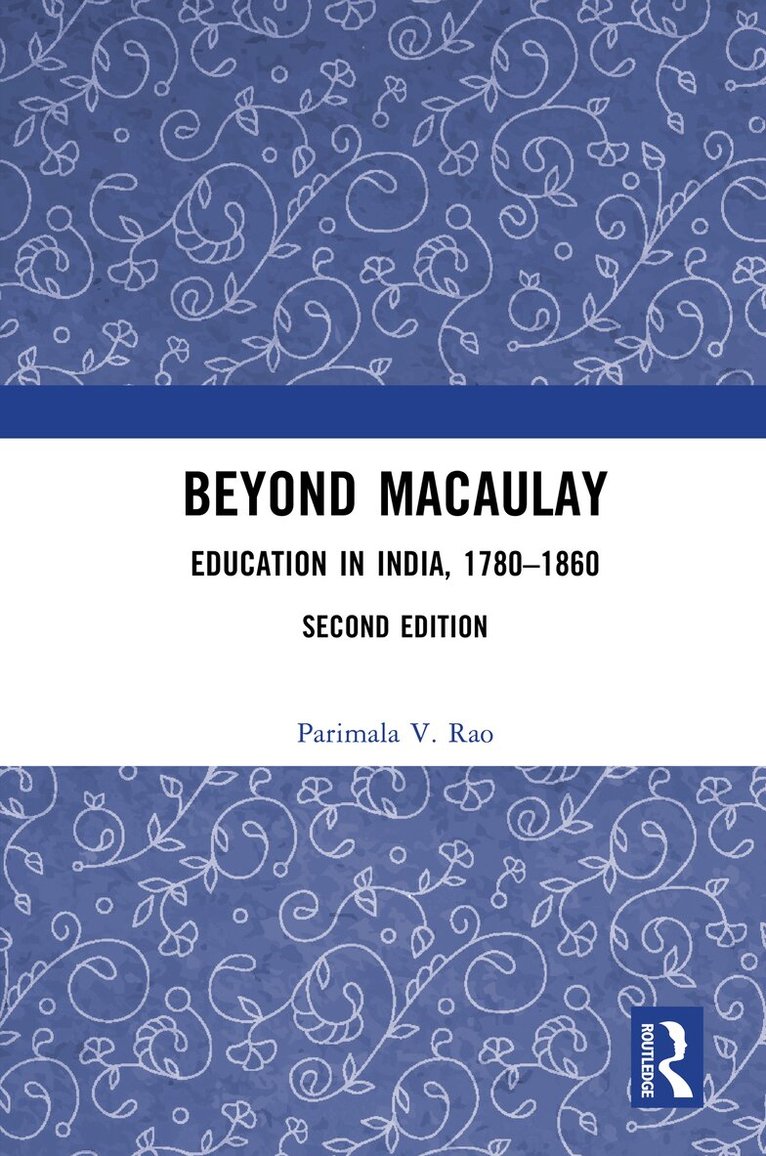
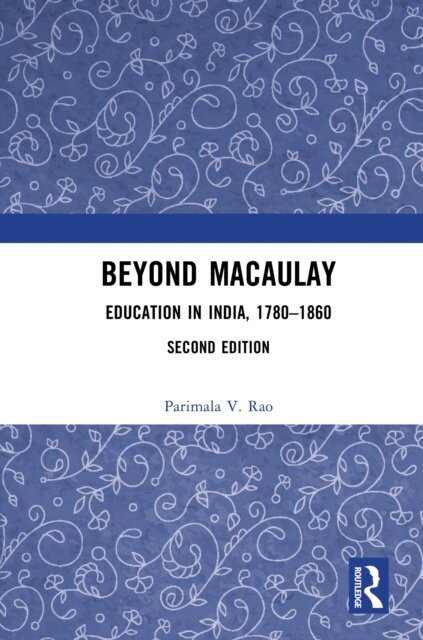
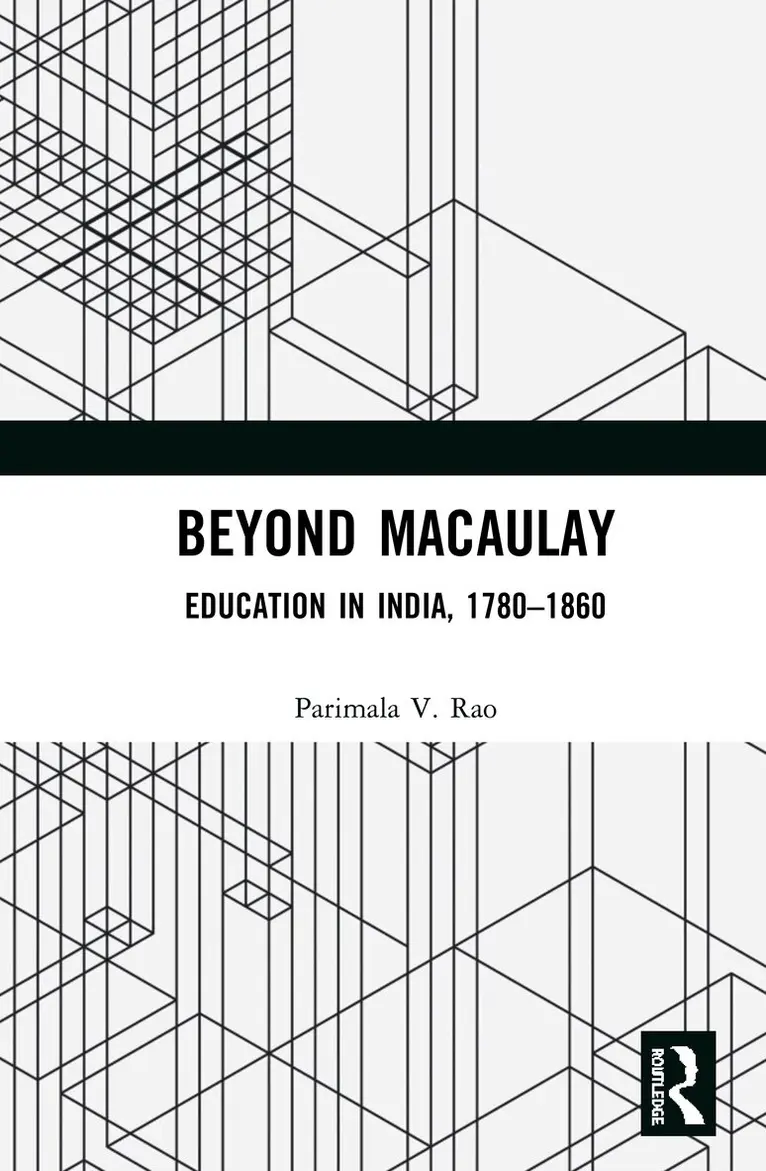
Beyond Macaulay provides a radical and comprehensive history of Indian education in the early colonial era — from the establishment of the Calcutta Madrasa in 1780 until the end of the East India Company’s rule and the beginning of the administration by the crown in 1860. The book challenges the conventional theory that the British administration imposed English language and modern education on Indians. Based on rich archival evidence, it critically explores data on 16,000 indigenous schools and shows that indigenous education was not oral, informal, and Brahmin-centric but written, formal, and egalitarian. The author highlights the educational policies of the colonial state and the way it actively opposed the introduction of modern education and privileged Brahmins. By including hitherto unused 41 Educational Minutes of Macaulay, the volume examines his educational ideas, and analyses why the colonial state closed down every school established by him. It also contrasts the educational ideas of the British elites and the Orientalists with dissenting Scottish voices. The book discusses post-Macaulayan educational policies and the Wood’s Despatch of 1854 as well as educational institutions during the revolt of 1857. It covers indigenous education in Sanskrit, Persian, Arabic and modern Indian vernaculars, the impact of the colonial policies on these schools, and traces the history of education in Bengal, North India, and Madras and Bombay Presidencies, as also the role of caste and religion in society. This book will be of great interest to scholars and researchers of education, history of education, Indian history, South Asian history, colonial history, sociology, political history and political science.
659 kr
Skickas inom 10-15 vardagar
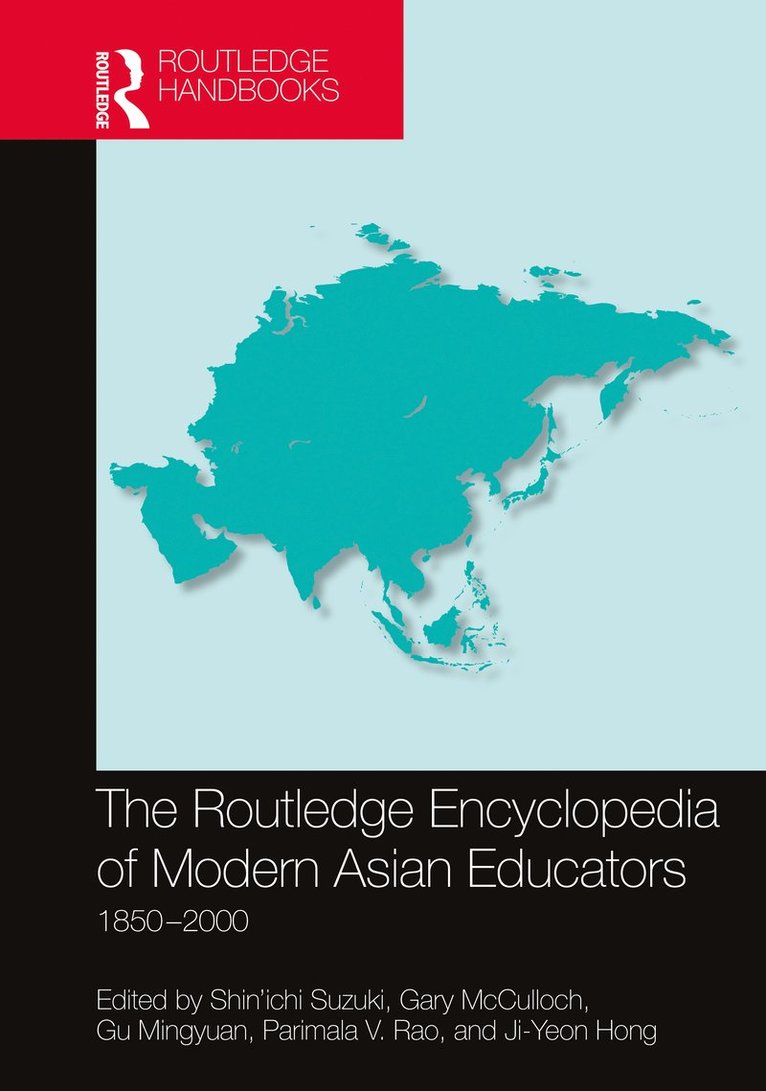
This handbook is a unique and major resource on modern educators of Asia and their contribution to Asian educational development through the 19th and 20th centuries when modernization started in Asia. In one comprehensive volume, this handbook covers a selection of modern educators from East Asia, South Asia, and Southeast Asia – and their contributions to the development of modern education, practically and theoretically. The diversity of cultures and religion as well as the multilinguistic and ethnic context have made Asian modernization unique and complex. Educational modernization in Asia reflected this historical context in many ways and resulted in the diverse forms of learning, teaching, institutions, and administration. Modern Asian educators compiled in this handbook represent various fields of Asian society: not only educational but cultural and social fields like academia, politics, economics, religion, literature, theatre, fine arts, and civic genres including the media. Through this Handbook, readers may discover the individual modern educators, male and female, and their contributions to Asian educational modernization. All of them were committed to the cause of education for children, youth, adults and in particular women. In addition, this volume has an extraordinarily rich subject index which can be an excellent guide and introduction to information touching divergent dynamics of educational developments in modern Asia. This insightful volume is perfect for students and researchers working on history of education, comparative education and educational development, particularly for those interested in Asian contexts.
3 210 kr
Skickas inom 10-15 vardagar
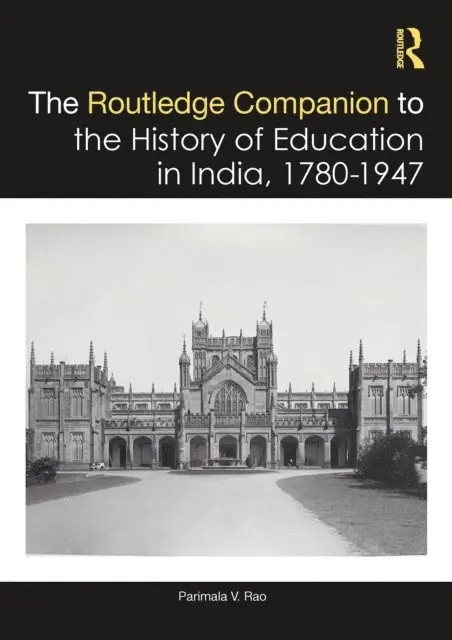
This companion presents a comprehensive overview of educational policies in India, tracing the development of modern education from the late eighteenth century until Indian independence. It also studies various aspects of indigenous education and examines the education system under the British administration.Drawing on archival and contemporary sources, the book explores the influence of geopolitics on educational policies and gives an in-depth analysis of debates related to access, curriculum, textbooks, funding, girls' education, missionary education, and the education of the Muslim community. It analyses school and collegiate education, various Education Commissions, and the Government of India Resolutions. It surveys Indian response to modern education and various forms of National Education. It also discusses Gandhi’s educational ideas and brings forth the entire curriculum of Nai Talim.An important contribution to the history of education in India, the companion will be indispensable to scholars and researchers of history, education, history of education, sociology, colonial education, Indian education, and political science.
770 kr
Kommande
This companion presents a comprehensive overview of educational policies in India, tracing the development of modern education from the late eighteenth century until Indian independence. It also studies various aspects of indigenous education and examines the education system under the British administration.Drawing on archival and contemporary sources, the book explores the influence of geopolitics on educational policies and gives an in-depth analysis of debates related to access, curriculum, textbooks, funding, girls' education, missionary education, and the education of the Muslim community. It analyses school and collegiate education, various Education Commissions, and the Government of India Resolutions. It surveys Indian response to modern education and various forms of National Education. It also discusses Gandhi’s educational ideas and brings forth the entire curriculum of Nai Talim.An important contribution to the history of education in India, the companion will be indispensable to scholars and researchers of history, education, history of education, sociology, colonial education, Indian education, and political science.
695 kr
Kommande
Beyond Macaulay provides a radical and comprehensive history of Indian education in the early colonial era from 1780 to 1860. It critically explores data of 16,000 indigenous schools, which shows that indigenous education was not oral, informal, and Brahmin-centric but written, formal, and egalitarian. Based on rich archival evidence, the book challenges the conventional theory that the British administration imposed the English language and modern education on Indians. By including hitherto unused 41 Educational Minutes of Macaulay, the volume examines his educational ideas, his insistence on compulsory teaching of Indian languages in English schools, his encouragement of the Hindi language, his opposition to making Arabic as a medium of instruction in medical and technical education opens up hither to unknown perspectives on Orientalist-Modernist debates. Contrasting the educational ideas of the British elites and the Orientalists with dissenting Scottish voices, it shows that the colonial administration was not monolithic. The book discusses post-Macaulayan educational policies, closing down of Macaulay’s schools and the Wood’s Despatch of 1854 as well as how people protected English schools during the revolt of 1857.This second edition is supplemented with complete student essays which reveal the students’ use of the English language, classical imageries, the debates in Europe and finally, their own location in Indian society. The essays by upper caste, OBC and Dalit students demonstrate their extraordinary competency and command over the English language. The book will be of great interest to scholars and researchers of education, history of education, Indian history, the history of English language teaching in India, sociology, and political science.
2 026 kr
Skickas inom 10-15 vardagar
Beyond Macaulay provides a radical and comprehensive history of Indian education in the early colonial era from 1780 to 1860. It critically explores data of 16,000 indigenous schools, which shows that indigenous education was not oral, informal, and Brahmin-centric but written, formal, and egalitarian. Based on rich archival evidence, the book challenges the conventional theory that the British administration imposed the English language and modern education on Indians. By including hitherto unused 41 Educational Minutes of Macaulay, the volume examines his educational ideas, his insistence on compulsory teaching of Indian languages in English schools, his encouragement of the Hindi language, his opposition to making Arabic as a medium of instruction in medical and technical education opens up hither to unknown perspectives on Orientalist-Modernist debates. Contrasting the educational ideas of the British elites and the Orientalists with dissenting Scottish voices, it shows that the colonial administration was not monolithic. The book discusses post-Macaulayan educational policies, closing down of Macaulay’s schools and the Wood’s Despatch of 1854 as well as how people protected English schools during the revolt of 1857.This second edition is supplemented with complete student essays which reveal the students’ use of the English language, classical imageries, the debates in Europe and finally, their own location in Indian society. The essays by upper caste, OBC and Dalit students demonstrate their extraordinary competency and command over the English language. The book will be of great interest to scholars and researchers of education, history of education, Indian history, the history of English language teaching in India, sociology, and political science.
3 280 kr
Skickas inom 10-15 vardagar
This handbook is a unique and major resource on modern educators of Asia and their contribution to Asian educational development through the 19th and 20th centuries when modernization started in Asia. In one comprehensive volume, this handbook covers a selection of modern educators from East Asia, South Asia, and Southeast Asia – and their contributions to the development of modern education, practically and theoretically. The diversity of cultures and religion as well as the multilinguistic and ethnic context have made Asian modernization unique and complex. Educational modernization in Asia reflected this historical context in many ways and resulted in the diverse forms of learning, teaching, institutions, and administration. Modern Asian educators compiled in this handbook represent various fields of Asian society: not only educational but cultural and social fields like academia, politics, economics, religion, literature, theatre, fine arts, and civic genres including the media. Through this Handbook, readers may discover the individual modern educators, male and female, and their contributions to Asian educational modernization. All of them were committed to the cause of education for children, youth, adults and in particular women. In addition, this volume has an extraordinarily rich subject index which can be an excellent guide and introduction to information touching divergent dynamics of educational developments in modern Asia. This insightful volume is perfect for students and researchers working on history of education, comparative education and educational development, particularly for those interested in Asian contexts.