Patrick D. Lyons – författare
Visar alla böcker från författaren . Handla med fri frakt och snabb leverans.
2 produkter
2 produkter
Inbunden, Engelska, 2019
917 kr
Skickas inom 11-20 vardagar
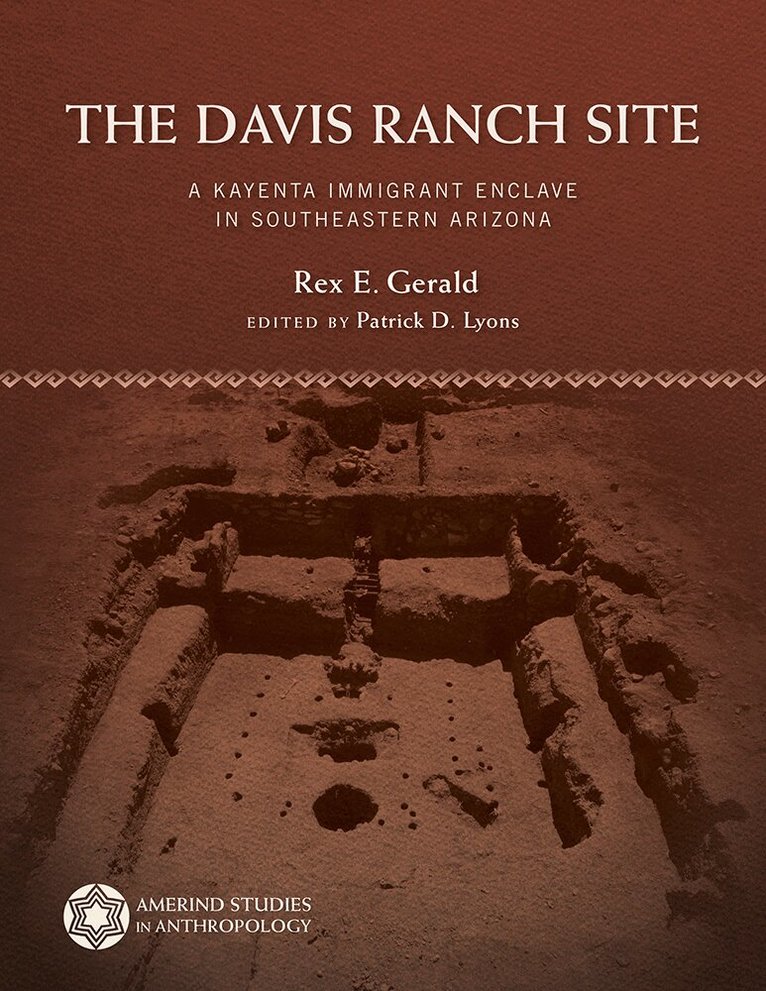
In this new volume, the results of Rex E. Gerald's 1957 excavations at the Davis Ranch Site in southeastern Arizona's San Pedro River Valley are reported in their entirety for the first time.Annotations to Gerald's original manuscript in the archives of the Amerind Museum and newly written material place Gerald's work in the context of what is currently known regarding the late thirteenth-century Kayenta diaspora and the relationship between Kayenta immigrants and the Salado phenomenon. Data presented by Gerald and other contributors identify the site as having been inhabited by people from the Kayenta region of northeastern Arizona and southeastern Utah.The results of Gerald's excavations and Archaeology Southwest's San Pedro Preservation Project (1990–2001) indicate that the people of the Davis Ranch Site were part of a network of dispersed immigrant enclaves responsible for the origin and spread of Roosevelt Red Ware pottery, the key material marker of the Salado phenomenon.A companion volume to Charles Di Peso's 1958 publication on the nearby Reeve Ruin, archaeologists working in the U.S. Southwest and other researchers interested in ancient population movements and their consequences will consider this work an essential case study.
Inbunden, Engelska, 2021
968 kr
Tillfälligt slut
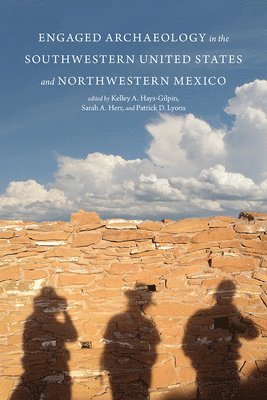
This volume of proceedings from the fifteenth biennial Southwest Symposium makes the case for engaged archaeology, an approach that considers scientific data and traditional Indigenous knowledge alongside archaeological theories and methodologies. Focusing on the southwestern United States and northwestern Mexico, the contributors show what can be gained when archaeologists engage with Indigenous communities and natural scientists: improved contemporary archaeological practice through better understandings of heritage and identity, anthropogenic landscapes, and societal potential for resilience. Organized around the theme of interdisciplinary perspectives, the book highlights collaborations with those who have other ways of knowing the past, from the traditional and proprietary knowledge of communities to new scientific methods, and considers the social context of archaeological practice and the modern relationships that inform interpretations of the past. Chapters show how cutting-edge practices lead to new archaeological understandings when archaeologists work in partnership with descendant and stakeholder communities and across international and disciplinary borders. Authors work across anthropological subfields and with the sciences, demonstrating that anthropological archaeology’s methods are starting points for investigation that allow for the expansion of understanding by incorporating long-remembered histories with innovative analytic methods. Engaged Archaeology in the Southwestern United States and Northwestern Mexico identifies current and near-future trends in archaeological practice in the US Southwest and northwestern Mexico, including repatriation, community engagement, and cross-disciplinary approaches, and focuses on Native American archaeologists and their communities, research, collaborations, and interests. It will be of interest to archaeologists and anthropologists working in the Southwest and to any researchers interested in interdisciplinary approaches to archaeology, heritage studies, and the natural sciences. Contributors: Christopher Caseldine, Chip Colwell, Guillermo Córdova Tello, Patrick Cruz, T. J. Ferguson, Cécile R. Ganteaume, Vernelda Grant, Neysa Grider-Potter, Christopher Grivas, Michael Heilen, Jane H. Hill, Leigh J. Kuwanwisiwma, Teresita Majewski, Debra L. Martin, Estela Martínez Mora, John A. McClelland, Emiliano Ricardo Melgar Tísoc, Darsita R. North, Scott Ortman, Peter J. Pilles Jr., Susan Sekaquaptewa, Arleyn W. Simon, Kimberly Spurr, Sarah Striker, Kerry F. Thompson, John A. Ware, Peter M. Whiteley, Lisa C. Young