Patrick Moreau – författare
Visar alla böcker från författaren . Handla med fri frakt och snabb leverans.
10 produkter
10 produkter
E-bok
PDF, Tyska, 2013570 kr
Läs direkt efter köp
Zu Beginn des 21. Jahrhunderts stellt sich Frankreich als eine moder ne Industrienation dar, die sich mit ihrem Status als europäische Mit telmacht abgefunden hat. Frankreich bildet heute einen der tragenden Pfeiler der Europäischen Union und ist maßgeblich an allen Initiativen beteiligt, die das weitere Zusammenwachsen der europäischen Staaten zum Ziel haben. Seit vielen Jahren ist Frankreich Deutschlands bevor zugter Partner. Eine solche enge Partnerschaft verlangt nach einer so liden Kenntnis des anderen. Wenn Frankreich als moderne Industrienation bezeichnet wird, so soll damit zum Ausdruck gebracht werden, daß es den lange spürbaren Rückstand einer stark landwirtschaftlich geprägten Gesellschaft auf geholt hat und daß die über die Nachkriegsjahrzehnte offensiv voran getriebene Modernisierungspolitik erfolgreich war. Frankreich ent spricht in vielem kaum mehr dem Bild, das besonders in Deutschland immer noch gerne gepflegt wird, sieht man hierzulande in Frankreich doch mit Vorliebe ein charmant altmodisches, im Vergleich zu Deutschland weniger modemes, weniger durchorganisiertes und durch rationalisiertes Land. Tatsächlich jedoch ist Frankreich in manchen Aspekten wesentlich "moderner" als Deutschland, so beispielsweise in seiner Offenheit für technische Innovationen, wovon verschiedene High-Tech-Freizeitparks wie La Villette bei Paris oder das Futuros cope in Poitiers zeugen, oder in seiner Begeisterung für avantgardis tische Architektur (la Grande Arche, la Pyramide du Louvre oder la Bibliotheque Fran~ois Mitterrand in Paris). Weiterhin drückt sich die se Art Modernität auch im Bereich der Telekommunikation, des Bahn verkehrs oder des Einzelhandels aus, der mit seinen für Deutschland unvorstellbar gigantischenEinkaufszentren und liberalen Öffnungs zeiten die Lebensgewohnheiten der Franzosen verändert hat.
E-bok
PDF, Engelska, 2018548 kr
Läs direkt efter köp
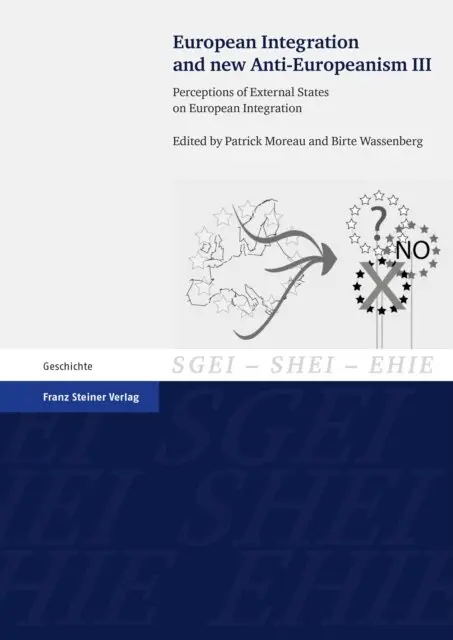
The history of European integration has always known "e;external states"e; that did not want or were not able to join the process of European integration. The EU might indeed not be seen as attractive: Since 2008, it has had to face many crises, first the financial crisis, then the migration and Schengen crises in 2015, and finally the "e;leave"e; vote in Great Britain in 2016, the so-called "e;Brexit"e;. Euro-skepticism has continually increased in EU-member states as the rejection of various EU treaties proved. On national as well as EU levels, the strength of anti-European parties has grown. The present volume, edited by Birte Wassenberg and Patrick Moreau, concentrates on these "e;external states"e;, particularly their attitude towards Europe. By looking at the geopolitical context, a wide range from historical constants to a changing of attitudes is shown and proves that the EU remains a fundamental actor of European politics and that its attraction continues to be very powerful.
E-bok
PDF, Engelska, 2016573 kr
Läs direkt efter köp
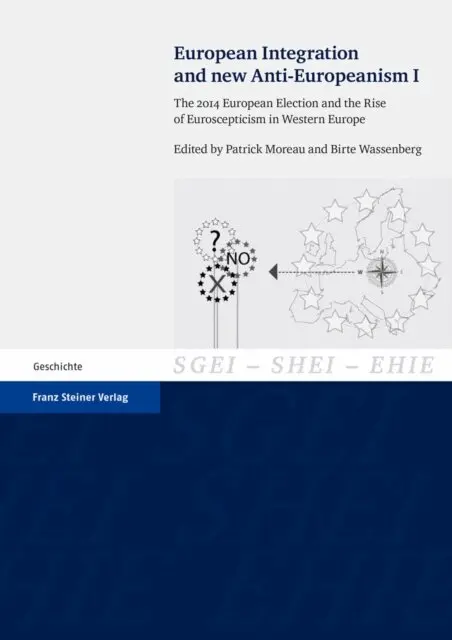
The economic crises since 2008, the tensions concerning the Euro, the Greek question and the refugee problem have fuelled a strong "e;Eurosceptic"e; movement. At the 2014 European elections, the rise of Eurosceptic forces could be observed in virtually all Member States of the EU. This publication regroups the contributions to a Conference organized 2014 in Strasburg by the CNRS-University of Strasbourg research unit "e;UMR Dynamiques europeennes"e;, in the framework of the IDEX excellence project "e;The European Integration and the New Anti-Europeanism"e;. In this first of two volumes, anti-Europeanism and Euroscepticism are examined as political phenomena and objects of interdisciplinary research. The focus is on "e;traditionally"e; Eurosceptic Great Britain and on sometimes very recent anti-European movements within the EC founding states (France, Germany, Italy, and the Netherlands), their discourses and voters. What reasons prompt anti-European voters: rejection of immigration, xenophobia, fear of the future, nationalism or the rejection of capitalism and globalization? Or is it the collective disappointment with the incapacity of the European elites to communicate with the majority of voters?
E-bok
PDF, Engelska, 2016650 kr
Läs direkt efter köp
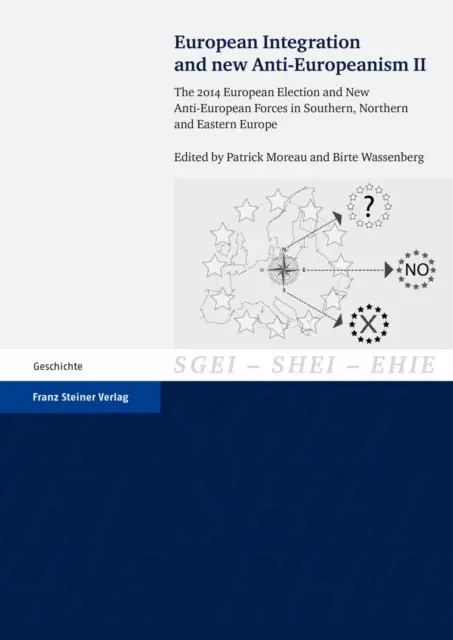
The economic crises since 2008, the tensions concerning the Euro, the Greek question and the refugee problem have fuelled a strong "e;Eurosceptic"e; movement. At the 2014 European elections, the rise of Eurosceptic forces could be observed in virtually all Member States of the EU. This publication regroups the contributions to a Conference organized 2014 in Strasburg by the CNRS-University of Strasbourg research unit "e;UMR Dynamiques europeennes"e;, in the framework of the IDEX excellence project "e;The European Integration and the New Anti-Europeanism"e;. In this second of two volumes, three groups of EU Member States are analysed: Mediterranean (Cyprus, Spain, Portugal, Greece), Scandinavian States (Sweden, Finland) and Austria; finally, Eastern European and Baltic States (Czech Republic, Slovakia, Hungary, Estonia, Latvia). Does the discourse of Eurosceptic parties in Eastern Europe differ from national-populists in the Nordic States or Austria? Is anti-Europeanism of the Greek or Cypriot extreme right similar to that of "e;parties of disruption"e; in Italy (Five Star Movement) or Spain (Podemos)? Can we equate anti-Europeanism of Czech Communists and alter-Europeanists in the Baltic States?
Häftad, Tyska, 2021
450 kr
Skickas inom 11-20 vardagar
How can the mobilizing power of the "right-wing populist" parties represented in the European Parliament be explained and how can they be effectively countered? This study aims to contribute to this by analyzing the ideological-programmatic aspects of these parties. The most popular among them provide "modernization services" that distinguish them from the old extreme right. They propagate anti-anti-Semitism, reject biological racism and orientate themselves on the model of a coexistence of separated ethno-cultural communities.
Inbunden, Engelska, 2008
1 611 kr
Skickas inom 11-20 vardagar
E-bok
PDF, Tyska, 2021346 kr
Läs direkt efter köp
Wie lässt sich die Mobilisierungskraft der im Europäischen Parlament vertretenen »rechtspopulistischen« Parteien erklären und wie ihnen wirksam begegnen? Diese Studie will dazu einen Beitrag leisten, indem sie vor allem die ideologisch-programmatischen Aspekte dieser Parteien analysiert. Die zugkräftigsten unter ihnen erbringen »Modernisierungsleistungen«, die sie von den alten extremen Rechten unterscheiden. So propagieren sie Anti-Antisemitismus, lehnen den biologischen Rassismus ab und orientieren sich am Leitbild eines Nebeneinanders separierter ethnokultureller Gemeinschaften.
E-bok
PDF, Engelska, 20111 337 kr
Läs direkt efter köp
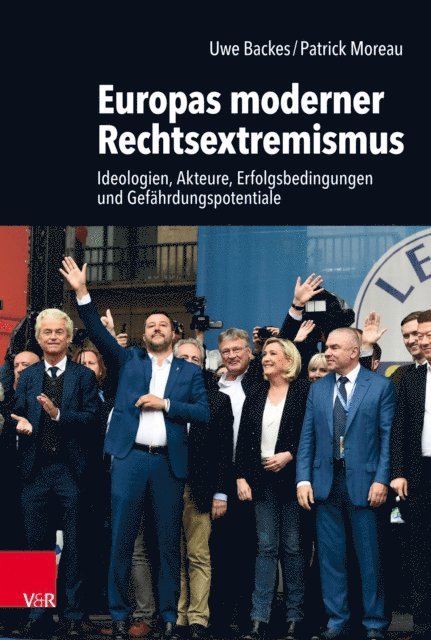
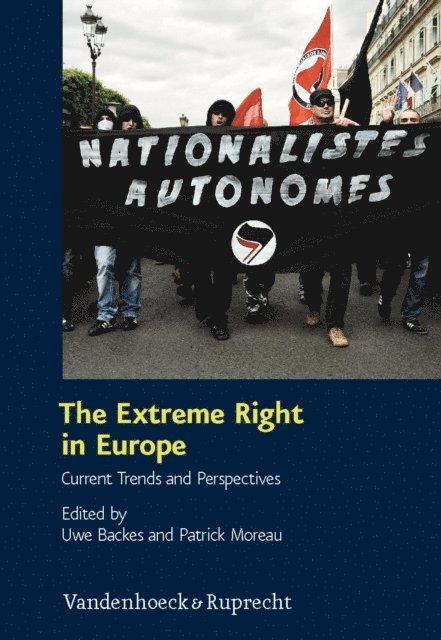
The present work deals not only with the well-organized right extremism in modern Europe as well as with its function in proper political parties, but equally includes two additional, broader approaches: the militant branches and subcultures that exist, including some paramilitary phenomena in Eastern Europe; and the broad realm of their political ideas and cultural trends and the influence they exert on European political culture.
Häftad, Tyska, 2000
560 kr
Skickas inom 10-15 vardagar
Zu Beginn des 21. Jahrhunderts stellt sich Frankreich als eine moder ne Industrienation dar, die sich mit ihrem Status als europäische Mit telmacht abgefunden hat. Frankreich bildet heute einen der tragenden Pfeiler der Europäischen Union und ist maßgeblich an allen Initiativen beteiligt, die das weitere Zusammenwachsen der europäischen Staaten zum Ziel haben. Seit vielen Jahren ist Frankreich Deutschlands bevor zugter Partner. Eine solche enge Partnerschaft verlangt nach einer so liden Kenntnis des anderen. Wenn Frankreich als moderne Industrienation bezeichnet wird, so soll damit zum Ausdruck gebracht werden, daß es den lange spürbaren Rückstand einer stark landwirtschaftlich geprägten Gesellschaft auf geholt hat und daß die über die Nachkriegsjahrzehnte offensiv voran getriebene Modernisierungspolitik erfolgreich war. Frankreich ent spricht in vielem kaum mehr dem Bild, das besonders in Deutschland immer noch gerne gepflegt wird, sieht man hierzulande in Frankreich doch mit Vorliebe ein charmant altmodisches, im Vergleich zu Deutschland weniger modemes, weniger durchorganisiertes und durch rationalisiertes Land. Tatsächlich jedoch ist Frankreich in manchen Aspekten wesentlich "moderner" als Deutschland, so beispielsweise in seiner Offenheit für technische Innovationen, wovon verschiedene High-Tech-Freizeitparks wie La Villette bei Paris oder das Futuros cope in Poitiers zeugen, oder in seiner Begeisterung für avantgardis tische Architektur (la Grande Arche, la Pyramide du Louvre oder la Bibliotheque Fran~ois Mitterrand in Paris). Weiterhin drückt sich die se Art Modernität auch im Bereich der Telekommunikation, des Bahn verkehrs oder des Einzelhandels aus, der mit seinen für Deutschland unvorstellbar gigantischenEinkaufszentren und liberalen Öffnungs zeiten die Lebensgewohnheiten der Franzosen verändert hat.
Del 1 - Quand Chuchote La Nuit
Quand chuchote la nuit
33 textes pour mieux vivre sa vie
Häftad, Franska, 2026
196 kr
Skickas inom 5-8 vardagar