Patrick Weil – författare
Visar alla böcker från författaren Patrick Weil. Handla med fri frakt och snabb leverans.
10 produkter
10 produkter
Inbunden, Engelska, 2001
1 058 kr
Skickas inom 10-15 vardagar
Adopting a comparative approach, the book examines the evolution of nationality law across the European Union since WWI. It explores the hypothesis that two factors, the experience of large-scale non-European immigration and the need to integrate a large and growing third country national population, have forced a convergence in European nationality law. The book accords attention to the role of gender and decolonization in reforms to nationality law.
Inbunden, Engelska, 2023
307 kr
Skickas inom 5-8 vardagar
“The extraordinary untold story of how a disillusioned American diplomat named William C. Bullitt came to Freud’s couch in 1926, and how Freud and his patient collaborated on a psychobiography of President Woodrow Wilson.”—Wall Street JournalThe notorious psychobiography of Woodrow Wilson, rediscovered nearly a century after it was written by Sigmund Freud and US diplomat William C. Bullitt, sheds new light on how the mental health of a controversial American president shaped world events.When the fate of millions rests on the decisions of a mentally compromised leader, what can one person do? Disillusioned by President Woodrow Wilson’s destructive and irrational handling of the 1919 Treaty of Versailles, a US diplomat named William C. Bullitt asked this very question. With the help of his friend Sigmund Freud, Bullitt set out to write a psychological analysis of the president. He gathered material from personal archives and interviewed members of Wilson’s inner circle. In The Madman in the White House, Patrick Weil resurrects this forgotten portrait of a troubled president.After two years of collaboration, Bullitt and Freud signed off on a manuscript in April 1932. But the book was not published until 1966, nearly thirty years after Freud’s death and only months before Bullitt’s. The published edition was heavily redacted, and by the time it was released, the mystique of psychoanalysis had waned in popular culture and Wilson’s legacy was unassailable. The psychological study was panned by critics, and Freud’s descendants denied his involvement in the project.For nearly a century, the mysterious, original Bullitt and Freud manuscript remained hidden from the public. Then in 2014, while browsing the archives of Yale University, Weil happened upon the text. Based on his reading of the 1932 manuscript, Weil examines the significance of Bullitt and Freud’s findings and offers a major reassessment of the notorious psychobiography. The result is a powerful warning about the influence a single unbalanced personality can have on the course of history.
Häftad, Engelska, 2025
221 kr
Skickas inom 5-8 vardagar
Shortlist, Cundill History Prize“The extraordinary untold story of how a disillusioned American diplomat named William C. Bullitt came to Freud’s couch in 1926, and how Freud and his patient collaborated on a psychobiography of President Woodrow Wilson.” —Wall Street Journal“A vivid shaggy-dog story about a curio that illuminates the possibilities (and perils) of studying the psychological soundness of presidents—a discipline as relevant as ever.” —The Atlantic“Excellent…Nearly a century since Wilson’s death, Weil’s monograph is the first to offer a comprehensive historical account of Bullitt’s career-long engagement with Wilson.” —American Literary HistoryWhen the fate of millions rests on the decisions of a mentally compromised leader, what can one person do? Alarmed by President Woodrow Wilson’s irrational handling of the 1919 Treaty of Versailles, a US diplomat named William C. Bullitt asked this very question. With the help of his friend Sigmund Freud—and the cooperation of interviewees in Wilson’s inner circle—Bullitt set out to write a psychological biography of a troubled president. In The Madman in the White House, Patrick Weil resurrects this forgotten portrait.The manuscript was completed in 1932, but the book was not published until 1966, in a heavily redacted edition. By that time, the mystique of psychoanalysis had waned and Wilson’s legacy was unassailable. Critics panned the book, and Freud’s descendants denied his involvement. But in 2014, Weil discovered the original manuscript, which leaves no doubt as to Freud’s role—or the significance of Bullitt and Freud’s analysis. Reassessing the notorious psychobiography, Weil finds a powerful warning about the influence a single unbalanced personality can have on the course of history.
Häftad, Engelska, 2006
589 kr
Skickas inom 10-15 vardagar
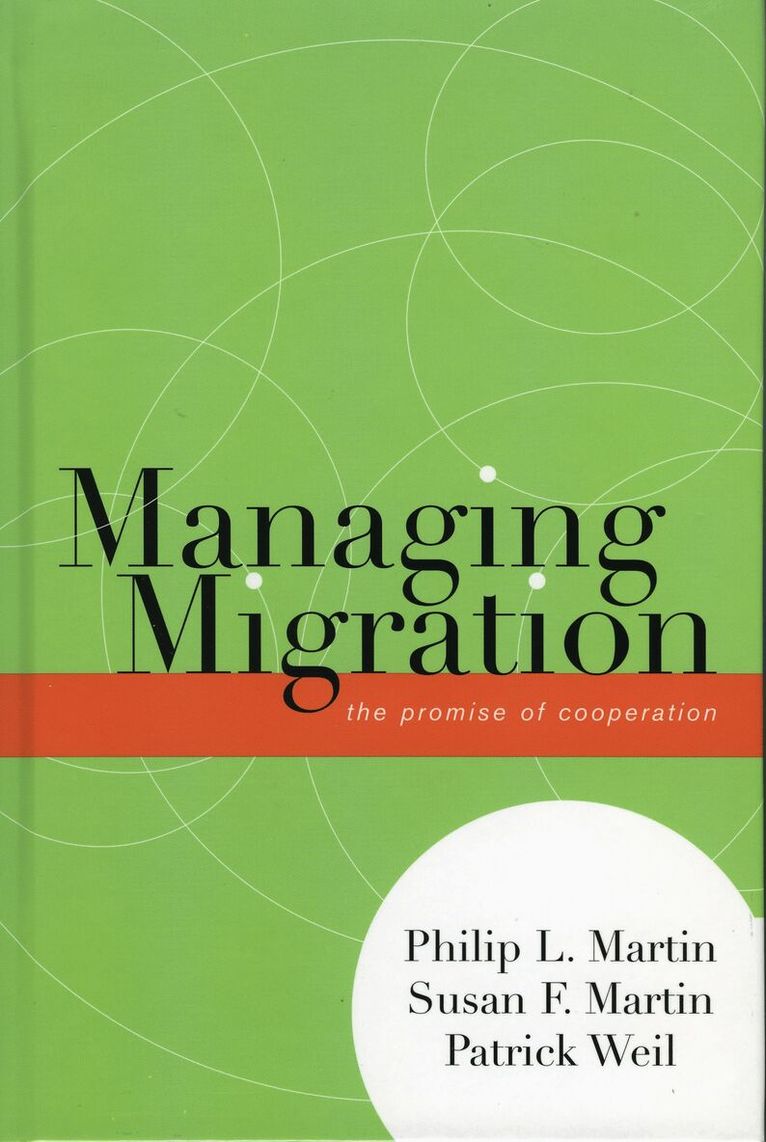
A growing share of the world's population lives in the 175 developing countries, while global income and wealth are increasingly concentrated in the 25 developed countries. The resulting migration from developing to developed countries is proving difficult to manage at national, regional, and local levels. Managing Migration presents the valuable results of the Cooperative Efforts to Manage Emigration project, a bottom-up effort to identify models and best practices for spurring economic development and respect for human rights in migrant countries of origin. Based on the research of experts from North America and Europe, authors Martin, Martin, and Weil discuss the challenges of managing international migration in the 21st century, present case studies in cooperative migration management, and offer recommendations to overcome the existing challenges. Concluding that there is no one-size-fits-all framework for managing migration, but that there are common elements of best-practice migration, Managing Migration is guaranteed to pique the interest of policy makers and practitioners involved in immigration as well as scholars of geography, anthropology, and international relations.
Häftad, Engelska, 2012
392 kr
Skickas inom 10-15 vardagar
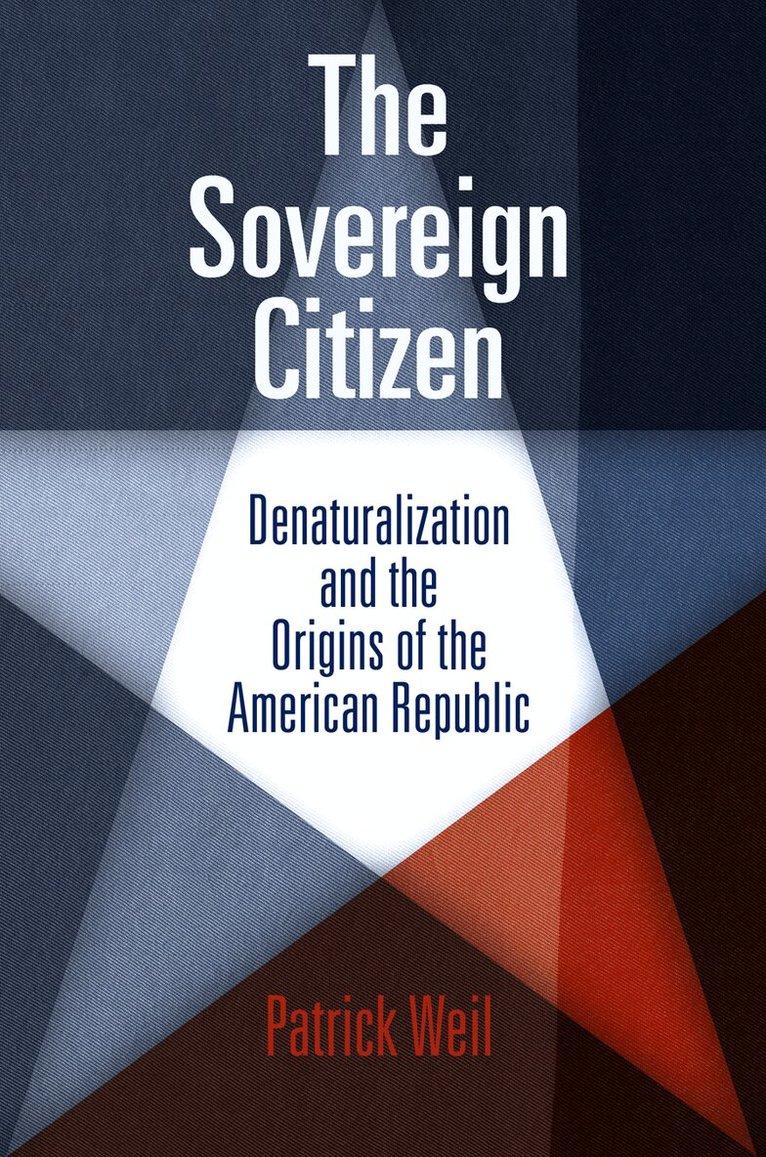
Present-day Americans feel secure in their citizenship: they are free to speak up for any cause, oppose their government, marry a person of any background, and live where they choose-at home or abroad. Denaturalization and denationalization are more often associated with twentieth-century authoritarian regimes. But there was a time when American-born and naturalized foreign-born individuals in the United States could be deprived of their citizenship and its associated rights. Patrick Weil examines the twentieth-century legal procedures, causes, and enforcement of denaturalization to illuminate an important but neglected dimension of Americans' understanding of sovereignty and federal authority: a citizen is defined, in part, by the parameters that could be used to revoke that same citizenship.The Sovereign Citizen begins with the Naturalization Act of 1906, which was intended to prevent realization of citizenship through fraudulent or illegal means. Denaturalization-a process provided for by one clause of the act-became the main instrument for the transfer of naturalization authority from states and local courts to the federal government. Alongside the federalization of naturalization, a conditionality of citizenship emerged: for the first half of the twentieth century, naturalized individuals could be stripped of their citizenship not only for fraud but also for affiliations with activities or organizations that were perceived as un-American. (Emma Goldman's case was the first and perhaps best-known denaturalization on political grounds, in 1909.) By midcentury the Supreme Court was fiercely debating cases and challenged the constitutionality of denaturalization and denationalization. This internal battle lasted almost thirty years. The Warren Court's eventual decision to uphold the sovereignty of the citizen-not the state-secures our national order to this day. Weil's account of this transformation, and the political battles fought by its advocates and critics, reshapes our understanding of American citizenship.
Häftad, Engelska, 2008
609 kr
Skickas inom 3-6 vardagar
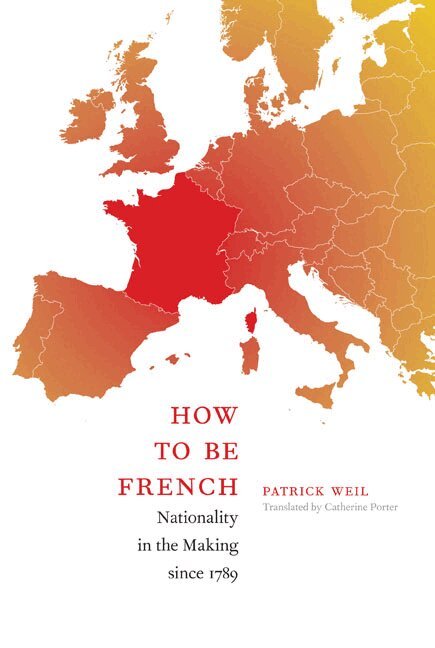
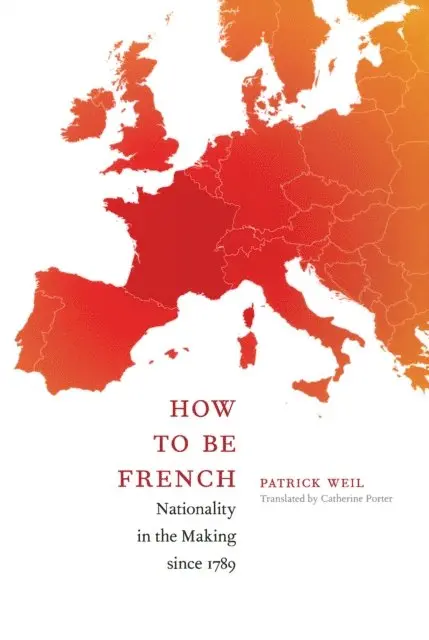
How to Be French is a magisterial history of French nationality law from 1789 to the present, written by Patrick Weil, one of France’s foremost historians. First published in France in 2002, it is filled with captivating human dramas, with legal professionals, and with statesmen including La Fayette, Napoleon, Clemenceau, de Gaulle, and Chirac. France has long pioneered nationality policies. It was France that first made the parent’s nationality the child’s birthright, regardless of whether the child is born on national soil, and France has changed its nationality laws more often and more significantly than any other modern democratic nation. Focusing on the political and legal confrontations that policies governing French nationality have continually evoked and the laws that have resulted, Weil teases out the rationales of lawmakers and jurists. In so doing, he definitively separates nationality from national identity. He demonstrates that nationality laws are written not to realize lofty conceptions of the nation but to address specific issues such as the autonomy of the individual in relation to the state or a sudden decline in population. Throughout How to Be French, Weil compares French laws to those of other countries, including the United States, Great Britain, and Germany, showing how France both borrowed from and influenced other nations’ legislation. Examining moments when a racist approach to nationality policy held sway, Weil brings to light the Vichy regime’s denaturalization of thousands of citizens, primarily Jews and anti-fascist exiles, and late-twentieth-century efforts to deny North African immigrants and their children access to French nationality. He also reveals stark gender inequities in nationality policy, including the fact that until 1927 French women lost their citizenship by marrying foreign men. More than the first complete, systematic study of the evolution of French nationality policy, How to be French is a major contribution to the broader study of nationality.
Häftad, Engelska, 2005
552 kr
Skickas inom 3-6 vardagar
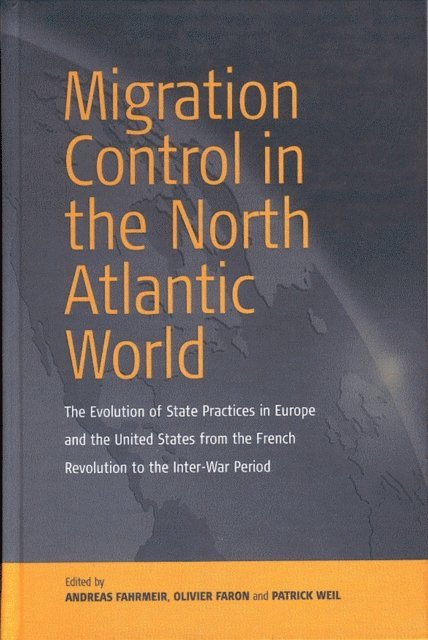
The migration movements of the 20th century have led to an increased interest in similarly dramatic population changes in the preceding century. The contributors to this volume - legal scholars, sociologists, political scientist and historians - focus on migration control in the 19th century, concentrating on three areas in particular: the impact of the French Revolution on the development of modern citizenship laws and on the development of new forms of migration control in France and elsewhere; the theory and practice of migration control in various European states is examined, focusing on the control of paupers, emigrants and "ordinary" travelers as well as on the interrelationship between the different administrative levels - local, regional and national - at which migration control was exercised. Finally, on the development of migration control in two countries of immigration: the United States and France. Taken altogether, these essays demonstrate conclusively that the image of the 19th century as a liberal era during which migration was unaffected by state intervention is untenable and in serious need of revision.
Inbunden, Engelska, 2002
1 903 kr
Skickas inom 3-6 vardagar
Dual nationality has become one of the most divisive issues linked with the politics of migration in Germany and the US. This volume, the first one in decades to focus on this issue, examines the history, consequences and arguments for and against dual citizenship, and uses dual nationality as the basis of a reflection on important issues closely related to it: social rights, European citizenship and federal citizenship. It pays particular attention to questions such as: What are the major arguments in favor and against dual nationality? Why has dual nationality provoked such contrasting responses, being a non-issue in the UK, for instance, and an extremely controversial one in Germany? How is dual nationality used by states to influence politics and policy in other states? How does it relate to the aim of integrating ethnic migrants and to broader issues in social policy and European integration?
Häftad, Engelska, 2002
552 kr
Skickas inom 3-6 vardagar
Dual nationality has become one of the most divisive issues linked with the politics of migration in Germany and the US. This volume, the first one in decades to focus on this issue, examines the history, consequences and arguments for and against dual citizenship, and uses dual nationality as the basis of a reflection on important issues closely related to it: social rights, European citizenship and federal citizenship. It pays particular attention to questions such as: What are the major arguments in favor and against dual nationality? Why has dual nationality provoked such contrasting responses, being a non-issue in the UK, for instance, and an extremely controversial one in Germany? How is dual nationality used by states to influence politics and policy in other states? How does it relate to the aim of integrating ethnic migrants and to broader issues in social policy and European integration?
Inbunden, Engelska, 2003
1 903 kr
Skickas inom 3-6 vardagar
The migration movements of the 20th century have led to an increased interest in similarly dramatic population changes in the preceding century. The contributors to this volume - legal scholars, sociologists, political scientist and historians - focus on migration control in the 19th century, concentrating on three areas in particular: the impact of the French Revolution on the development of modern citizenship laws and on the development of new forms of migration control in France and elsewhere; the theory and practice of migration control in various European states is examined, focusing on the control of paupers, emigrants and "ordinary" travelers as well as on the interrelationship between the different administrative levels - local, regional and national - at which migration control was exercised. Finally, on the development of migration control in two countries of immigration: the United States and France. Taken altogether, these essays demonstrate conclusively that the image of the 19th century as a liberal era during which migration was unaffected by state intervention is untenable and in serious need of revision.