Patrik Åström - Böcker
Visar alla böcker från författaren Patrik Åström. Handla med fri frakt och snabb leverans.
5 produkter
5 produkter
356 kr
Skickas inom 5-8 vardagar
Kodex: Boken i medeltidens Sverige är en handbok byggd på den senaste forskningen och handlar om boken som objekt och som kulturprodukt i en tid då Sverige inlemmades i den europeiska bildningssfären. De tjugo specialskrivna texterna rör sig från bokens framställning och gestaltning, över skriftsystemens och illustrationskonstens utveckling, till användning, utbyte och samlande av böcker i både handskrift och tryck. Boken har tillkommit vid Avdelningen för bokhistoria, Lunds universitet. Författarna är ledande medeltidsforskare från en rad olika verksamhetsfält.
Del 90 - Acta Bibliothecae regiae Stockholmiensis
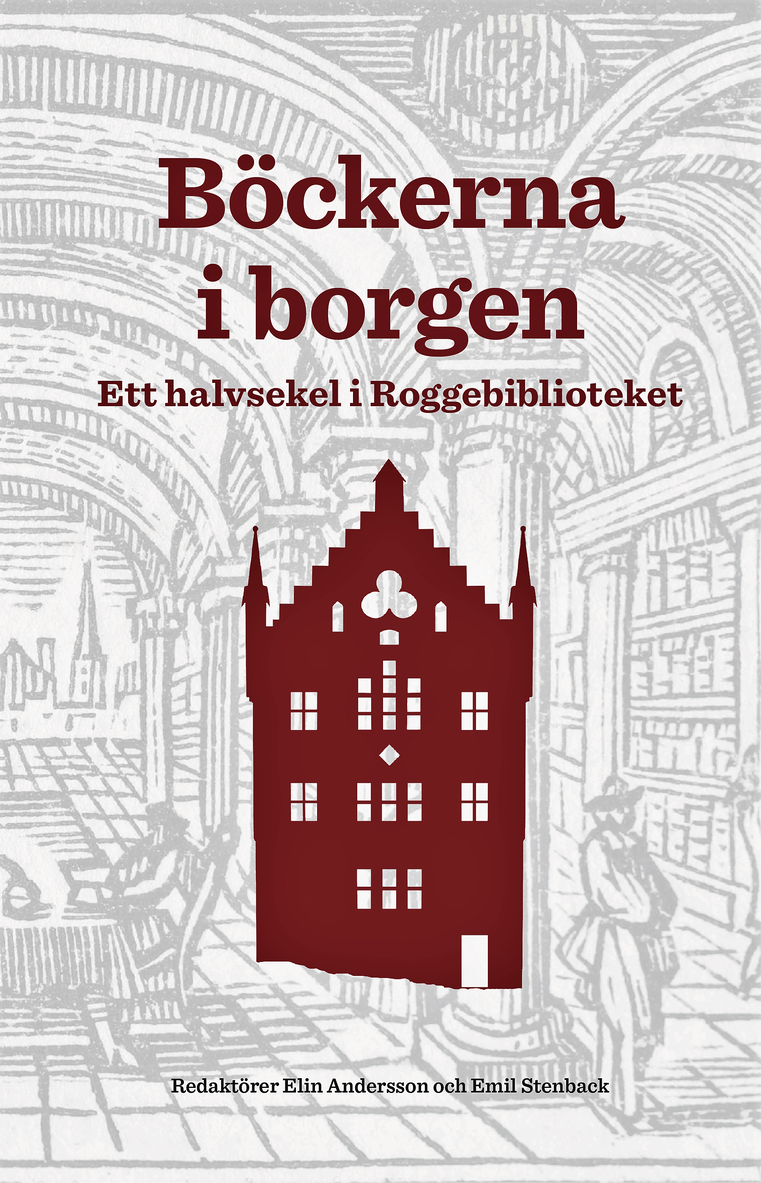
Böckerna i borgen : ett halvsekel i Roggebiblioteket
Häftad, Svenska, 2018
150 kr
Skickas
Intill Strängnäs domkyrka höjer sig Roggeborgen och blickar ut över Mälaren. Byggnaden, som uppfördes som biskopsresidens i slutet av 1400-talet, har fyllt många syften genom åren. Mest förknippad är borgen med Strängnäs gymnasium och läroverk som brukade byggnaden i över tre hundra år. Under många sekler har huset varit en miljö för kunskap och lärande. När skolan flyttade från Roggeborgen blev den äldre boksamlingen, Strängnäs stifts- och läroverksbibliotek, kvar på domkyrkoberget. Samlingen införlivades 1968 med Kungliga biblioteket och fick ett nytt namn: Roggebiblioteket. Roggebibliotekets samlingar spänner över sju sekler. Här finns verk från boktryckarkonstens barndom, handskrifter, kartor, glober och titlar inom ett stort antal ämnesområden. Till Roggebibliotekets 50-årsjubileum 2018 presenteras i denna antologi en historik över boksamlingen och några artiklar som ger läsaren en glimt av böckerna i borgen, forna tiders gymnasieliv och bibliotekets långa historia.
Register till Samlingar utgivna av Svenska fornskriftsällskapet 1844-2000 : utgivna skrifter och däri använda fornsvenska handskrifter
Häftad, Svenska, 2003
293 kr
Skickas inom 5-8 vardagar
The volume contains three major and five minor indices. Cross-references are given to three different number series used in the works. Manuscript signa in the editions are updated. Special indices on manuscript descriptions and datings of manuscripts are given. Indices are also given with information on outdated and present numbers of volumes, on authors and editors, and on outdated and present manuscript signa. Språk i boken: svenska
293 kr
Skickas inom 5-8 vardagar
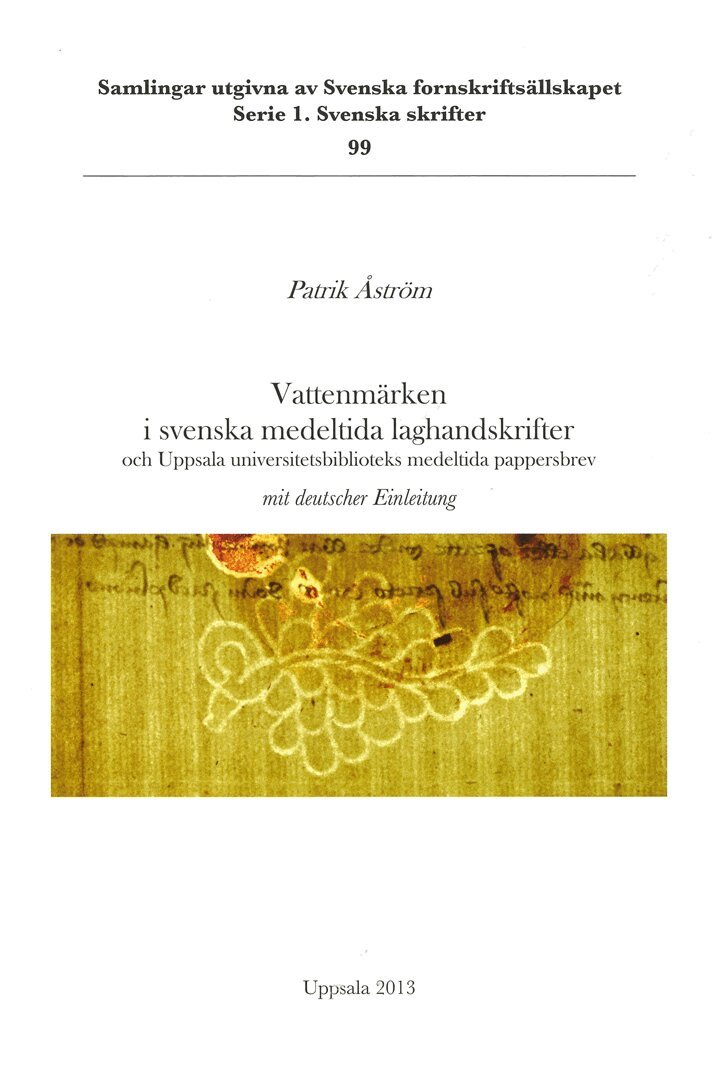
This volume in Samlingar utgivna av Svenska fornskriftsällskapet is a catalogue of 325 watermarks in Swedish medieval law manuscripts and in the collection of medieval paper documents (up to 1500) in Uppsala university library. The catalogue contains images of the watermarks and references to the most important previous catalogues and collections, in particular by Charles M. Briquet and Gerhard Piccard, as well as a description of the distribution of watermarks in the mediaeval law manuscripts. Introductions are given in Swedish and German. Keywords: Watermarks, paper, mediaeval, manuscript, Swedish law. Språk i boken: svenska
262 kr
Skickas inom 5-8 vardagar
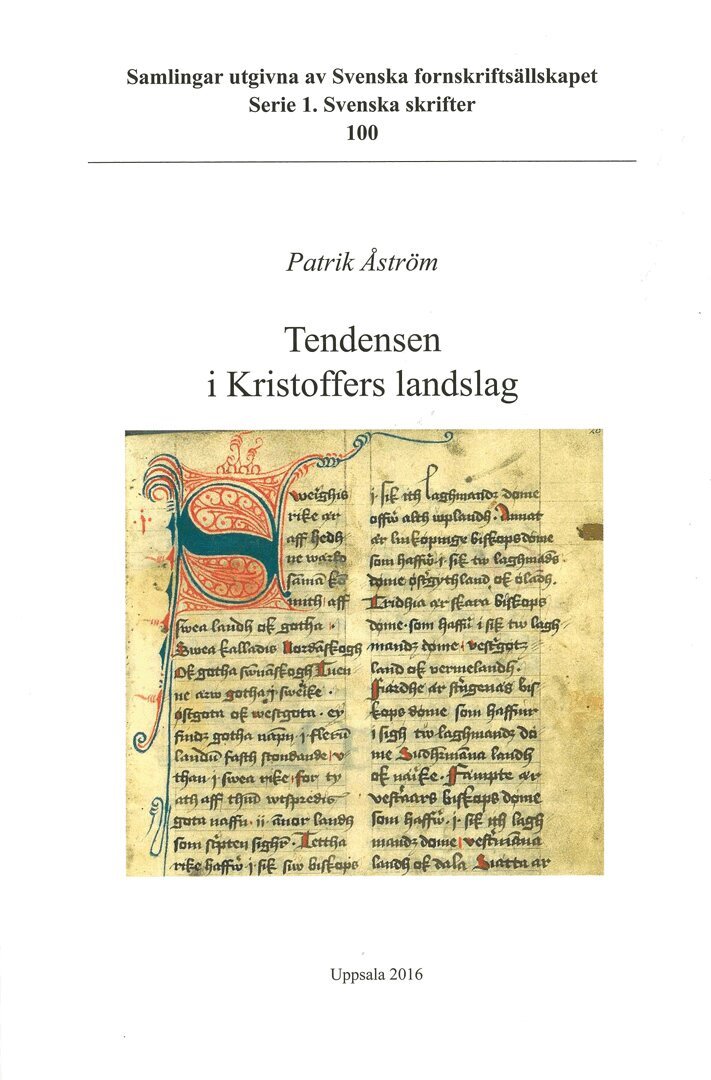
Just before Christopher of Bavaria took office as king of Sweden in 1442 a revision was made of the Common Law (”Magnus Erikssons landslag”). This revision, later called ”Kristoffers landslag”, had a very limited distribution, judging from the number of surviving manuscripts. The reason for the limited distribution, it has been claimed, was that Kristoffer’s successor, Karl Knutsson Bonde, did not dare to promote the new law, since it had an aristocratic tendency opposed by the common peasantry. The main questions asked here are: 1) What do we actually know about the distribution of the new legislation? 2) Is there an aristocratic influence in the new law, and if not, can we see any other tendency? In the first section of this work the historical background is outlined. The second sec- tion examines how legislative rules were disseminated in Sweden during the late Mid- dle Ages. It is stated that it is difficult to achieve absolute certainty about how widely spread new rules were, since they were reproduced not only in written form (laws and statutes), but also orally, either by reading or from memory. In the third section it is shown that there are no signs of Karl Knutsson abolishing the new law, and, fur- thermore, that there are no unambiguous signs of an aristocratic tendency in the new revision. The fourth section, finally, attempts to trace any influence at all, and comes to the conclusion that there is at least some evidence of an influence from the church, in particular its political ideology and canonical law. Among the appendices, a late medi- eval compilation of some differences between the new and old law is most noteworthy. Keywords: legal history, medieval common law, law distribution, medieval literacy, canon law. Språk i boken: svenska