Paul A. Gagniuc – författare
1 265 kr
Skickas inom 10-15 vardagar
Antivirus Engines: From Methods to Innovations, Design, and Applications offers an in-depth exploration of the core techniques employed in modern antivirus software. It provides a thorough technical analysis of detection methods, algorithms, and integration strategies essential for the development and enhancement of antivirus solutions. The examples provided are written in Python, showcasing foundational, native implementations of key concepts, allowing readers to gain practical experience with the underlying mechanisms of antivirus technology.The text covers a wide array of scanning techniques, including heuristic and smart scanners, hexadecimal inspection, and cryptographic hash functions such as MD5 and SHA for file integrity verification. These implementations highlight the crucial role of various scanning engines, from signature-based detection to more advanced models like behavioral analysis and heuristic algorithms. Each chapter provides clear technical examples, demonstrating the integration of modules and methods required for a comprehensive antivirus system, addressing both common and evolving threats.Beyond simple virus detection, the content illustrates how polymorphic malware, ransomware, and state-sponsored attacks are tackled using multi-layered approaches. Through these examples, students, researchers, and security professionals gain practical insight into the operation of antivirus engines, enhancing their ability to design or improve security solutions in a rapidly changing threat environment.
Offers a thorough exploration of the mechanics behind antivirus detection methods, including signature-based detection, heuristic algorithms, and modern smart scanning techniques, with native source code examples to illustrate these core conceptsProvides fundamental native implementations of various antivirus engines, allowing readers to directly experiment with MD5, SHA, hexadecimal scanners, and heuristic models to expand their technical skillsHighlights practical case studies and examples of integrating antivirus software into real-world systems, helping cybersecurity professionals and developers design and implement robust protective measures adapted to evolving threatsDelivers actionable insights for business leaders, policymakers, and IT decision-makers, emphasizing the critical role antivirus software plays in safeguarding digital infrastructure, facilitating informed cybersecurity investments1 597 kr

Läs direkt efter köp
1 829 kr
Kommande
1 654 kr
Kommande
1 446 kr
Skickas inom 11-20 vardagar
1 645 kr
Läs direkt efter köp
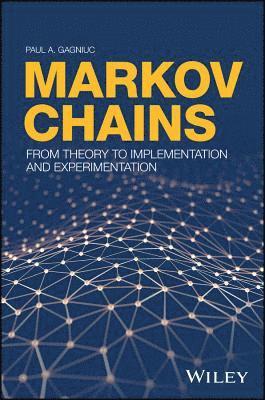
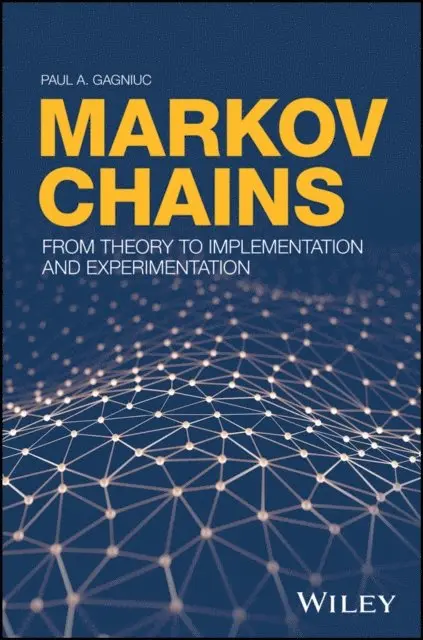
A fascinating and instructive guide to Markov chains for experienced users and newcomers alike
This unique guide to Markov chains approaches the subject along the four convergent lines of mathematics, implementation, simulation, and experimentation. It introduces readers to the art of stochastic modeling, shows how to design computer implementations, and provides extensive worked examples with case studies.
Markov Chains: From Theory to Implementation and Experimentation begins with a general introduction to the history of probability theory in which the author uses quantifiable examples to illustrate how probability theory arrived at the concept of discrete-time and the Markov model from experiments involving independent variables. An introduction to simple stochastic matrices and transition probabilities is followed by a simulation of a two-state Markov chain. The notion of steady state is explored in connection with the long-run distribution behavior of the Markov chain. Predictions based on Markov chains with more than two states are examined, followed by a discussion of the notion of absorbing Markov chains. Also covered in detail are topics relating to the average time spent in a state, various chain configurations, and n-state Markov chain simulations used for verifying experiments involving various diagram configurations.
• Fascinating historical notes shed light on the key ideas that led to the development of the Markov model and its variants
• Various configurations of Markov Chains and their limitations are explored at length
• Numerous examples—from basic to complex—are presented in a comparative manner using a variety of color graphics
• All algorithms presented can be analyzed in either Visual Basic, Java Script, or PHP
• Designed to be useful to professional statisticians as well as readers without extensive knowledge of probability theory
Covering both the theory underlying the Markov model and an array of Markov chain implementations, within a common conceptual framework, Markov Chains: From Theory to Implementation and Experimentation is a stimulating introduction to and a valuable reference for those wishing to deepen their understanding of this extremely valuable statistical tool.
Paul A. Gagniuc, PhD, is Associate Professor at Polytechnic University of Bucharest, Romania. He obtained his MS and his PhD in genetics at the University of Bucharest. Dr. Gagniuc’s work has been published in numerous high profile scientific journals, ranging from the Public Library of Science to BioMed Central and Nature journals. He is the recipient of several awards for exceptional scientific results and a highly active figure in the review process for different scientific areas.
1 645 kr
Läs direkt efter köp
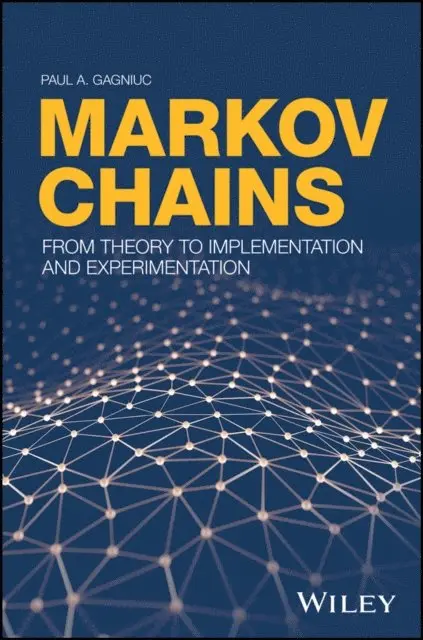
A fascinating and instructive guide to Markov chains for experienced users and newcomers alike
This unique guide to Markov chains approaches the subject along the four convergent lines of mathematics, implementation, simulation, and experimentation. It introduces readers to the art of stochastic modeling, shows how to design computer implementations, and provides extensive worked examples with case studies.
Markov Chains: From Theory to Implementation and Experimentation begins with a general introduction to the history of probability theory in which the author uses quantifiable examples to illustrate how probability theory arrived at the concept of discrete-time and the Markov model from experiments involving independent variables. An introduction to simple stochastic matrices and transition probabilities is followed by a simulation of a two-state Markov chain. The notion of steady state is explored in connection with the long-run distribution behavior of the Markov chain. Predictions based on Markov chains with more than two states are examined, followed by a discussion of the notion of absorbing Markov chains. Also covered in detail are topics relating to the average time spent in a state, various chain configurations, and n-state Markov chain simulations used for verifying experiments involving various diagram configurations.
• Fascinating historical notes shed light on the key ideas that led to the development of the Markov model and its variants
• Various configurations of Markov Chains and their limitations are explored at length
• Numerous examples—from basic to complex—are presented in a comparative manner using a variety of color graphics
• All algorithms presented can be analyzed in either Visual Basic, Java Script, or PHP
• Designed to be useful to professional statisticians as well as readers without extensive knowledge of probability theory
Covering both the theory underlying the Markov model and an array of Markov chain implementations, within a common conceptual framework, Markov Chains: From Theory to Implementation and Experimentation is a stimulating introduction to and a valuable reference for those wishing to deepen their understanding of this extremely valuable statistical tool.
Paul A. Gagniuc, PhD, is Associate Professor at Polytechnic University of Bucharest, Romania. He obtained his MS and his PhD in genetics at the University of Bucharest. Dr. Gagniuc’s work has been published in numerous high profile scientific journals, ranging from the Public Library of Science to BioMed Central and Nature journals. He is the recipient of several awards for exceptional scientific results and a highly active figure in the review process for different scientific areas.
1 740 kr
Läs direkt efter köp
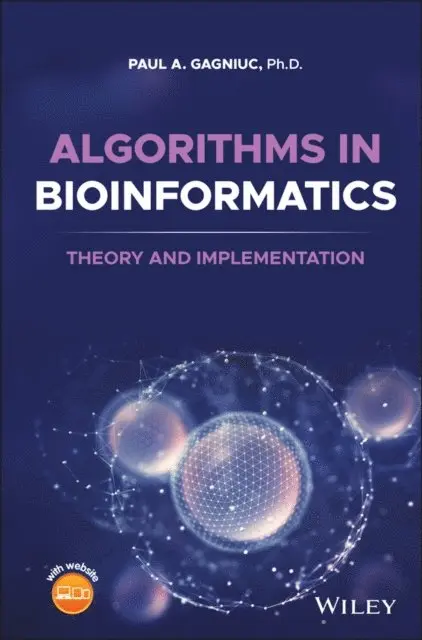
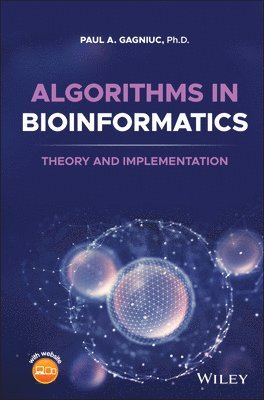
Explore a comprehensive and insightful treatment of the practical application of bioinformatic algorithms in a variety of fields
Algorithms in Bioinformatics: Theory and Implementation delivers a fulsome treatment of some of the main algorithms used to explain biological functions and relationships. It introduces readers to the art of algorithms in a practical manner which is linked with biological theory and interpretation. The book covers many key areas of bioinformatics, including global and local sequence alignment, forced alignment, detection of motifs, Sequence logos, Markov chains or information entropy. Other novel approaches are also described, such as Self-Sequence alignment, Objective Digital Stains (ODSs) or Spectral Forecast and the Discrete Probability Detector (DPD) algorithm.
The text incorporates graphical illustrations to highlight and emphasize the technical details of computational algorithms found within, to further the reader’s understanding and retention of the material. Throughout, the book is written in an accessible and practical manner, showing how algorithms can be implemented and used in JavaScript on Internet Browsers. The author has included more than 120 open-source implementations of the material, as well as 33 ready-to-use presentations. The book contains original material that has been class-tested by the author and numerous cases are examined in a biological and medical context. Readers will also benefit from the inclusion of:
A thorough introduction to biological evolution, including the emergence of life, classifications and some known theories and molecular mechanismsA detailed presentation of new methods, such as Self-sequence alignment, Objective Digital Stains and Spectral ForecastA treatment of sequence alignment, including local sequence alignment, global sequence alignment and forced sequence alignment with full implementationsDiscussions of position-specific weight matrices, including the count, weight, relative frequencies, and log-likelihoods matricesA detailed presentation of the methods related to Markov Chains as well as a description of their implementation in Bioinformatics and adjacent fieldsAn examination of information and entropy, including sequence logos and explanations related to their meaningAn exploration of the current state of bioinformatics, including what is known and what issues are usually avoided in the fieldA chapter on philosophical transactions that allows the reader a broader view of the prediction processNative computer implementations in the context of the field of BioinformaticsExtensive worked examples with detailed case studies that point out the meaning of different resultsPerfect for professionals and researchers in biology, medicine, engineering, and information technology, as well as upper level undergraduate students in these fields, Algorithms in Bioinformatics: Theory and Implementation will also earn a place in the libraries of software engineers who wish to understand how to implement bioinformatic algorithms in their products.
1 527 kr
Skickas inom 5-8 vardagar
1 787 kr
Läs direkt efter köp
Explore a comprehensive and insightful treatment of the practical application of bioinformatic algorithms in a variety of fields
Algorithms in Bioinformatics: Theory and Implementation delivers a fulsome treatment of some of the main algorithms used to explain biological functions and relationships. It introduces readers to the art of algorithms in a practical manner which is linked with biological theory and interpretation. The book covers many key areas of bioinformatics, including global and local sequence alignment, forced alignment, detection of motifs, Sequence logos, Markov chains or information entropy. Other novel approaches are also described, such as Self-Sequence alignment, Objective Digital Stains (ODSs) or Spectral Forecast and the Discrete Probability Detector (DPD) algorithm.
The text incorporates graphical illustrations to highlight and emphasize the technical details of computational algorithms found within, to further the reader’s understanding and retention of the material. Throughout, the book is written in an accessible and practical manner, showing how algorithms can be implemented and used in JavaScript on Internet Browsers. The author has included more than 120 open-source implementations of the material, as well as 33 ready-to-use presentations. The book contains original material that has been class-tested by the author and numerous cases are examined in a biological and medical context. Readers will also benefit from the inclusion of:
A thorough introduction to biological evolution, including the emergence of life, classifications and some known theories and molecular mechanismsA detailed presentation of new methods, such as Self-sequence alignment, Objective Digital Stains and Spectral ForecastA treatment of sequence alignment, including local sequence alignment, global sequence alignment and forced sequence alignment with full implementationsDiscussions of position-specific weight matrices, including the count, weight, relative frequencies, and log-likelihoods matricesA detailed presentation of the methods related to Markov Chains as well as a description of their implementation in Bioinformatics and adjacent fieldsAn examination of information and entropy, including sequence logos and explanations related to their meaningAn exploration of the current state of bioinformatics, including what is known and what issues are usually avoided in the fieldA chapter on philosophical transactions that allows the reader a broader view of the prediction processNative computer implementations in the context of the field of BioinformaticsExtensive worked examples with detailed case studies that point out the meaning of different resultsPerfect for professionals and researchers in biology, medicine, engineering, and information technology, as well as upper level undergraduate students in these fields, Algorithms in Bioinformatics: Theory and Implementation will also earn a place in the libraries of software engineers who wish to understand how to implement bioinformatic algorithms in their products.
1 843 kr
Kommande
783 kr
Skickas inom 10-15 vardagar
734 kr
Läs direkt efter köp
667 kr
Skickas inom 5-8 vardagar
562 kr
Skickas inom 10-15 vardagar
506 kr
Skickas inom 10-15 vardagar
652 kr
Läs direkt efter köp
This book provides a comprehensive guide to Matlab, which stands as the cornerstone of modern education and is the main computer language driving development in science and engineering. The author introduces readers to the rich world of Matlab, taking them on a journey from the fundamentals to advanced topics, equipping them with the knowledge and skills needed to become a proficient Matlab developer or scientist. The book provides a treasure trove of practical examples, meticulously crafted to deepen the reader understanding of Matlab. This comprehensive exploration is designed to cater to novice learners as well as mature developers and scientists, equipping them with the requisite knowledge and competencies to harness the Matlab full potential in their respective projects. From the basics of variable naming and program structure to complex matrix operations, recursion, and object-oriented programming, this book covers it all. This book is part of a series of worksdesigned to present both the examples and their explanations in various computer languages, as close to a mirror version as possible.
506 kr
Skickas inom 10-15 vardagar
450 kr
Skickas inom 5-8 vardagar
551 kr
Läs direkt efter köp
This book provides a comprehensive guide to Python, which stands as the cornerstone of modern programming and is the main computer language driving software prototyping in both industry and research. The author introduces readers to the rich world of Python, taking them on a journey from the fundamentals to advanced topics, equipping them with the knowledge and skills needed to become a proficient Python developer or scientist. The book provides a treasure trove of practical examples, meticulously crafted to deepen the reader understanding of Python. This comprehensive exploration is designed to cater to novice learners as well as mature developers and scientists, equipping them with the requisite knowledge and competencies to harness the Python full potential in their respective projects. From the basics of variable naming and program structure to complex matrix operations, recursion, and object-oriented programming, this book covers it all. This book is part of a seriesof works designed to present both the examples and their explanations in various computer languages, as close to a mirror version as possible.
450 kr
Skickas inom 5-8 vardagar
450 kr
Skickas inom 10-15 vardagar
571 kr
Läs direkt efter köp
This book provides a comprehensive guide to JavaScript, which stands as the cornerstone of modern programming and is the main computer language driving the Internet. The author introduces readers to the rich world of JavaScript, taking them on a journey from the fundamentals to advanced topics, equipping them with the knowledge and skills needed to become a proficient science and engineering oriented JavaScript developer. The book provides a treasure trove of practical examples, meticulously crafted to deepen the reader understanding of JavaScript. This comprehensive exploration is designed to cater to novice learners as well as mature developers and scientists, equipping them with the requisite knowledge and competencies to harness the JavaScript full potential in their respective projects. This book is part of a series of works designed to present both the examples and their explanations in various computer languages, as close to a mirror version as possible.
450 kr
Skickas inom 10-15 vardagar
468 kr
Kommande