Paul E. Ceruzzi – författare
474 kr
Läs direkt efter köp
From the first digital computer to the dot-com crash—a story of individuals, institutions, and the forces that led to a series of dramatic transformations.
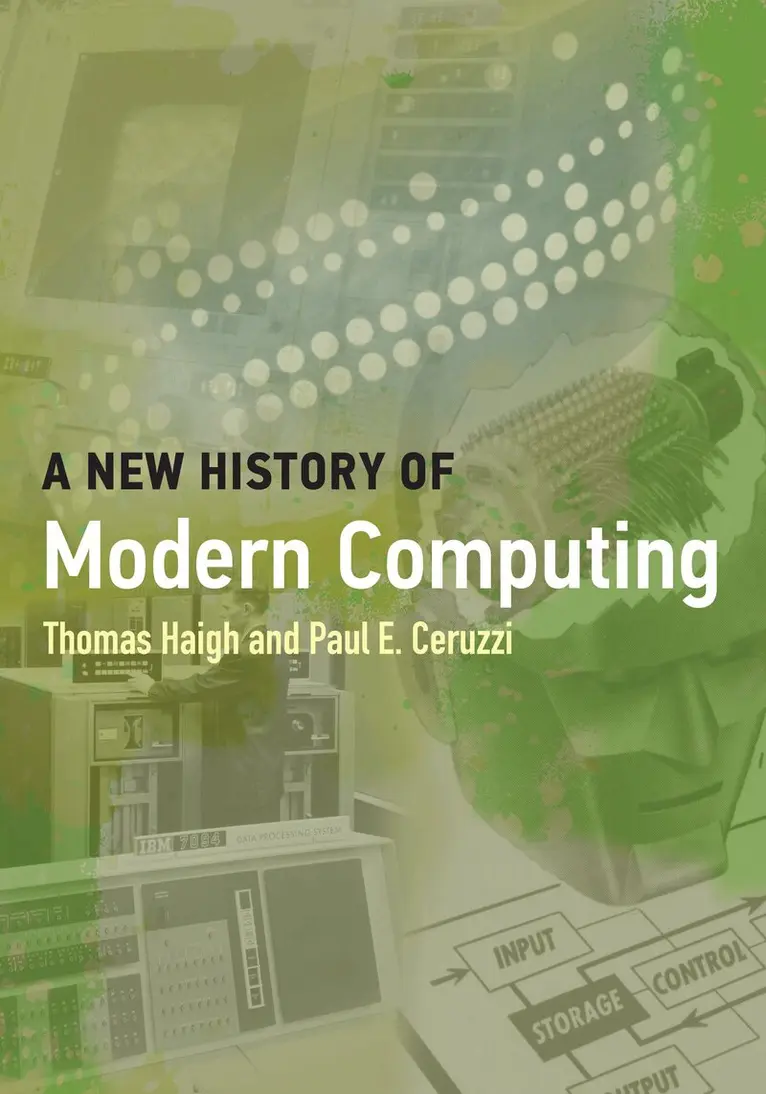
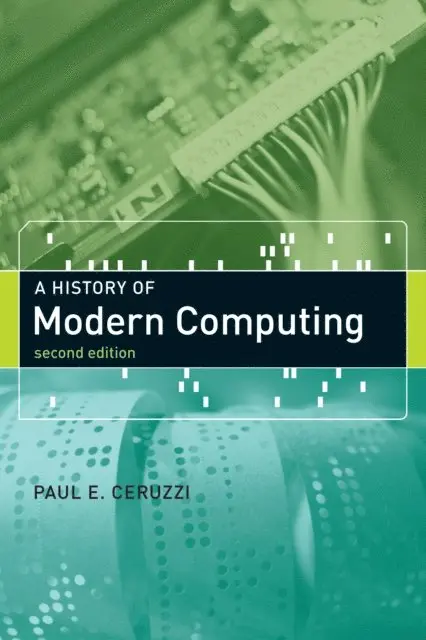
This engaging history covers modern computing from the development of the first electronic digital computer through the dot-com crash. The author concentrates on five key moments of transition: the transformation of the computer in the late 1940s from a specialized scientific instrument to a commercial product; the emergence of small systems in the late 1960s; the beginning of personal computing in the 1970s; the spread of networking after 1985; and, in a chapter written for this edition, the period 1995-2001. The new material focuses on the Microsoft antitrust suit, the rise and fall of the dot-coms, and the advent of open source software, particularly Linux. Within the chronological narrative, the book traces several overlapping threads: the evolution of the computer''s internal design; the effect of economic trends and the Cold War; the long-term role of IBM as a player and as a target for upstart entrepreneurs; the growth of software from a hidden element to a major character in the story of computing; and the recurring issue of the place of information and computing in a democratic society. The focus is on the United States (though Europe and Japan enter the story at crucial points), on computing per se rather than on applications such as artificial intelligence, and on systems that were sold commercially and installed in quantities.
199 kr
Läs direkt efter köp
A compact and accessible history, from punch cards and calculators to UNIVAC and ENIAC, the personal computer, Silicon Valley, and the Internet.
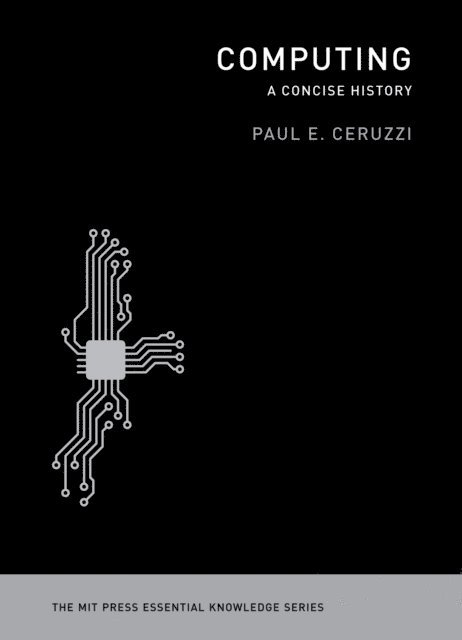
The history of computing could be told as the story of hardware and software, or the story of the Internet, or the story of “smart” hand-held devices, with subplots involving IBM, Microsoft, Apple, Facebook, and Twitter. In this concise and accessible account of the invention and development of digital technology, computer historian Paul Ceruzzi offers a broader and more useful perspective. He identifies four major threads that run throughout all of computing''s technological development: digitization—the coding of information, computation, and control in binary form, ones and zeros; the convergence of multiple streams of techniques, devices, and machines, yielding more than the sum of their parts; the steady advance of electronic technology, as characterized famously by “Moore''s Law”; and the human-machine interface.
Ceruzzi guides us through computing history, telling how a Bell Labs mathematician coined the word “digital” in 1942 (to describe a high-speed method of calculating used in anti-aircraft devices), and recounting the development of the punch card (for use in the 1890 U.S. Census). He describes the ENIAC, built for scientific and military applications; the UNIVAC, the first general purpose computer; and ARPANET, the Internet''s precursor. Ceruzzi''s account traces the world-changing evolution of the computer from a room-size ensemble of machinery to a “minicomputer” to a desktop computer to a pocket-sized smart phone. He describes the development of the silicon chip, which could store ever-increasing amounts of data and enabled ever-decreasing device size. He visits that hotbed of innovation, Silicon Valley, and brings the story up to the present with the Internet, the World Wide Web, and social networking.
292 kr
Läs direkt efter köp
A concise history of GPS, from its military origins to its commercial applications and ubiquity in everyday life.
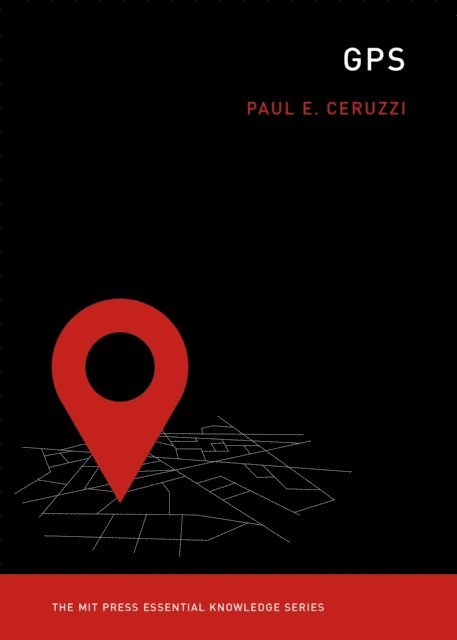
GPS is ubiquitous in everyday life. GPS mapping is standard equipment in many new cars and geolocation services are embedded in smart phones. GPS makes Uber and Lyft possible; driverless cars won''t be able to drive without it. In this volume in the MIT Press Essential Knowledge series, Paul Ceruzzi offers a concise history of GPS, explaining how a once-obscure space technology became an invisible piece of our infrastructure, as essential to modern life as electric power or clean water.
GPS relays precise time and positioning information from orbiting satellites to receivers on the ground, at sea, and in the air. It operates worldwide, and its basic signals are free, although private companies can commodify the data provided. Ceruzzi recounts the origins of GPS and its predecessor technologies, including early aircraft navigation systems and satellites. He describes the invention of GPS as a space technology in the post-Apollo, pre-Space Shuttle years and its first military and commercial uses. Ceruzzi explains how the convergence of three major technological developments—the microprocessor, the Internet, and cellular telephony—enabled the development and application of GPS technology. Recognizing the importance of satellite positioning systems in a shifting geopolitical landscape—and perhaps doubting U.S. assurances of perpetual GPS availability—other countries are now building or have already developed their own systems, and Ceruzzi reports on these efforts in the European Union, Russia, India, China, and Japan.
499 kr
Läs direkt efter köp
667 kr
Skickas inom 3-6 vardagar
175 kr
Skickas
572 kr
Skickas inom 5-8 vardagar
481 kr
Skickas
332 kr
Läs direkt efter köp
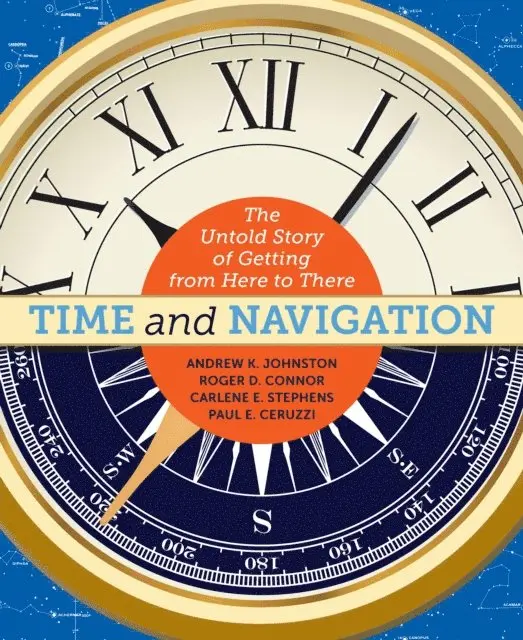
If you want to know where you are, you need a good clock. The surprising connection between time and place is explored in Time and Navigation: The Untold Story of Getting from Here to There, the companion book to the National Air and Space Museum exhibition of the same name.Today we use smartphones and GPS, but navigating has not always been so easy. The oldest "clock" is Earth itself, and the oldest means of keeping time came from observing changes in the sky. Early mariners like the Vikings accomplished amazing feats of navigation without using clocks at all. Pioneering seafarers in the Age of Exploration used dead reckoning and celestial navigation; later innovations such as sextants and marine chronometers honed these techniques by measuring latitude and longitude. When explorers turned their sights to the skies, they built on what had been learned at sea. For example, Charles Lindbergh used a bubble sextant on his record-breaking flights. World War II led to the development of new flight technologies, notably radio navigation, since celestial navigation was not suited for all-weather military operations. These forms of navigation were extended and enhanced when explorers began guiding spacecraft into space and across the solar system. Astronauts combined celestial navigation technology with radio transmissions. The development of the atomic clock revolutionized space flight because it could measure billionths of a second, thereby allowing mission teams to navigate more accurately. Scientists and engineers applied these technologies to navigation on earth to develop space-based time and navigation services such as GPS that is used every day by people from all walks of life.While the history of navigation is one of constant change and innovation, it is also one of remarkable continuity. Time and Navigation tells the story of navigation to help us understand where we have been and how we got there so that we can understand where we are going.
214 kr
Skickas inom 3-6 vardagar
157 kr
Tillfälligt slut
609 kr
Tillfälligt slut
150 kr
Tillfälligt slut