Thomas Haigh – författare
Visar alla böcker från författaren Thomas Haigh. Handla med fri frakt och snabb leverans.
8 produkter
New History of Modern Computing
Av Thomas Haigh, Paul E. Ceruzzi
Häftad, 2021
495 kr
Lägg i varukorg
How the computer became universal. Over the past fifty years, the computer has been transformed from a hulking scientific supertool and data processing workhorse, remote from the experiences of ordinary people, to a diverse family of devices that billions rely on to play games, shop, stream music …
ENIAC in Action
Av Crispin Rope, Mark Priestley m. fl.
E-bok, 2016
310 kr
Lägg i varukorg
The history of the first programmable electronic computer, from its conception, construction, and use to its afterlife as a part of computing folklore. Conceived in 1943, completed in 1945, and decommissioned in 1955, ENIAC (the Electronic Numerical Integrator and Computer) was the first …
Histories of Computing
Av Michael Sean Mahoney, Thomas Haigh
Inbunden, 2011
648 kr
Lägg i varukorg
Computer technology is pervasive in the modern world, its role ever more important as it becomes embedded in a myriad of physical systems and disciplinary ways of thinking. The late Michael Sean Mahoney was a pioneer scholar of the history of computing, one of the first established historians of …
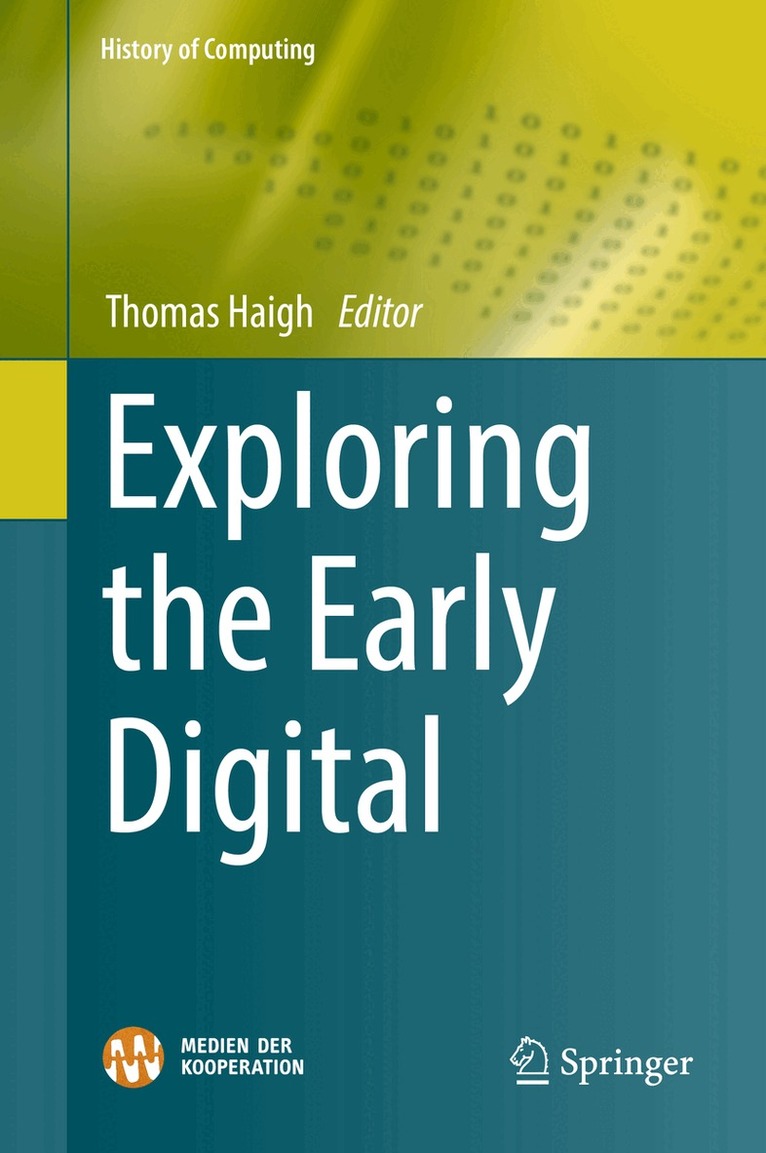
Exploring the Early Digital
Av Thomas Haigh
Inbunden, 2019
442 kr
Lägg i varukorg
Changes in the present challenge us to reinterpret the past, but historians have not yet come to grips with the convergence of computing, media, and communications technology. Today these things are inextricably intertwined, in technologies such as the smartphone and internet, in convergent …
Exploring the Early Digital
Av Thomas Haigh
E-bok, 2019
553 kr
Lägg i varukorg
Changes in the present challenge us to reinterpret the past, but historians have not yet come to grips with the convergence of computing, media, and communications technology. Today these things are inextricably intertwined, in technologies such as the smartphone and internet, in convergent …
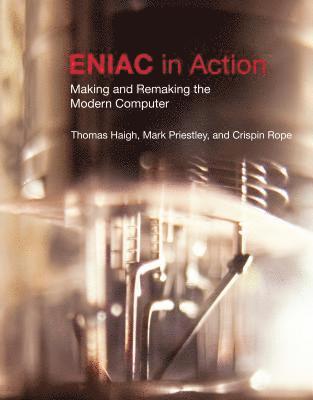
ENIAC in Action
Making and Remaking the Modern Computer
Av Thomas Haigh, Mark Priestley m. fl.
Inbunden, 2016
3,0 utav 5 stjärnor. Totalt antal röster: (1)
349 kr
Tillfälligt slut