Paul J. Dyson - Böcker
Visar alla böcker från författaren Paul J. Dyson. Handla med fri frakt och snabb leverans.
5 produkter
5 produkter
928 kr
Skickas inom 10-15 vardagar
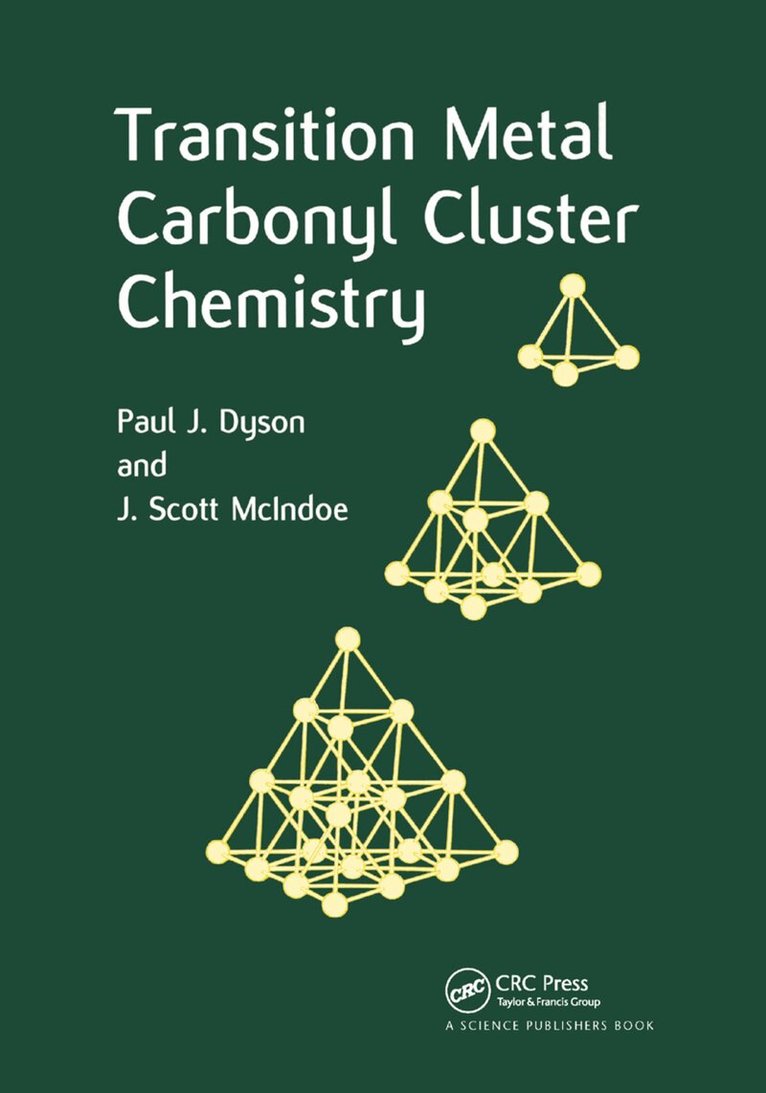
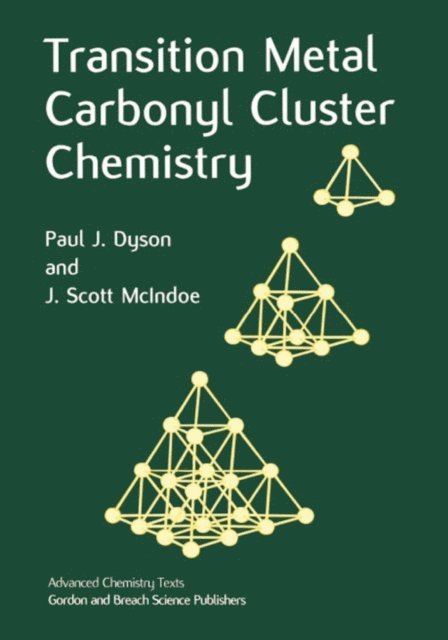
Transition metal carbonyl clusters (TMCCs) continue to inspire great interest in chemical research, as much for their fascinating structures as for potential industrial applications conferred by their unique properties. This highly accessible book introduces the bonding, structure, spectroscopic properties, and characterization of clusters, and then explores their synthesis, reactivity, reaction mechanisms and use in organic synthesis and catalysis.Transition Metal Carbonyl Cluster Chemistry describes models and rules that correlate cluster structure with electron count, which are then applied in worked examples. Subsequent chapters explain how bonding relates to molecular structure, demonstrate the use of spectroscopic techniques such as NMR, IR and MS in cluster chemistry, and outline the factors contributing to the stability, dynamics and reactivity of clusters. The second part of this book discusses the synthesis and applications of TMCCs. It emphasizes the differences between the reactivities of clusters vs. mononuclear metal complexes, contingent to the availability of multiple-bonding sites and heterosite reactivity. The final chapters discuss reactions in which clusters act as homogeneous catalysts; including discussion on the use of solid and biphasic liquid-liquid supported clusters in heterogeneous catalysts. A useful reference for those commencing further research or post-graduate study on metal carbonyl clusters and advanced organometallic chemistry, this book is also a cornerstone addition to academic and libraries as well as private collections.
1 302 kr
Skickas inom 5-8 vardagar
At a time when environmental concerns are increasing, it's important that chemical processes are as environmentally friendly as possible. This book outlines various methods for producing inorganic and organic solvents without the use of traditional solvents that can have detrimental effects on the environment. This is the first book to give extensive and exclusive coverage to the topicIncludes important environmental issuesThis book will appeal to anyone with an interest in organic synthesis; reaction chemistry; catalysis; and process development, and to undergraduate and graduate students of organic chemistry; catalysis; green chemistry; clean technology and environmental chemistry courses.
1 787 kr
Skickas inom 10-15 vardagar
Metal Catalysed Reactions in Ionic Liquids is the first non-edited book on the subject of metal catalyzed reactions in ionic liquids to cover the literature from its origins until early 2005. Following a general introduction to the field of biphasic/multiphasic catalysis, the book moves on to describe the synthesis, the functionalisation, and fundamental properties of ionic liquids relevant to catalysis. It then analyses the catalysed reactions according to their type, encompassing hydrogenation, hydroformylation, oxidation, C-C coupling reactions, metathesis, dimerisation, polymerisation and more. Trends, generalisations, advantages and disadvantages of ionic liquids for specific reaction types are also examined as well as specific processes such as supported ionic liquid phase catalysis, continuous processes using CO2 extraction and nanoparticle catalysis. Metal Catalysed Reactions in Ionic Liquids is of interest to those working in catalysis/green chemistry, in particular to advanced level undergraduate and graduate students and researchers in bi- or multiphasic catalysis using ionic liquids.
1 787 kr
Skickas inom 10-15 vardagar
This book represents first non-edited book on the subject of metal catalysed reactions in ionic liquids and covers the literature from its origins until early 2005. Following a general introduction to the field of biphasic/mutliphasic catalysis, the synthesis, functionalisation and fundamental properties of ionic liquids relevant to catalysis are described. In the ensuing chapters catalysed reactions are discussed according to their type, encompassing hydrogenation, hydroformylation, oxidation, C-C coupling reactions, metathesis, dimerisation, polymerisation and more. Trends, generalisations, advantages and disadvantages of ionic liquids for specific reaction types are discussed. Specific processes such as supported ionic liquid phase catalysis, continuous processes using CO2 extraction and nanoparticle catalysis are covered. The book should be of interest to all those working in catalysis/green chemistry, in particular, to advanced level undergraduate and graduate students and all those researching or contemplating research in bi- or multiphasic catalysis using ionic liquids.
2 557 kr
Skickas inom 10-15 vardagar
Transition metal carbonyl clusters (TMCCs) continue to inspire great interest in chemical research, as much for their fascinating structures as for potential industrial applications conferred by their unique properties. This highly accessible book introduces the bonding, structure, spectroscopic properties, and characterization of clusters, and then explores their synthesis, reactivity, reaction mechanisms and use in organic synthesis and catalysis.Transition Metal Carbonyl Cluster Chemistry describes models and rules that correlate cluster structure with electron count, which are then applied in worked examples. Subsequent chapters explain how bonding relates to molecular structure, demonstrate the use of spectroscopic techniques such as NMR, IR and MS in cluster chemistry, and outline the factors contributing to the stability, dynamics and reactivity of clusters. The second part of this book discusses the synthesis and applications of TMCCs. It emphasizes the differences between the reactivities of clusters vs. mononuclear metal complexes, contingent to the availability of multiple-bonding sites and heterosite reactivity. The final chapters discuss reactions in which clusters act as homogeneous catalysts; including discussion on the use of solid and biphasic liquid-liquid supported clusters in heterogeneous catalysts. A useful reference for those commencing further research or post-graduate study on metal carbonyl clusters and advanced organometallic chemistry, this book is also a cornerstone addition to academic and libraries as well as private collections.