Paul Lakeland - Böcker
Visar alla böcker från författaren Paul Lakeland. Handla med fri frakt och snabb leverans.
8 produkter
8 produkter
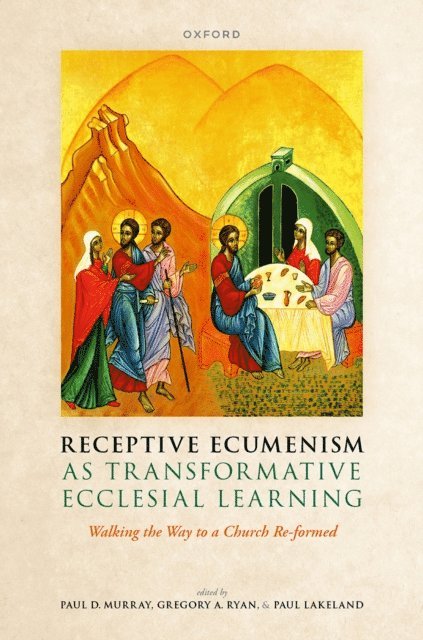
Receptive Ecumenism as Transformative Ecclesial Learning
Walking the Way to a Church Re-formed
Inbunden, Engelska, 2022
2 040 kr
Skickas inom 5-8 vardagar
Receptive Ecumenism asks not what other churches can learn from us, but 'what can we learn and receive with integrity from our ecclesial others?' Since the publication of Receptive Ecumenism and the Call to Catholic Learning: Exploring a Way for Contemporary Ecumenism (OUP, 2008), this fresh ecumenical strategy has been adopted, critiqued, and developed in different Christian traditions, and in local, national, and international settings, including the most recent bilateral dialogue of the Anglican-Roman Catholic International Commission (ARCIC III). The thirty-eight chapters in this new volume, by academics, church leaders, and ecumenical practitioners who have adopted and adapted Receptive Ecumenism in various ecclesial and cultural contexts, show how Receptive Ecumenism has grown and matured.Part One demonstrates how Receptive Ecumenism itself is capable of being received with integrity into very different ecclesiologies and ecclesial traditions. In Part Two, this approach to transformative ecumenical learning is applied to some recurrent ecclesial problems, such as the understanding and practice of ministry, revealing new insights and practical opportunities. Part Three examines the potential and challenges for Receptive Ecumenism in different international settings. Part Four draws on scripture, hermeneutics, and pneumatology to offer critical reflection on how Receptive Ecumenism itself implements transformative ecclesial learning.Addressing the 70th Anniversary of the World Council of Churches, Archbishop Justin Welby, said that 'One of the most important of recent ecumenical developments has been the concept of "Receptive Ecumenism"'. This volume provides an indispensable point of reference for understanding and applying that concept in the life of the Christian churches today.
185 kr
Skickas inom 5-8 vardagar
360 kr
Skickas inom 3-6 vardagar
Swiss theologian Hans Küng was the most controversial of the European Catholic theologians who emerged at the time of Vatican II. He gained notoriety for challenging papal infallibility, but he also wrote at length on other topics, including justification, the Christian life, priesthood, global ethics, and interreligious dialogue.This collection of essays explores his theological legacy. Given Küng’s mixed reputation and broad range of topics, a wide range of voices, including Susan Ross, Francis X. Clooney, Roger Haight, and Mary Ann Hinsdale, among others, provides a revaluation of his impact on the church and its teachings by examining his writings, influence, and significance.Paul Lakeland is the Emeritus Aloysius P. Kelley, SJ, Professor of Catholic Studies and was the founding director of Fairfield University’s Center for Catholic Studies.†
314 kr
Skickas inom 3-6 vardagar
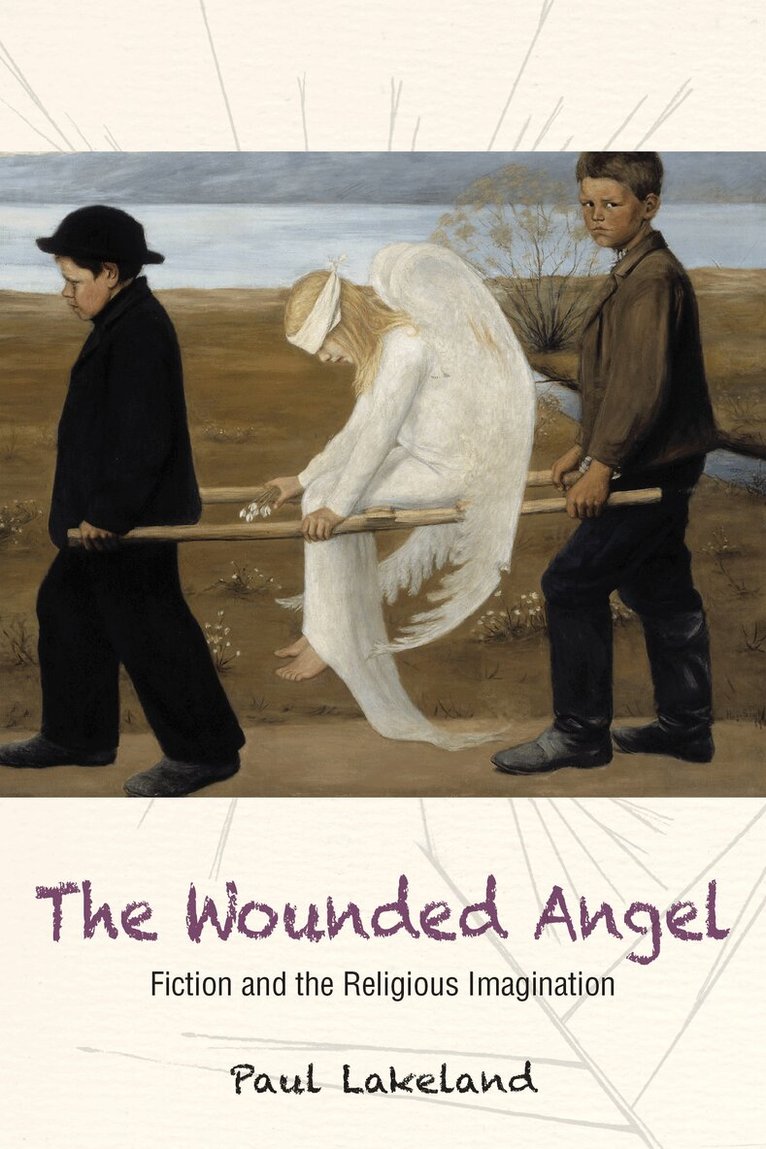
In this unique book, readers are taken on a journey to explore the role of the imagination in the face of mystery, whether it be the mystery of God, whose full reality lies beyond our earthly horizons, or the deepest mysteries of life hinted at in the work of fiction. By attending to a series of novels, Paul Lakeland proposes serious fiction as an antidote to the failure of the religious imagination today and shows how literature might lead the secular mind at least to the threshold of mystery.
263 kr
Skickas inom 5-8 vardagar
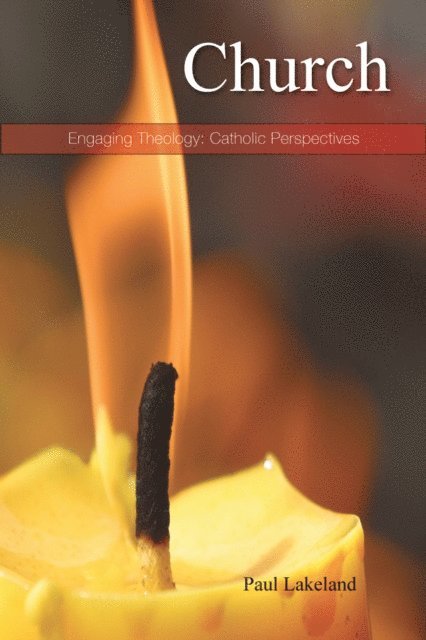
Drawing on the wisdom and teaching experience of highly respected theologians, the Engaging Theology series builds a firm foundation for graduate study and other ministry formation programs. Each of the volumes 'Scripture, Jesus, God, Anthropology, and Church 'is concerned with retrieving, carefully evaluating, and constructively interpreting the Christian tradition. Comprehensive in scope and accessibly written, these volumes, used together or independently, will stimulate rich theological reflection and discussion. More important, the series will create and sustain the passion of the next generation of theologians and church leaders.Paul Lakeland's recent award-winning books on the place of the laity in the contemporary Roman Catholic Church have prepared him well to take on this ecclesiology from below." While paying close attention to the classical "marks of the Church, "Lakeland's focus is on what we can learn about the nature of the Church as living communion by examining the values and practices of ordinary believers. Following the advice of Bernard Lonergan, Lakeland adopts a resolutely inductive approach to ecclesial reflection. He explores ten questions that the Church must address, both those that affect the internal workings of the faith community and those that have to do with its relationships to other groups, religious and secular. Finally, he offers a constructive proposal for a contextual ecclesiology of the U.S. Catholic Church that utilizes the images of hospice, pilgrim, immigrant, and pioneer.
368 kr
Skickas inom 10-15 vardagar
The present crisis in the American Catholic Church stems from a two-fold source: lay people are powerless while the bishops are accountable to no one but the pope and the curia. While the number of lay people exercising ministries in the Church has grown enormously over the past thirty years (largely due to the shortage of priests), there has been little or no theological reflection till now on the genuine role of the laity. It is only from such reflection that structural reform of the Church will come. The first half of The Liberation of the Laity concentrates on the fortunes of the laity, theologically speaking, between Vatican I (1870) and Vatican II (1962 - 65). It examines the growth of the 'new theology' in France in the 1940s and 1950s, and shows how in the work of one of its leading practitioners, Yves Congar, much of the vision of the laity expressed at Vatican II was anticipated. Seeing the years after the council as decades of missed opportunity to recognize the role of the laity, the book turns to a series of constructive proposals for the liberation of the laity, and thus the liberation of the Church.It discusses the importance of 'secularity,' the need for a 'lay liberation theology,' and the centrality of the struggles against global capitalism in the mission of the Church. It ends with a chapter envisioning dramatic changes in ministry and governing structures, in which accountability will be central, 'servant leaders' will include women and married people, and both ecclesiastical careerism and the College of Cardinals will be history.
368 kr
Skickas inom 10-15 vardagar
Try to define a layperson without using the word not: cannot preach or say mass, is not a priest, is not in a position of leadership in the church. This generally negative or passive understanding of the laity was epitomized in a statement of Pope Pius X: "The one duty of the multitude [i.e., the laity] is to allow themselves to be led and, like a docile fl ock, to follow the Pastors." The Second Vatican Council, with its emphasis on the priesthood of all believers rooted in baptism, changed all that. Yet, writes Paul Lakeland, "many of our bishops and not a few of the lay members of the church are attracted to a dangerously incomplete vision of Catholicism...one that sidesteps the major themes and key insights of Vatican II." In Catholicism at the Crossroads, he teases out themes fi rst developed in a much more formal way in his prize-winning The Liberation of the Laity. In his new book he is "talking to ordinary Catholics in language that requires no special expertise in theology and does not necessitate constant reference to a dictionary."Baptism, says Lakeland, not priestly ordination, is the basis for all mission and ministry, and the mission of those baptized into Christ is to be the sacrament of God's love in a world rife with violence and brutal inequity. The specifi c mission of the laity is to the world, whereas the mission of the clergy is to the household of the faith. Yet lay people can't leave "church business" exclusively to the clergy, and the clergy can't leave the church's "worldly mission" exclusively to the laity. The key to resolving these overlapping responsibilities is by becoming an adult church, an open church in an open society. In pursuing this goal, Lakeland develops "ten steps toward a more adult church."
376 kr
Tillfälligt slut
The Politics of Salvation takes a radical stance: it focuses on the significance of the state in the Hegelian system when it is viewed as inspired and motivated by the Christian notion of God. The book thus makes connections between Hegel's political philosophy and his explicit appropriation of Christianity's incarnational mode of thinking. In unfolding the implications of this position, Lakeland shows how Hegel's thought can offer the basis for a non-dualistic account of the human being as religious and political. This conjunction allows for a theology which sees politics as the arena of salvation providing a practical religious outlook relevant to the contemporary world and, in particular, to the commitments of Latin America's liberation theology.The author writes: "If Hegel can be understood (as he frequently expressed himself) as expressing conceptually in speculative philosophy what religion expresses in the form of image and representation, then the covenantal demands of justice and freedom from oppression, the Christian struggle for a free and authentic humanity, and Christian hope in the kingdom of God, will all find their counterpart in the Hegelian system." Thus this Hegelian political theology can "illuminate the connections between the expectation of salvation and the struggle for liberation."