Paul L.G. Vlek – författare
Visar alla böcker från författaren Paul L.G. Vlek. Handla med fri frakt och snabb leverans.
17 produkter
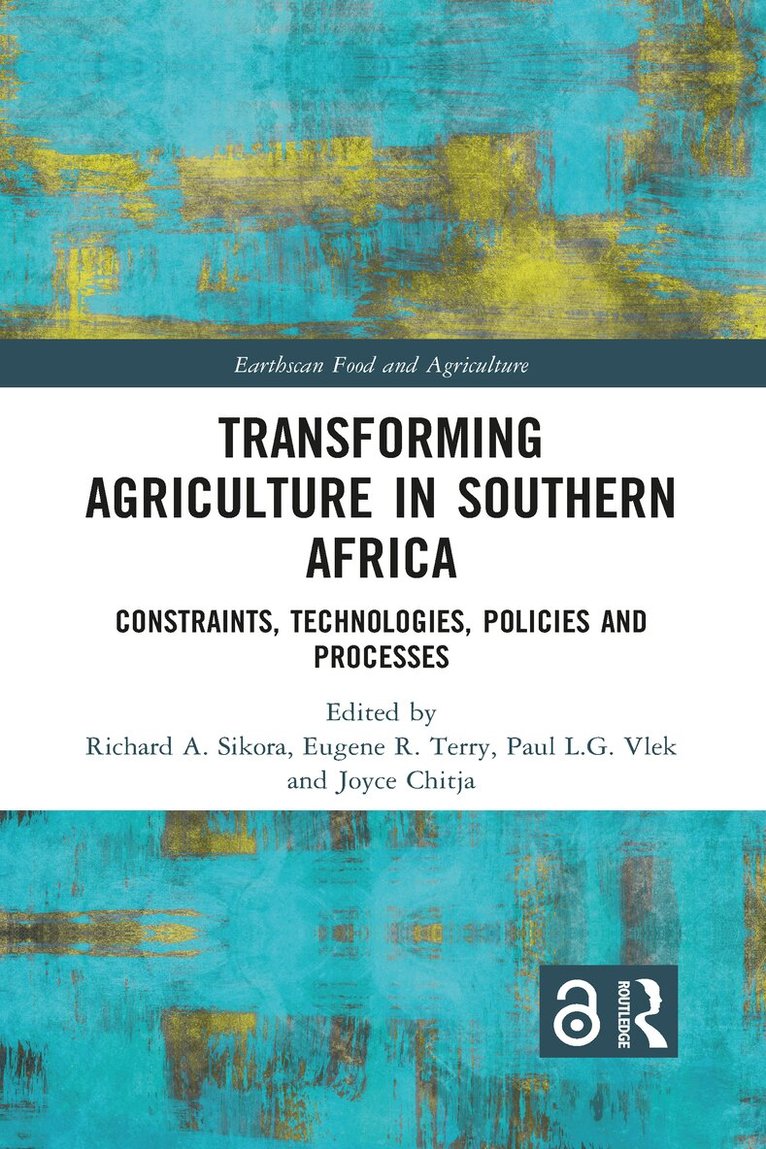
Transforming Agriculture in Southern Africa
Constraints, Technologies, Policies and Processes
Av Richard A. Sikora, Eugene R. Terry m. fl.
Häftad, 2021
691 kr
Lägg i varukorg
This book provides a synthesis of the key issues and challenges facing agriculture and food production in Southern Africa. Southern Africa is facing numerous challenges from diverse issues such as agricultural transformations, growing populations, urbanization and climate change. These challenges …
Transforming Agriculture in Southern Africa
Constraints, Technologies, Policies and Processes
Av Richard A. Sikora, Eugene R. Terry m. fl.
Inbunden, 2019
2510 kr
Lägg i varukorg
This book provides a synthesis of the key issues and challenges facing agriculture and food production in Southern Africa. Southern Africa is facing numerous challenges from diverse issues such as agricultural transformations, growing populations, urbanization and climate change. These challenges …
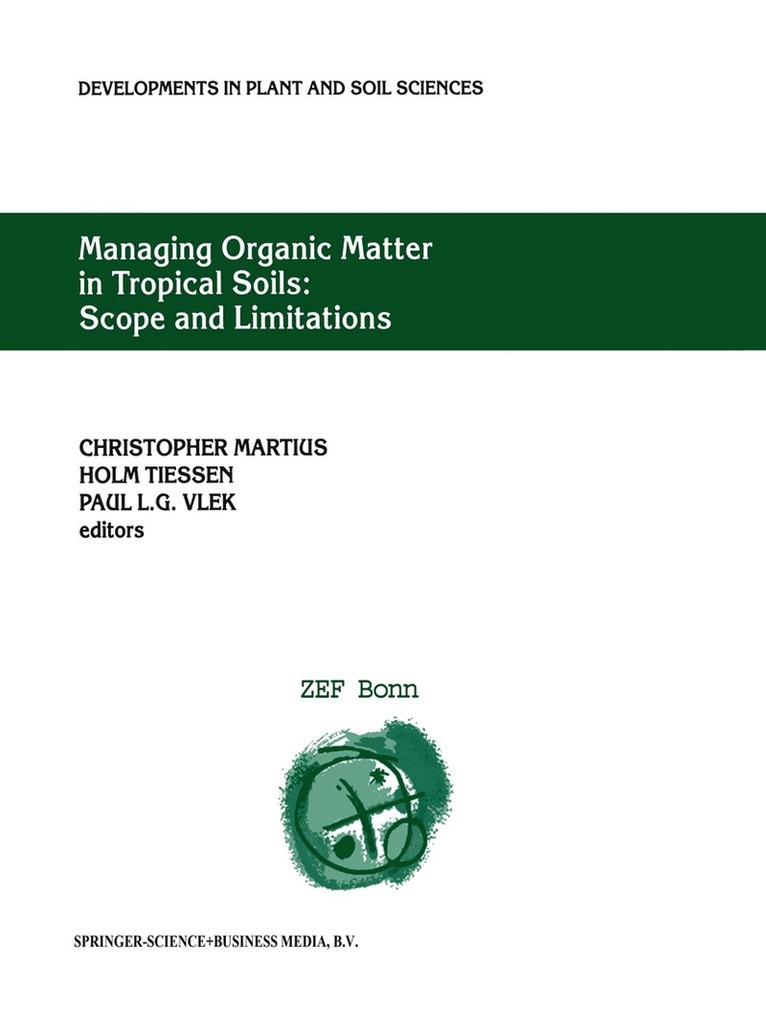
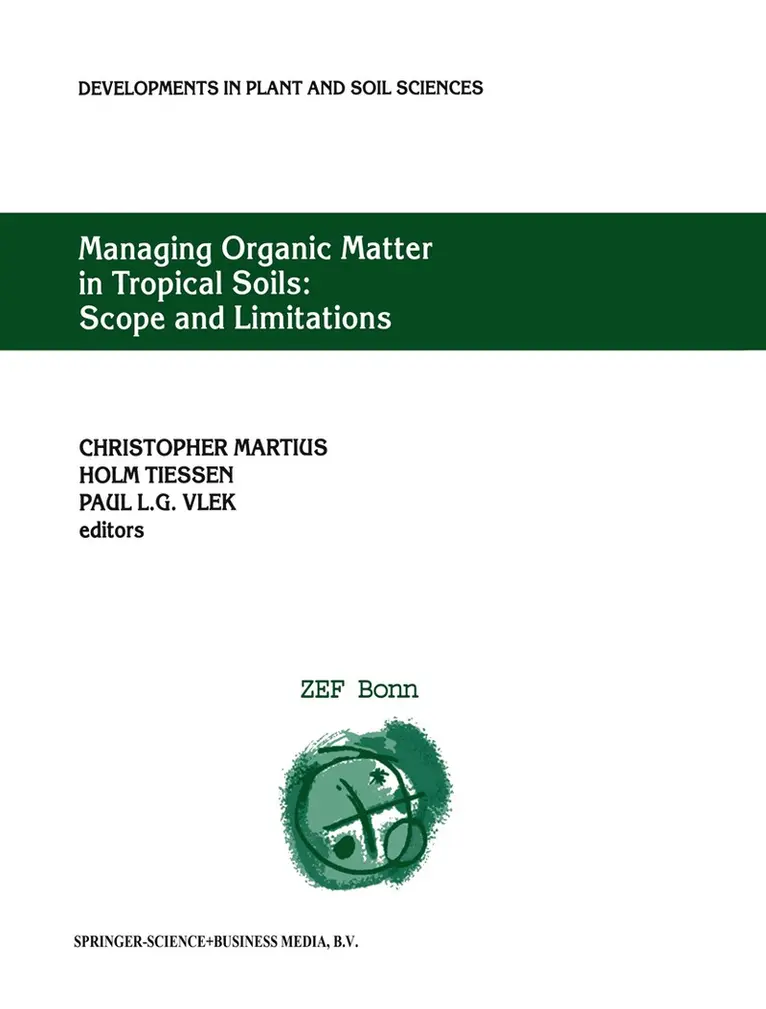
Managing Organic Matter in Tropical Soils: Scope and Limitations
Proceedings of a Workshop organized by the Center for Development Research at the University of Bonn (ZEF Bonn) — Germany, 7–10 June, 1999
Av Christopher Martius, Holm Tiessen m. fl.
Inbunden, 2002
1093 kr
Lägg i varukorg
Soil organic matter is a reservoir for plant nutrients, it provides water-holding capacity, stabilizes soil structure against compaction and erosion, and thus determines soil productivity. All agriculture to some degree depends on soil organic matter. It has long been known that soil organic matter …
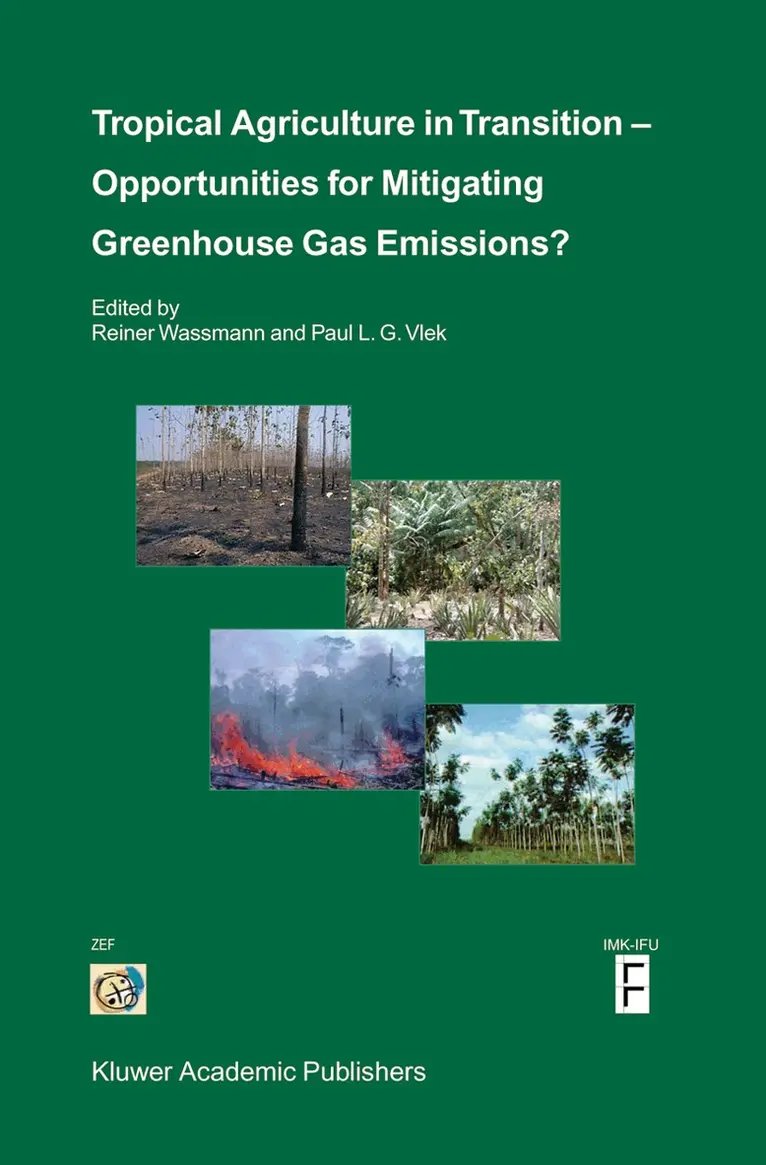
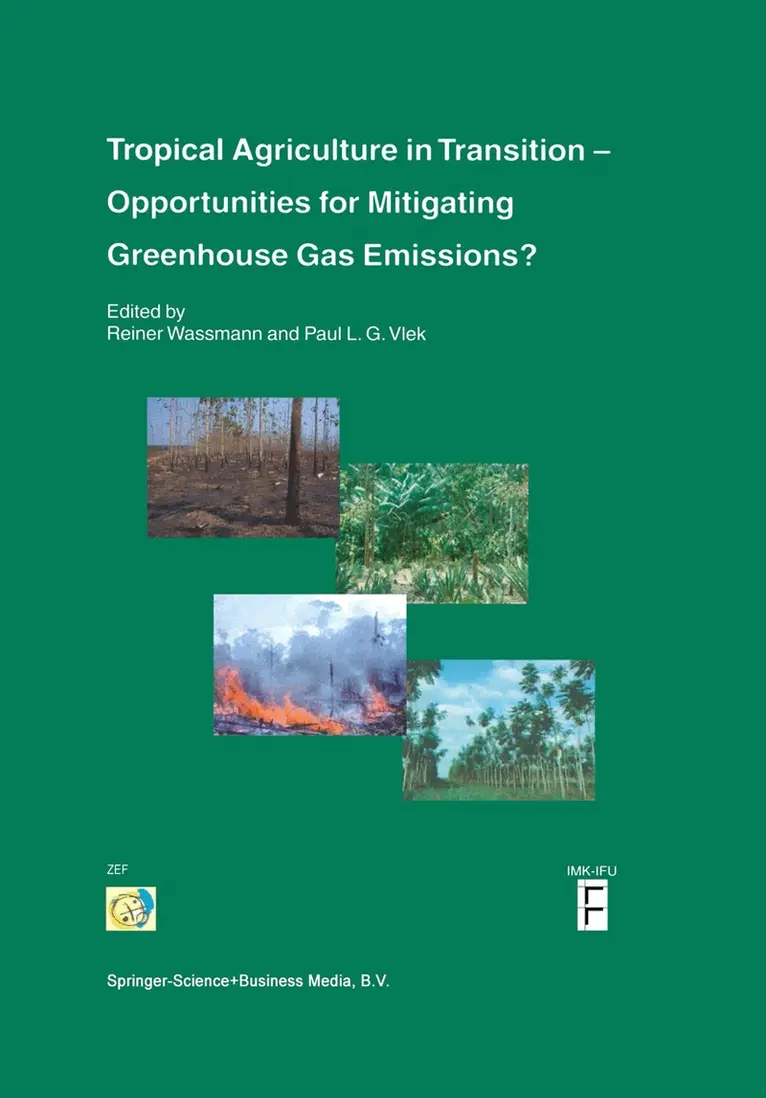
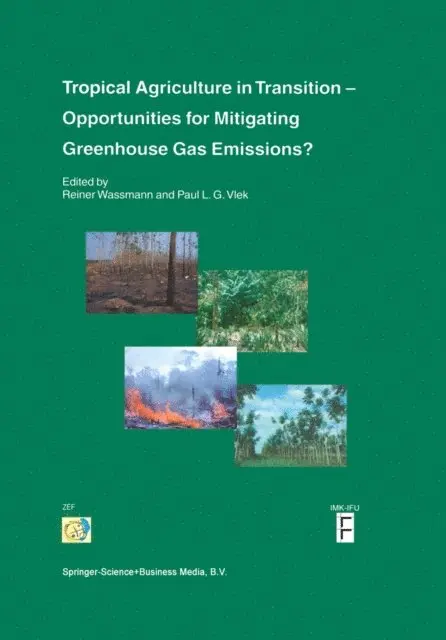
Tropical Agriculture in Transition — Opportunities for Mitigating Greenhouse Gas Emissions?
Av Reiner Wassmann, Paul L.G. Vlek
Inbunden, 2003
550 kr
Lägg i varukorg
Production from tropical agricultural systems will need to increase to satisfy the rising food demand of an increasing population coupled with changes in consumption patterns. At the same time, the agricultural sector is a significant source of greenhouse gases (GHG) in many developing countries, …
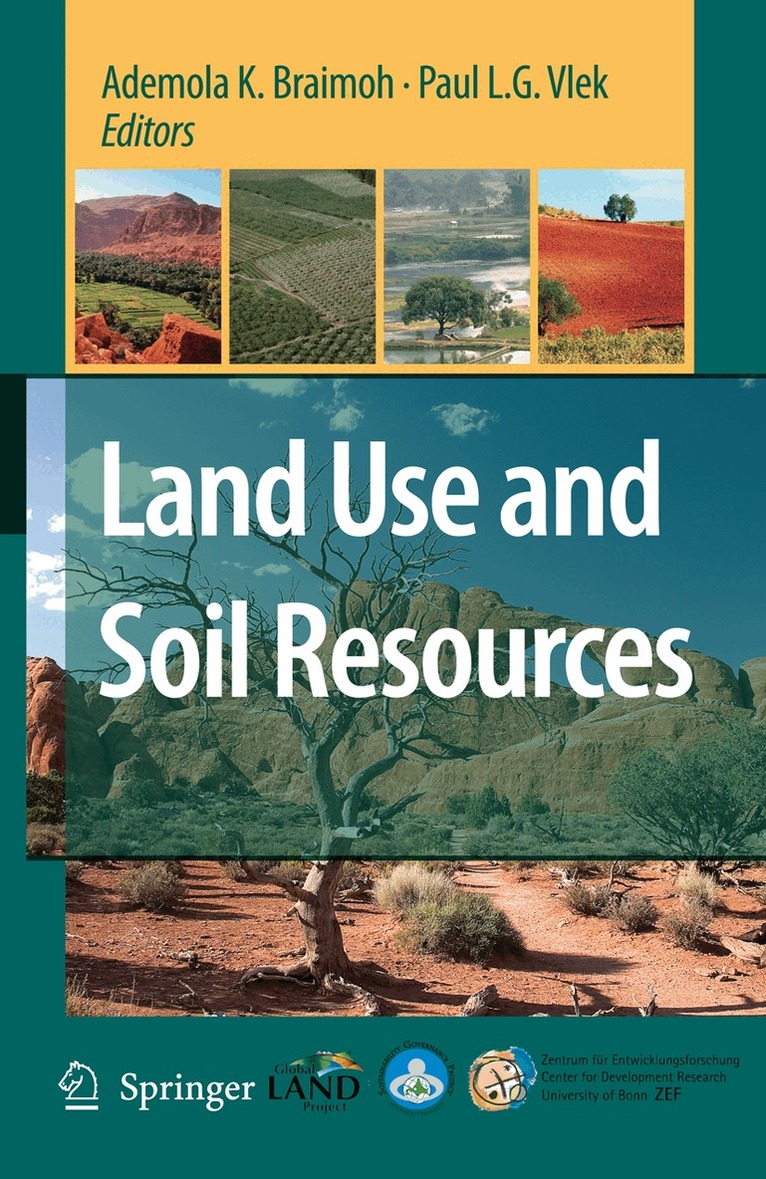
Land Use and Soil Resources
Av Ademola K. Braimoh, Paul L.G. Vlek
Inbunden, 2008
1636 kr
Lägg i varukorg
Land-use change is one of the main drivers of many environmental change processes. It influences the basic resources of land use, including the soil. Its impact on soil often occurs so creepingly that land managers hardly contemplate initiating ameliorative or counterbalance measures. Poor land …
Land Use and Soil Resources
Av Paul L.G. Vlek, Ademola K. Braimoh
E-bok, 2008
2111 kr
Lägg i varukorg
Land-use change is one of the main drivers of many environmental change processes. It influences the basic resources of land use, including the soil. Its impact on soil often occurs so creepingly that land managers hardly contemplate initiating ameliorative or counterbalance measures. Poor land …
Micronutrients in Tropical Food Crop Production
Inbunden, 1985
2179 kr
Lägg i varukorg
The mission of the International Fertilizer Development Center is to increase food production through the improvement of fertilizers and fertilizer practices for the developing countries with special emphasis on tropical and subtropical agriculture. The principal aim is to ensure that fertilizer …
Management of Nitrogen and Phosphorus Fertilizers in Sub-Saharan Africa
Proceedings of a symposium, held in Lome, Togo, March 25–28, 1985
Av Uzo M. Mokwunye, Paul L.G. Vlek
Inbunden, 1986
1636 kr
Lägg i varukorg
Food security, one of the basic human rights, seems to be ever eluding the people of sub-Saharan Africa. With each occurrence of crop failure, agriculturalists around the world reawaken to the challenge of ensuring sta ble, adequate food production in the tropical African environments. The …
Managing Organic Matter in Tropical Soils: Scope and Limitations
Proceedings of a Workshop organized by the Center for Development Research at the University of Bonn (ZEF Bonn) — Germany, 7–10 June, 1999
Av Christopher Martius, Holm Tiessen m. fl.
Häftad, 2011
1093 kr
Lägg i varukorg
Soil organic matter is a reservoir for plant nutrients, provides water-holding capacity, stabilizes soil structure against compaction and erosion, and thus determines soil productivity. All agriculture to some degree depends on soil organic matter. It has long been known that soil organic matter …
Tropical Agriculture in Transition — Opportunities for Mitigating Greenhouse Gas Emissions?
Av Reiner Wassmann, Paul L.G. Vlek
Häftad, 2010
550 kr
Lägg i varukorg
Production from tropical agricultural systems will need to increase to satisfy the rising food demand of an increasing population coupled with changes in consumption patterns. At the same time, the agricultural sector is a significant source of greenhouse gases (GHG) in many developing countries, …
Land Use and Soil Resources
Av Ademola K. Braimoh, Paul L.G. Vlek
Häftad, 2010
1636 kr
Lägg i varukorg
Land-use change is one of the main drivers of many environmental change processes. It influences the basic resources of land use, including the soil. Its impact on soil often occurs so creepingly that land managers hardly contemplate initiating ameliorative or counterbalance measures. Poor land …
Management of Nitrogen and Phosphorus Fertilizers in Sub-Saharan Africa
Proceedings of a symposium, held in Lome, Togo, March 25–28, 1985
Av Paul L.G. Vlek, Uzo M. Mokwunye
E-bok, 2012
2111 kr
Lägg i varukorg
Food security, one of the basic human rights, seems to be ever eluding the people of sub-Saharan Africa. With each occurrence of crop failure, agriculturalists around the world reawaken to the challenge of ensuring sta ble, adequate food production in the tropical African environments. The …
Micronutrients in Tropical Food Crop Production
E-bok, 2012
2925 kr
Lägg i varukorg
The mission of the International Fertilizer Development Center is to increase food production through the improvement of fertilizers and fertilizer practices for the developing countries with special emphasis on tropical and subtropical agriculture. The principal aim is to ensure that fertilizer …
Management of Nitrogen and Phosphorus Fertilizers in Sub-Saharan Africa
Proceedings of a symposium, held in Lome, Togo, March 25–28, 1985
Av Uzo M. Mokwunye, Paul L.G. Vlek
Häftad, 2012
1636 kr
Lägg i varukorg
Food security, one of the basic human rights, seems to be ever eluding the people of sub-Saharan Africa. With each occurrence of crop failure, agriculturalists around the world reawaken to the challenge of ensuring sta ble, adequate food production in the tropical African environments. The …
Micronutrients in Tropical Food Crop Production
Häftad, 2012
2179 kr
Lägg i varukorg
The mission of the International Fertilizer Development Center is to increase food production through the improvement of fertilizers and fertilizer practices for the developing countries with special emphasis on tropical and subtropical agriculture. The principal aim is to ensure that fertilizer …
Managing Organic Matter in Tropical Soils: Scope and Limitations
Proceedings of a Workshop organized by the Center for Development Research at the University of Bonn (ZEF Bonn) — Germany, 7–10 June, 1999
Av Paul L.G. Vlek, Holm Tiessen m. fl.
E-bok, 2013
1459 kr
Lägg i varukorg
Soil organic matter is a reservoir for plant nutrients, provides water-holding capacity, stabilizes soil structure against compaction and erosion, and thus determines soil productivity. All agriculture to some degree depends on soil organic matter. It has long been known that soil organic matter …
Tropical Agriculture in Transition - Opportunities for Mitigating Greenhouse Gas Emissions?
Av Paul L.G. Vlek, Reiner Wassmann
E-bok, 2013
734 kr
Lägg i varukorg
Production from tropical agricultural systems will need to increase to satisfy the rising food demand of an increasing population coupled with changes in consumption patterns. At the same time, the agricultural sector is a significant source of greenhouse gases (GHG) in many developing countries, …