Paul M. Frank – författare
Visar alla böcker från författaren Paul M. Frank. Handla med fri frakt och snabb leverans.
5 produkter
5 produkter
E-bok
PDF, Engelska, 20121 367 kr
Läs direkt efter köp
Advances in Control contains keynote contributions and tutorial material from the fifth European Control Conference, held in Germany in September 1999. The topics covered are of particular relevance to all academics and practitioners in the field of modern control engineering. These include: - Modern Control Theory - Fault Tolerant Control Systems - Linear Descriptor Systems - Generic Robust Control Design - Verification of Hybrid Systems - New Industrial Perspectives - Nonlinear System Identification - Multi-Modal Telepresence Systems - Advanced Strategies for Process Control - Nonlinear Predictive Control - Logic Controllers of Continuous Plants - Two-dimensional Linear Systems. This important collection of work is introduced by Professor P.M. Frank who has almost forty years of experience in the field of automatic control. State-of-the-art research, expert opinions and future developments in control theory and its industrial applications, combine to make this an essential volume for all those involved in control engineering.
Häftad, Engelska, 2011
1 091 kr
Skickas inom 10-15 vardagar
Advances in Control contains keynote contributions and tutorial material from the fifth European Control Conference, held in Germany in September 1999. The topics covered are of particular relevance to all academics and practitioners in the field of modern control engineering. These include: - Modern Control Theory - Fault Tolerant Control Systems - Linear Descriptor Systems - Generic Robust Control Design - Verification of Hybrid Systems - New Industrial Perspectives - Nonlinear System Identification - Multi-Modal Telepresence Systems - Advanced Strategies for Process Control - Nonlinear Predictive Control - Logic Controllers of Continuous Plants - Two-dimensional Linear Systems. This important collection of work is introduced by Professor P.M. Frank who has almost forty years of experience in the field of automatic control. State-of-the-art research, expert opinions and future developments in control theory and its industrial applications, combine to make this an essential volume for all those involved in control engineering.
E-bok
PDF, Engelska, 20132 741 kr
Läs direkt efter köp
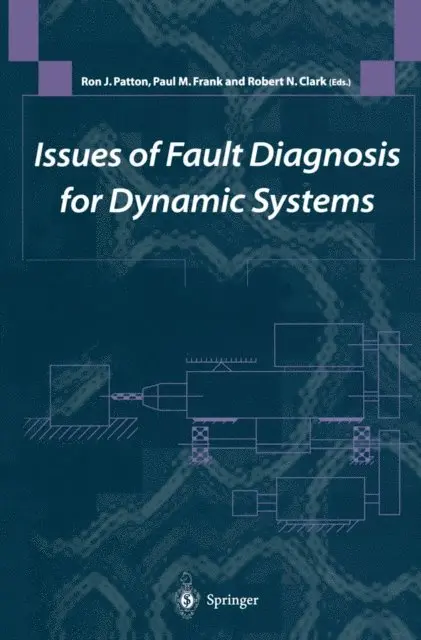
Since the time our first book Fault Diagnosis in Dynamic Systems: The ory and Applications was published in 1989 by Prentice Hall, there has been a surge in interest in research and applications into reliable methods for diag nosing faults in complex systems. The first book sold more than 1,200 copies and has become the main text in fault diagnosis for dynamic systems. This book will follow on this excellent record by focusing on some of the advances in this subject, by introducing new concepts in research and new application topics. The work cannot provide an exhaustive discussion of all the recent research in fault diagnosis for dynamic systems, but nevertheless serves to sample some of the major issues. It has been valuable once again to have the co-operation of experts throughout the world working in industry, gov emment establishments and academic institutions in writing the individual chapters. Sometimes dynamical systems have associated numerical models available in state space or in frequency domain format. When model infor mation is available, the quantitative model-based approach to fault diagnosis can be taken, using the mathematical model to generate analytically redun dant alternatives to the measured signals. When this approach is used, it becomes important to try to understand the limitations of the mathematical models i. e. , the extent to which model parameter variations occur and the effect of changing the systems point of operation.
Häftad, Engelska, 2010
2 178 kr
Skickas inom 10-15 vardagar
Since the time our first book Fault Diagnosis in Dynamic Systems: The ory and Applications was published in 1989 by Prentice Hall, there has been a surge in interest in research and applications into reliable methods for diag nosing faults in complex systems. The first book sold more than 1,200 copies and has become the main text in fault diagnosis for dynamic systems. This book will follow on this excellent record by focusing on some of the advances in this subject, by introducing new concepts in research and new application topics. The work cannot provide an exhaustive discussion of all the recent research in fault diagnosis for dynamic systems, but nevertheless serves to sample some of the major issues. It has been valuable once again to have the co-operation of experts throughout the world working in industry, gov emment establishments and academic institutions in writing the individual chapters. Sometimes dynamical systems have associated numerical models available in state space or in frequency domain format. When model infor mation is available, the quantitative model-based approach to fault diagnosis can be taken, using the mathematical model to generate analytically redun dant alternatives to the measured signals. When this approach is used, it becomes important to try to understand the limitations of the mathematical models i. e. , the extent to which model parameter variations occur and the effect of changing the systems point of operation.
Inbunden, Engelska, 2000
2 178 kr
Skickas inom 10-15 vardagar
Since the time our first book Fault Diagnosis in Dynamic Systems: The ory and Applications was published in 1989 by Prentice Hall, there has been a surge in interest in research and applications into reliable methods for diag nosing faults in complex systems. The first book sold more than 1,200 copies and has become the main text in fault diagnosis for dynamic systems. This book will follow on this excellent record by focusing on some of the advances in this subject, by introducing new concepts in research and new application topics. The work cannot provide an exhaustive discussion of all the recent research in fault diagnosis for dynamic systems, but nevertheless serves to sample some of the major issues. It has been valuable once again to have the co-operation of experts throughout the world working in industry, gov emment establishments and academic institutions in writing the individual chapters. Sometimes dynamical systems have associated numerical models available in state space or in frequency domain format. When model infor mation is available, the quantitative model-based approach to fault diagnosis can be taken, using the mathematical model to generate analytically redun dant alternatives to the measured signals. When this approach is used, it becomes important to try to understand the limitations of the mathematical models i. e. , the extent to which model parameter variations occur and the effect of changing the systems point of operation.