Robert N. Clark – författare
Visar alla böcker från författaren Robert N. Clark. Handla med fri frakt och snabb leverans.
5 produkter
5 produkter
Häftad, Engelska, 2005
1 056 kr
Skickas inom 7-10 vardagar
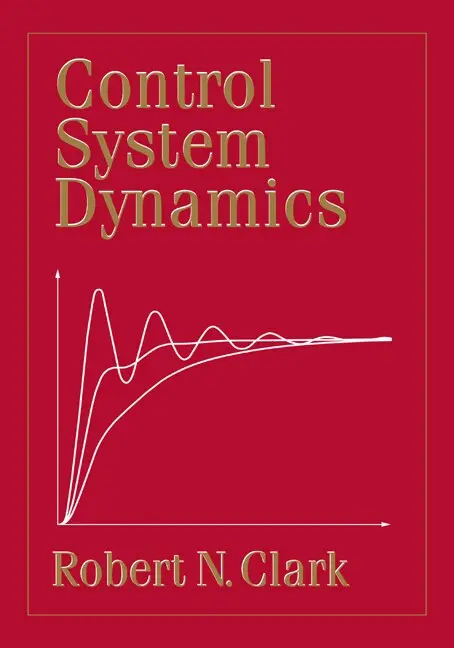
Automatic control systems have become essential features in virtually every area of technology, from machine tools to aerospace vehicles. This book is a comprehensive, clearly written introduction to automatic control engineering. The author begins with the fundamentals of modelling mechanical, electrical, and electromechanical systems in the state variable format. The emphasis is on classical feedback control theory and design, and their application to practical electromechanical and aerospace problems. Following a careful grounding in classical control theory, the author introduces modern control theory, including digital control and nonlinear system analysis. Over 230 problems help the reader apply principles discussed in the text to practical engineering situations. Engineering students and practising engineers will find all they need to know about control system analysis and design in this valuable text.
Inbunden, Engelska, 1996
2 034 kr
Skickas inom 7-10 vardagar
Automatic control systems have become essential features in virtually every area of technology, from machine tools to aerospace vehicles. This book is a comprehensive, clearly written introduction to automatic control engineering. The author begins with the fundamentals of modelling mechanical, electrical, and electromechanical systems in the state variable format. The emphasis is on classical feedback control theory and design, and their application to practical electromechanical and aerospace problems. Following a careful grounding in classical control theory, the author introduces modern control theory, including digital control and nonlinear system analysis. Over 230 problems help the reader apply principles discussed in the text to practical engineering situations. Engineering students and practising engineers will find all they need to know about control system analysis and design in this valuable text.
E-bok
PDF, Engelska, 20132 840 kr
Läs direkt efter köp
Since the time our first book Fault Diagnosis in Dynamic Systems: The ory and Applications was published in 1989 by Prentice Hall, there has been a surge in interest in research and applications into reliable methods for diag nosing faults in complex systems. The first book sold more than 1,200 copies and has become the main text in fault diagnosis for dynamic systems. This book will follow on this excellent record by focusing on some of the advances in this subject, by introducing new concepts in research and new application topics. The work cannot provide an exhaustive discussion of all the recent research in fault diagnosis for dynamic systems, but nevertheless serves to sample some of the major issues. It has been valuable once again to have the co-operation of experts throughout the world working in industry, gov emment establishments and academic institutions in writing the individual chapters. Sometimes dynamical systems have associated numerical models available in state space or in frequency domain format. When model infor mation is available, the quantitative model-based approach to fault diagnosis can be taken, using the mathematical model to generate analytically redun dant alternatives to the measured signals. When this approach is used, it becomes important to try to understand the limitations of the mathematical models i. e. , the extent to which model parameter variations occur and the effect of changing the systems point of operation.
Häftad, Engelska, 2010
2 178 kr
Skickas inom 10-15 vardagar
Since the time our first book Fault Diagnosis in Dynamic Systems: The ory and Applications was published in 1989 by Prentice Hall, there has been a surge in interest in research and applications into reliable methods for diag nosing faults in complex systems. The first book sold more than 1,200 copies and has become the main text in fault diagnosis for dynamic systems. This book will follow on this excellent record by focusing on some of the advances in this subject, by introducing new concepts in research and new application topics. The work cannot provide an exhaustive discussion of all the recent research in fault diagnosis for dynamic systems, but nevertheless serves to sample some of the major issues. It has been valuable once again to have the co-operation of experts throughout the world working in industry, gov emment establishments and academic institutions in writing the individual chapters. Sometimes dynamical systems have associated numerical models available in state space or in frequency domain format. When model infor mation is available, the quantitative model-based approach to fault diagnosis can be taken, using the mathematical model to generate analytically redun dant alternatives to the measured signals. When this approach is used, it becomes important to try to understand the limitations of the mathematical models i. e. , the extent to which model parameter variations occur and the effect of changing the systems point of operation.
Inbunden, Engelska, 2000
2 178 kr
Skickas inom 10-15 vardagar
Since the time our first book Fault Diagnosis in Dynamic Systems: The ory and Applications was published in 1989 by Prentice Hall, there has been a surge in interest in research and applications into reliable methods for diag nosing faults in complex systems. The first book sold more than 1,200 copies and has become the main text in fault diagnosis for dynamic systems. This book will follow on this excellent record by focusing on some of the advances in this subject, by introducing new concepts in research and new application topics. The work cannot provide an exhaustive discussion of all the recent research in fault diagnosis for dynamic systems, but nevertheless serves to sample some of the major issues. It has been valuable once again to have the co-operation of experts throughout the world working in industry, gov emment establishments and academic institutions in writing the individual chapters. Sometimes dynamical systems have associated numerical models available in state space or in frequency domain format. When model infor mation is available, the quantitative model-based approach to fault diagnosis can be taken, using the mathematical model to generate analytically redun dant alternatives to the measured signals. When this approach is used, it becomes important to try to understand the limitations of the mathematical models i. e. , the extent to which model parameter variations occur and the effect of changing the systems point of operation.