Paul Nathanson – författare
Visar alla böcker från författaren Paul Nathanson. Handla med fri frakt och snabb leverans.
12 produkter
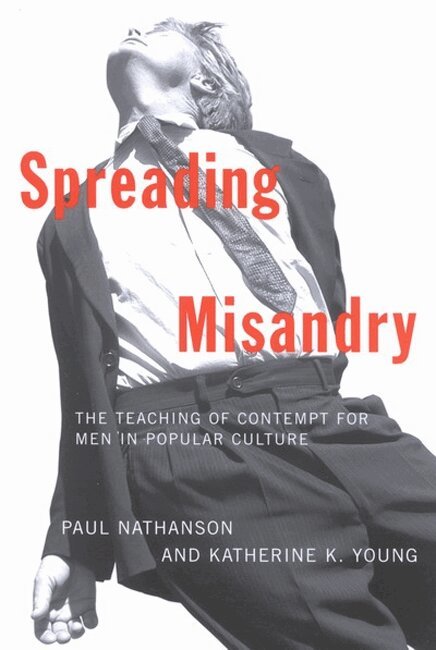
Spreading Misandry
The Teaching of Contempt for Men in Popular Culture
Av Paul Nathanson, Katherine K. Young
Häftad, 2006
315 kr
Lägg i varukorg
A probing inquiry into the pervasiveness of negative male stereotypes in popular culture.
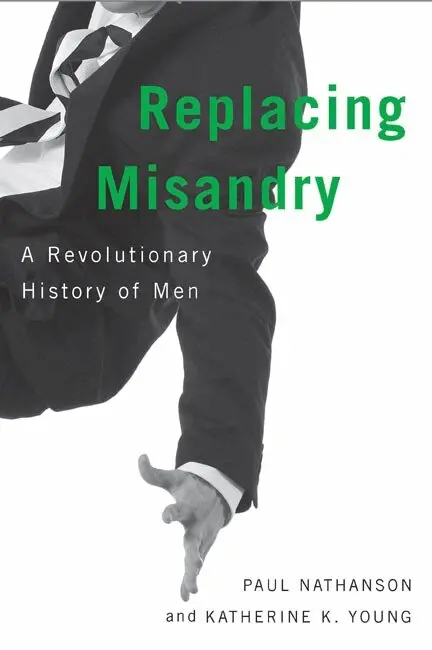
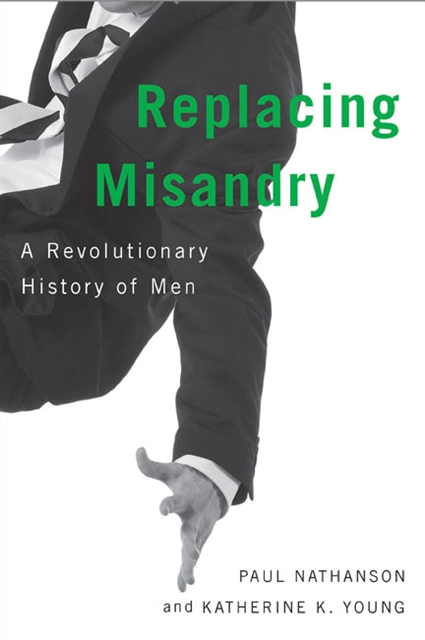
Replacing Misandry
A Revolutionary History of Men
Av Paul Nathanson, Katherine K. Young
Inbunden, 2015
399 kr
Lägg i varukorg
In the first three volumes of this series, Paul Nathanson and Katherine Young challenge theories about patriarchy that ideological forms of feminism have promoted. In this volume, they argue that we must replace those misandric theories with one that takes seriously the needs and problems of boys …
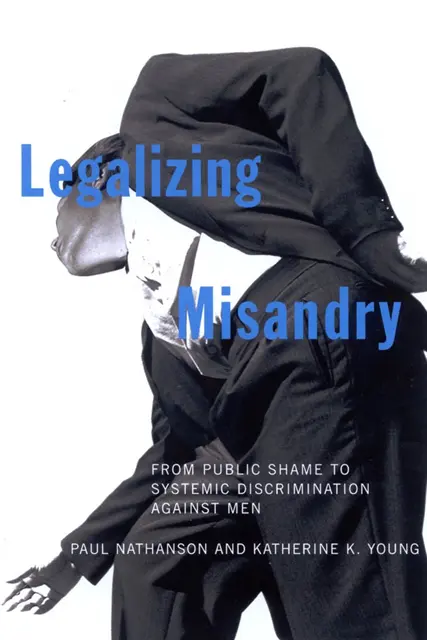
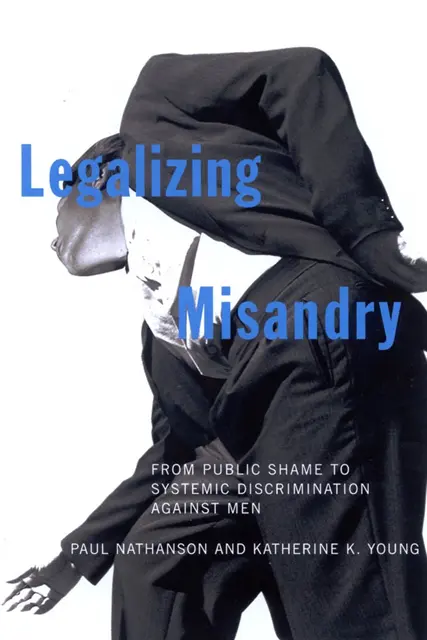
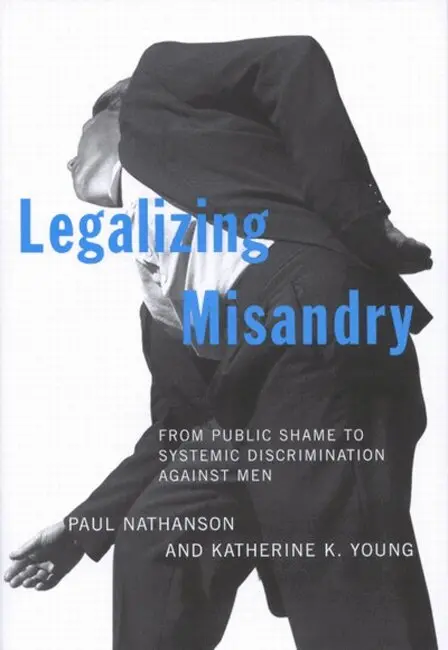
Legalizing Misandry
From Public Shame to Systemic Discrimination against Men
Av Katherine K. Young, Paul Nathanson
E-bok, 2006
328 kr
Lägg i varukorg
Paul Nathanson and Katherine Young believe that this reveals a shift in the United States and Canada to a worldview based on ideological feminism, which presents all issues from the point of view of women and, in the process, explicitly or implicitly attacks men as a class. They argue that …
Spreading Misandry
The Teaching of Contempt for Men in Popular Culture
Av Katherine K. Young, Paul Nathanson
E-bok, 2001
321 kr
Lägg i varukorg
Nathanson and Young urge us to rethink prevalent assumptions about men that result in profoundly disturbing stereotypes that foster contempt. Spreading Misandry breaks new ground by discussing misandry in moral terms rather than purely psychological or sociological ones and by criticizing not only …
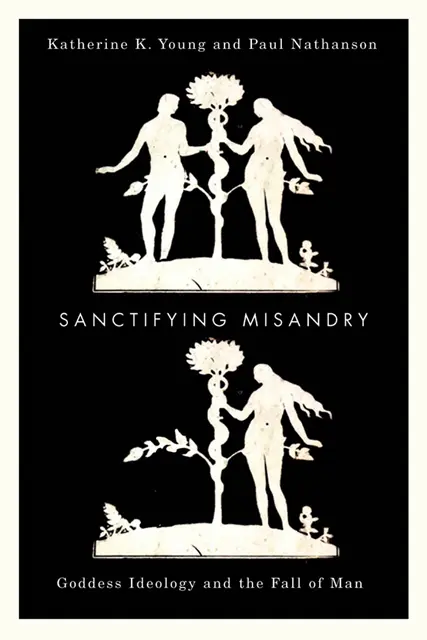
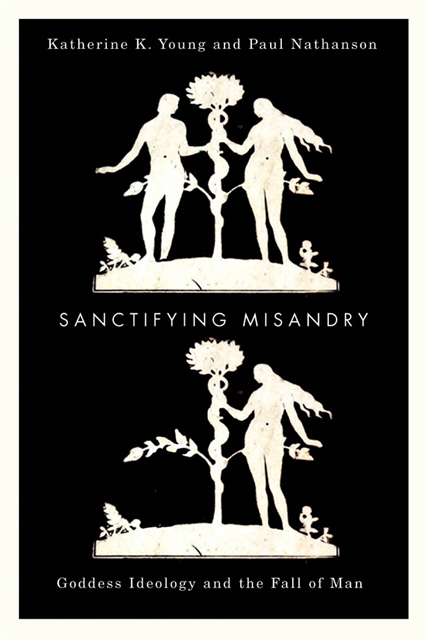
Sanctifying Misandry
Goddess Ideology and the Fall of Man
Av Paul Nathanson, Katherine K. Young
E-bok, 2010
343 kr
Lägg i varukorg
How some feminists have used religion to turn the "Fall of Man" into the fall of men.
Legalizing Misandry
From Public Shame to Systemic Discrimination against Men
Av Katherine K. Young, Paul Nathanson
E-bok, 2009
328 kr
Lägg i varukorg
Paul Nathanson and Katherine Young believe that this reveals a shift in the United States and Canada to a worldview based on ideological feminism, which presents all issues from the point of view of women and, in the process, explicitly or implicitly attacks men as a class. They argue that …
Replacing Misandry
A Revolutionary History of Men
Av Katherine K. Young, Paul Nathanson
E-bok, 2015
400 kr
Lägg i varukorg
In the first three volumes of this series, Paul Nathanson and Katherine Young challenge theories about patriarchy that ideological forms of feminism have promoted. In this volume, they argue that we must replace those misandric theories with one that takes seriously the needs and problems of boys …
Replacing Misandry
A Revolutionary History of Men
Av Katherine K. Young, Paul Nathanson
E-bok, 2015
400 kr
Lägg i varukorg
In the first three volumes of this series, Paul Nathanson and Katherine Young challenge theories about patriarchy that ideological forms of feminism have promoted. In this volume, they argue that we must replace those misandric theories with one that takes seriously the needs and problems of boys …
Sanctifying Misandry
Goddess Ideology and the Fall of Man
Av Paul Nathanson, Katherine K. Young
E-bok, 2011
343 kr
Lägg i varukorg
How some feminists have used religion to turn the "Fall of Man" into the fall of men.
Legalizing Misandry
From Public Shame to Systemic Discrimination Against Men
Av Paul Nathanson, Katherine K. Young
Inbunden, 2006
568 kr
Tillfälligt slut
This follow-up to the bestselling Spreading Misandry critiques the impact of ideological feminism on law and government
Sanctifying Misandry
Goddess Ideology and the Fall of Man
Av Katherine K. Young, Paul Nathanson
Inbunden, 2010
1409 kr
Tillfälligt slut
How some feminists have used religion to turn the "Fall of Man" into the fall of men.
Sanctifying Misandry
Goddess Ideology and the Fall of Man
Av Katherine K. Young, Paul Nathanson
Häftad, 2011
385 kr
Tillfälligt slut
How some feminists have used religion to turn the "Fall of Man" into the fall of men.