Paul Nesbitt-Larking – författare
Visar alla böcker från författaren Paul Nesbitt-Larking. Handla med fri frakt och snabb leverans.
9 produkter
9 produkter
E-bok
Engelska, 2011554 kr
Läs direkt efter köp
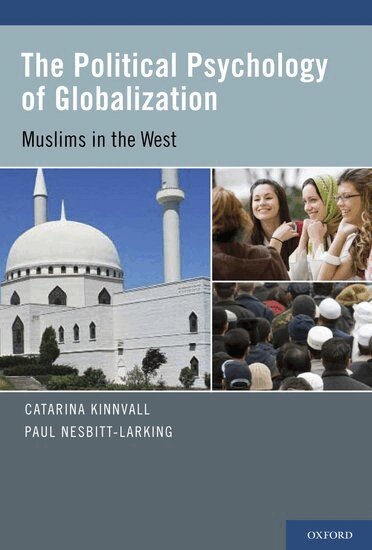
In an increasingly globalized world, there are new economic, strategic, cultural, and political forces at work. IThe Political Psychology of Globalization: Muslims in the West/I explores how these shifts and shocks have influenced the way in which Muslim minorities in western countries form their identities as political actors. Catarina Kinnvall and Paul Nesbitt-Larking uncover three identity strategies adopted by Muslims in the West: retreatism, essentialism, and engagement. Six western countries - Canada, Denmark, France, the Netherlands, Sweden, and the United Kingdom - serve as places for exploration of the emergence of these Muslim political identities. These countries are discussed in light of their colonial histories, patterns of immigration, and citizenship regimes. Although retreatism, essentialism, and engagement occur in Muslim citizens of each of the six western nations discussed in this book, the countries that are best able to balance individual and community rights are most successful in promoting the politics of engagement. In contrast, regimes that focus on anti-terrorist legislation and discourses, and support majority political cultures that are exclusionary, also promote retreatism and essentialist identity strategies in both minority and majority communities. The authors discuss the importance of a climate of engagement that is based on recognition, dialogue, deep multiculturalism, a new global and "cosmopolitical" consciousness, and a sense of political identity that transcends national boundaries and regimes.
Inbunden, Engelska, 2011
709 kr
Skickas inom 5-8 vardagar
In an increasingly globalized world, there are new economic, strategic, cultural, and political forces at work. The Political Psychology of Globalization: Muslims in the West explores how these shifts and shocks have influenced the way in which Muslim minorities in western countries form their identities as political actors. Catarina Kinnvall and Paul Nesbitt-Larking uncover three identity strategies adopted by Muslims in the West: retreatism, essentialism, and engagement. Six western countries - Canada, Denmark, France, the Netherlands, Sweden, and the United Kingdom - serve as places for exploration of the emergence of these Muslim political identities. These countries are discussed in light of their colonial histories, patterns of immigration, and citizenship regimes. Although retreatism, essentialism, and engagement occur in Muslim citizens of each of the six western nations discussed in this book, the countries that are best able to balance individual and community rights are most successful in promoting the politics of engagement. In contrast, regimes that focus on anti-terrorist legislation and discourses, and support majority political cultures that are exclusionary, also promote retreatism and essentialist identity strategies in both minority and majority communities. The authors discuss the importance of a climate of engagement that is based on recognition, dialogue, deep multiculturalism, a new global and "cosmopolitical" consciousness, and a sense of political identity that transcends national boundaries and regimes.
E-bok
PDF, Engelska, 2011554 kr
Läs direkt efter köp
In an increasingly globalized world, there are new economic, strategic, cultural, and political forces at work. IThe Political Psychology of Globalization: Muslims in the West/I explores how these shifts and shocks have influenced the way in which Muslim minorities in western countries form their identities as political actors. Catarina Kinnvall and Paul Nesbitt-Larking uncover three identity strategies adopted by Muslims in the West: retreatism, essentialism, and engagement. Six western countries - Canada, Denmark, France, the Netherlands, Sweden, and the United Kingdom - serve as places for exploration of the emergence of these Muslim political identities. These countries are discussed in light of their colonial histories, patterns of immigration, and citizenship regimes. Although retreatism, essentialism, and engagement occur in Muslim citizens of each of the six western nations discussed in this book, the countries that are best able to balance individual and community rights are most successful in promoting the politics of engagement. In contrast, regimes that focus on anti-terrorist legislation and discourses, and support majority political cultures that are exclusionary, also promote retreatism and essentialist identity strategies in both minority and majority communities. The authors discuss the importance of a climate of engagement that is based on recognition, dialogue, deep multiculturalism, a new global and "cosmopolitical" consciousness, and a sense of political identity that transcends national boundaries and regimes.
E-bok
Engelska, 2007427 kr
Läs direkt efter köp
Politics, Society, and the Media is the first comprehensive political sociology of the media to be published in Canada. Paul Nesbitt-Larking draws upon a range of disciplines, including cultural and media studies, political economy, social theory, and political science to provide an analysis of the relationship between power and representation in Canada. The framework for the book presents a model of the mutual interaction between politics and the media. Attention is focused in the early chapters on how cultural, ideological, economic, and governmental forces shape and condition the production of media in Canada. Chapters on the work of Innis, Grant, McLuhan, and their postmodern successors place the evolution of McLuhan's theoretical argument that "the medium is the message" at the heart of the book. Canadian identity, and how to understand Canadian media politically, is the subject of a chapter on textual analysis. Two extensive chapters follow on the media's influence and effects on politics. In addition to standard topics on politics and the media, this new edition offers much more: an examination of the media on the politics of gender and aboriginal peoples, the micro-politics of the media workplace, and an exploration of important media-related considerations. Throughout, reference is made to relevant and compelling issues placed within the context of media theory.
E-bok
PDF, Engelska, 2013427 kr
Läs direkt efter köp
Politics, Society, and the Media is the first comprehensive political sociology of the media to be published in Canada. Paul Nesbitt-Larking draws upon a range of disciplines, including cultural and media studies, political economy, social theory, and political science to provide an analysis of the relationship between power and representation in Canada. The framework for the book presents a model of the mutual interaction between politics and the media. Attention is focused in the early chapters on how cultural, ideological, economic, and governmental forces shape and condition the production of media in Canada. Chapters on the work of Innis, Grant, McLuhan, and their postmodern successors place the evolution of McLuhan's theoretical argument that "the medium is the message" at the heart of the book. Canadian identity, and how to understand Canadian media politically, is the subject of a chapter on textual analysis. Two extensive chapters follow on the media's influence and effects on politics. In addition to standard topics on politics and the media, this new edition offers much more: an examination of the media on the politics of gender and aboriginal peoples, the micro-politics of the media workplace, and an exploration of important media-related considerations. Throughout, reference is made to relevant and compelling issues placed within the context of media theory.
Inbunden, Engelska, 2017
512 kr
Skickas inom 10-15 vardagar
This book uses original research and interviews to consider the views of contemporary members of the Orange Order in Canada, including their sense of political and societal purpose, awareness of the decline of influence, views on their present circumstances, and hopes for the future of Orangeism in Canada. In so doing, it details the organisational structure of Canadian society: the role of religion in public life, the changing context of multicultural Canada, and the politics of resistance of a political and social organisation in decline. This book offers a social scientific complement to existing historical work on the role of the Orange Order in Canadian society, and builds upon it through an analysis of contemporary Orangeism. It considers the Orange Order as a worldwide body and makes some comparisons and contrasts with its organisational status and membership in Ireland and elsewhere. As such, the book makes a distinctive contribution to our knowledge of a fraternal organisationand the role of religious belief and politics in contemporary society.
E-bok
Engelska, 2017712 kr
Läs direkt efter köp
This book uses original research and interviews to consider the views of contemporary members of the Orange Order in Canada, including their sense of political and societal purpose, awareness of the decline of influence, views on their present circumstances, and hopes for the future of Orangeism in Canada. In so doing, it details the organisational structure of Canadian society: the role of religion in public life, the changing context of multicultural Canada, and the politics of resistance of a political and social organisation in decline. This book offers a social scientific complement to existing historical work on the role of the Orange Order in Canadian society, and builds upon it through an analysis of contemporary Orangeism. It considers the Orange Order as a worldwide body and makes some comparisons and contrasts with its organisational status and membership in Ireland and elsewhere. As such, the book makes a distinctive contribution to our knowledge of a fraternal organisationand the role of religious belief and politics in contemporary society.
Häftad, Engelska, 2018
512 kr
Skickas inom 10-15 vardagar
This book uses original research and interviews to consider the views of contemporary members of the Orange Order in Canada, including their sense of political and societal purpose, awareness of the decline of influence, views on their present circumstances, and hopes for the future of Orangeism in Canada. In so doing, it details the organisational structure of Canadian society: the role of religion in public life, the changing context of multicultural Canada, and the politics of resistance of a political and social organisation in decline. This book offers a social scientific complement to existing historical work on the role of the Orange Order in Canadian society, and builds upon it through an analysis of contemporary Orangeism. It considers the Orange Order as a worldwide body and makes some comparisons and contrasts with its organisational status and membership in Ireland and elsewhere. As such, the book makes a distinctive contribution to our knowledge of a fraternal organisationand the role of religious belief and politics in contemporary society.
Inbunden, Engelska, 2015
196 kr
Skickas
Very rarely has peace and conflict studies been combined with public administration research. Divided Cities Governing Diversity brings together theories from conflict resolution, public administration, and urban studies to present new theoretical and empirical insights from nine in-depth case studies. The authors employ the city as a prism to shed light on the com¬plex, multidimensional processes of conflict, segregation, democratization, and governance. They use the city as a diagnostic site for exploring the role of public administration and civil servants in resolving contested issues in divided societies. The researchers analyse nine multifaceted cases: Toronto, Copenhagen, Malmö, Mostar, Cape Town, Belfast, Jerusalem, Nicosia and Mitrovica all cities at different stages of conflict and stability and with disparate legacies. The contributors map the tools, strate-gies, and understandings of conflict resolution to be found in each city, and in so doing break new empirical and theoretical ground.