Paul Opdam – författare
Visar alla böcker från författaren Paul Opdam. Handla med fri frakt och snabb leverans.
8 produkter
8 produkter
Inbunden, Engelska, 1992
1 199 kr
Skickas inom 10-15 vardagar
E-bok
PDF, Engelska, 20141 432 kr
Läs direkt efter köp
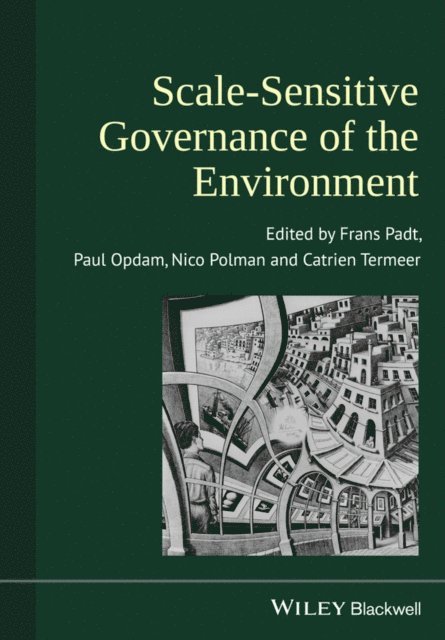
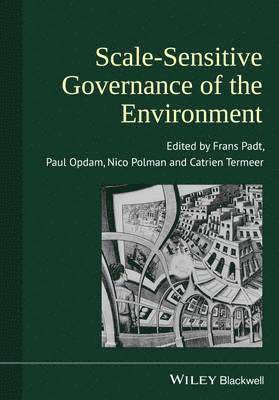
Sensitivity to scales is one of the key challenges in environmental governance. Climate change, food production, energy supply, and natural resource management are examples of environmental challenges that stretch across scales and require action at multiple levels. Governance systems are typically ill-equipped for this task due to organisational and jurisdictional specialisation and short-term planning horizons. Further to this, scientific knowledge is fragmented along disciplinary lines and research traditions in academia and research institutions. State-of-the-art, Scale-Sensitive Governance of the Environment addresses these challenges by establishing the foundation for a new, trans-disciplinary research field. It brings together and reframes a variety of disciplinary approaches, using the idea of scales to create a conceptual and methodological basis for scale-sensitive governance of the environment from both a natural and social science perspective. This volume presents new visions, methods and innovative applications of thinking and decision making across scales in space and time to develop a holistic view on the subject. It is unique in providing: F analysis on how spatial, temporal, and governance scales are constructed, politically and scientifically defined, institutionalized in governance practices, and strategically used in policy discourses F details on how current environmental governance practices can be enriched by the use of theory on scale, with specific research themes to show the benefits of recognizing scales in empirical research F insightful case studies drawn from countries in the Americas, Eastern and Southern Africa, Europe, and South and Southeastern Asia, covering a wide range of environmental topics including biodiversity, climate change, commodities (tea and palm oil), cultural landscapes, energy, forestry, natural resource management, pesticides, urban development, and water management. With its comprehensive coverage of scale and scaling issues and convergence of widely different scientific approaches, this book is essential for environmental scientists, policy makers and planners, also conservation biologists and ecologists who are involved in modeling climate change impacts and sustainability. This reference will also benefit students of environmental studies, and all those who seek a response to the urgent environmental governance challenges for the decades ahead.
E-bok
Engelska, 20141 419 kr
Läs direkt efter köp
Sensitivity to scales is one of the key challenges in environmental governance. Climate change, food production, energy supply, and natural resource management are examples of environmental challenges that stretch across scales and require action at multiple levels. Governance systems are typically ill-equipped for this task due to organisational and jurisdictional specialisation and short-term planning horizons. Further to this, scientific knowledge is fragmented along disciplinary lines and research traditions in academia and research institutions. State-of-the-art, Scale-Sensitive Governance of the Environment addresses these challenges by establishing the foundation for a new, trans-disciplinary research field. It brings together and reframes a variety of disciplinary approaches, using the idea of scales to create a conceptual and methodological basis for scale-sensitive governance of the environment from both a natural and social science perspective. This volume presents new visions, methods and innovative applications of thinking and decision making across scales in space and time to develop a holistic view on the subject. It is unique in providing: F analysis on how spatial, temporal, and governance scales are constructed, politically and scientifically defined, institutionalized in governance practices, and strategically used in policy discourses F details on how current environmental governance practices can be enriched by the use of theory on scale, with specific research themes to show the benefits of recognizing scales in empirical research F insightful case studies drawn from countries in the Americas, Eastern and Southern Africa, Europe, and South and Southeastern Asia, covering a wide range of environmental topics including biodiversity, climate change, commodities (tea and palm oil), cultural landscapes, energy, forestry, natural resource management, pesticides, urban development, and water management. With its comprehensive coverage of scale and scaling issues and convergence of widely different scientific approaches, this book is essential for environmental scientists, policy makers and planners, also conservation biologists and ecologists who are involved in modeling climate change impacts and sustainability. This reference will also benefit students of environmental studies, and all those who seek a response to the urgent environmental governance challenges for the decades ahead.
Häftad, Engelska, 2005
2 391 kr
Skickas inom 10-15 vardagar
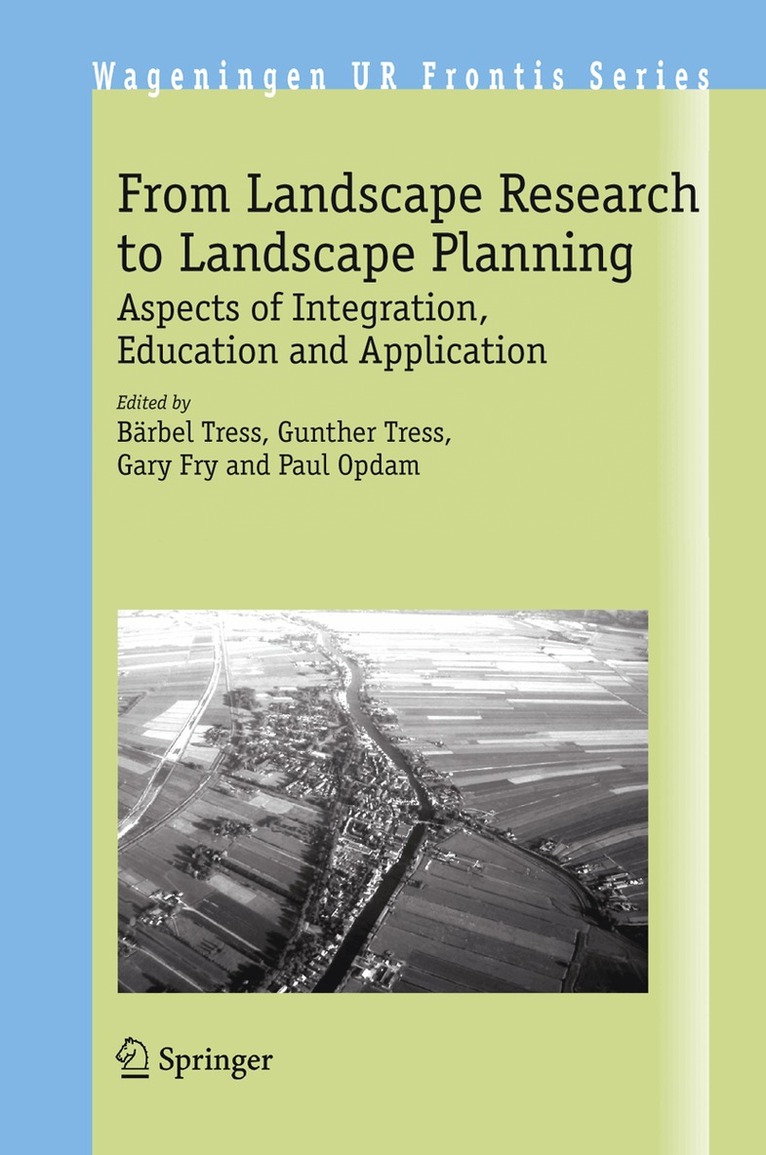
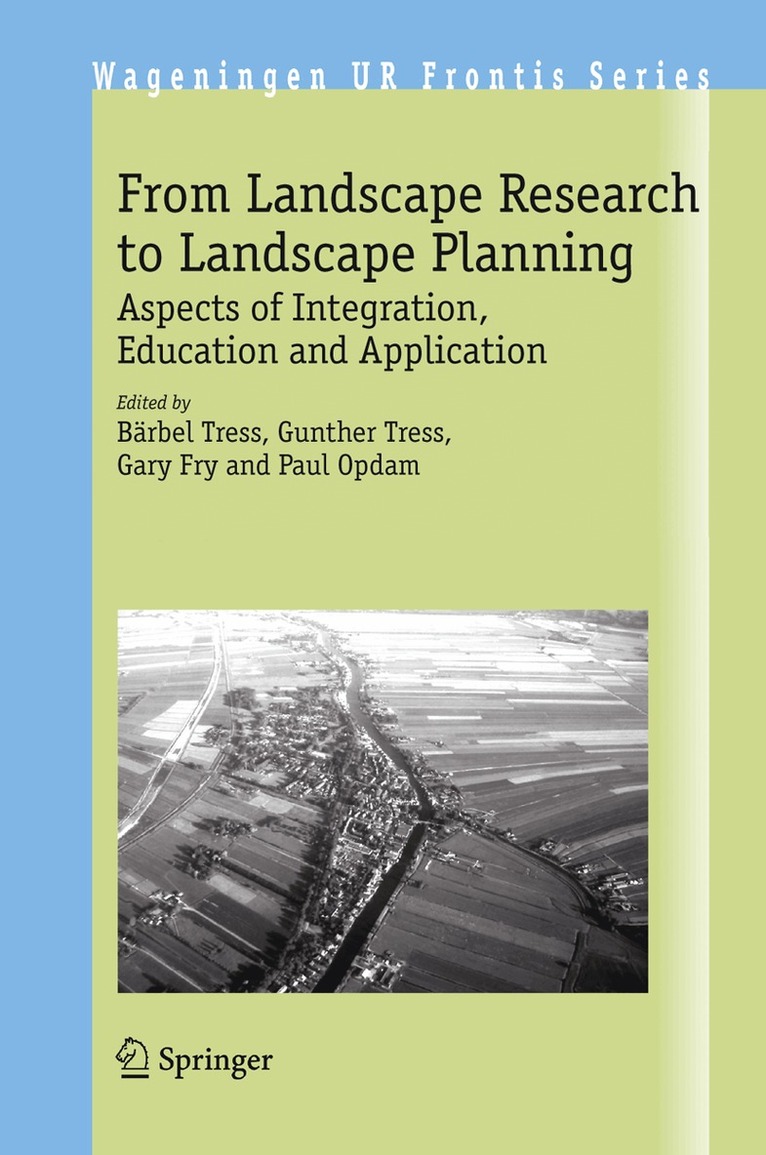
Research policy favours projects that integrate disciplinary knowledge and involve non-academic stakeholders. Consequently, integrative concepts – interdisciplinarity and transdisciplinarity – are gaining currency in landscape research and planning. Researchers are excited by the prospect of merging disciplinary and non-academic expertise to improve their understanding and performance, but often struggle with the challenges of operationalizing integration.This book provides guidelines for those coping with these challenges, whether they are members of an integrative research team or individuals working on a problem that demands integration. They must define terminology, choose appropriate methodologies, overcome epistemological barriers and cope with the high expectations of some stakeholders while encouraging others to participate at all.
Inbunden, Engelska, 2005
2 174 kr
Skickas inom 10-15 vardagar
Research policy favours projects that integrate disciplinary knowledge and involve non-academic stakeholders. Consequently, integrative concepts – interdisciplinarity and transdisciplinarity – are gaining currency in landscape research and planning. Researchers are excited by the prospect of merging disciplinary and non-academic expertise to improve their understanding and performance, but often struggle with the challenges of operationalizing integration.This book provides guidelines for those coping with these challenges, whether they are members of an integrative research team or individuals working on a problem that demands integration. They must define terminology, choose appropriate methodologies, overcome epistemological barriers and cope with the high expectations of some stakeholders while encouraging others to participate at all.
Häftad, Engelska, 2012
1 091 kr
Skickas inom 10-15 vardagar
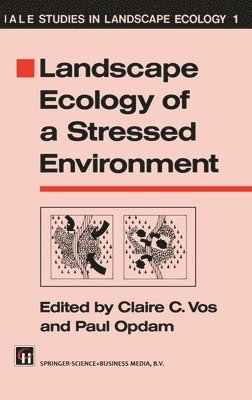
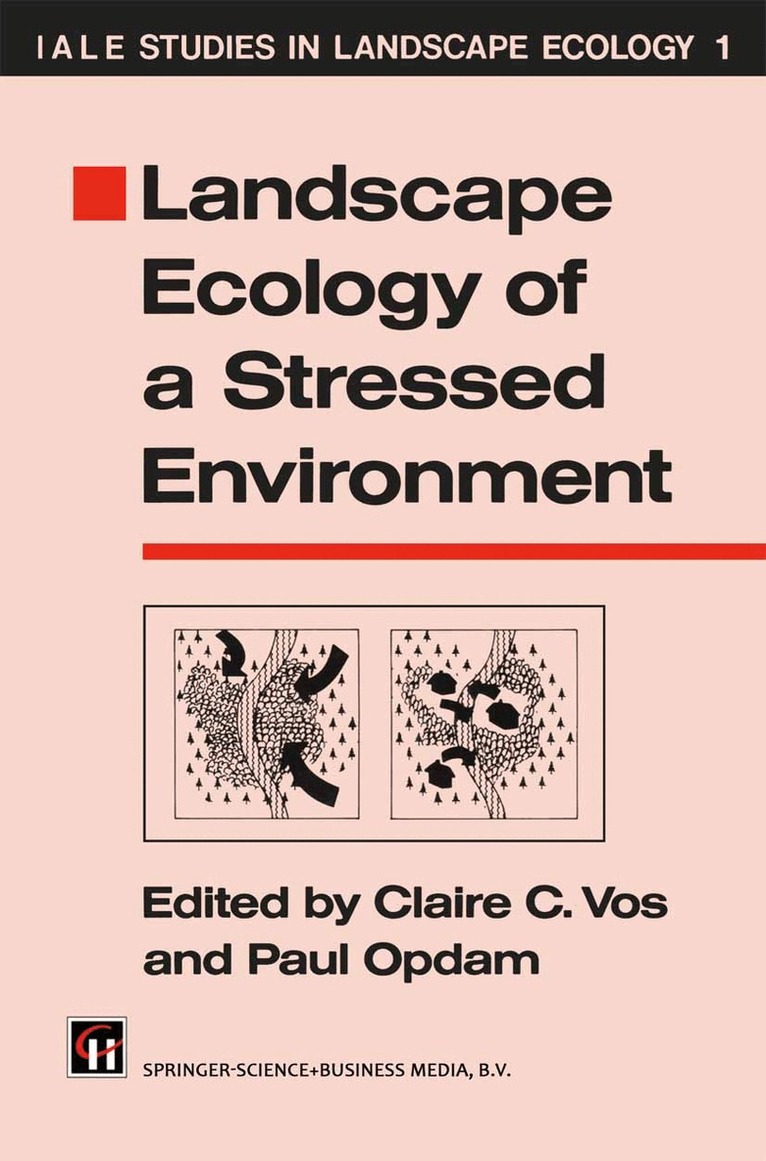
This series presents studies that have used the paradigm of landscape ecology. Other approaches, both to landscape and landscape ecology are common, but in the last decade landscape ecology has become distinct from its predecessors and its contemporaries. Landscape ecol ogy addresses the relationships among spatial patterns, temporal pat terns and ecological processes. The effect of spatial configurations on ecological processes is fundamental. When human activity is an import ant variable affecting those relationships, landscape ecology includes it. Spatial and temporal scales are as large as needed for comprehension of system processes and the mosaic included may be very heteroge neous. Intellectual utility and applicability of results are valued equally. The International Association for Landscape Ecology sponsors this series of studies in order to introduce and disseminate some of the new knowledge that is being produced by this exciting new environmental science. Gray Merriam Ottawa, Canada Preface In Europe, during the seventies, landscape ecology emerged as a fusion of the spatial approach of geographers and the functional approach of ecologists. The latter focused on ecosystem functioning, regarding eco systems as homogeneous, almost abstract units in space, with input and output of energy and matter to and from the undefined surroundings.
E-bok
PDF, Engelska, 20121 367 kr
Läs direkt efter köp
This series presents studies that have used the paradigm of landscape ecology. Other approaches, both to landscape and landscape ecology are common, but in the last decade landscape ecology has become distinct from its predecessors and its contemporaries. Landscape ecol ogy addresses the relationships among spatial patterns, temporal pat terns and ecological processes. The effect of spatial configurations on ecological processes is fundamental. When human activity is an import ant variable affecting those relationships, landscape ecology includes it. Spatial and temporal scales are as large as needed for comprehension of system processes and the mosaic included may be very heteroge neous. Intellectual utility and applicability of results are valued equally. The International Association for Landscape Ecology sponsors this series of studies in order to introduce and disseminate some of the new knowledge that is being produced by this exciting new environmental science. Gray Merriam Ottawa, Canada Preface In Europe, during the seventies, landscape ecology emerged as a fusion of the spatial approach of geographers and the functional approach of ecologists. The latter focused on ecosystem functioning, regarding eco systems as homogeneous, almost abstract units in space, with input and output of energy and matter to and from the undefined surroundings.
Inbunden, Engelska, 2014
969 kr
Tillfälligt slut
Sensitivity to scales is one of the key challenges in environmental governance. Climate change, food production, energy supply, and natural resource management are examples of environmental challenges that stretch across scales and require action at multiple levels. Governance systems are typically ill-equipped for this task due to organisational and jurisdictional specialisation and short-term planning horizons. Further to this, scientific knowledge is fragmented along disciplinary lines and research traditions in academia and research institutions. State-of-the-art, Scale-Sensitive Governance of the Environment addresses these challenges by establishing the foundation for a new, trans-disciplinary research field. It brings together and reframes a variety of disciplinary approaches, using the idea of scales to create a conceptual and methodological basis for scale-sensitive governance of the environment from both a natural and social science perspective. This volume presents new visions, methods and innovative applications of thinking and decision making across scales in space and time to develop a holistic view on the subject. It is unique in providing: F analysis on how spatial, temporal, and governance scales are constructed, politically and scientifically defined, institutionalized in governance practices, and strategically used in policy discourses F details on how current environmental governance practices can be enriched by the use of theory on scale, with specific research themes to show the benefits of recognizing scales in empirical research F insightful case studies drawn from countries in the Americas, Eastern and Southern Africa, Europe, and South and Southeastern Asia, covering a wide range of environmental topics including biodiversity, climate change, commodities (tea and palm oil), cultural landscapes, energy, forestry, natural resource management, pesticides, urban development, and water management. With its comprehensive coverage of scale and scaling issues and convergence of widely different scientific approaches, this book is essential for environmental scientists, policy makers and planners, also conservation biologists and ecologists who are involved in modeling climate change impacts and sustainability. This reference will also benefit students of environmental studies, and all those who seek a response to the urgent environmental governance challenges for the decades ahead.