Paul R. Thomas - Böcker
Visar alla böcker från författaren Paul R. Thomas. Handla med fri frakt och snabb leverans.
6 produkter
6 produkter
Opportunities in the Nutrition and Food Sciences
Research Challenges and the Next Generation of Investigators
Häftad, Engelska, 1994
665 kr
Tillfälligt slut
Thanks to increased knowledge about nutrition, many threats to human health have been curbed. But there is much more to be learned. This new volume identifies the most promising opportunities for further progress in basic and clinical research in the biological sciences, food science and technology, and public health. The committee identifies cross-cutting themes as frameworks for investigation and offers a history of nutrition and food science research with nine case studies of accomplishments. The core of the volume identifies research opportunities in areas likely to provide the biggest payoffs in enhancing individual and public health. The volume highlights the importance of technology and instrumentation and covers the spectrum from the effects of neurotransmitters on food selection to the impact of federal food programs on public health. The book also explores the training of nutrition and food scientists. This comprehensive resource will be indispensable to investigators, administrators, and funding decisionmakers in government and industry as well as faculty, students, and interested individuals.
606 kr
Tillfälligt slut
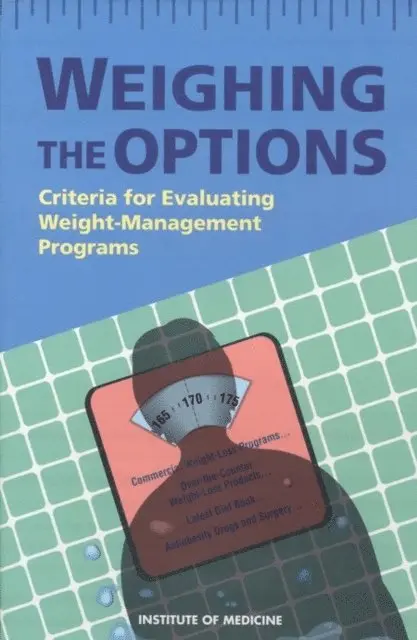
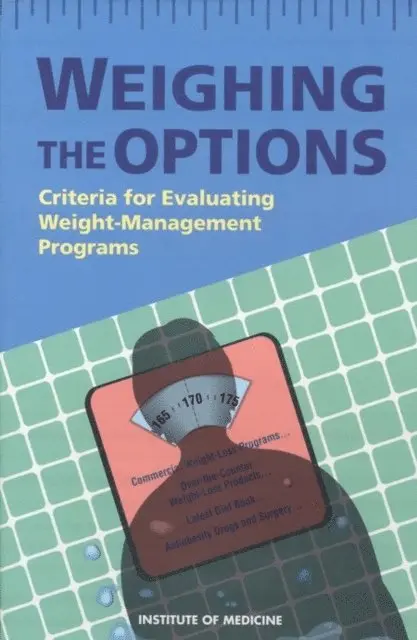
Nearly one out of every three adults in America is obese and tens of millions of people in the United States are dieting at any one time. This has resulted in a weight-loss industry worth billions of dollars a year and growing. What are the long-term results of weight-loss programs? How can people sort through the many programs available and select one that is right for them? Weighing the Options strives to answer these questions. Despite widespread public concern about weight, few studies have examined the long-term results of weight-loss programs. One reason that evaluating obesity management is difficult is that no other treatment depends so much on an individual's own initiative and state of mind. Now, a distinguished group of experts assembled by the Institute of Medicine addresses this compelling issue. Weighing the Options presents criteria for evaluating treatment programs for obesity and explores what these criteria mean--to health care providers, program designers, researchers, and even overweight people seeking help.In presenting its criteria the authors offer a wealth of information about weight loss: how obesity is on the rise, what types of weight-loss programs are available, how to define obesity, how well we maintain weight loss, and what approaches and practices appear to be most successful. Information about weight-loss programs--their clients, staff qualifications, services, and success rates--necessary to make wise program choices is discussed in detail. The book examines how client demographics and characteristics--including health status, knowledge of weight-loss issues, and attitude toward weight and body image--affect which programs clients choose, how successful they are likely to be with their choices, and what this means for outcome measurement. Short- and long-term safety consequences of weight loss are discussed as well as clinical assessment of individual patients. The authors document the health risks of being overweight, summarizing data indicating that even a small weight loss reduces the risk of disease and depression and increases self-esteem.At the same time, weight loss has been associated with some poor outcomes, and the book discusses the implications for program evaluation. Prevention can be even more important than treatment. In Weighing the Options, programs for population groups, efforts targeted to specific groups at high risk for obesity, and prevention of further weight gain in obese individuals get special attention. This book provides detailed guidance on how the weight-loss industry can improve its programs to help people be more successful at long-term weight loss. And it provides consumers with tips on selecting a program that will improve their chances of permanently losing excess weight.
845 kr
Tillfälligt slut
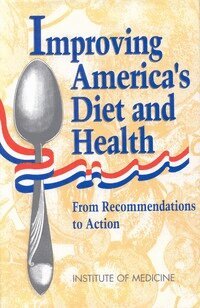
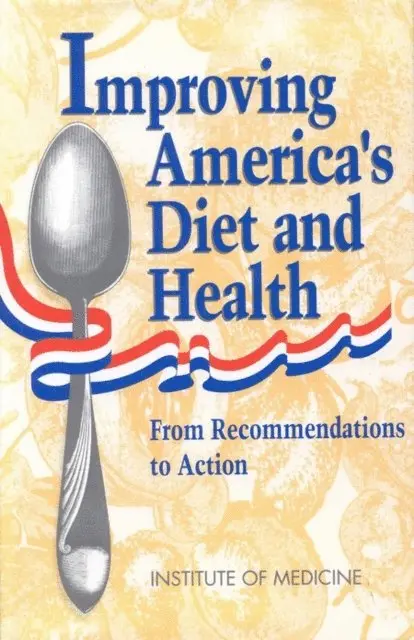
Written and organized to be accessible to a wide range of readers, Improving America's Diet and Health explores how Americans can be persuaded to adopt healthier eating habits. Moving well beyond the "pamphlet and public service announcement" approach to dietary change, this volume investigates current eating patterns in this country, consumers' beliefs and attitudes about food and nutrition, the theory and practice of promoting healthy behaviors, and needs for further research. The core of the volume consists of strategies and actions targeted to sectors of society--government, the private sector, the health professions, the education community--that have special responsibilities for encouraging and enabling consumers to eat better. These recommendations form the basis for three principal strategies necessary to further the implementation of dietary recommendations in the United States.
Eat for Life
The Food and Nutrition Board's Guide to Reducing Your Risk of Chronic Disease
Häftad, Engelska, 1992
686 kr
Tillfälligt slut
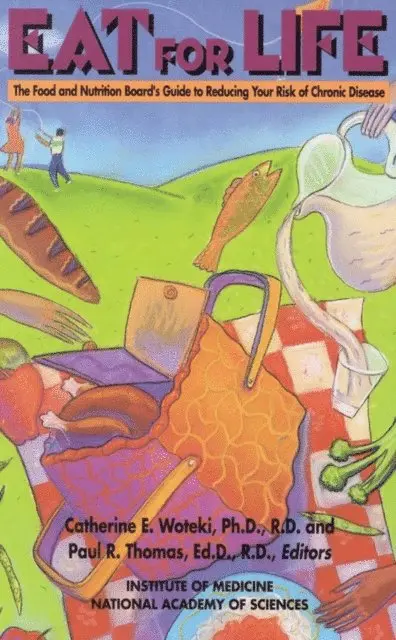
Results from the National Research Council's (NRC) landmark study Diet and health are readily accessible to nonscientists in this friendly, easy-to-read guide. Readers will find the heart of the book in the first chapter: the Food and Nutrition Board's nine-point dietary plan to reduce the risk of diet-related chronic illness. The nine points are presented as sensible guidelines that are easy to follow on a daily basis, without complicated measuring or calculating--and without sacrificing favorite foods. Eat for Life gives practical recommendations on foods to eat and in a "how-to" section provides tips on shopping (how to read food labels), cooking (how to turn a high-fat dish into a low-fat one), and eating out (how to read a menu with nutrition in mind). The volume explains what protein, fiber, cholesterol, and fats are and what foods contain them, and tells readers how to reduce their risk of chronic disease by modifying the types of food they eat. Each chronic disease is clearly defined, with information provided on its prevalence in the United States.Written for everyone concerned about how they can influence their health by what they eat, Eat for Life offers potentially lifesaving information in an understandable and persuasive way. Alternative Selection, Quality Paperback Book Club
2 113 kr
Skickas inom 10-15 vardagar
South Africa is the dominant force in an area that is of increasing strategic importance to the West, yet few studies address the geopolitical pressures that dictate the course of events there. Analyzing South Africa’s base of power, the authors argue that because South Africa’s relationships with other states in Southern Africa are asymmetrical in nature, the country has substantial economic and political leverage in the region. Control of Southern Africa’s transport infrastructure and the ability to project a conventional or surrogate military presence throughout the region, for example, gives South Africa the power to affect the economic and political stability of virtually all regional states. Asymmetry also characterizes relationships at the global level. Because the West depends upon South Africa for access to the region’s strategic minerals, for the security of the Cape oil route, and for the country’s ability to counterbalance the Soviet presence in Southern Africa, South Africa exercises considerable influence over the African foreign policies of the superpowers. Focusing on the major geopolitical variables affecting South Africa’s ability to sustain power, the authors analyze the economic and geographic factors that contribute to asymmetrical relationships and examine the pluralism that divides South African society. Pretoria’s successful foreign policy, which has created a security corridor of new buffer states, is given particular emphasis. In addition, the authors provide a detailed analysis of South Africa’s minerals-based economy and discuss the implications for regional stability of economic sanctions against South Africa. Finally, they outline a policy framework that takes regional economic, political, and geographic realities into account.
618 kr
Skickas inom 10-15 vardagar
South Africa is the dominant force in an area that is of increasing strategic importance to the West, yet few studies address the geopolitical pressures that dictate the course of events there. Analyzing South Africa’s base of power, the authors argue that because South Africa’s relationships with other states in Southern Africa are asymmetrical in nature, the country has substantial economic and political leverage in the region. Control of Southern Africa’s transport infrastructure and the ability to project a conventional or surrogate military presence throughout the region, for example, gives South Africa the power to affect the economic and political stability of virtually all regional states. Asymmetry also characterizes relationships at the global level. Because the West depends upon South Africa for access to the region’s strategic minerals, for the security of the Cape oil route, and for the country’s ability to counterbalance the Soviet presence in Southern Africa, South Africa exercises considerable influence over the African foreign policies of the superpowers. Focusing on the major geopolitical variables affecting South Africa’s ability to sustain power, the authors analyze the economic and geographic factors that contribute to asymmetrical relationships and examine the pluralism that divides South African society. Pretoria’s successful foreign policy, which has created a security corridor of new buffer states, is given particular emphasis. In addition, the authors provide a detailed analysis of South Africa’s minerals-based economy and discuss the implications for regional stability of economic sanctions against South Africa. Finally, they outline a policy framework that takes regional economic, political, and geographic realities into account.