Paul Schuurman - Böcker
Visar alla böcker från författaren Paul Schuurman. Handla med fri frakt och snabb leverans.
7 produkter
7 produkter
2 942 kr
Skickas inom 10-15 vardagar
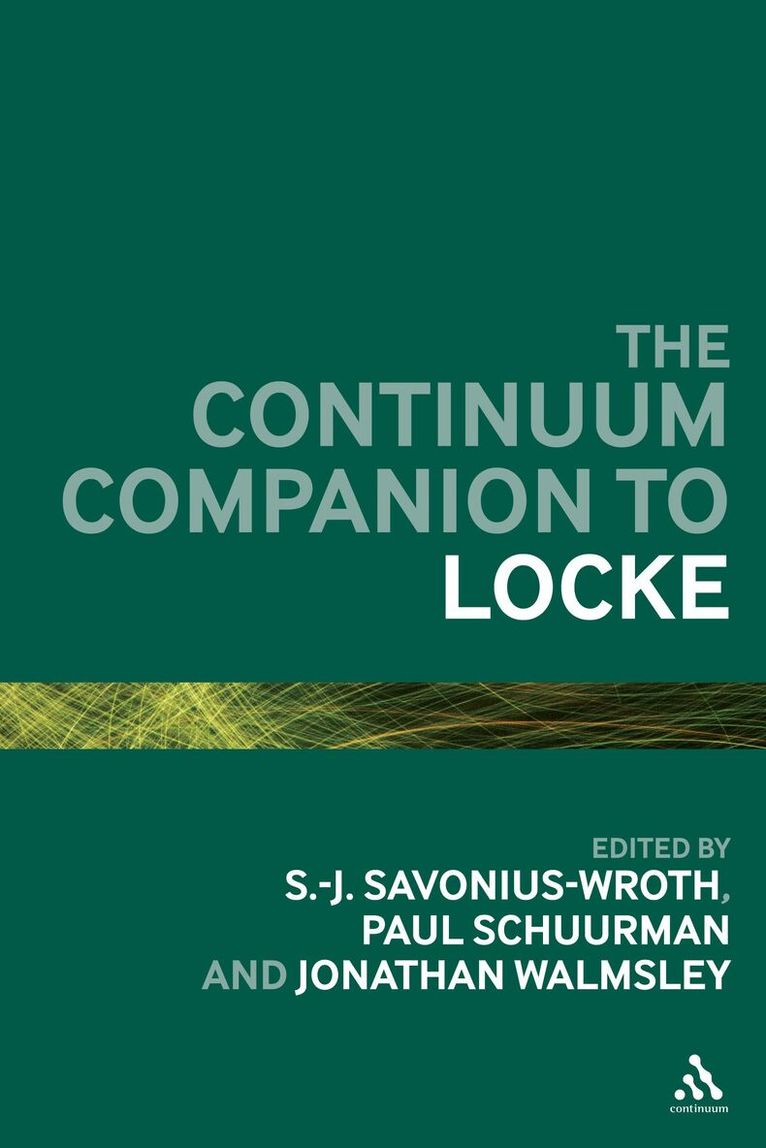
This title includes contributions from an international team of leading Locke experts, covering all the key themes and topics, Locke's life, context, reception and enduring influence. John Locke (1632-1704) was a leading seventeenth-century philosopher and widely considered to be the first of the British Empiricists. One of the most influential Enlightenment thinkers, his major works and central ideas have had a significant impact on the development of key areas in political philosophy and epistemology. This comprehensive and accessible guide to Locke's life and work includes more than 90 specially commissioned entries, written by a team of leading experts, covering every aspect of Locke's thought. The Companion presents details of Locke's life, historical and philosophical context, a comprehensive overview of the all the key themes and topics apparent in his work, and a thorough account of his reception and enduring influence. This is an essential reference tool for anyone working in the fields of Locke Studies and Seventeenth-Century Philosophy."The Continuum Companions" series is a major series of single volume companions to key research fields in the humanities aimed at postgraduate students, scholars and libraries. Each companion offers a comprehensive reference resource giving an overview of key topics, research areas, new directions and a manageable guide to beginning or developing research in the field. A distinctive feature of the series is that each companion provides practical guidance on advanced study and research in the field, including research methods and subject specific resources. This title features 50-60 contributors, including the editor of the competing "Cambridge Companion".
Dictionary of Seventeenth and Eighteenth-Century Dutch Philosophers: Volume I
Inbunden, Engelska, 2017
2 942 kr
Skickas inom 10-15 vardagar
The Dictionary of Seventeenth and Eighteenth-Century Dutch Philosophers covers the 200-year period of the Dutch Republic, when its people experienced a Golden Age in the arts, in sea trade and in philosophy that left a lasting impression on European culture. The Dutch witnessed nothing less than a philosophical revolution, driven to a large extent by the migres from France, Finland, Portugal, Britain, Switzerland, Germany and elsewhere, who provided the Golden Age with its thinkers. As a result of the unique position held by the Netherlands during the period, this dictionary constitutes an anthology of European thought at large. Included are all foreign thinkers (such as Rene Descartes and Pierre Bayle) who exercised a major influence on the philosophical life of the Dutch Republic and who developed their ideas through interaction with other philosophers residing there. Among these resident philosophers, as well as all the well-known figures such as Benedict Spinoza, many lesser-known ones are included. Each entry includes a bibliography listing the subject's major and minor philosophical writings and giving guidance to further reading. A system of cross-references makes it easy for the reader to pursue connections and influences. In addition, the dictionary features entries on Dutch universities, city academies, publishing houses and journals. This work will be of interest to all students and scholars of the period.
Dictionary of Seventeenth and Eighteenth-Century Dutch Philosophers: Volume II
Inbunden, Engelska, 2017
7 112 kr
Skickas inom 10-15 vardagar
The Dictionary of Seventeenth and Eighteenth-Century Dutch Philosophers covers the 200-year period of the Dutch Republic, when its people experienced a Golden Age in the arts, in sea trade and in philosophy that left a lasting impression on European culture. The Dutch witnessed nothing less than a philosophical revolution, driven to a large extent by the migres from France, Finland, Portugal, Britain, Switzerland, Germany and elsewhere, who provided the Golden Age with its thinkers.As a result of the unique position held by the Netherlands during the period, this dictionary constitutes an anthology of European thought at large. Included are all foreign thinkers (such as Rene Descartes and Pierre Bayle) who exercised a major influence on the philosophical life of the Dutch Republic and who developed their ideas through interaction with other philosophers residing there. Among these resident philosophers, as well as all the well-known figures such as Benedict Spinoza, many lesser-known ones are included.Each entry includes a bibliography listing the subject's major and minor philosophical writings and giving guidance to further reading. A system of cross-references makes it easy for the reader to pursue connections and influences. In addition, the dictionary features entries on Dutch universities, city academies, publishing houses and journals. This work will be of interest to all students and scholars of the period.
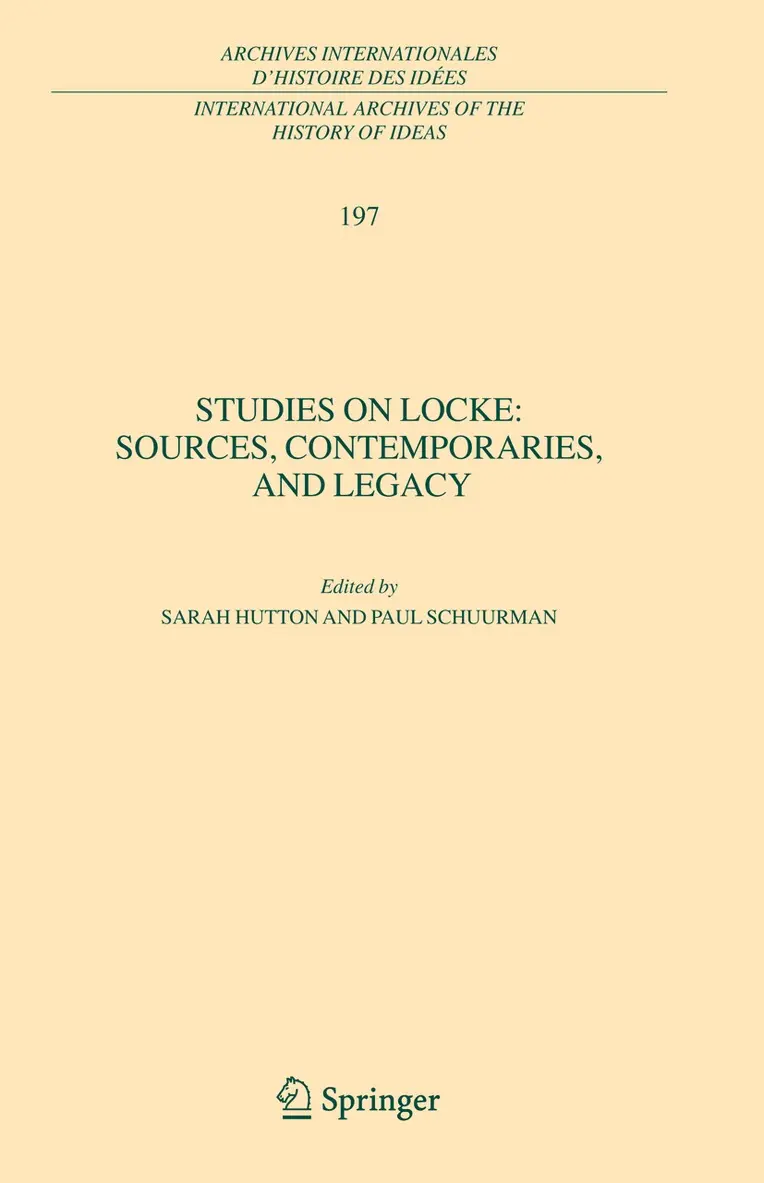
Studies on Locke: Sources, Contemporaries, and Legacy
In Honour of G.A.J. Rogers
Häftad, Engelska, 2008
1 577 kr
Skickas inom 10-15 vardagar
John Cottingham In the anglophone philosophical world, there has, for some time, been a curious relationship between the history of philosophy and contemporary philosophical - quiry. Many philosophers working today virtually ignore the history of their s- ject, apparently regarding it as an antiquarian pursuit with little relevance to their “cutting-edge” research. Conversely, there are historians of philosophy who seldom if ever concern themselves with the intricate technical debates that ll the journals devoted to modern analytic philosophy. Both sides are surely the poorer for this strange bifurcation. For philosophy, like all parts of our intellectual culture, did not come into existence out of nowhere, but was shaped and nurtured by a long tradition; in uncovering the roots of that tradition we begin see current philoso- ical problems in a broader context and thereby enrich our understanding of their signi cance. This is surely part of the justi cation for the practice, in almost every university, of including elements from the history of philosophy as a basic part of the undergraduate curriculum. But understanding is enriched by looking forwards as well as backwards, which is why a good historian of philosophy will not just be c- cerned with uncovering ancient ideas, but will be constantly alert to how those ideas pre gure and anticipate later developments.
507 kr
Skickas inom 7-10 vardagar
John Locke (1632-1704) was a leading seventeenth-century philosopher and widely considered to be the first of the British Empiricists. One of the most influential Enlightenment thinkers, his major works and central ideas have had a significant impact on the development of key areas in political philosophy and epistemology. The Bloomsbury Companion to Locke is a comprehensive and accessible resource to Locke's life and work, his contemporaries and critics, his key concepts and enduring influence. Including more than 80 specially commissioned entries, written by a team of leading experts, topics range from absolutism to toleration, from education to socinianism. The Companion features a series of indispensable research tools including a chronology of Locke’s life, an A-Z of his key concepts and synopses of his principal writings. This is an essential resource for anyone working in the fields of Locke Studies and Seventeenth-Century Philosophy.
Del 383 - Studies in the History of Western Philosophy
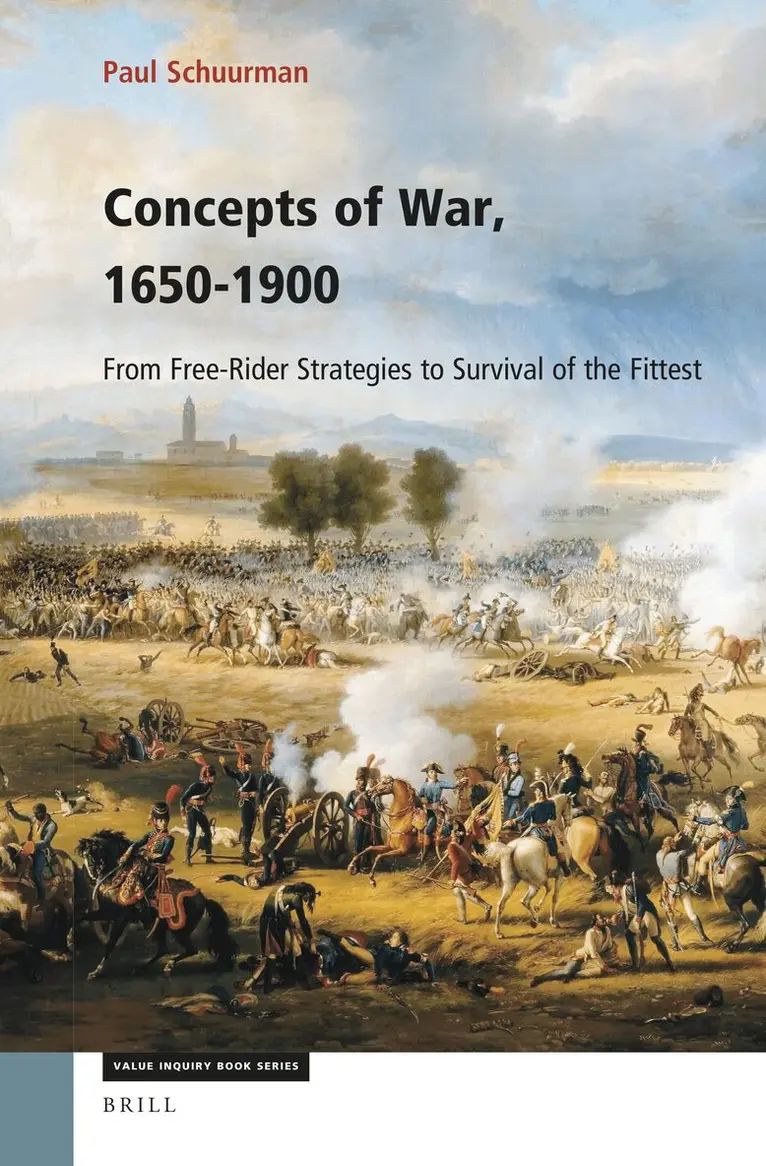
Concepts of War, 1650-1900
From Free-Rider Strategies to Survival of the Fittest
Inbunden, Engelska, 2023
2 456 kr
Skickas inom 5-8 vardagar
Why do people wage war? How can wars be won? How has warfare been an engine of change for human civilization—for better and for worse? In this book Paul Schuurman shows how some of the best Western minds between 1650 and 1900 tried to answer these questions in an epoch when European developments became a matter of global concern. In eight wide-ranging chapters he discusses the key concepts that philosophers and generals of this era developed to grasp and influence the dramatic phenomenon of war. Their concepts remain fresh and relevant down to the present day.
Studies on Locke: Sources, Contemporaries, and Legacy
In Honour of G.A.J. Rogers
Häftad, Engelska, 2010
1 786 kr
Skickas inom 10-15 vardagar
John Cottingham In the anglophone philosophical world, there has, for some time, been a curious relationship between the history of philosophy and contemporary philosophical - quiry. Many philosophers working today virtually ignore the history of their s- ject, apparently regarding it as an antiquarian pursuit with little relevance to their “cutting-edge” research. Conversely, there are historians of philosophy who seldom if ever concern themselves with the intricate technical debates that ll the journals devoted to modern analytic philosophy. Both sides are surely the poorer for this strange bifurcation. For philosophy, like all parts of our intellectual culture, did not come into existence out of nowhere, but was shaped and nurtured by a long tradition; in uncovering the roots of that tradition we begin see current philoso- ical problems in a broader context and thereby enrich our understanding of their signi cance. This is surely part of the justi cation for the practice, in almost every university, of including elements from the history of philosophy as a basic part of the undergraduate curriculum. But understanding is enriched by looking forwards as well as backwards, which is why a good historian of philosophy will not just be c- cerned with uncovering ancient ideas, but will be constantly alert to how those ideas pre gure and anticipate later developments.