Paul Turnbull - Böcker
Visar alla böcker från författaren Paul Turnbull. Handla med fri frakt och snabb leverans.
5 produkter
5 produkter
2 151 kr
Skickas inom 10-15 vardagar
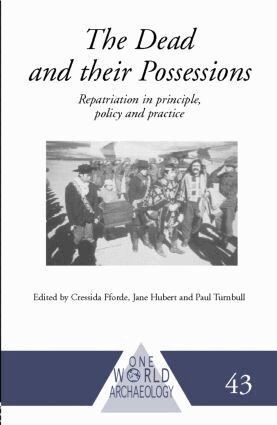
Inspired by a key session for the World Archaeological Congress in South Africa, The Dead and their Possessions is the first book to tackle the principle, policy and practice of repatriating museum artefacts, rather than cultural heritage in general.Increasingly, indigenous people world-wide are asserting their fundamental right to determine the future of the human remains of their ancestors, and are requesting their return, often for reburial, with varying degrees of success. This repatriation campaign has become hugely significant in universities and museums where human remains uncovered through archaeological excavation have been retained for the scientific study of past populations. This book will be invaluable to those involved in the collection and repatriation of remains and cultural objects to indigenous groups.
658 kr
Skickas inom 10-15 vardagar
Inspired by a key session for the World Archaeological Congress in South Africa, The Dead and their Possessions is the first book to tackle the principle, policy and practice of repatriating museum artefacts, rather than cultural heritage in general.Increasingly, indigenous people world-wide are asserting their fundamental right to determine the future of the human remains of their ancestors, and are requesting their return, often for reburial, with varying degrees of success. This repatriation campaign has become hugely significant in universities and museums where human remains uncovered through archaeological excavation have been retained for the scientific study of past populations. This book will be invaluable to those involved in the collection and repatriation of remains and cultural objects to indigenous groups.
566 kr
Skickas inom 3-6 vardagar
Indigenous peoples have long sought the return of ancestral human remains and associated artefacts from western museums and scientific institutions. Since the late 1970s their efforts have led museum curators and researchers to re-evaluate their practices and policies in respect to the scientific uses of human remains. New partnerships have been established between cultural and scientific institutions and indigenous communities. Human remains and culturally significant objects have been returned to the care of indigenous communities, although the fate of bones and burial artefacts in numerous collections remains unresolved and, in some instances, the subject of controversy. In this book, leading researchers from a wide range of disciplines in the humanities and social sciences reflect critically on the historical, cultural, ethical and scientific dimensions of repatriation. Through various case studies they consider the impact of repatriation: what have been the benefits, and in what ways has repatriation given rise to new problems for indigenous people, scientists and museum personnel.It features chapters by indigenous knowledge custodians, who reflect upon recent debates and interaction between indigenous people and researchers in disciplines with direct interests in the continued scientific preservation of human remains. In this book, leading researchers from a wide range of disciplines in the humanities and social sciences reflect critically on the historical, cultural, ethical and scientific dimensions of repatriation. Through various case studies they consider the impact of repatriation: what have been the benefits, and in what ways has repatriation given rise to new problems for indigenous people, scientists and museum personnel. It features chapters by indigenous knowledge custodians, who reflect upon recent debates and interaction between indigenous people and researchers in disciplines with direct interests in the continued scientific preservation of human remains. Paul Turnbul lis a Professor of history in the School of History, Philosophy, Religion and Classics at the University of Queensland. He has written extensively on nineteenth-century racial thought, and the theft and repatriation of Indigenous bodily remains.His recent publications include (with Cressida Fforde and Jane Hubert) the co-edited volume The Dead and their Possessions (Routledge). Michael Pickering is the Head of the Aboriginal and Torres Strait Islander Program at the National Museum of Australia and has directed the Museum's repatriation program for the past nine years. His research interests and publications include studies on material culture, cannibalism, hunter-gatherer archaeology and anthropology, heritage management, and repatriation.
1 422 kr
Skickas inom 10-15 vardagar
It explains how and why skulls and other bodily structures of Indigenous Australians became the focus of scientific curiosity about the nature and origins of human diversity from the early years of colonisation in the late eighteenth century to Australia achieving nationhood at the turn of the twentieth century.
334 kr
Skickas inom 10-15 vardagar
It explains how and why skulls and other bodily structures of Indigenous Australians became the focus of scientific curiosity about the nature and origins of human diversity from the early years of colonisation in the late eighteenth century to Australia achieving nationhood at the turn of the twentieth century.