Paul W. Mattessich - Böcker
Visar alla böcker från författaren Paul W. Mattessich. Handla med fri frakt och snabb leverans.
8 produkter
8 produkter
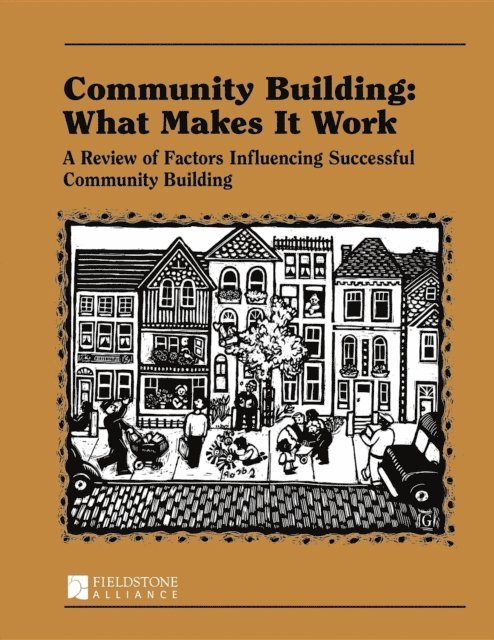
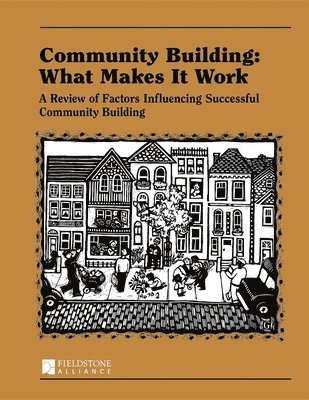
Community Building: What Makes It Work
A Review of Factors Influencing Successful Community Building
Häftad, Engelska, 1997
291 kr
Skickas inom 5-8 vardagar
This practical guide shows you what really does (and doesn't) contribute to community building success. It reveals 28 keys to help you build community more effectively and efficiently. You won't find another single report that pulls out common lessons from across community building initiatives about what works. You can use this report to find out what community characteristics contribute to successful community building, make sure key processes such as communications and technical assistance are in place, determine if community leaders or organizers have essential qualities such as a relationship of trust and flexibility, and evaluate the likely success of a proposed project or get a struggling effort back on track. Examples, definitions, and a detailed bibliography make this report even more valuable. Wilder Research Center scoured the literature, contacted resource centers, and spoke with community development experts across the country. The result is concrete, understandable research based on real-life experiences. The 28 factors in this report are grouped by: 1) characteristics of the community, 2) characteristics of the community building process, and 3) characteristics of community building organizers. Detailed descriptions and case examples of how each factor plays out are followed by practical questions you can use to assess your work. In addition to the factors, you also get working definitions for community, community building, and many other terms; a list of resources and contacts in the field; an explanation of how the research was done; and a complete bibliography of all the studies used in this report. Now you can save time looking for best-practice information. With this concise report, you've got the tools to help your community building work succeed!
Wilder Collaboration Factors Inventory
Assessing Your Collaboration's Strengths and Weaknesses
Häftad, Engelska, 2001
187 kr
Skickas inom 3-6 vardagar
This inventory is a practical tool for discovering how your collaboration is doing on the twenty factors that research has shown influence success (see Collaboration: What Makes It Work). The inventory takes about fifteen minutes to complete. It can be distributed to a small group of leaders in the collaborative, during a general meeting, or via mail to all members for the most complete picture. You can tally your score manually or online. The tool includes complete instructions for administering, scoring, and interpreting the results, plus a definition of collaboration and descriptions of the twenty success factors. Groups that are considering collaboration can use it to see if they have what they need to succeed. They can then act quickly to shore up weaknesses and capitalize on strengthsóbefore formalizing the collaboration, or in its early stages. Established collaborations can use the inventory to troubleshoot problems, demonstrate successes to funders, and uncover differences in how participating organizations perceive the collaboration. Consultants to collaborations can use the tool to help the collaboration assess itself and to intervene for the most effective results.
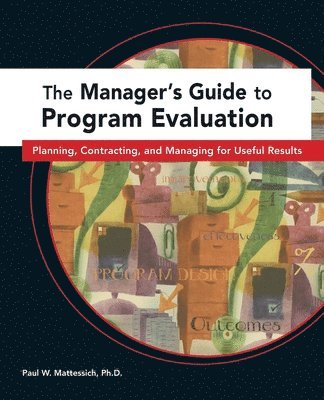
The Manager's Guide to Program Evaluation : Planning, Contracting, & Managing for Useful Results
Engelska, 2003
265 kr
Skickas inom 5-8 vardagar
257 kr
Skickas inom 3-6 vardagar
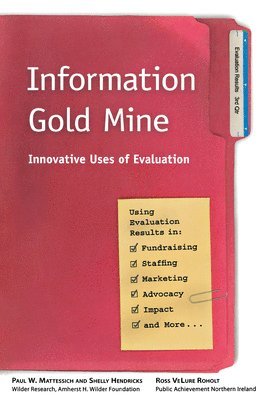
Don't Shelve that Evaluation! Use the Findings More Creatively and Effectively Traditional use of evaluation—for improving service quality—is well known. But are you using the data to full advantage? Information Gold Mine highlights 14 nonprofits that have used program evaluation in exciting, creative ways. You'll find five examples of using evaluation for improving services, five examples of influencing policy, and four examples of marketing a program. Written for non-technicians—service delivery practitioners, program designers, and managers—Information Gold Mine provides real examples and contains the ideas, suggestions, and actual words of your nonprofit colleagues. These are people who understand the realities of work in nonprofit and government service delivery organizations. You'll learn about specific changes organizations made based on evaluation findings; barriers they faced and how they overcame them; and practical advice including their most important learning and what would they have done differently. Plus, you'll find 15 key questions the authors advise you to answer if you want to improve services, 10 questions to answer if you want to influence policy and legislation, and 7 questions for marketing a program. Service providers have only scratched the surface when it comes to using evaluation information as a tool for public relations, educating consumers, influencing policy, and boosting staff morale. Information Gold Mine was written with the hope that the stories of these nonprofit will inspire more organizations to use program evaluation, as well as other forms of applied research, to accomplish tasks that will increase their strength and their impacts.
Community Building: What Makes It Work
A Review of Factors Influencing Successful Community Building
Inbunden, Engelska, 1997
436 kr
Skickas inom 3-6 vardagar
This practical guide shows you what really does (and doesn't) contribute to community building success. It reveals 28 keys to help you build community more effectively and efficiently. You won't find another single report that pulls out common lessons from across community building initiatives about what works. You can use this report to find out what community characteristics contribute to successful community building, make sure key processes such as communications and technical assistance are in place, determine if community leaders or organizers have essential qualities such as a relationship of trust and flexibility, and evaluate the likely success of a proposed project or get a struggling effort back on track. Examples, definitions, and a detailed bibliography make this report even more valuable. Wilder Research Center scoured the literature, contacted resource centers, and spoke with community development experts across the country. The result is concrete, understandable research based on real-life experiences. The 28 factors in this report are grouped by: 1) characteristics of the community, 2) characteristics of the community building process, and 3) characteristics of community building organizers. Detailed descriptions and case examples of how each factor plays out are followed by practical questions you can use to assess your work. In addition to the factors, you also get working definitions for community, community building, and many other terms; a list of resources and contacts in the field; an explanation of how the research was done; and a complete bibliography of all the studies used in this report. Now you can save time looking for best-practice information. With this concise report, you've got the tools to help your community building work succeed!
The Manager's Guide to Program Evaluation : Planning, Contracting, & Managing for Useful Results
Inbunden, Engelska, 2003
345 kr
Skickas inom 5-8 vardagar
299 kr
Skickas inom 5-8 vardagar
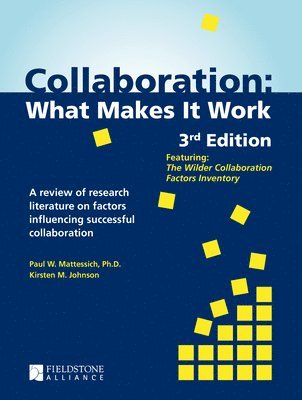
This third edition of Collaboration: What Makes It Work—written nearly 25 years after the first edition was published—is an example of the enduring importance of collaboration.Reaction to the first edition, published in 1992, showed that researchers and practitioners alike found it a useful tool. They appreciated its emphasis on providing a practical reference for decision-making that built upon credible, research-based information. The 21st century has brought with it rapid changes and increasingly complex challenges. This third edition in large part responds to the complexity witnessed daily in the authors' work with community, nonprofit, and government organizations. It offers new research and insights paired with practitioner wisdom, adding a “how-to” perspective to help readers put the success factors to work. Nearly 25 years after the first edition was published, it is not just the "how" of collaboration that has changed—who we are collaborating with has changed as well. Today, nearly every collaboration involves some degree of working across difference. Bringing together diverse people, organizations, or sectors in a way that will foster collaborative success requires a unique set of skills.This third edition will ground you in the factors that support successful collaboration and assist you in incorporating those factors into your work.
340 kr
Skickas inom 5-8 vardagar
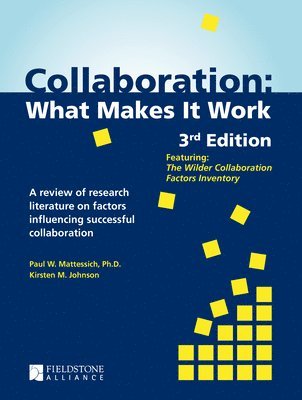
This third edition of Collaboration: What Makes It Work—written nearly 25 years after the first edition was published—is an example of the enduring importance of collaboration.Reaction to the first edition, published in 1992, showed that researchers and practitioners alike found it a useful tool. They appreciated its emphasis on providing a practical reference for decision-making that built upon credible, research-based information. The 21st century has brought with it rapid changes and increasingly complex challenges. This third edition in large part responds to the complexity witnessed daily in the authors' work with community, nonprofit, and government organizations. It offers new research and insights paired with practitioner wisdom, adding a “how-to” perspective to help readers put the success factors to work. Nearly 25 years after the first edition was published, it is not just the "how" of collaboration that has changed—who we are collaborating with has changed as well. Today, nearly every collaboration involves some degree of working across difference. Bringing together diverse people, organizations, or sectors in a way that will foster collaborative success requires a unique set of skills.This third edition will ground you in the factors that support successful collaboration and assist you in incorporating those factors into your work.