Paul W. Rhode - Böcker
Visar alla böcker från författaren Paul W. Rhode. Handla med fri frakt och snabb leverans.
8 produkter
8 produkter
4 743 kr
Skickas
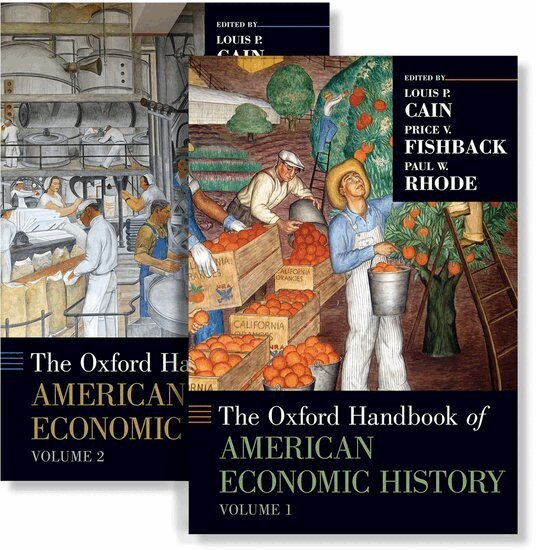
American economic history describes the transition of a handful of struggling settlements on the Atlantic seaboard into the nation with the most successful economy in the world today. As the economy has developed, so have the methods used by economic historians to analyze the process. Interest in economic history has sharply increased in recent years among the public, policy-makers, and in the academy. The current economic turmoil, calling forth comparisons with the Great Depression of the 1930s, is in part responsible for the surge in interest among the public and in policy circles. It has also stimulated greater scholarly research into past financial crises, the multiplier effects of fiscal and monetary policy, the dynamics of the housing market, and international economic cooperation and conflict. Other pressing policy issues -- including the impending retirement of the Baby-Boom generation, the ongoing expansion of the healthcare sector, and the environmental challenges imposed by global climate change -- have further increased demand for the long-run perspective given by economic history. Confronting this need, The Oxford Handbook of American Economic History affords access to the latest research on the crucial events, themes, and legacies of America's economic history -- from colonial America, to the Civil War, up to present day. More than fifty contributors address topics as wide-ranging as immigration, agriculture, and urbanization. Over its two volumes, this handbook gives readers not only a comprhensive look at where the field of American economic history currently stands but where it is headed in the years to come.
574 kr
Skickas inom 7-10 vardagar
When we think about history, we often think about people, events, ideas, and revolutions, but what about the numbers? What do the data tell us about what was, what is, and how things changed over time? Economist Robert E. Gallman (1926-98) gathered extensive data on US capital stock and created a legacy that has, until now, been difficult for researchers to access and appraise in its entirety.Gallman measured American capital stock from a range of perspectives, viewing it as the accumulation of income saved and invested, and as an input into the production process. He used the level and change in the capital stock as proxy measures for long-run economic performance. Analyzing data in this way from the end of the US colonial period to the turn of the twentieth century, Gallman placed our knowledge of the long nineteenth century--the period during which the United States began to experience per capita income growth and became a global economic leader--on a strong empirical foundation. Gallman's research was painstaking and his analysis meticulous, but he did not publish the material backing to his findings in his lifetime. Here Paul W. Rhode completes this project, giving permanence to a great economist's insights and craftsmanship. Gallman's data speak to the role of capital in the economy, which lies at the heart of many of the most pressing issues today.
331 kr
Skickas inom 7-10 vardagar
Gives permanence and context to Gallman’s influential economic research on growth theory.When we think about history, we often think about people, events, ideas, and revolutions, but what about the numbers? What do the data tell us about what was, what is, and how things changed over time? Economist Robert E. Gallman (1926–98) gathered extensive data on US capital stock and created a legacy that has, until now, been difficult for researchers to access and appraise in its entirety.Gallman measured American capital stock from a range of perspectives, viewing it as the accumulation of income saved and invested, and as an input into the production process. He used the level and change in the capital stock as proxy measures for long-run economic performance. Analyzing data in this way from the end of the US colonial period to the turn of the twentieth century, Gallman placed our knowledge of the long nineteenth century—the period during which the United States began to experience per capita income growth and became a global economic leader—on a strong empirical foundation. Gallman’s research was painstaking and his analysis meticulous, but he did not publish the material backing to his findings in his lifetime. Here Paul W. Rhode completes this project, giving permanence to a great economist’s insights and craftsmanship. Gallman’s data speak to the role of capital in the economy, which lies at the heart of many of the most pressing issues today.
383 kr
Skickas inom 7-10 vardagar
The 1990s were an extraordinary, contradictory, fascinating period of economic development, one evoking numerous historical parallels. But the 1990s are far from being well understood and their meaning for the future remains open to debate. In this volume, world-class economic historians analyze the growth of the world economy, globalization and its implications for domestic and international policy, the sources and sustainability of productivity growth in the USA, the causes of sluggish growth in Europe and Japan, comparisons of the Information Technologies revolution with previous innovation waves, the bubble and burst in asset prices and their impacts on the real economy, the effects of trade and factor mobility on the global distribution of income, and the changes in the welfare state, regulation, and macro-policy making. Leading scholars place the 1990s in a fuller long-run global context, offering insights into what lies ahead for the world economy in the twenty-first century.
410 kr
Skickas inom 7-10 vardagar
This book demonstrates that American agricultural development was far more dynamic than generally portrayed. In the two centuries before World War II, a stream of biological innovations revolutionized the crop and livestock sectors, increasing both land and labor productivity. Biological innovations were essential for the movement of agriculture onto new lands with more extreme climates, for maintaining production in the face of evolving threats from pests, and for the creation of the modern livestock sector. These innovations established the foundation for the subsequent Green and Genetic Revolutions. The book challenges the misconceptions that, before the advent of hybrid corn, American farmers single-mindedly invested in labor-saving mechanical technologies and that biological technologies were static.
Creating Abundance
Biological Innovation and American Agricultural Development
Inbunden, Engelska, 2008
534 kr
Skickas inom 7-10 vardagar
This book demonstrates that American agricultural development was far more dynamic than generally portrayed. In the two centuries before World War II, a stream of biological innovations revolutionized the crop and livestock sectors, increasing both land and labor productivity. Biological innovations were essential for the movement of agriculture onto new lands with more extreme climates, for maintaining production in the face of evolving threats from pests, and for the creation of the modern livestock sector. These innovations established the foundation for the subsequent Green and Genetic Revolutions. The book challenges the misconceptions that, before the advent of hybrid corn, American farmers single-mindedly invested in labor-saving mechanical technologies and that biological technologies were static.
Arresting Contagion
Science, Policy, and Conflicts over Animal Disease Control
Inbunden, Engelska, 2015
511 kr
Skickas inom 10-15 vardagar
Over sixty percent of all infectious human diseases, including tuberculosis, influenza, cholera, and hundreds more, are shared with other vertebrate animals. Arresting Contagion tells the story of how early efforts to combat livestock infections turned the United States from a disease-prone nation into a world leader in controlling communicable diseases. Alan Olmstead and Paul Rhode show that many innovations devised in the fight against animal diseases, ranging from border control and food inspection to drug regulations and the creation of federal research labs, provided the foundation for modern food safety programs and remain at the heart of U.S. public health policy.America’s first concerted effort to control livestock diseases dates to the founding of the Bureau of Animal Industry (BAI) in 1884. Because the BAI represented a milestone in federal regulation of commerce and industry, the agency encountered major jurisdictional and constitutional obstacles. Nevertheless, it proved effective in halting the spread of diseases, counting among its early breakthroughs the discovery of Salmonella and advances in the understanding of vector-borne diseases.By the 1940s, government policies had eliminated several major animal diseases, saving hundreds of thousands of lives and establishing a model for eradication that would be used around the world. Although scientific advances played a key role, government interventions did as well. Today, a dominant economic ideology frowns on government regulation of the economy, but the authors argue that in this case it was an essential force for good.
941 kr
Skickas inom 10-15 vardagar
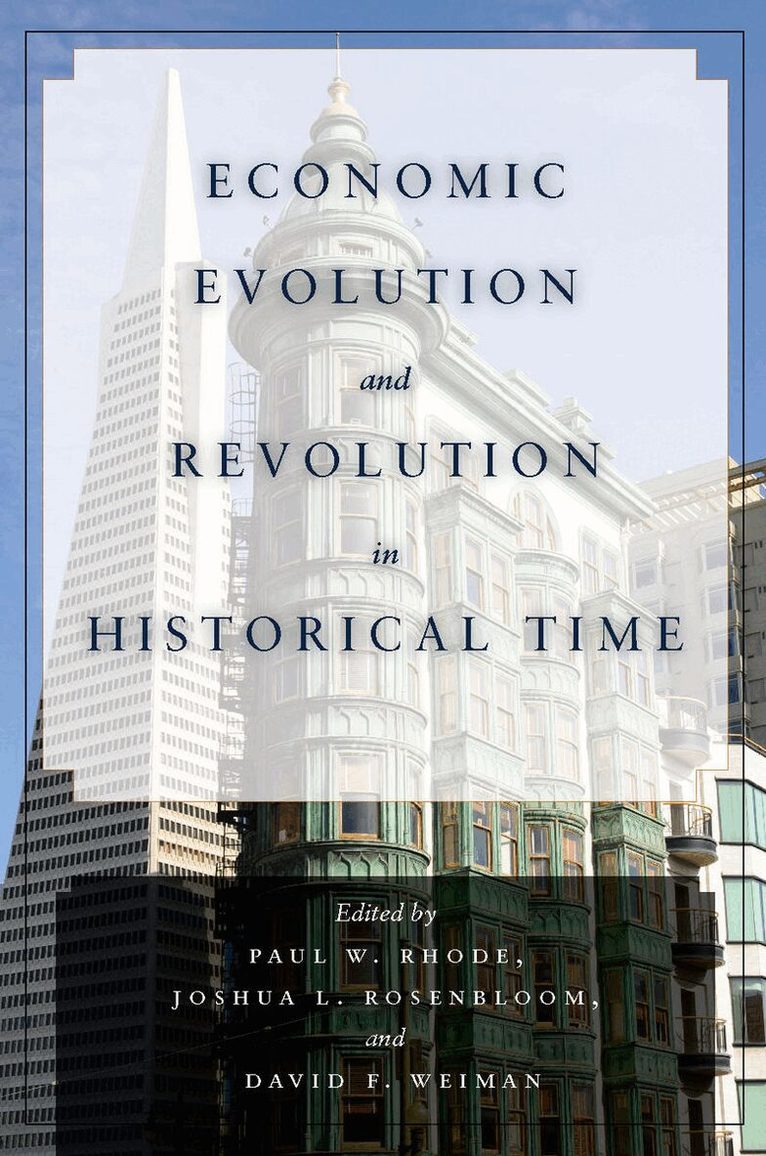
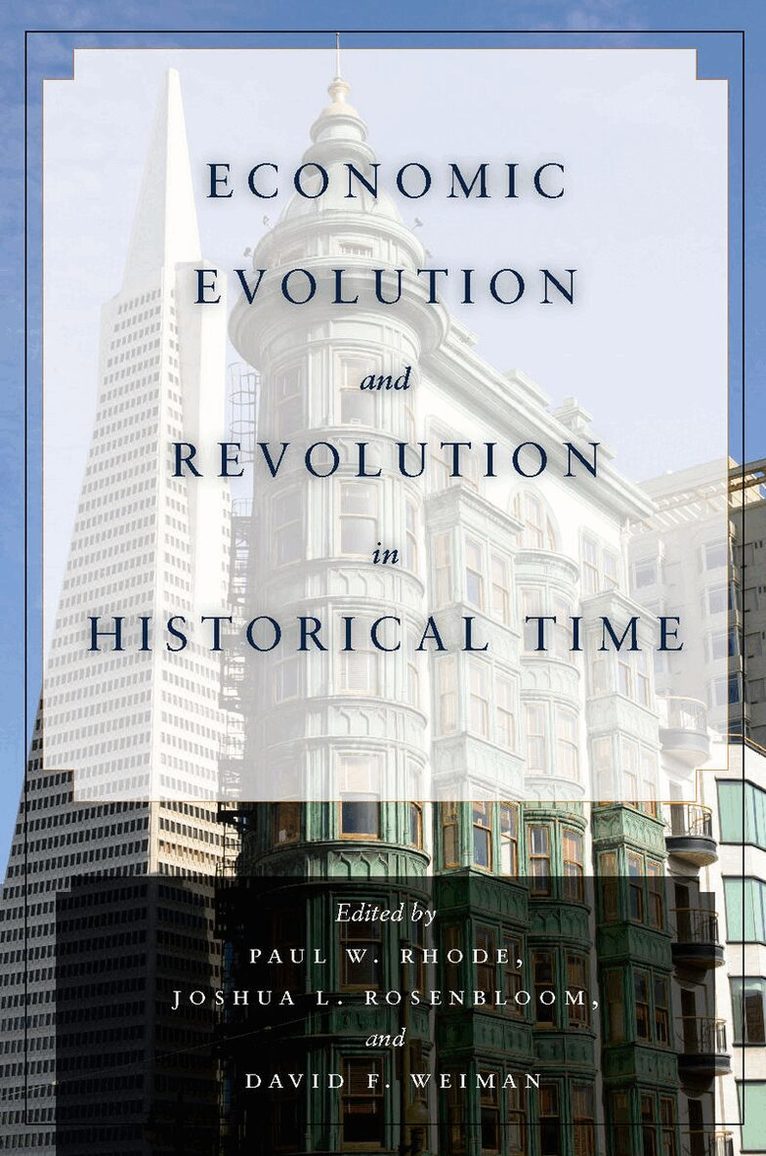
This book challenges the static, ahistorical models on which Economics continues to rely. These models presume that markets operate on a "frictionless" plane where abstract forces play out independent of their institutional and spatial contexts, and of the influences of the past. In reality, at any point in time exogenous factors are themselves outcomes of complex historical processes. They are shaped by institutional and spatial contexts, which are "carriers of history," including past economic dynamics and market outcomes.To examine the connections between gradual, evolutionary change and more dramatic, revolutionary shifts the text takes on a wide array of historically salient economic questions—ranging from how formative, European encounters reconfigured the political economies of indigenous populations in Africa, the Americas, and Australia to how the rise and fall of the New Deal order reconfigured labor market institutions and outcomes in the twentieth century United States. These explorations are joined by a common focus on formative institutions, spatial structures, and market processes. Through historically informed economic analyses, contributors recognize the myriad interdependencies among these three frames, as well as their distinct logics and temporal rhythms.