Paula Jones - Böcker
Visar alla böcker från författaren Paula Jones. Handla med fri frakt och snabb leverans.
11 produkter
11 produkter
108 kr
Skickas inom 5-8 vardagar
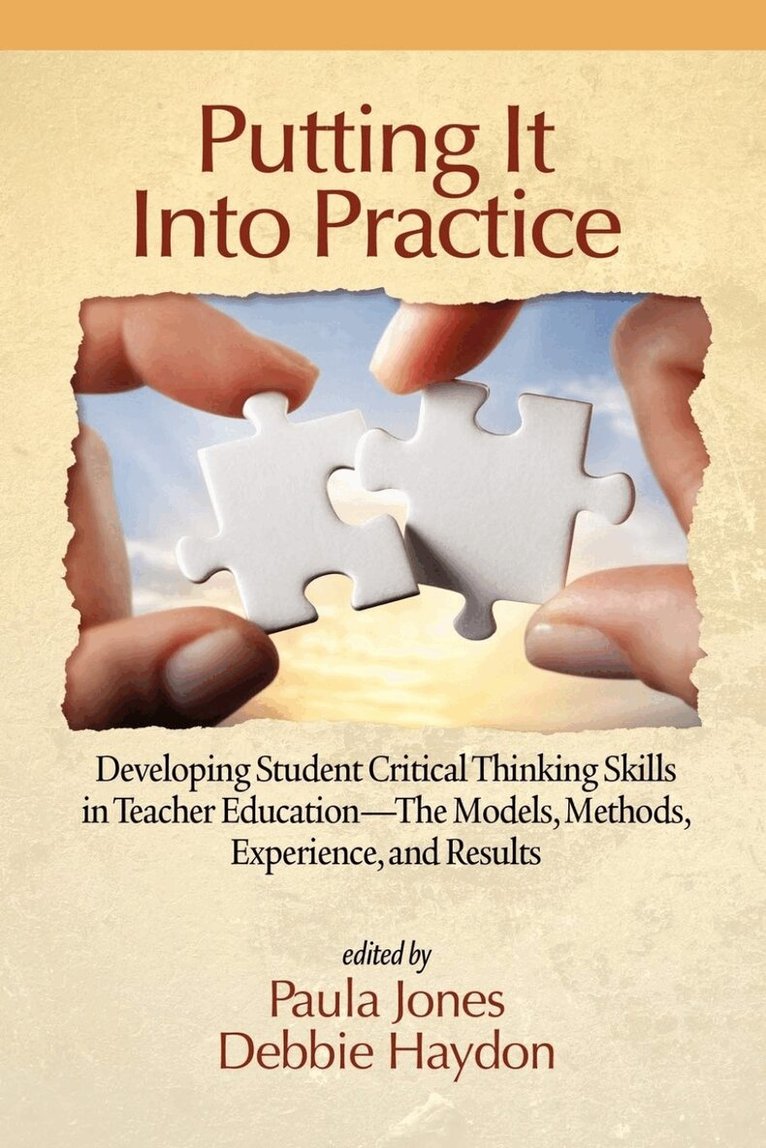
Putting It Into Practice
Developing Student Critical Thinking Skills in Teacher Education - The Models, Methods, Experience, and Results
Häftad, Engelska, 2012
518 kr
Skickas inom 7-10 vardagar
Most teachers would agree that they teach reasoning skills in their classes. However, are they explicitly incorporating strategies that teach students to think critically? If so, how do they know these methods are effective? The purpose of this book is to summarize and share a variety of methods for developing students’ critical thinking skills. Each chapter focuses on a select teacher education class where the instructor implemented components of the Paul and Elder Model of Critical Thinking.Written from the instructor’s point of view, each chapter details how each instructor utilized components of the Paul and Elder Model to support students in the development of their critical thinking skills. Importantly, each instructor's use of the model varied and those variations are shared in detail. Chapter authors found that utilizing components of the Paul and Elder Model resulted in more consistent use of critical thinking skills by students within their teacher education classes. In this practice-based book, interested teachers will be challenged to think through the methods they currently use in their own classes and will be provided new ideas or strategies to try.
Putting It Into Practice
Developing Student Critical Thinking Skills in Teacher Education - The Models, Methods, Experience, and Results
Inbunden, Engelska, 2012
952 kr
Skickas inom 7-10 vardagar
Most teachers would agree that they teach reasoning skills in their classes. However, are they explicitly incorporating strategies that teach students to think critically? If so, how do they know these methods are effective? The purpose of this book is to summarize and share a variety of methods for developing students’ critical thinking skills. Each chapter focuses on a select teacher education class where the instructor implemented components of the Paul and Elder Model of Critical Thinking.Written from the instructor’s point of view, each chapter details how each instructor utilized components of the Paul and Elder Model to support students in the development of their critical thinking skills. Importantly, each instructor's use of the model varied and those variations are shared in detail. Chapter authors found that utilizing components of the Paul and Elder Model resulted in more consistent use of critical thinking skills by students within their teacher education classes. In this practice-based book, interested teachers will be challenged to think through the methods they currently use in their own classes and will be provided new ideas or strategies to try.
189 kr
Skickas inom 5-8 vardagar
202 kr
Skickas inom 3-6 vardagar
2 155 kr
Skickas inom 10-15 vardagar
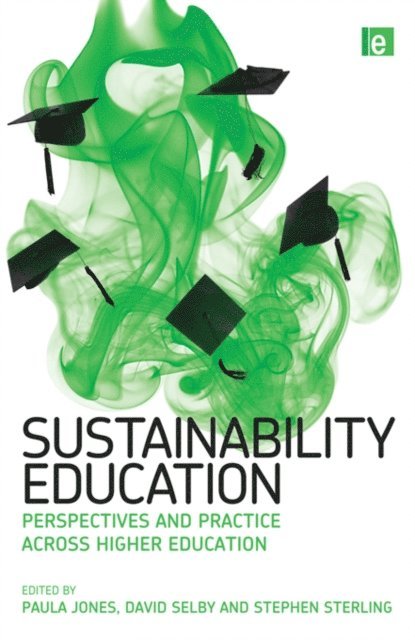
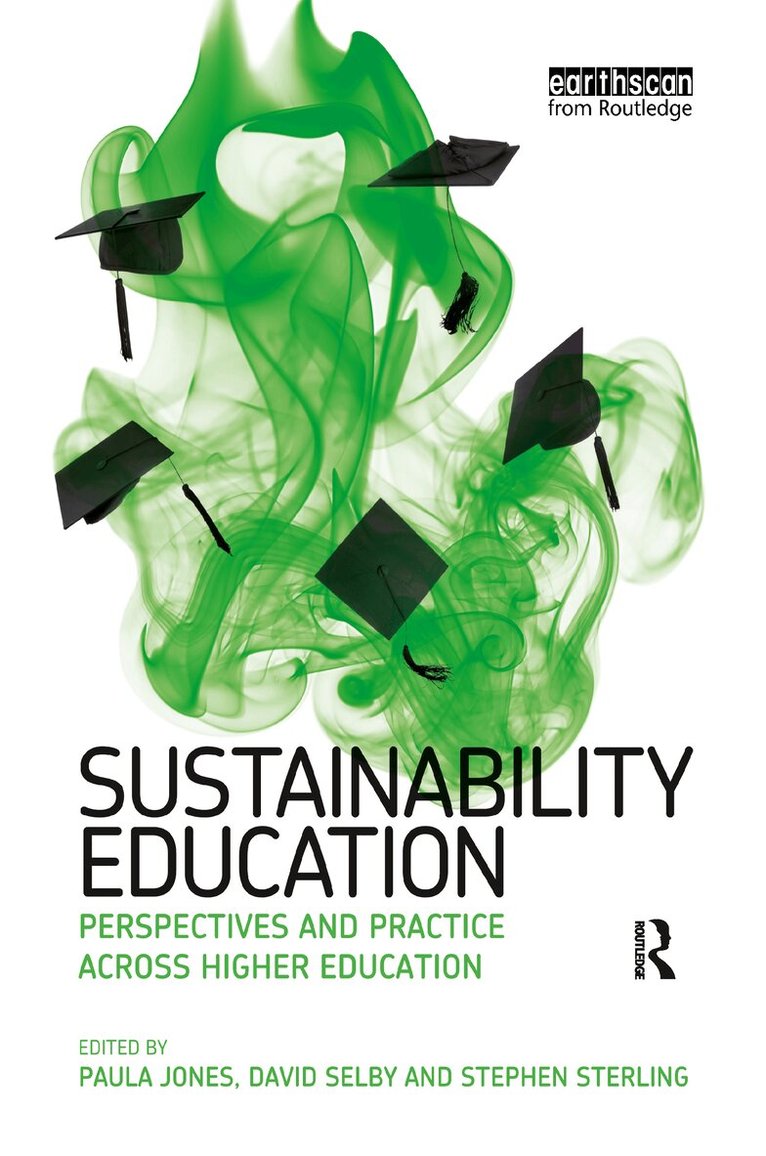
How do we equip learners with the values, knowledge, skills, and motivation to help achieve economic, social and ecological well-being? How can universities make a major contribution towards a more sustainable future? Amid rising expectations on HE from professional associations, funders, policy makers, and undergraduates, and increasing interest amongst academics and senior management, a growing number of higher education institutions are taking the lead in embracing sustainability. This response does not only include greening the campus but also transforming curricula and teaching and learning. This book explains why this is necessary and – crucially – how to do it. Bringing together the experience of the HEFCE funded Centre for Sustainable Futures (CSF) at the University of Plymouth and the Higher Education Academy's Education for Sustainable Development Project, the book distills out the curriculum contributions of a wide range of disciplinary areas to sustainability. The first part of the book provides background on the current status of sustainability within higher education, including chapters discussing interdisciplinarity, international perspectives and pedagogy. The second part features 13 chapter case studies from teachers and lecturers in diverse disciplines, describing what has worked, how and why - and what hasn't. Whilst the book is organised by traditional disciplines, the authors and editors emphasise transferable lessons and interdisciplinarity so that readers can learn from examples outside their own area to embed sustainability within their own curricula and teaching. Subject areas covered include: geography, environmental and Earth Sciences, nursing/health, law, dance, drama, music, engineering, media and cultural studies, art and design, theology, social work, economics, languages, education, business and built environment.
753 kr
Skickas inom 10-15 vardagar
How do we equip learners with the values, knowledge, skills, and motivation to help achieve economic, social and ecological well-being? How can universities make a major contribution towards a more sustainable future? Amid rising expectations on HE from professional associations, funders, policy makers, and undergraduates, and increasing interest amongst academics and senior management, a growing number of higher education institutions are taking the lead in embracing sustainability. This response does not only include greening the campus but also transforming curricula and teaching and learning. This book explains why this is necessary and – crucially – how to do it. Bringing together the experience of the HEFCE funded Centre for Sustainable Futures (CSF) at the University of Plymouth and the Higher Education Academy's Education for Sustainable Development Project, the book distills out the curriculum contributions of a wide range of disciplinary areas to sustainability. The first part of the book provides background on the current status of sustainability within higher education, including chapters discussing interdisciplinarity, international perspectives and pedagogy. The second part features 13 chapter case studies from teachers and lecturers in diverse disciplines, describing what has worked, how and why - and what hasn't. Whilst the book is organised by traditional disciplines, the authors and editors emphasise transferable lessons and interdisciplinarity so that readers can learn from examples outside their own area to embed sustainability within their own curricula and teaching. Subject areas covered include: geography, environmental and Earth Sciences, nursing/health, law, dance, drama, music, engineering, media and cultural studies, art and design, theology, social work, economics, languages, education, business and built environment.
406 kr
Skickas inom 5-8 vardagar
147 kr
Skickas inom 5-8 vardagar
247 kr
Skickas inom 5-8 vardagar
254 kr
Skickas inom 5-8 vardagar