Paula Martin - Böcker
Visar alla böcker från författaren Paula Martin. Handla med fri frakt och snabb leverans.
10 produkter
10 produkter
167 kr
Skickas inom 7-10 vardagar
Whether working on an international project for a Fortune 500 company or organizing a family reunion, you need effective project management to ensure timely and efficient completion of projects. This helpful guide offers explanations of everything needed to get started in project management including: how to initiate a project and lead the project team, how to structure the project and plan for resources, how to monitor and track the plan, and how to close out the project. Packed with practical advice, this book includes tips to increase success, reveals common pitfalls to avoid, and presents case studies to show and why project management actually works.Paula Martin (Torrington, CT) is the CEO of Martin Tate, a management consulting and training company. She works with project teams to help them improve performance and has been a consultant on issues related to improving organization performance for over ten years.Karen Tate (Cincinnati, OH) is the President of MartinTate and is a Project Management Professional. She has over twenty years of project management experience and teaches project management to teams in organizations around the world.
319 kr
Skickas inom 3-6 vardagar
200 kr
Skickas inom 3-6 vardagar
294 kr
Skickas inom 3-6 vardagar
266 kr
Skickas inom 5-8 vardagar
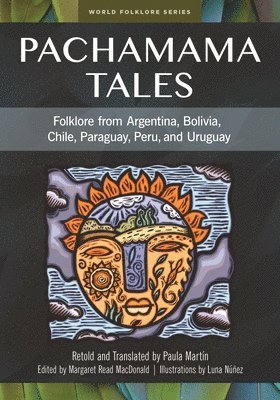
Pachamama Tales
Folklore from Argentina, Bolivia, Chile, Paraguay, Peru, and Uruguay
Inbunden, Engelska, 2014
664 kr
Skickas inom 7-10 vardagar
A bilingual collection of enchanting folk tales from the peoples of Chile, Argentina, Bolivia, Peru, Uruguay, and Paraguay, accompanied by historical and geographical background as well as color photographs.Containing numerous tales that have never before appeared in an English-language children's story collection, this book presents many of author Paula Martín's favorite stories from her many years of experience in storytelling around the world and particularly in South America. It stands as a unique folklore and storytelling resource that will give readers a better understanding of life and culture in the southern part of South America.Readers of all ages will delight in entertaining stories about animals, plants and trees, musical instruments, lost places, fantastic creatures, and witches and devils. This collection also includes never-ending tales, sky stories, and folk tales about fools. The book provides related cultural information about the lands where these stories originated as well as the people who tell these tales, traditional games of South America, and recipes for regional food items that can go hand in hand with the stories.
245 kr
Skickas inom 5-8 vardagar
245 kr
Skickas inom 5-8 vardagar
208 kr
Kommande
Cupar was created a royal burgh in 1328, though its name is Pictish, suggesting that there had been an important settlement there since the 7th or 8th century if not earlier. Until the 16th century it was among the richest royal burghs in Scotland, but declined in the 17th century, its trade handicapped by its distance from the sea. It flourished once again as a centre of the linen industry in the 18th century. As the county town of Fife, and a town which serviced travellers on their way from Edinburgh to Dundee and Aberdeen, Cupar became a 'leisure town', attracting well-off retired people and country gentry to its balls, horse races, theatre and library, as well as the services offered by banks, lawyers and doctors (and brothels).But by the mid 19th century the railway carried travellers through without stopping, industrial development shifted to west Fife where coal was plentiful, and St Andrews took over as the cultural centre of east Fife. Because the town did not develop major industries, it retains its medieval town plan and many fine buildings from its Georgian heyday.
586 kr
Skickas inom 7-10 vardagar
Approximately 26% of American adults are classified as disabled, meaning many academic librarians live with at least one disability. Much of the literature surrounding disability in libraries, however, focuses on the user rather than the library worker. Navigating Disability in the Academic Library Workplace collects ways that the library can support its workers with disabilities and encourage them to succeed. It’s a guide for librarians with disabilities on supporting and advocating for themselves in the workplace, but also a resource for able-bodied and neurotypical managers and workers to learn how to be allies. Chapters examine identities, intersections, The Americans with Disabilities Act, accommodations, advocacy, and collective care practices. Authors generously share their own stories and experiences and offer their own definitions of ableism, disability, intersectionality, and other relevant terms to help capture the diversity and magnitude of identities held by people with disabilities. Navigating Disability in the Academic Library Workplace offers a chorus of voices with different perspectives and provides ideas and resources for individuals with disabilities, supervisors, coworkers, and the profession.