Pauline Rea-Dickins – författare
2 190 kr
Skickas inom 10-15 vardagar
771 kr
Skickas inom 10-15 vardagar
552 kr
Skickas inom 10-15 vardagar
654 kr
Läs direkt efter köp
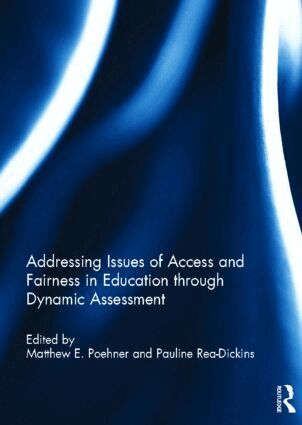
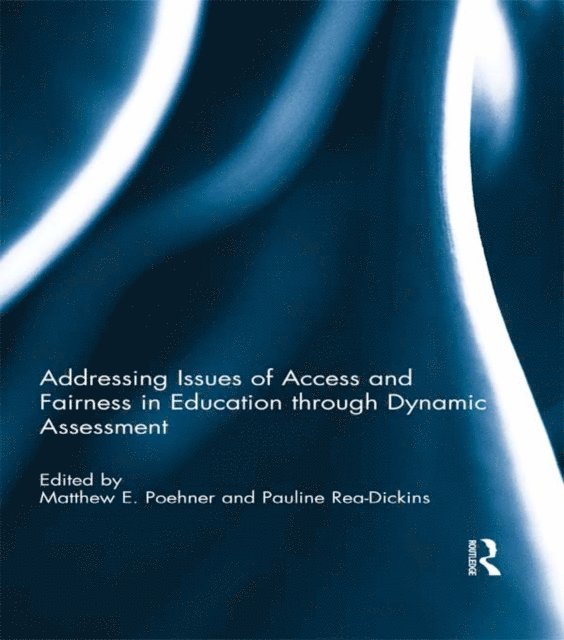
Increased emphasis in many school systems on formal testing to mark student achievement and hold teachers accountable has begun to heighten concern among many educational policy makers, assessment specialists, and classroom teachers over questions of access and fairness, particularly for learners from culturally different backgrounds and those with a history of academic struggles. This situation echoes that faced by the Russian psychologist L. S. Vygotsky nearly ninety years ago in his efforts to understand processes of development and meet the needs of all learners. His famous proposal of the Zone of Proximal Development (ZPD) holds that assessments must take account not only of abilities that have fully formed but also those that are still emerging. The diagnostic value of the ZPD lies in identifying the underlying source of learner difficulties as well as their future potential. Since Vygotsky’s time, psychologists and educators have devised a range of practices for engaging with learners in ZPD activity that have come to be known as Dynamic Assessment (DA). In DA, assessors go beyond observations of independent performance and engage cooperatively with learners to both understand and support their development.
This process is in full evidence in the papers in this collection, which offers a cross section of applications of DA with diverse populations, including special needs learners, immigrant and minority students, and second language learners. While these papers may be read as cutting-edge academic research, they also represent a commitment to going beyond manifest difficulties and failures to help individuals construct a more positive future.
This book was originally published as a special issue of Assessment in Education: Principles, Policy & Practice.
654 kr
Läs direkt efter köp
Increased emphasis in many school systems on formal testing to mark student achievement and hold teachers accountable has begun to heighten concern among many educational policy makers, assessment specialists, and classroom teachers over questions of access and fairness, particularly for learners from culturally different backgrounds and those with a history of academic struggles. This situation echoes that faced by the Russian psychologist L. S. Vygotsky nearly ninety years ago in his efforts to understand processes of development and meet the needs of all learners. His famous proposal of the Zone of Proximal Development (ZPD) holds that assessments must take account not only of abilities that have fully formed but also those that are still emerging. The diagnostic value of the ZPD lies in identifying the underlying source of learner difficulties as well as their future potential. Since Vygotsky’s time, psychologists and educators have devised a range of practices for engaging with learners in ZPD activity that have come to be known as Dynamic Assessment (DA). In DA, assessors go beyond observations of independent performance and engage cooperatively with learners to both understand and support their development.
This process is in full evidence in the papers in this collection, which offers a cross section of applications of DA with diverse populations, including special needs learners, immigrant and minority students, and second language learners. While these papers may be read as cutting-edge academic research, they also represent a commitment to going beyond manifest difficulties and failures to help individuals construct a more positive future.
This book was originally published as a special issue of Assessment in Education: Principles, Policy & Practice.
915 kr
Läs direkt efter köp
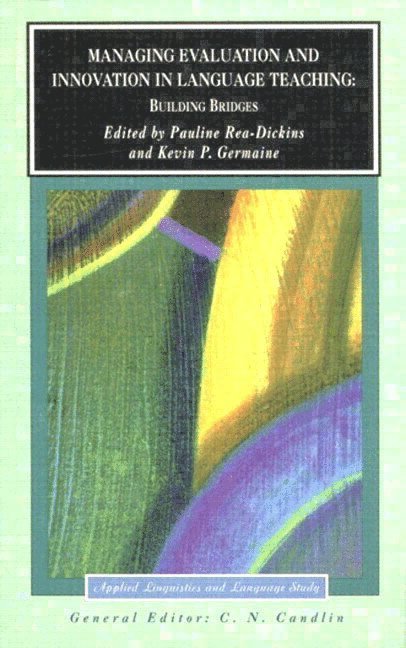
Managing Evaluation and Innovation in Language Teaching focuses on the connections to be made between evaluation and change in language education with a specific focus on English Language Teaching. The book demonstrates the central importance of evaluation in relation to language projects and programmes, the management of change and innovation, and in improving language teacher development. The introductory chapter provides an overview of the present trends in evaluation as well as offering examples of recent evaluation projects. Subsequent chapters identify contemporary issues in evaluation and their relevance to language teaching, covering a number of cultural and ethnographic studies in evaluation management in different world-wide contexts, as well as drawing insights from other related disciplines. The editors seek to draw attention to the possibilities of inter-disciplinary exchange to inform the reader of current practice, and highlight emerging issues in the expanding field of evaluation in language teaching, especially in ELT. The contemporary nature of the studies presented here will be relevant to both post graduate students following language education programmes as well as to professionals involved in language teaching. It will be of particular interest to those involved in the management of innovation and the evaluation of projects and programmes, such as curriculum developers, Director of Studies, and professionals with a special responsibility for bringing about change in language teaching contexts.
915 kr
Läs direkt efter köp
Managing Evaluation and Innovation in Language Teaching focuses on the connections to be made between evaluation and change in language education with a specific focus on English Language Teaching. The book demonstrates the central importance of evaluation in relation to language projects and programmes, the management of change and innovation, and in improving language teacher development. The introductory chapter provides an overview of the present trends in evaluation as well as offering examples of recent evaluation projects. Subsequent chapters identify contemporary issues in evaluation and their relevance to language teaching, covering a number of cultural and ethnographic studies in evaluation management in different world-wide contexts, as well as drawing insights from other related disciplines. The editors seek to draw attention to the possibilities of inter-disciplinary exchange to inform the reader of current practice, and highlight emerging issues in the expanding field of evaluation in language teaching, especially in ELT. The contemporary nature of the studies presented here will be relevant to both post graduate students following language education programmes as well as to professionals involved in language teaching. It will be of particular interest to those involved in the management of innovation and the evaluation of projects and programmes, such as curriculum developers, Director of Studies, and professionals with a special responsibility for bringing about change in language teaching contexts.
557 kr
Skickas inom 5-8 vardagar