Pavel Baev – författare
Visar alla böcker från författaren Pavel Baev. Handla med fri frakt och snabb leverans.
3 produkter
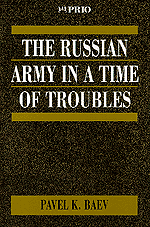
The Russian Army in a Time of Troubles
Av Pavel Baev
Inbunden, 1996
3203 kr
Lägg i varukorg
This study of the Russian army and how it has fared in the uncertain transitional period since independence in December 1991 provides the basis for understanding its present and potential future role in the new political developments within Russia. Following an historical overview of Russia's …
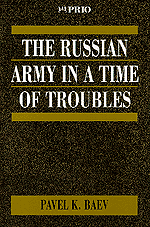
The Russian Army in a Time of Troubles
Av Pavel Baev
Häftad, 1996
1791 kr
Lägg i varukorg
This study of the Russian army and how it has fared in the uncertain transitional period since independence in December 1991 provides the basis for understanding its present and potential future role in the new political developments within Russia. Following an historical overview of Russia's …
Geopolitics in Post-Wall Europe
Security, Territory and Identity
Av Ola Tunander, Pavel Baev m. fl.
Häftad, 1997
1764 kr
Lägg i varukorg
The fall of the Berlin Wall symbolized a dramatic turning point in the history of European politics and security. Geopolitics in Post-Wall Europe highlights the new relations between politics, culture and territory. It analyzes the major geopolitical shifts in the connection between security and …