Paweł D. Domański - Böcker
Visar alla böcker från författaren Paweł D. Domański. Handla med fri frakt och snabb leverans.
4 produkter
4 produkter
942 kr
Skickas inom 10-15 vardagar
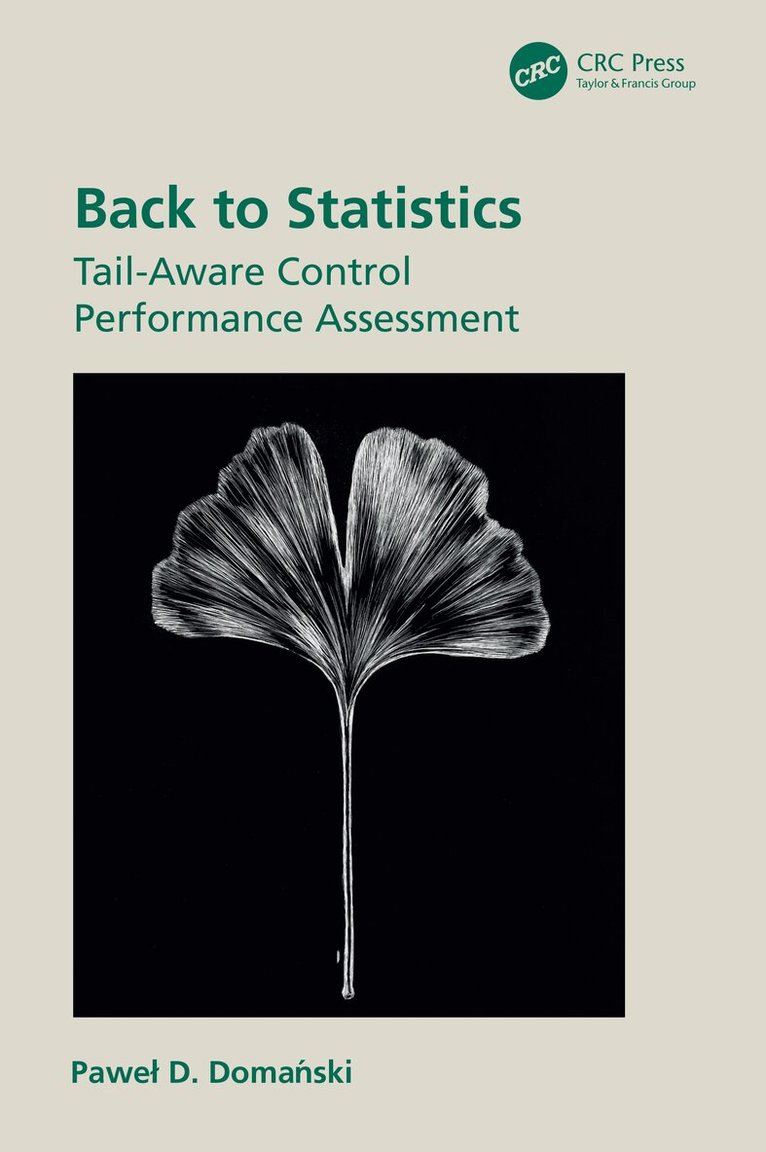
Due to the popularity of artificial intelligence today, scientists and practitioners tend to ignore the achievements of statistical methods. This book aims to re-establish statistical methods, especially for control practitioners, for whom the task of assessing control performance is important.The author introduces the elements of statistical theory, including basic statistical concepts and the description of distributions. Extending the most common observations toward the tails and extreme statistics, he demonstrates the robust statistics approach that deals with the tails, followed by the description of methods that can visualize and bring forward statistical properties as long as the derivative issues. By addressing statistical issues of sustainability, extreme statistics, non-Gaussianity, L-moments, tail index and index ratio diagrams, the author aims to change traditional concepts and broaden the scope of available methods. Simulation case studies and real industrial cases are also presented. The book will be of interest to site control engineers and scholars assessing control systems and process performance.
Del 245 - Studies in Systems, Decision and Control
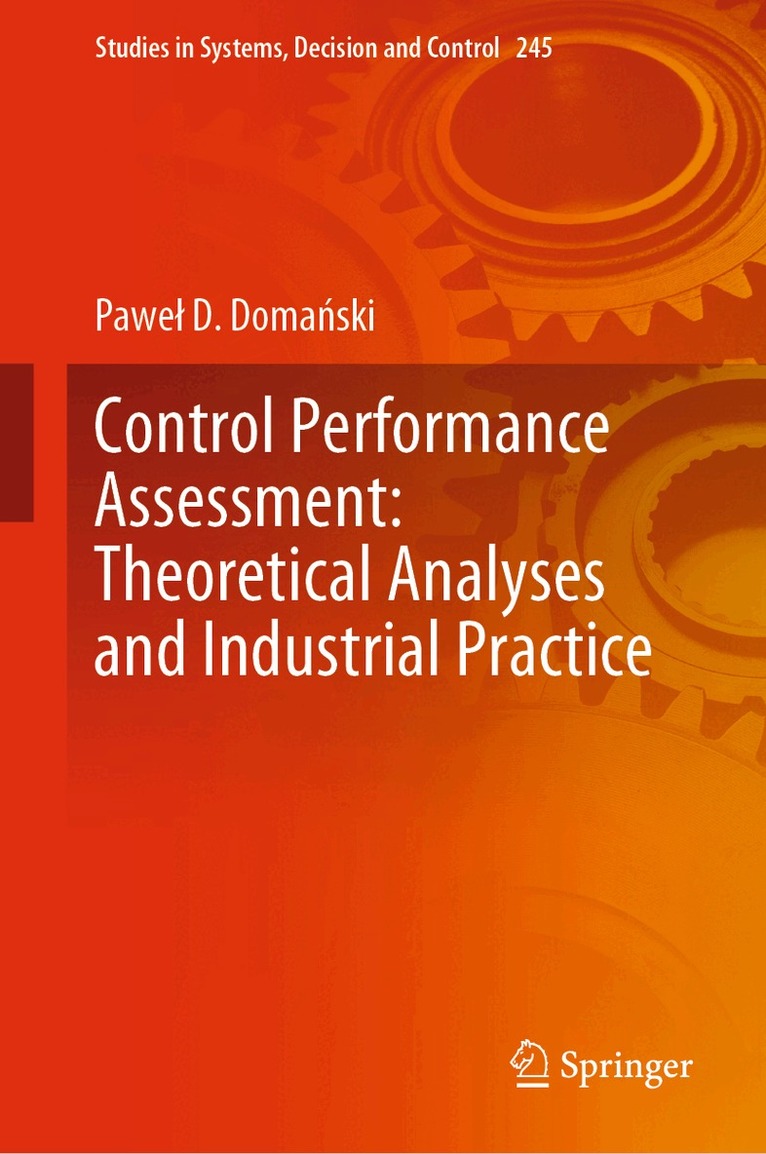
Control Performance Assessment: Theoretical Analyses and Industrial Practice
Inbunden, Engelska, 2019
1 064 kr
Skickas inom 10-15 vardagar
This book presents a comprehensive review of currently available Control Performance Assessment methods. It covers a broad range of classical and modern methods, with a main focus on assessment practice, and is intended to help practitioners learn and properly perform control assessment in the industrial reality.
Del 245 - Studies in Systems, Decision and Control
Control Performance Assessment: Theoretical Analyses and Industrial Practice
Häftad, Engelska, 2020
1 064 kr
Skickas inom 10-15 vardagar
This book presents a comprehensive review of currently available Control Performance Assessment methods. It covers a broad range of classical and modern methods, with a main focus on assessment practice, and is intended to help practitioners learn and properly perform control assessment in the industrial reality.
2 058 kr
Skickas inom 7-10 vardagar
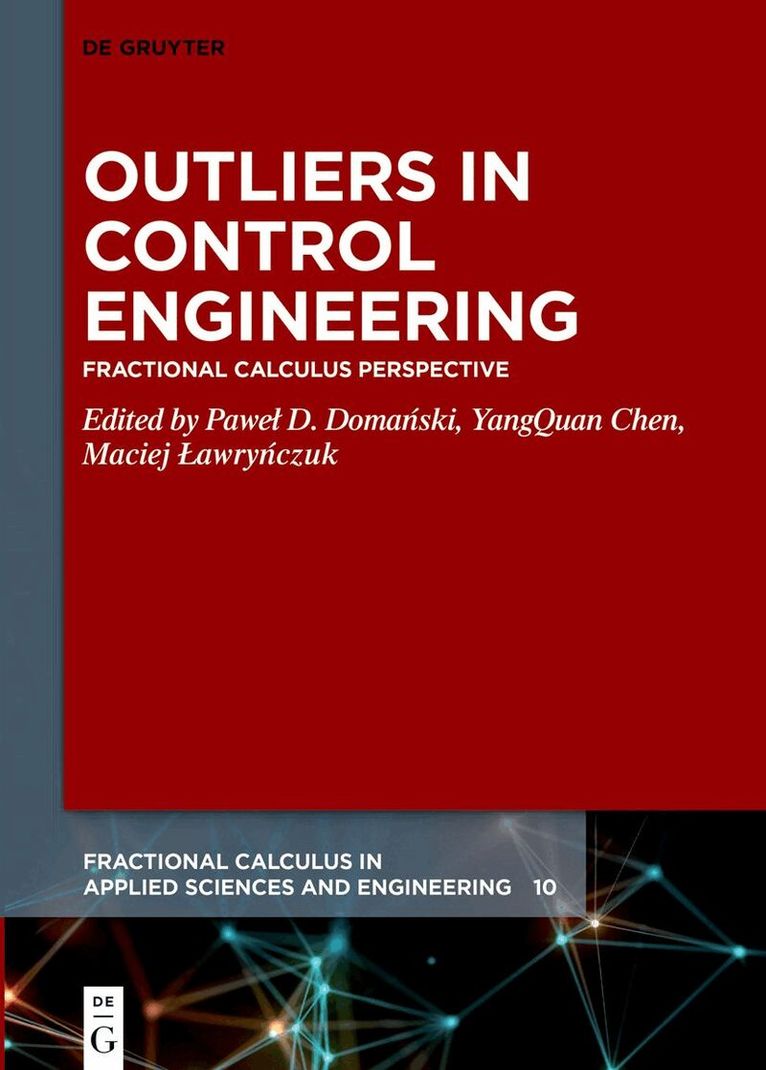
Outliers play an important, though underestimated, role in control engineering. Traditionally they are unseen and neglected. In opposition, industrial practice gives frequent examples of their existence and their mostly negative impacts on the control quality. The origin of outliers is never fully known. Some of them are generated externally to the process (exogenous), like for instance erroneous observations, data corrupted by control systems or the effect of human intervention. Such outliers appear occasionally with some unknow probability shifting real value often to some strange and nonsense value. They are frequently called deviants, anomalies or contaminants. In most cases we are interested in their detection and removal. However, there exists the second kind of outliers. Quite often strange looking data observations are not artificial data occurrences. They may be just representatives of the underlying generation mechanism being inseparable internal part of the process (endogenous outliers). In such a case they are not wrong and should be treated with cautiousness, as they may include important information about the dynamic nature of the process. As such they cannot be neglected nor simply removed. The Outlier should be detected, labelled and suitably treated. These activities cannot be performed without proper analytical tools and modeling approaches. There are dozens of methods proposed by scientists, starting from Gaussian-based statistical scoring up to data mining artificial intelligence tools. The research presented in this book presents novel approach incorporating non-Gaussian statistical tools and fractional calculus approach revealing new data analytics applied to this important and challenging task. The proposed book includes a collection of contributions addressing different yet cohesive subjects, like dynamic modelling, classical control, advanced control, fractional calculus, statistical analytics focused on an ultimate goal: robust and outlier-proof analysis. All studied problems show that outliers play an important role and classical methods, in which outlier are not taken into account, do not give good results. Applications from different engineering areas are considered such as semiconductor process control and monitoring, MIMO peltier temperature control and health monitoring, networked control systems, and etc.