Pawel Smaga – författare
Visar alla böcker från författaren Pawel Smaga. Handla med fri frakt och snabb leverans.
9 produkter
Role of Crises in Shaping Financial Systems
From the Global Financial Crisis to COVID-19
Av Bartosz Witkowski, Pawel Smaga m. fl.
E-bok, 2022
768 kr
Lägg i varukorg
The Role of Crises in Shaping Financial Systems: From the Global Financial Crisis to COVID-19 underscores the role of crises as turning points for the financial sector and its interactions with the real economy. It sheds new light on the financial industry through the lens of three recent crises …
Role of Crises in Shaping Financial Systems
From the Global Financial Crisis to COVID-19
Av Bartosz Witkowski, Pawel Smaga m. fl.
E-bok, 2022
768 kr
Lägg i varukorg
The Role of Crises in Shaping Financial Systems: From the Global Financial Crisis to COVID-19 underscores the role of crises as turning points for the financial sector and its interactions with the real economy. It sheds new light on the financial industry through the lens of three recent crises …
Role of Crises in Shaping Financial Systems
From the Global Financial Crisis to COVID-19
Av Małgorzata Iwanicz-Drozdowska, Elżbieta Malinowska-Misiąg m. fl.
Inbunden, 2022
2197 kr
Lägg i varukorg
The Role of Crises in Shaping Financial Systems: From the Global Financial Crisis to COVID-19 underscores the role of crises as turning points for the financial sector and its interactions with the real economy. It sheds new light on the financial industry through the lens of three recent crises – …
Role of Crises in Shaping Financial Systems
From the Global Financial Crisis to COVID-19
Av Małgorzata Iwanicz-Drozdowska, Elżbieta Malinowska-Misiąg m. fl.
Häftad, 2024
667 kr
Lägg i varukorg
The Role of Crises in Shaping Financial Systems: From the Global Financial Crisis to COVID-19 underscores the role of crises as turning points for the financial sector and its interactions with the real economy. It sheds new light on the financial industry through the lens of three recent crises – …
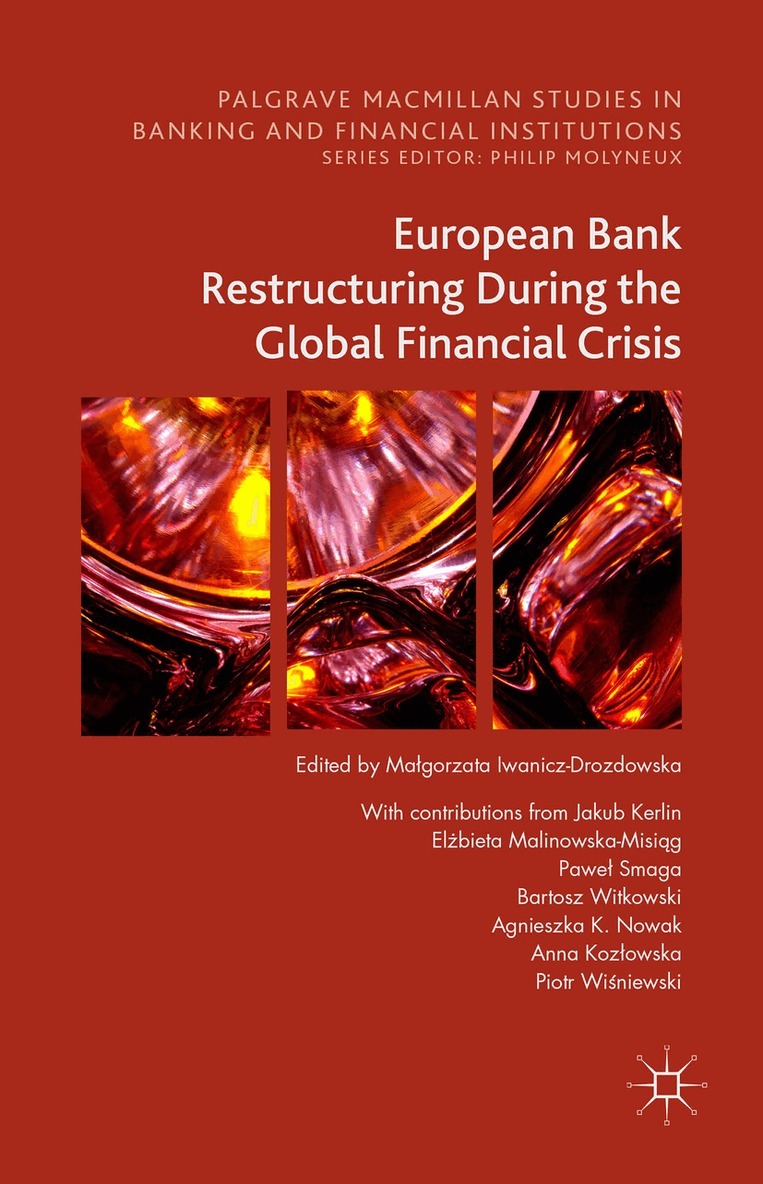
European Bank Restructuring During the Global Financial Crisis
Av Jakub Kerlin, Elżbieta Malinowska-Misiąg m. fl.
Inbunden, 2015
1128 kr
Lägg i varukorg
This book explores the diversity of restructuring instruments applied to financial institutions in EU countries during the Global Financial Crisis. It investigates the cost of that support before evaluating its effects, as well as providing an extensive analysis of the measures undertaken. The …
European Bank Restructuring During the Global Financial Crisis
Av Piotr Wisniewski, Anna Kozlowska m. fl.
E-bok, 2016
1562 kr
Lägg i varukorg
This book explores the diversity of restructuring instruments applied to financial institutions in EU countries during the Global Financial Crisis. It investigates the cost of that support before evaluating its effects, as well as providing an extensive analysis of the measures undertaken. The …
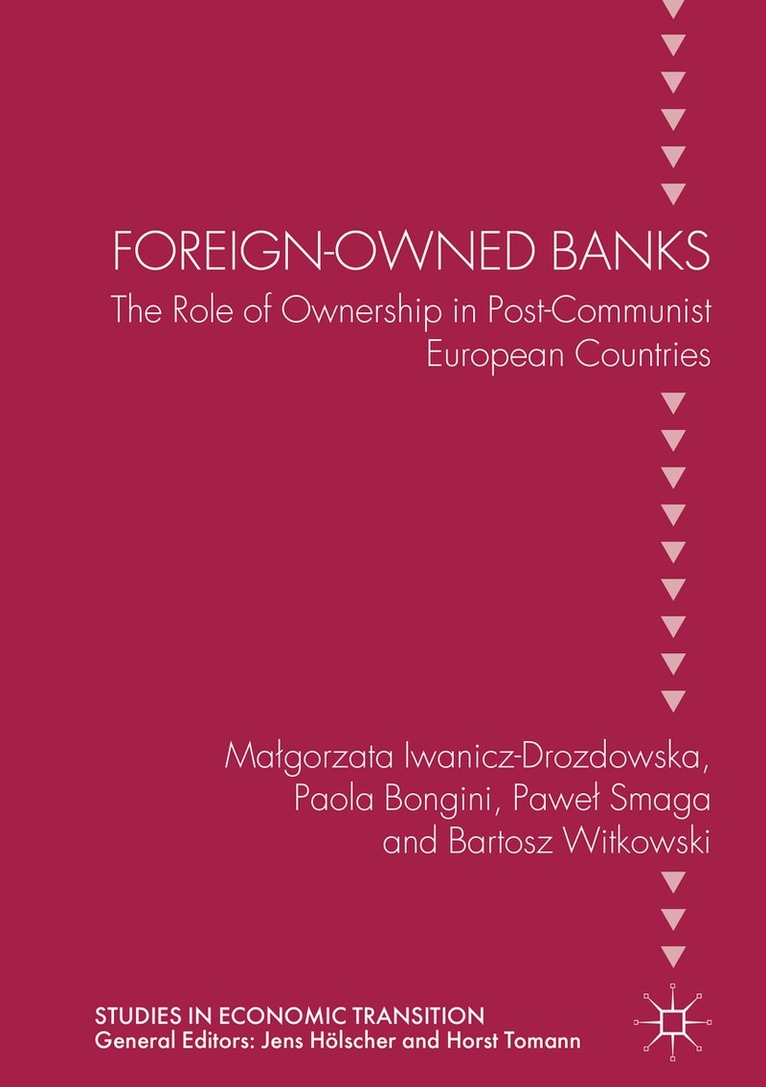
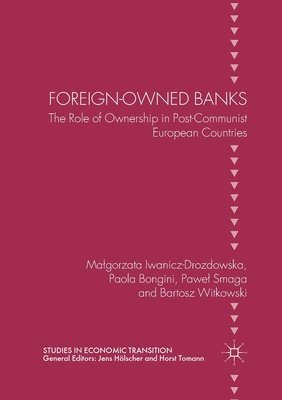
Foreign-Owned Banks
The Role of Ownership in Post-Communist European Countries
Av Małgorzata Iwanicz-Drozdowska, Paola Bongini m. fl.
Inbunden, 2019
1352 kr
Lägg i varukorg
This book provides an in-depth analysis of the role of foreign-owned banks for credit growth, financial stability and economic growth in the post-communist European countries. Using data covering 20 countries over the period from 1995 to 2015, the authors analyse the evolution of banking sectors in …
Foreign-Owned Banks
The Role of Ownership in Post-Communist European Countries
Av Bartosz Witkowski, Pawel Smaga m. fl.
E-bok, 2018
1838 kr
Lägg i varukorg
This book provides an in-depth analysis of the role of foreign-owned banks for credit growth, financial stability and economic growth in the post-communist European countries. Using data covering 20 countries over the period from 1995 to 2015, the authors analyse the evolution of banking sectors in …
Foreign-Owned Banks
The Role of Ownership in Post-Communist European Countries
Av Malgorzata Iwanicz-Drozdowska, Paola Bongini m. fl.
Häftad, 2020
932 kr
Lägg i varukorg
This book provides an in-depth analysis of the role of foreign-owned banks for credit growth, financial stability and economic growth in the post-communist European countries. Using data covering 20 countries over the period from 1995 to 2015, the authors analyse the evolution of banking sectors in …