Perridon Harry Perridon – författare
Visar alla böcker från författaren Perridon Harry Perridon. Handla med fri frakt och snabb leverans.
3 produkter
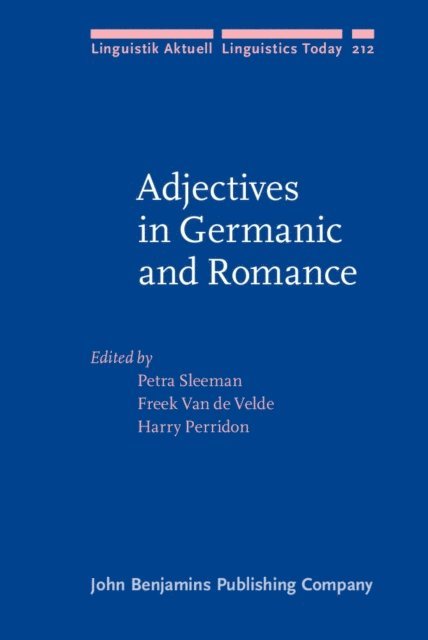
Adjectives in Germanic and Romance
Av Perridon Harry Perridon, Van de Velde Freek Van de Velde m. fl.
E-bok, 2014
1393 kr
Lägg i varukorg
Although the Germanic and Romance languages are two branches of the same language family and although both have developed the adjective as a separate syntactic and morphological category, the syntax, morphology, and interpretation of adjectives is by no means the same in these two language groups, …
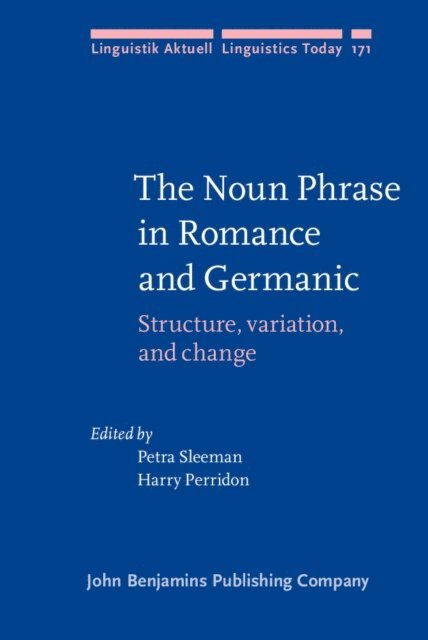
Noun Phrase in Romance and Germanic
Structure, variation, and change
Av Perridon Harry Perridon, Sleeman Petra Sleeman
E-bok, 2011
1393 kr
Lägg i varukorg
One of the recurrent questions in historical linguistics is to what extent languages can borrow grammar from other languages. It seems for instance hardly likely that each ''average European'' language developed a definite article all by itself, without any influence from neighbouring languages. It …
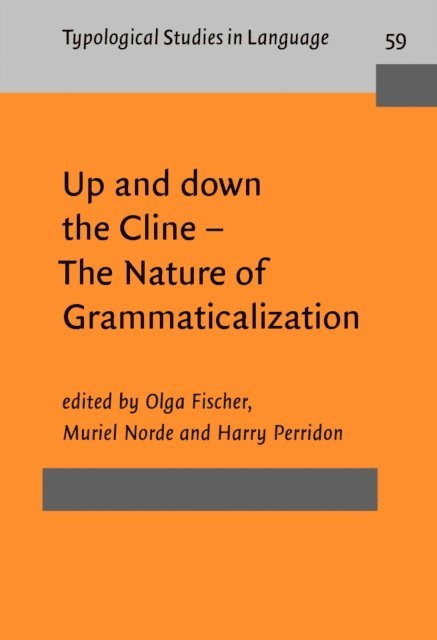
Up and down the Cline - The Nature of Grammaticalization
Av Perridon Harry Perridon, Norde Muriel Norde m. fl.
E-bok, 2004
1762 kr
Lägg i varukorg
The basic idea behind this volume is to probe the nature of grammaticalization. Its contributions focus on the following questions: (i) In how far can grammaticalization be considered a universal diachronic process or mechanism of change and in how far is it conditioned by synchronic factors? (ii) …