Perumal Rameshkumar – författare
1 938 kr
Skickas inom 10-15 vardagar
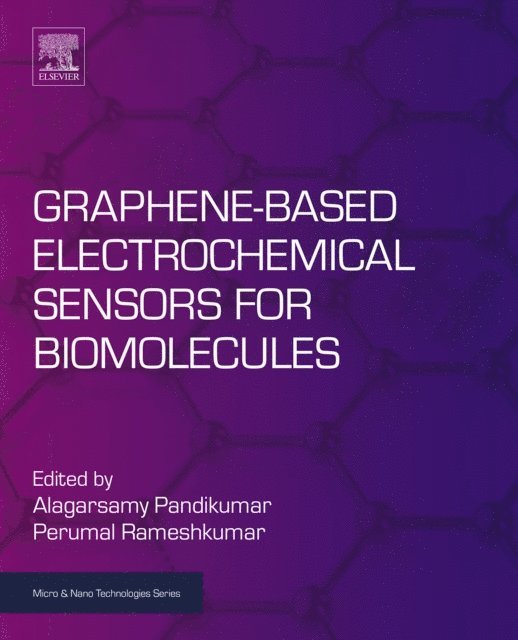
Graphene-Based Electrochemical Sensors for Biomolecules presents the latest on these nanomaterials that have gained a lot of attention based on their unique properties of high mechanical flexibility, large surface area, chemical stability, superior electric and thermal conductivities that render them great choices as alternative electrode materials for electrochemical energy storage and sensor applications. The hybridization of graphene with other nanomaterials induces a synergetic effect, leading to the improvement in electrical conductivity, stability and an enhancement of the electrocatalytic activity of the new nanocomposite material. This book discusses the electrochemical determination of a variety of biomolecules using graphene-based nanocomposite materials.
Finally, recent progress in the development of electrochemical sensors using graphene-based nanocomposite materials and perspectives on future opportunities in sensor research and development are discussed in detail.
Covers the importance of detecting biomolecules and the application of graphene and its nanocomposite materials in the detection of a wide variety of bioanalytes Presents easily understood fundamentals of electrochemical sensing systems and the role of graphene-based nanocomposite materials in research and development2 759 kr
Läs direkt efter köp
2 449 kr
Skickas inom 10-15 vardagar
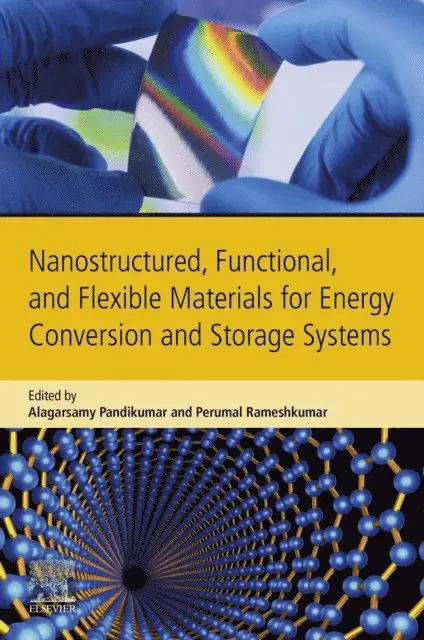
Nanostructured, Functional, and Flexible Materials for Energy Conversion and Storage Systems gathers and reviews developments within the field of nanostructured functional materials towards energy conversion and storage. Contributions from leading research groups involved in interdisciplinary research in the fields of chemistry, physics and materials science and engineering are presented. Chapters dealing with the development of nanostructured materials for energy conversion processes, including oxygen reduction, methanol oxidation, oxygen evolution, hydrogen evolution, formic acid oxidation and solar cells are discussed. The work concludes with a look at the application of nanostructured functional materials in� energy storage system, such as supercapacitors and batteries.
With its distinguished international team of expert contributors, this book will be an indispensable tool for anyone involved in the field of energy conversion and storage, including materials engineers, scientists and academics.
Covers the importance of energy conversion and storage systems and the application of nanostructured functional materials toward energy-relevant catalytic processes Discusses the basic principles involved in energy conversion and storage systems Presents the role of nanostructured functional materials in the current scenario of energy-related research and development2 231 kr
Skickas inom 10-15 vardagar
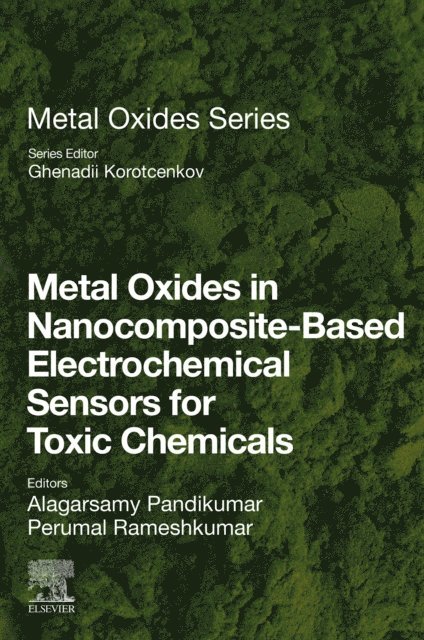
Metal oxide nanomaterials exhibit interesting electrical and photochemical properties because of their size, stability, and high surface area that render them as great choices in fabricating alternative electrode materials for electrochemical energy storage and sensor applications. The hybridization of metal oxides with other materials lead to the improvement in electrical conductivity, stability, and electron transfer kinetics during the electrocatalytic reactions. These key factors result in greater sensitivity of the sensor materials towards the analyte molecules.
This book reviews the electrochemical determination of a variety of toxic chemical contaminants using metal oxide-based nanocomposite materials. Ultrasensitive and selective detection of toxic chemical contaminants is important and demanding, especially for monitoring and controlling environmental pollution. In recent years, metal oxide-based nanocomposite materials have shown high potential in the electrochemical detection of heavy metals, inorganic anions, phenolic compounds, pesticides, and chemical warfare reagents. Metal Oxides in Nanocomposite-Based Electrochemical Sensors for Toxic Chemicals comprehensively reviews this topic.
In addition to the instrumental simplicity, the electrochemical methods show the improved sensor performance through the synergetic effect of metal oxide and other electroactive nanomaterial present in the nanocomposite. Thus, detailed information on the electrochemical sensing of toxic chemical contaminants using metal oxide-based nanomaterials are discussed. The recent progress in developing electrochemical sensors using metal oxide-based nanocomposite materials and perspectives on future opportunities in sensor research and development are addressed in the book.
Introduces the fundamentals of electrochemical sensors and fabrication of metal oxide sensors of toxic chemicals Reviews binary, doped, metal oxide-metal, metal oxide-carbon, metal oxide-polymer, metal-boron nitride, metal oxide-clay, and metal oxide- MOF electrodes Systematically addresses the fabrication, synthesis, performance, mechanisms, detection limits, sensitivity, advantages and limitations and future perspectives of a wide range of metal oxide-based electrochemical sensors3 293 kr
Läs direkt efter köp
3 471 kr
Läs direkt efter köp
Graphene-Based Electrochemical Sensors for Toxic Chemicals
1 468 kr
Skickas inom 5-8 vardagar
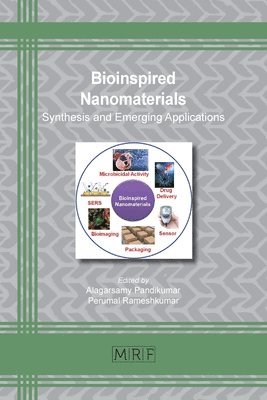
Bioinspired Nanomaterials
Synthesis and Emerging Applications
1 330 kr
Skickas inom 5-8 vardagar
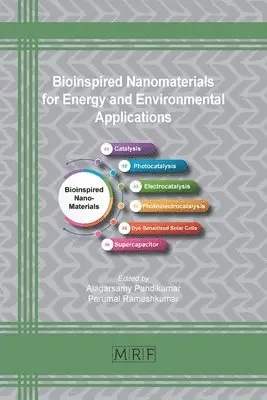
Bioinspired Nanomaterials for Energy and Environmental Applications
1 067 kr
Skickas inom 5-8 vardagar
1 745 kr
Skickas inom 5-8 vardagar
1 978 kr
Läs direkt efter köp
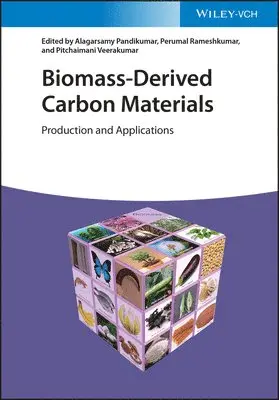
Explores the sustainable production of carbon materials and their applications
Of increasing interest to practitioners and researchers in a variety of areas, biomass-derived carbon materials can be easily produced and possess the large surface areas and porosities that enable many applications in materials science, biochemistry, chemistry, and energy research.
In Biomass-Derived Carbon Materials: Production and Applications, a team of accomplished researchers delivers a thorough and up-to-date exploration of the preparation and activation processes of biomass-derived carbon materials, the fabrication of composites, and assorted and multidisciplinary applications of the technology. The book also covers future opportunities for research and application.
Introductory chapters provide information about the production, functionalization, and characterization of biomass-derived carbon materials, while the latter parts of this edited volume discuss the applications of biomass-derived carbon materials such as catalysis, sensors, microbicidal activity, toxic chemicals removal, drug delivery, and energy conversion and storage applications.
The book also includes:
A thorough introduction to the production of biomass-derived carbon materials, as well as their characterization Comprehensive explorations of biomass-derived carbon-based materials for microbicidal applications and carbon-based nanomaterials prepared from biomass for catalysis Practical discussions of biomass-derived carbon quantum dots for fluorescence sensors and mesoporous carbon nanomaterials for drug delivery and imaging applications In-depth examinations of biomass-derived carbon as electrode materials for batteries and porous carbon synthesized from biomass for fuel cellsIdeal for materials scientists as well as industrial chemists and biochemists, Biomass-Derived Carbon Materials: Production and Applications also belongs in the libraries of electrochemists and sensor developers.
1 978 kr
Läs direkt efter köp
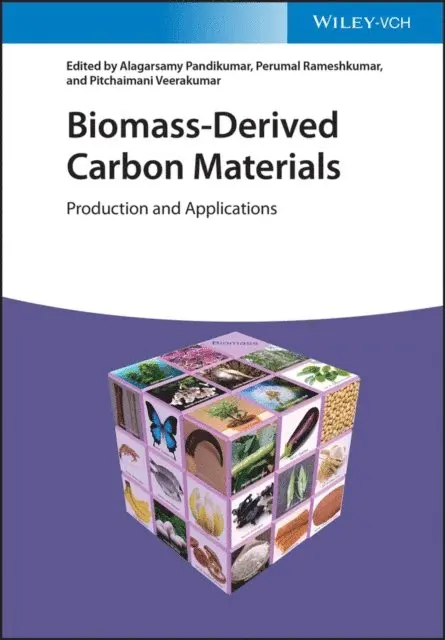
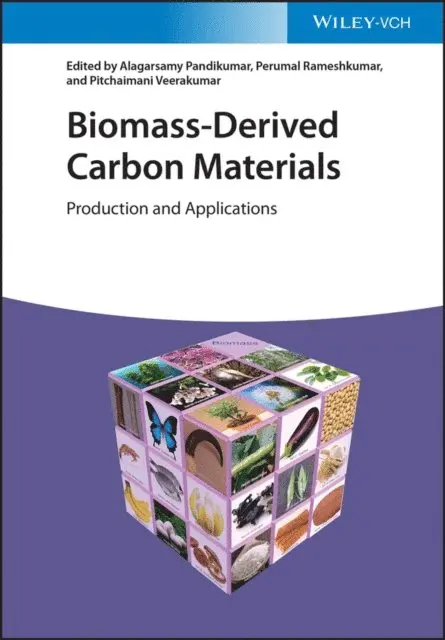
Explores the sustainable production of carbon materials and their applications
Of increasing interest to practitioners and researchers in a variety of areas, biomass-derived carbon materials can be easily produced and possess the large surface areas and porosities that enable many applications in materials science, biochemistry, chemistry, and energy research.
In Biomass-Derived Carbon Materials: Production and Applications, a team of accomplished researchers delivers a thorough and up-to-date exploration of the preparation and activation processes of biomass-derived carbon materials, the fabrication of composites, and assorted and multidisciplinary applications of the technology. The book also covers future opportunities for research and application.
Introductory chapters provide information about the production, functionalization, and characterization of biomass-derived carbon materials, while the latter parts of this edited volume discuss the applications of biomass-derived carbon materials such as catalysis, sensors, microbicidal activity, toxic chemicals removal, drug delivery, and energy conversion and storage applications.
The book also includes:
A thorough introduction to the production of biomass-derived carbon materials, as well as their characterization Comprehensive explorations of biomass-derived carbon-based materials for microbicidal applications and carbon-based nanomaterials prepared from biomass for catalysis Practical discussions of biomass-derived carbon quantum dots for fluorescence sensors and mesoporous carbon nanomaterials for drug delivery and imaging applications In-depth examinations of biomass-derived carbon as electrode materials for batteries and porous carbon synthesized from biomass for fuel cellsIdeal for materials scientists as well as industrial chemists and biochemists, Biomass-Derived Carbon Materials: Production and Applications also belongs in the libraries of electrochemists and sensor developers.