Peter de Souza - Böcker
Visar alla böcker från författaren Peter de Souza. Handla med fri frakt och snabb leverans.
5 produkter
5 produkter
509 kr
Skickas inom 10-15 vardagar
The countryside has often been marginalised in discussions of economic and societal development, in favour of the urban. This book aims to stimulate a debate and a re-evaluation of how the concepts of the rural, peripheral and marginal are treated in academia and policy.Approaching this theme from geographic, demographic and economic perspectives, Peter de Souza makes a compelling case for giving the periphery a prominent role as an integral part of a holistic and balanced society. The book carefully deconstructs the concept of the urban, and critiques the idea of urban-rural or centre-periphery comparisons, and presents an alternative approach to spark future discussions.The Rural and Peripheral in Regional Development will be of interest to those studying and researching in the areas of rural economics, sustainability and development, as well as those involved in rural policymaking.
Regional Development in Northern Europe
Peripherality, Marginality and Border Issues
Inbunden, Engelska, 2012
2 299 kr
Skickas inom 10-15 vardagar
This book draws on work from across northern Europe and is parallel and complementary to the network itself. By establishing an intellectual and practically orientated framework and platform, and by bringing together contributions defining the state-of-the-art and potential development paths in the field, it is the first volume to offer a systematic and scientific view from the periphery.
1 753 kr
Skickas inom 10-15 vardagar
The countryside has often been marginalised in discussions of economic and societal development, in favour of the urban. This book aims to stimulate a debate and a re-evaluation of how the concepts of the rural, peripheral and marginal are treated in academia and policy.Approaching this theme from geographic, demographic and economic perspectives, Peter de Souza makes a compelling case for giving the periphery a prominent role as an integral part of a holistic and balanced society. The book carefully deconstructs the concept of the urban, and critiques the idea of urban-rural or centre-periphery comparisons, and presents an alternative approach to spark future discussions. Winner of the Regional Studies Association Best Book Award 2020, The Rural and Peripheral in Regional Development will be of interest to those studying and researching in the areas of rural economics, sustainability and development, as well as those involved in rural policymaking.
Regional Development in Northern Europe
Peripherality, Marginality and Border Issues
Häftad, Engelska, 2014
694 kr
Skickas inom 10-15 vardagar
This book draws on work from across northern Europe and is parallel and complementary to the network itself. By establishing an intellectual and practically orientated framework and platform, and by bringing together contributions defining the state-of-the-art and potential development paths in the field, it is the first volume to offer a systematic and scientific view from the periphery.
367 kr
Skickas inom 11-20 vardagar
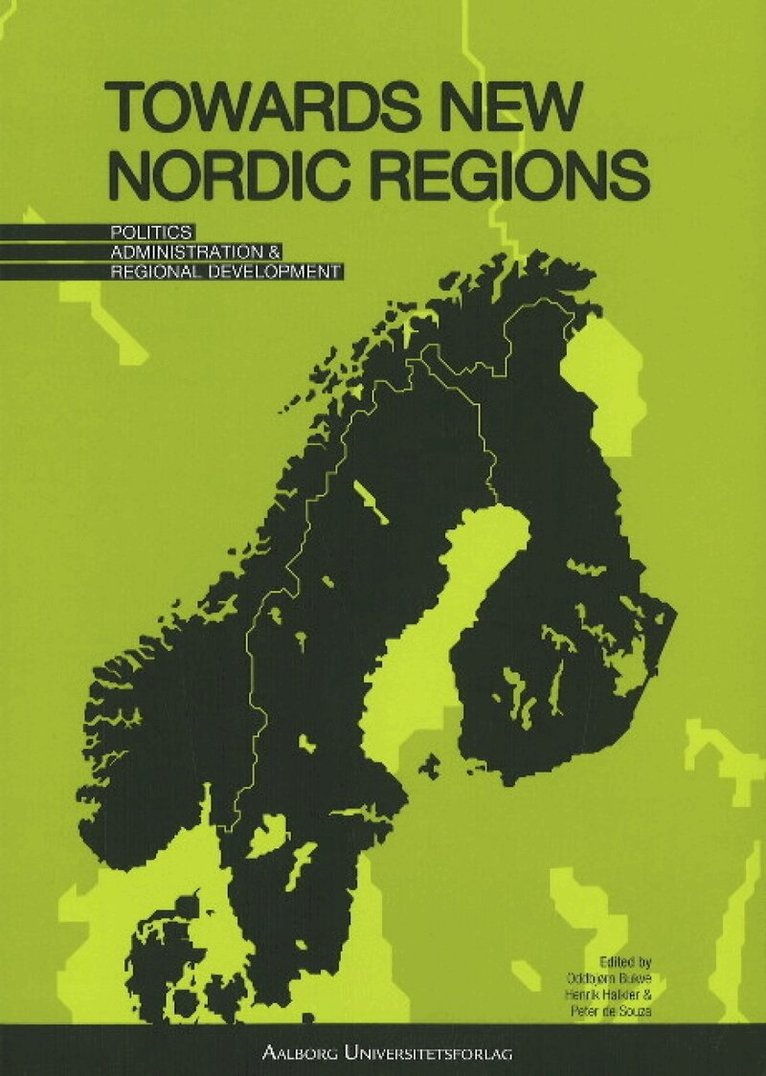
Across the Nordic countries movements are taking place towards new political and administrative government structures at the regional level. The book presents an analysis of this development, in order to figure out both similarities and differences in the content of the reform and the reform process. At the same time the book also discusses how and to what extent new regions are growing from below. The overall aim of the book is to outline the broader implications of the Nordic experience for the understanding of the international trend towards the development of the new regions: What are the main elements in the top down reforms of regional governments? What is the content of regionalism processes related to each other? Are the state reforms mainly an answer to bottom up economic and social drives towards new regions? Are they rather motivated by ideas of a new regionalism which are spreading through Europe? Or are they maybe a result of a perceived need for more efficient service delivery at the regional level? By discussing these questions, the authors aim to contribute to the international discussion on new regions and regionalism.