Peter F. Biehl - Böcker
Visar alla böcker från författaren Peter F. Biehl. Handla med fri frakt och snabb leverans.
5 produkter
5 produkter
1 282 kr
Skickas inom 7-10 vardagar
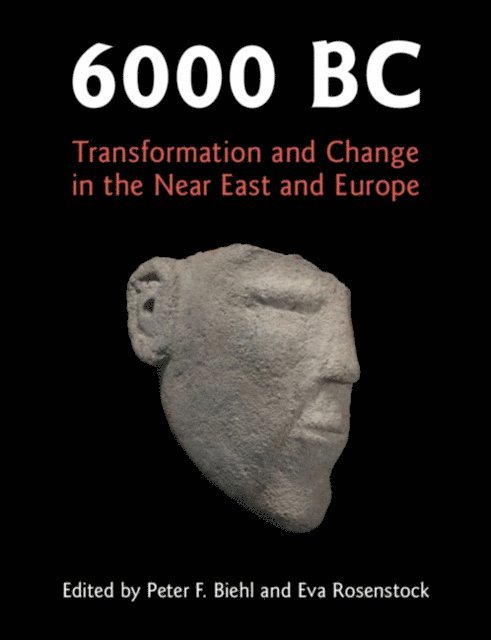
This is the first book to present a comprehensive, up to date overview of archaeological and environmental data from the eastern Mediterranean world around 6000 BC. It brings together the research of an international team of scholars who have excavated at key Neolithic and Chalcolithic sites in Syria, Anatolia, Greece, and the Balkans. Collectively, their essays conceptualize and enable a deeper understanding of times of transition and changes in the archaeological record. Overcoming the terminological and chronological differences between the Near East and Europe, the volume expands from studies of individual societies into regional views and diachronic analyses. It enables researchers to compare archaeological data and analysis from across the region, and offers a new understanding of the importance of this archaeological story to broader, high-impact questions pertinent to climate and culture change.
414 kr
Tillfälligt slut
Rich case studies examining responses to climatic events in ancient Europe and the Near East.The subject of climate change could hardly be more timely. In Climate and Cultural Change in Prehistoric Europe and the Near East, an interdisciplinary group of contributors examine climate change through the lens of new archaeological and paleo-environmental data over the course of more than 10,000 years from the Near East to Europe. Key climatic and other events are contextualized with cultural changes and transitions for which the authors discuss when, how, and if, changes in climate and environment caused people to adapt, move or perish. More than this publication of crucial archaeological and paleo-environmental data, however, the volume seeks to understand the social, political and economic significance of climate change as it was manifested in various ways around the Old World. Contrary to perceptions of threatening global warming in our popular media, and in contrast to grim images of collapse presented in some archaeological discussions of past climate change, this book rejects outright societal collapse as a likely outcome. Yet this does not keep the authors from considering climate change as a potential factor in explaining culture change by adopting a critical stance with regard to the long-standing practice of equating synchronicity with causality, and explicitly considering alternative explanations.
1 102 kr
Tillfälligt slut
Rich case studies examining responses to climatic events in ancient Europe and the Near East.The subject of climate change could hardly be more timely. In Climate and Cultural Change in Prehistoric Europe and the Near East, an interdisciplinary group of contributors examine climate change through the lens of new archaeological and paleo-environmental data over the course of more than 10,000 years from the Near East to Europe. Key climatic and other events are contextualized with cultural changes and transitions for which the authors discuss when, how, and if, changes in climate and environment caused people to adapt, move or perish. More than this publication of crucial archaeological and paleo-environmental data, however, the volume seeks to understand the social, political and economic significance of climate change as it was manifested in various ways around the Old World. Contrary to perceptions of threatening global warming in our popular media, and in contrast to grim images of collapse presented in some archaeological discussions of past climate change, this book rejects outright societal collapse as a likely outcome. Yet this does not keep the authors from considering climate change as a potential factor in explaining culture change by adopting a critical stance with regard to the long-standing practice of equating synchronicity with causality, and explicitly considering alternative explanations.
Del 8 - SpringerBriefs in Archaeology
Heritage in the Context of Globalization
Europe and the Americas
Häftad, Engelska, 2012
552 kr
Skickas inom 10-15 vardagar
This brief is the proceedings of two roundtables and forums organized by Eszter Bánffy, Peter Biehl, Douglas Comer, and Christopher Prescott and sponsored by the European Association of Archaeologists (EAA) and the Society for American Archaeology (SAA) held at the 76th SAA annual conference in Sacramento in April 2011, and the 17th EAA annual conference in Oslo in September 2011. The book is organized around five main issues with the goal to stimulate discussion, research and practices within the field:Traditions and legal regulations of heritage and its management The teaching of cultural heritage; public outreach and university trainingHeritage and national identity The future of cultural heritage in a globalized and digitized world This book is thus be an exploration of the various experiences in Europe and the Americas to better understand, in the vast field of archaeology and cultural heritage management, where we are today, where we might be, and where we hope to be in the near future.
552 kr
Skickas inom 10-15 vardagar
This book will suggest new agendas for identity and heritage studies by means of presenting contentious issues facing archaeology and heritage management in a globalized world. The book is not only present the variability of heritage objectives and experiences in the New and Old World, and opens a discussion, in a shrinking world, to look beyond national and regional contexts. If the heritage sector and archaeology are to remain relevant in our contemporary world and the near future, there are a number of questions concerning the politics, practices and narratives related to heritage and identity that must be addressed. Questions of relevance in an affluent, cosmopolitan setting are at odds with those relevant for a region emerging from civil war or ethnic strife, or a national minority battling oppression or ethnic cleansing. A premise is that heritage represents a broad scope of empirically and theoretically sound interpretations – that heritage is a response to contemporary forces, as much as data. It is therefore necessary constantly to evaluate what is scientifically accurate as well as what is valid and relevant and what can have a contemporary impact.