Peter Forbrig – författare
Visar alla böcker från författaren Peter Forbrig. Handla med fri frakt och snabb leverans.
14 produkter
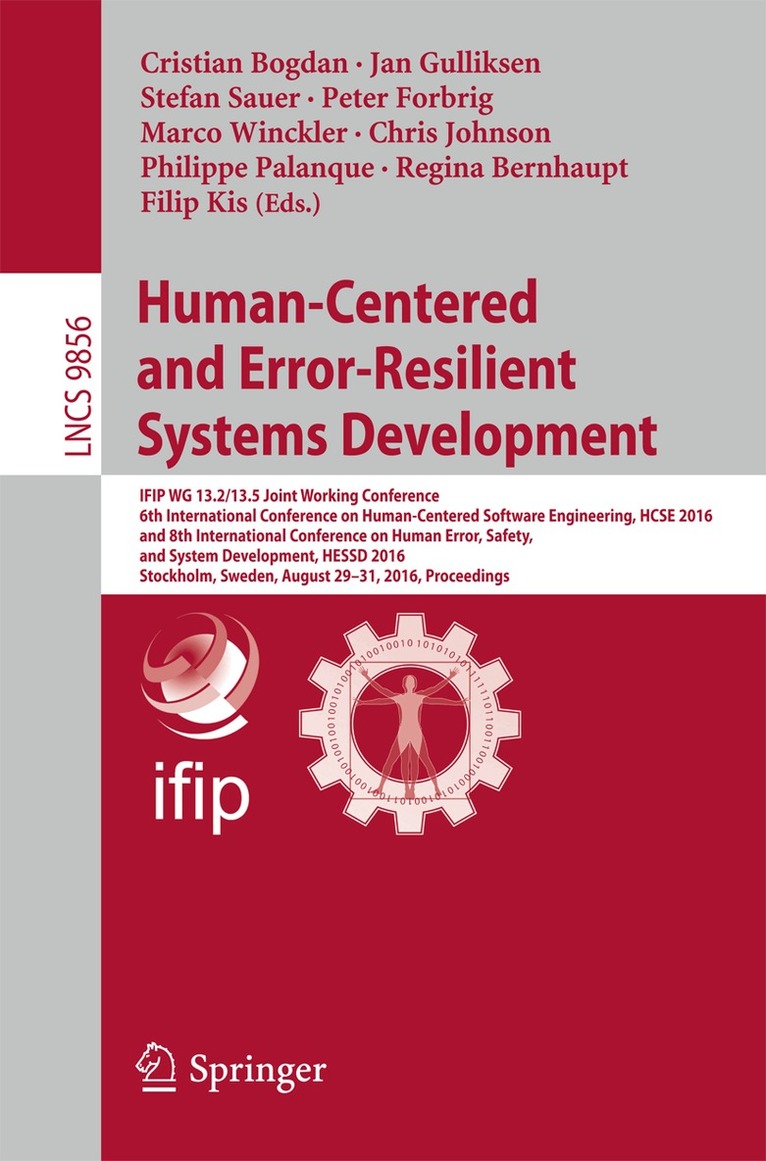
Human-Centered and Error-Resilient Systems Development
IFIP WG 13.2/13.5 Joint Working Conference, 6th International Conference on Human-Centered Software Engineering, HCSE 2016, and 8th International Conference on Human Error, Safety, and System Development, HESSD 2016, Stockholm, Sweden, August 29-31, 2016, Proceedings
Av Cristian Bogdan, Jan Gulliksen m. fl.
Häftad, 2016
568 kr
Lägg i varukorg
This book constitutes the refereed proceedings of the IFIP WG 13.2/13.5 Joint Working Conferences: 6th International Conference on Human-Centered Software Engineering, HCSE 2016, and 8th International Conference on Human Error, Safety, and System Development, HESSD 2016, held in Stockholm, Sweden, …
Human-Centered and Error-Resilient Systems Development
IFIP WG 13.2/13.5 Joint Working Conference, 6th International Conference on Human-Centered Software Engineering, HCSE 2016, and 8th International Conference on Human Error, Safety, and System Development, HESSD 2016, Stockholm, Sweden, August 29-31, 2016, Proceedings
Av Filip Kis, Regina Bernhaupt m. fl.
E-bok, 2016
755 kr
Lägg i varukorg
This book constitutes the refereed proceedings of the IFIP WG 13.2/13.5 Joint Working Conferences: 6th International Conference on Human-Centered Software Engineering, HCSE 2016, and 8th International Conference on Human Error, Safety, and System Development, HESSD 2016, held in Stockholm, Sweden, …
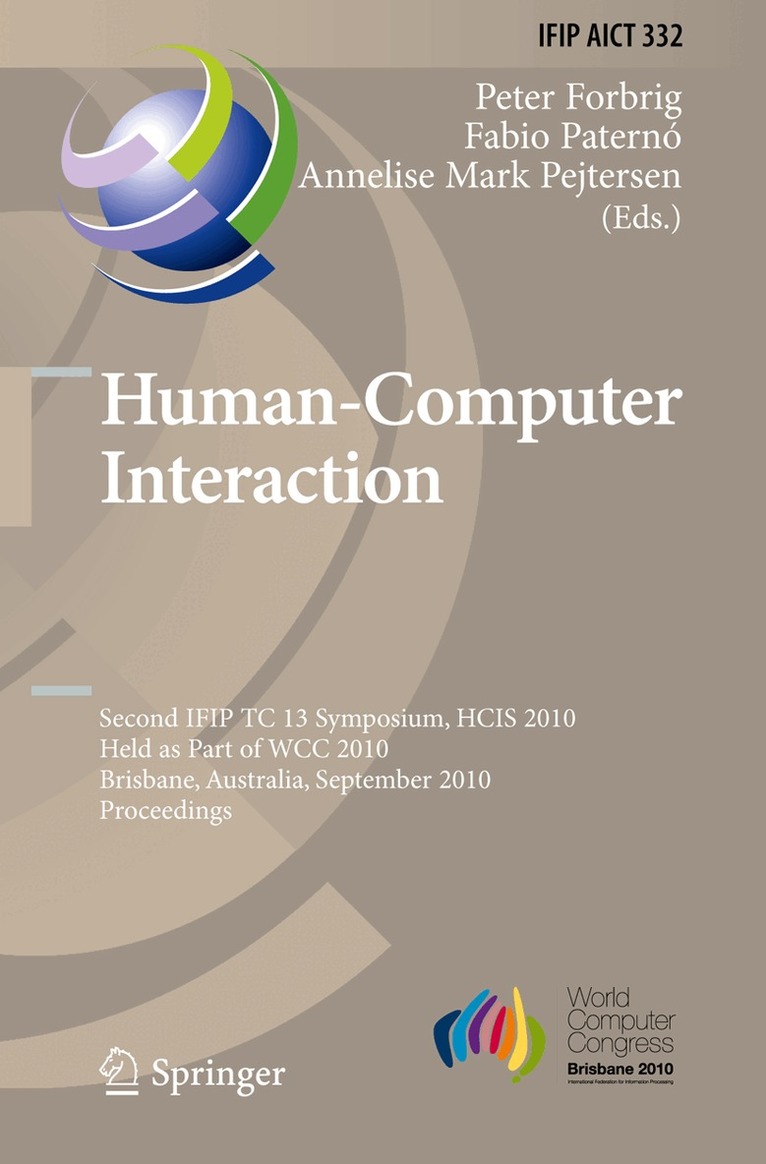
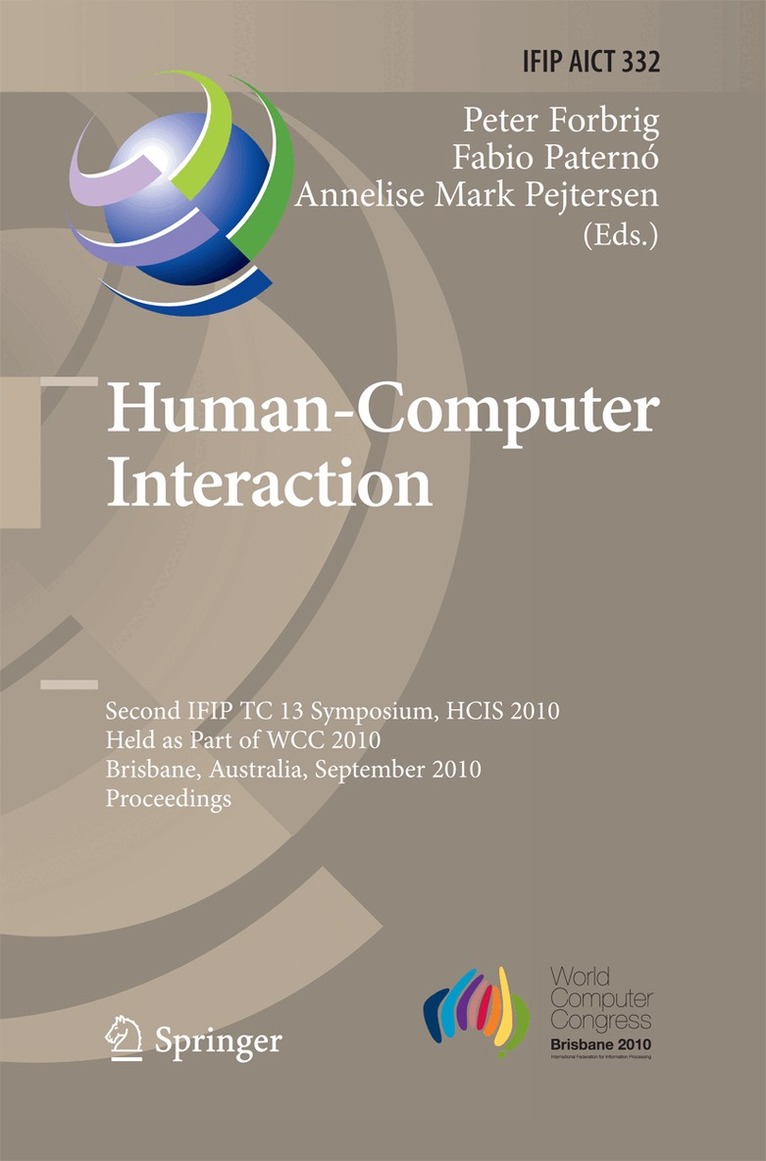
Human-Computer Interaction
Second IFIP TC 13 Symposium, HCIS 2010, Held as Part of WCC 2010, Brisbane, Australia, September 20-23, 2010, Proceedings
Av Peter Forbrig, Fabio Paternó m. fl.
Inbunden, 2010
568 kr
Lägg i varukorg
The IFIP World Computer Congress (WCC) is one of the most important conferences in the area of computer science at the worldwide level and it has a federated structure, which takes into account the rapidly growing and expanding interests in this area. Informatics is rapidly changing and becoming …
Human-Computer Interaction
Second IFIP TC 13 Symposium, HCIS 2010, Held as Part of WCC 2010, Brisbane, Australia, September 20-23, 2010, Proceedings
Av Annelise Mark Pejtersen, Fabio Paterno m. fl.
E-bok, 2010
755 kr
Lägg i varukorg
The IFIP World Computer Congress (WCC) is one of the most important conferences in the area of computer science at the worldwide level and it has a federated structure, which takes into account the rapidly growing and expanding interests in this area. Informatics is rapidly changing and becoming …
Perspectives in Business Informatics Research
9th International Conference, BIR 2010, Rostock, Germany, September 29--October 1, 2010, Proceedings
Av Peter Forbrig, Horst Günther
Häftad, 2010
568 kr
Lägg i varukorg
The conference series BIR (Business Informatics Research) was established 10 years ago in Rostock as an initiative of researchers from Swedish and German universities. The objective was to create a global forum where researchers in business informatics, seniors as well as juniors, could meet, …
Perspectives in Business Informatics Research
9th International Conference, BIR 2010, Rostock, Germany, September 29--October 1, 2010, Proceedings
Av Horst Gunther, Peter Forbrig
E-bok, 2010
732 kr
Lägg i varukorg
The conference series BIR (Business Informatics Research) was established 10 years ago in Rostock as an initiative of researchers from Swedish and German universities. The objective was to create a global forum where researchers in business informatics, seniors as well as juniors, could meet, …
Human-Centred Software Engineering
Third International Conference, HCSE 2010, Reykjavik, Iceland, October 14-15, 2010. Proceedings
Av Regina Bernhaupt, Peter Forbrig m. fl.
Häftad, 2010
568 kr
Lägg i varukorg
The conference series HCSE (Human-Centred Software Engineering) was established four years ago in Salamanca. HCSE 2010 is the third working conference of IFIP Working Group 13.2, Methodologies for User-Centered Systems Design. The goal of HCSE is to bring together researchers and practitioners …
Human-Centred Software Engineering
Third International Conference, HCSE 2010, Reykjavik, Iceland, October 14-15, 2010. Proceedings
Av Marta Kristin Larusdottir, Jan Gulliksen m. fl.
E-bok, 2010
739 kr
Lägg i varukorg
The conference series HCSE (Human-Centred Software Engineering) was established four years ago in Salamanca. HCSE 2010 is the third working conference of IFIP Working Group 13.2, Methodologies for User-Centered Systems Design. The goal of HCSE is to bring together researchers and practitioners …
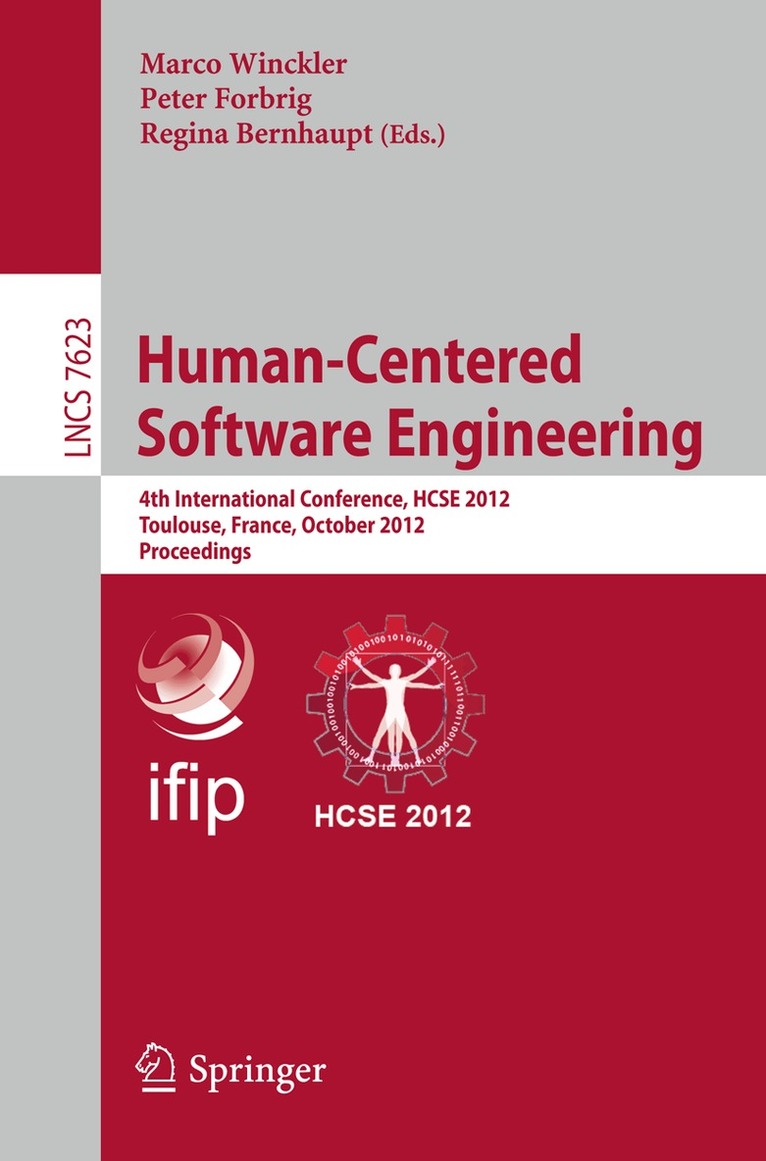
Human-Centered Software Engineering
4th International Conference, HCSE 2012, Toulouse, France, October 29-31, 2012, Proceedings
Av Marco Winckler, Peter Forbrig m. fl.
Häftad, 2012
568 kr
Lägg i varukorg
This book constitutes the refereed proceedings of the 4th International Conference on Human-Centered Software Engineering, HCSE 2012, held in Toulouse, France, in October 2012.The twelve full papers and fourteen short papers presented were carefully reviewed and selected from various submissions. …
Human-Centered Software Engineering
4th International Conference, HCSE 2012, Toulouse, France, October 29-31, 2012, Proceedings
Av Regina Bernhaupt, Peter Forbrig m. fl.
E-bok, 2012
739 kr
Lägg i varukorg
This book constitutes the refereed proceedings of the 4th International Conference on Human-Centered Software Engineering, HCSE 2012, held in Toulouse, France, in October 2012. The twelve full papers and fourteen short papers presented were carefully reviewed and selected from various submissions. …
Human-Computer Interaction
Second IFIP TC 13 Symposium, HCIS 2010, Held as Part of WCC 2010, Brisbane, Australia, September 20-23, 2010, Proceedings
Av Peter Forbrig, Fabio Paternó m. fl.
Häftad, 2014
568 kr
Lägg i varukorg
The IFIP World Computer Congress (WCC) is one of the most important conferences in the area of computer science at the worldwide level and it has a federated structure, which takes into account the rapidly growing and expanding interests in this area. Informatics is rapidly changing and becoming …
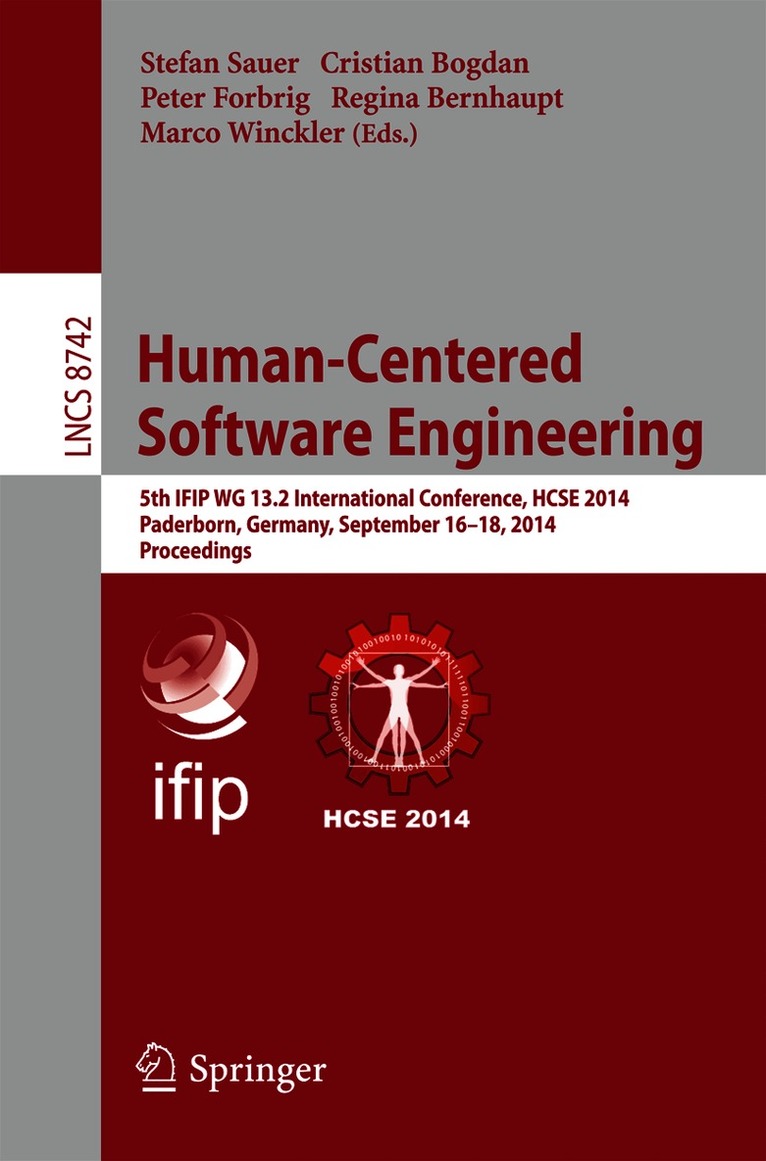
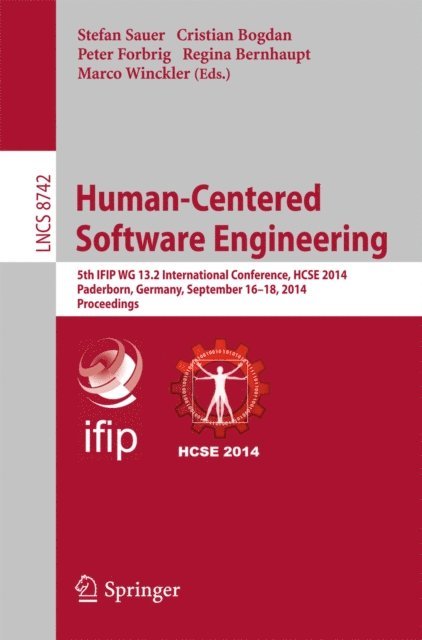
Human-Centered Software Engineering
5th IFIP WG 13.2 International Conference, HCSE 2014, Paderborn, Germany, September 16-18, 2014. Proceedings
Av Stefan Sauer, Cristian Bogdan m. fl.
Häftad, 2014
568 kr
Lägg i varukorg
This book constitutes the refereed proceedings of the 5th IFIP WG 13.2 International Conference on Human-Centered Software Engineering, HCSE 2014, held in Paderborn, Germany, in September 2014. The 13 full papers and 10 short papers presented together with one keynote were carefully reviewed and …
Human-Centered Software Engineering
5th IFIP WG 13.2 International Conference, HCSE 2014, Paderborn, Germany, September 16-18, 2014. Proceedings
Av Marco Winckler, Regina Bernhaupt m. fl.
E-bok, 2014
755 kr
Lägg i varukorg
This book constitutes the refereed proceedings of the 5th IFIP WG 13.2 International Conference on Human-Centered Software Engineering, HCSE 2014, held in Paderborn, Germany, in September 2014. The 13 full papers and 10 short papers presented together with one keynote were carefully reviewed and …