Peter Gardenfors – författare
Visar alla böcker från författaren Peter Gardenfors. Handla med fri frakt och snabb leverans.
16 produkter
Geometry of Meaning
E-bok, 2014
506 kr
Lägg i varukorg
A novel cognitive theory of semantics that proposes that the meanings of words can be described in terms of geometric structures. In The Geometry of Meaning , Peter Gärdenfors proposes a theory of semantics that bridges cognitive science and linguistics and shows how theories of cognitive …
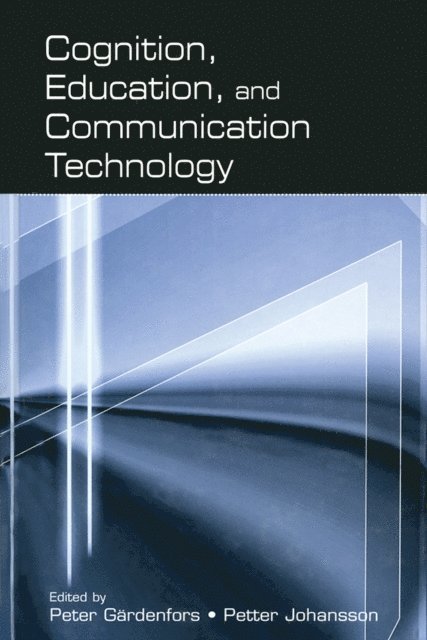
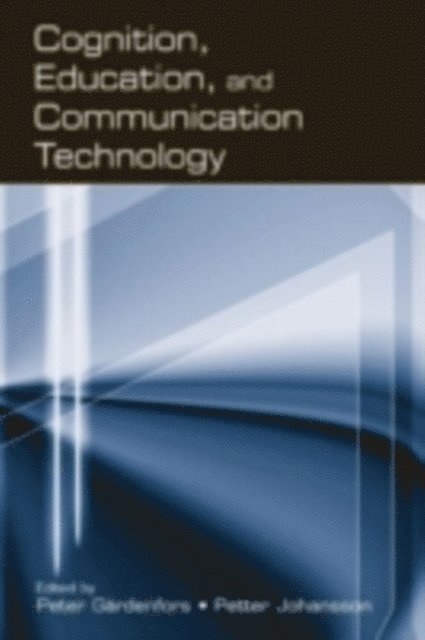
Cognition, Education, and Communication Technology
Av PETER GARDENFORS, Petter Johansson
Inbunden, 2005
2448 kr
Lägg i varukorg
Cognition, Education, and Communication Technology presents some of the recent theoretical developments in the cognitive and educational sciences and implications for the use of information and communication technology (ICT) in the organization of school and university education. Internationally …
Cognition, Education, and Communication Technology
Av PETER GARDENFORS, Petter Johansson
Häftad, 2005
674 kr
Lägg i varukorg
Cognition, Education, and Communication Technology presents some of the recent theoretical developments in the cognitive and educational sciences and implications for the use of information and communication technology (ICT) in the organization of school and university education. Internationally …
Cognition, Education, and Communication Technology
Av Petter Johansson, PETER GARDENFORS
E-bok, 2014
791 kr
Lägg i varukorg
Cognition, Education, and Communication Technology presents some of the recent theoretical developments in the cognitive and educational sciences and implications for the use of information and communication technology (ICT) in the organization of school and university education. Internationally …
Cognition, Education, and Communication Technology
Av Petter Johansson, PETER GARDENFORS
E-bok, 2014
791 kr
Lägg i varukorg
Cognition, Education, and Communication Technology presents some of the recent theoretical developments in the cognitive and educational sciences and implications for the use of information and communication technology (ICT) in the organization of school and university education. Internationally …
Dynamics of Thought
Inbunden, 2005
2189 kr
Lägg i varukorg
This book is a selection from the articles that I have written over a period of more than twenty years. Since the focus of my research interests has shifted several times during this period, it would be difficult to identify a common theme for all the papers in the volume. Following the Swedish …
Dynamics of Thought
E-bok, 2005
2925 kr
Lägg i varukorg
This book is a selection from the articles that I have written over a period of more than twenty years. Since the focus of my research interests has shifted several times during this period, it would be difficult to identify a common theme for all the papers in the volume. Following the Swedish …
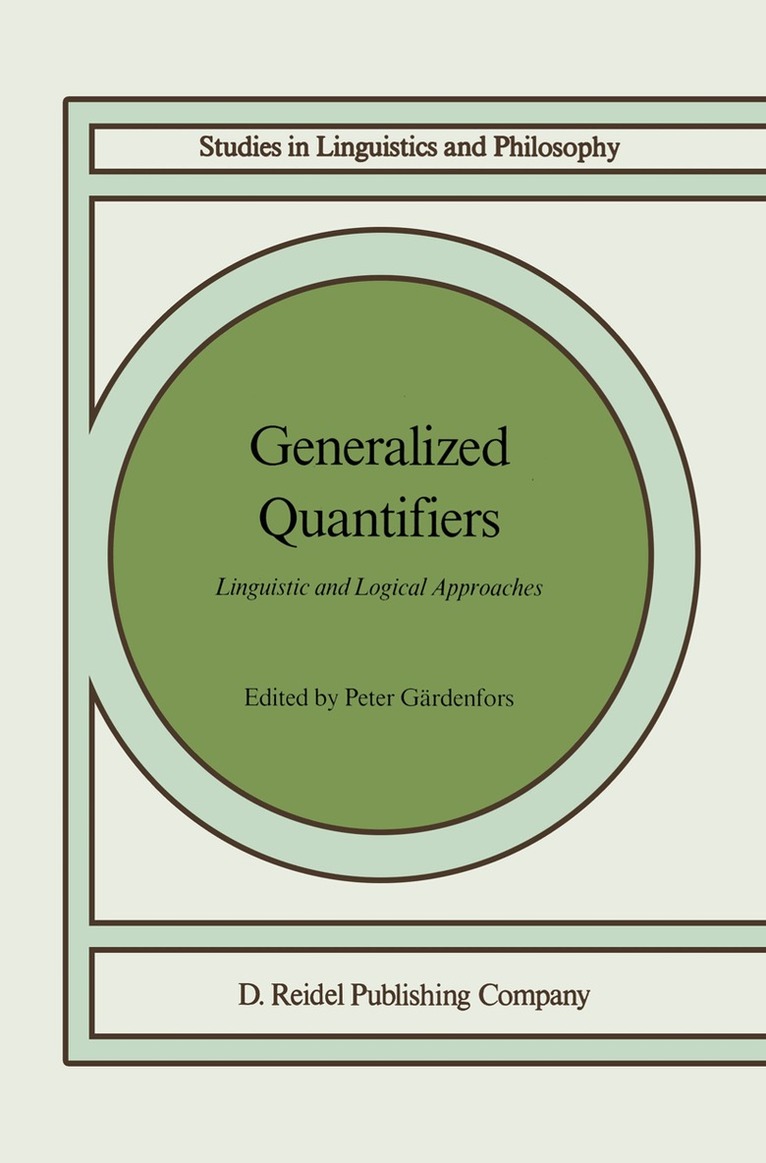
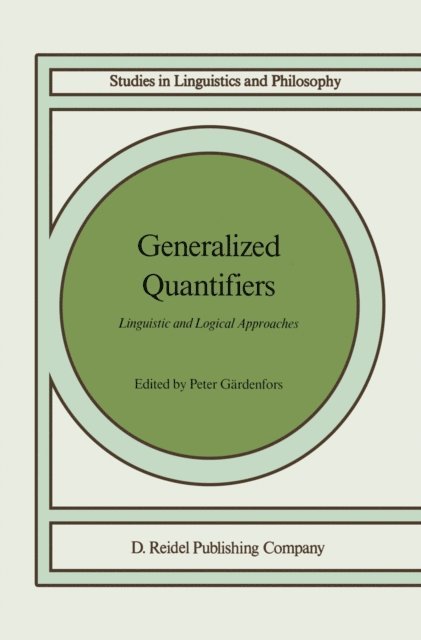
Generalized Quantifiers
Linguistic and Logical Approaches
Av Peter Gardenfors, Peter Gärdenfors
Inbunden, 1987
1693 kr
Lägg i varukorg
Some fifteen years ago, research on generalized quantifiers was con sidered to be a branch of mathematical logic, mainly carried out by mathematicians. Since then an increasing number of linguists and philosophers have become interested in exploring the relevance of general quantifiers for natural …
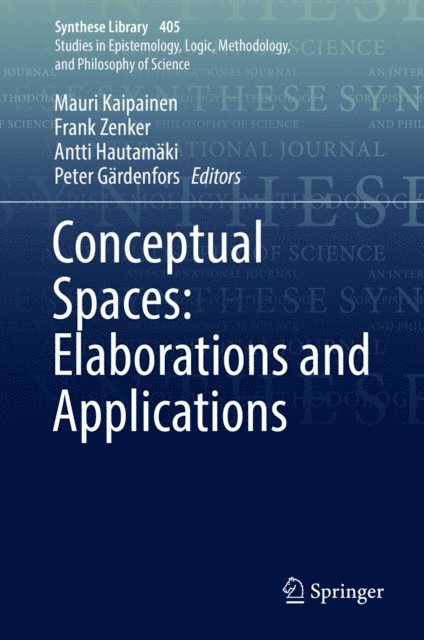
Conceptual Spaces: Elaborations and Applications
Av Peter Gardenfors, Antti Hautamaki m. fl.
E-bok, 2019
1785 kr
Lägg i varukorg
This edited book focuses on concepts and their applications using the theory of conceptual spaces, one of today’s most central tracks of cognitive science discourse. It features 15 papers based on topics presented at the Conceptual Spaces @ Work 2016 conference. The contributors interweave both …
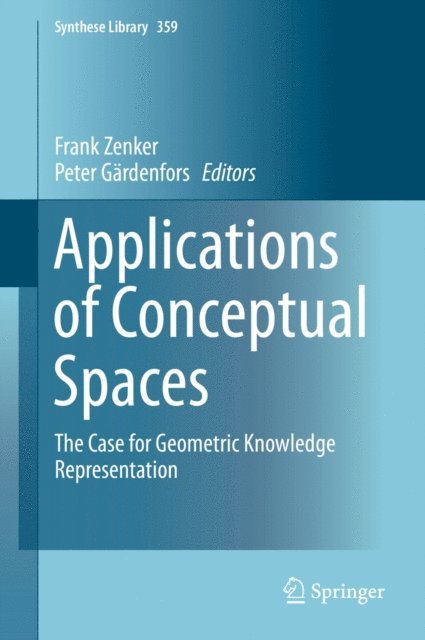
Applications of Conceptual Spaces
The Case for Geometric Knowledge Representation
Av Peter Gardenfors, Frank Zenker
E-bok, 2015
1427 kr
Lägg i varukorg
This volume provides an overview of applications of conceptual spaces theory, beginning with an introduction to the modeling tool that unifies the chapters. The first section explores issues of linguistic semantics, including speakers’ negotiation of meaning. Further sections address computational …
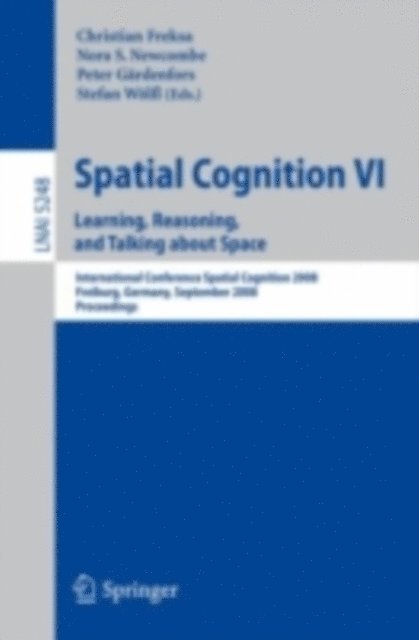
Spatial Cognition VI. Learning, Reasoning, and Talking about Space
International Conference Spatial Cognition 2008, Freiburg, Germany, September 15-19, 2008. Proceedings
Av Stefan Wolfl, Peter Gardenfors m. fl.
E-bok, 2008
1320 kr
Lägg i varukorg
This book constitutes the refereed proceedings of the International Conference on Spatial Cognition, Spatial Cognition 2008, held in Freiburg, Germany, in September 2008. The 27 revised full papers presented together with 3 invited lectures were carefully reviewed and selected from 54 submissions. …
Dynamics of Thought
Häftad, 2010
2189 kr
Lägg i varukorg
This book is a selection from the articles that I have written over a period of more than twenty years. Since the focus of my research interests has shifted several times during this period, it would be difficult to identify a common theme for all the papers in the volume. Following the Swedish …
Generalized Quantifiers
Linguistic and Logical Approaches
E-bok, 2012
2174 kr
Lägg i varukorg
Some fifteen years ago, research on generalized quantifiers was con sidered to be a branch of mathematical logic, mainly carried out by mathematicians. Since then an increasing number of linguists and philosophers have become interested in exploring the relevance of general quantifiers for natural …
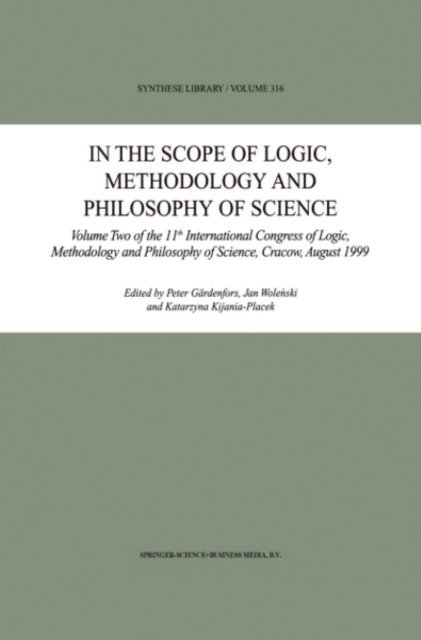
In the Scope of Logic, Methodology and Philosophy of Science
Volume Two of the 11th International Congress of Logic, Methodology and Philosophy of Science, Cracow, August 1999
Av K. Kijania-Placek, Jan Wolenski m. fl.
E-bok, 2013
2111 kr
Lägg i varukorg
This is the second of two volumes containing papers submitted by the invited speakers to the 11th international Congress of Logic, Methodology and Philosophy of Science, held in Cracow in 1999, under the auspices of the International Union of History and Philosophy of Science, Division of Logic, …
Cognition, Education, and Communication Technology
Av Petter Johansson, Peter Gardenfors
E-bok, 2005
322 kr
Tillfälligt slut