Peter J. Balint – författare
Visar alla böcker från författaren Peter J. Balint. Handla med fri frakt och snabb leverans.
8 produkter
8 produkter
Inbunden, Engelska, 2016
1 732 kr
Skickas inom 5-8 vardagar
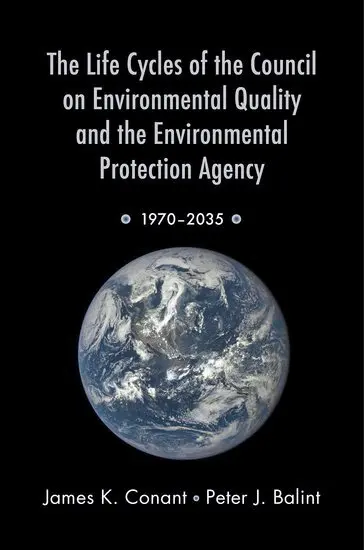
During the middle and late 1960s, public concern about the environment grew rapidly, as did Congressional interest in addressing environmental problems. Then, in 1970, a dramatic series of bipartisan actions were taken to expand the national government's efforts to control the volume and types of substances that pollute the air, water, and land. In that year, President Richard Nixon signed into law the National Environmental Policy Act, which established for the first time a national policy on the environment and created the Council on Environmental Quality (CEQ). Additionally, President Nixon created, with Congressional support, the Environmental Protection Agency (EPA), and he signed into law the Clean Air Act of 1970, which had overwhelming bipartisan support in Congress. The strong bipartisan consensus on the need to protect environmental and human health began to erode, however, during the middle and late 1970s as other domestic and foreign policy problems rose to the top of the public and legislative agendas. Ronald Reagan's election to the Presidency in 1980 marked a dramatic shift in both environmental policymaking and administration. Over the thirty years that followed Reagan's election, environmental politics and administration became increasingly polarized. In this book, James K. Conant and Peter J. Balint examine the trajectory of environmental policy and administration in the United States by looking at the development of the CEQ and EPA. They look at changes in budgetary and staffing resources over time as well as the role of quality of leadership as key indicators of capacity and vitality. As well, they make correlations between the agencies' fortunes and various social, political, and economic variables. Conant and Balint cautiously predict that both agencies are likely to survive over the next twenty years, but that they will both experience continuing volatility as their life histories unfold.
Häftad, Engelska, 2016
405 kr
Skickas inom 5-8 vardagar
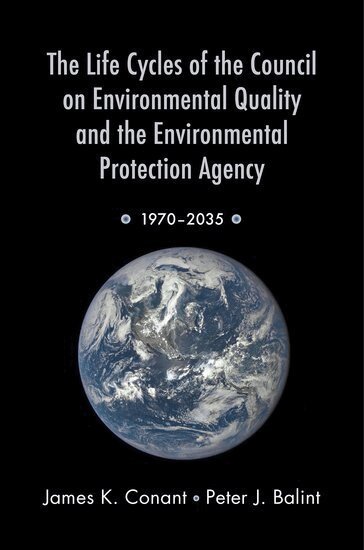
During the middle and late 1960s, public concern about the environment grew rapidly, as did Congressional interest in addressing environmental problems. Then, in 1970, a dramatic series of bipartisan actions were taken to expand the national government's efforts to control the volume and types of substances that pollute the air, water, and land. In that year, President Richard Nixon signed into law the National Environmental Policy Act, which established for the first time a national policy on the environment and created the Council on Environmental Quality (CEQ). Additionally, President Nixon created, with Congressional support, the Environmental Protection Agency (EPA), and he signed into law the Clean Air Act of 1970, which had overwhelming bipartisan support in Congress. The strong bipartisan consensus on the need to protect environmental and human health began to erode, however, during the middle and late 1970s as other domestic and foreign policy problems rose to the top of the public and legislative agendas. Ronald Reagan's election to the Presidency in 1980 marked a dramatic shift in both environmental policymaking and administration. Over the thirty years that followed Reagan's election, environmental politics and administration became increasingly polarized. In this book, James K. Conant and Peter J. Balint examine the trajectory of environmental policy and administration in the United States by looking at the development of the CEQ and EPA. They look at changes in budgetary and staffing resources over time as well as the role of quality of leadership as key indicators of capacity and vitality. As well, they make correlations between the agencies' fortunes and various social, political, and economic variables. Conant and Balint cautiously predict that both agencies are likely to survive over the next twenty years, but that they will both experience continuing volatility as their life histories unfold.
E-bok
PDF, Engelska, 2016309 kr
Läs direkt efter köp
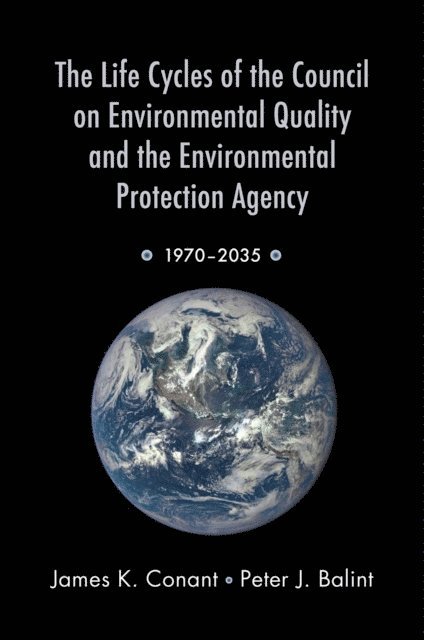
In 1970, due to increasing public concern about the environment, a dramatic series of bipartisan actions were taken to expand the national government''s efforts to control pollutants. In that year, the Congress and President Nixon established two key federal agencies to address the nation''s growing environmental problems: the Council on Environmental Quality (CEQ) and the Environmental Protection Agency (EPA). But despite this initial recognition of the pressing problems presented by environmental degradation, support for related policymaking and administration waxed and waned over the next thirty-five years, as other domestic and foreign policy problems rose to the top of the public and legislative agendas. What does the future hold for environmental policy in the United States, given the highly polarized politics surrounding the issue today? In this book, James K. Conant and Peter J. Balint examine what happened to the CEQ and EPA between 1970 and 2010 by using changes in leadership and budgetary resources as key indicators of the agencies'' vitality and capacity for implementing pollution control laws. They also examine correlations between the agencies'' fortunes and various social, political, and economic variables. The authors conclude with several scenarios about what the future holds for these important environmental agencies.
E-bok
Engelska, 2016309 kr
Läs direkt efter köp
In 1970, due to increasing public concern about the environment, a dramatic series of bipartisan actions were taken to expand the national government''s efforts to control pollutants. In that year, the Congress and President Nixon established two key federal agencies to address the nation''s growing environmental problems: the Council on Environmental Quality (CEQ) and the Environmental Protection Agency (EPA). But despite this initial recognition of the pressing problems presented by environmental degradation, support for related policymaking and administration waxed and waned over the next thirty-five years, as other domestic and foreign policy problems rose to the top of the public and legislative agendas. What does the future hold for environmental policy in the United States, given the highly polarized politics surrounding the issue today? In this book, James K. Conant and Peter J. Balint examine what happened to the CEQ and EPA between 1970 and 2010 by using changes in leadership and budgetary resources as key indicators of the agencies'' vitality and capacity for implementing pollution control laws. They also examine correlations between the agencies'' fortunes and various social, political, and economic variables. The authors conclude with several scenarios about what the future holds for these important environmental agencies.
Inbunden, Engelska, 2000
834 kr
Skickas inom 10-15 vardagar
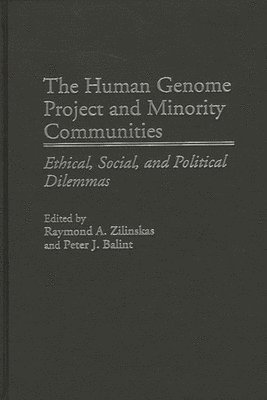
Zilinskas and Balint and their contributors examine the divisions between minority groups and the scientific community, particularly in the area of medical and genetic research. Minorities have reasons to be skeptical of medical research in general and genetics research in particular. The sad history of the Tuskegee experiment, in which black men with syphilis were left untreated so that the course of the disease could be studied, undermined confidence in the ethics of medical researchers. More recently, publication of The Bell Curve reanimated controversy over purported genetic distinctions among the races that could have powerfully negative social implications.In contrast, as the essays make clear, the Human Genome Project, conducted in accordance with the highest ethical standards, has the potential to make dramatic positive contributions to the health of all human beings. Members of minority communities in particular—who statistically are at high risk of adverse health outcomes in the United States—have much to gain from innovative medical diagnostics and therapies that will result from the study of human genetics. Therefore, if we are to benefit fully from this new knowledge, it is vital that the distrust, skepticism, and misconceptions relating to genetics research be overcome. This is a provocative collection for scholars, students, researchers, and community leaders involved with minority and public health issues.
Inbunden, Engelska, 1998
1 090 kr
Skickas inom 10-15 vardagar
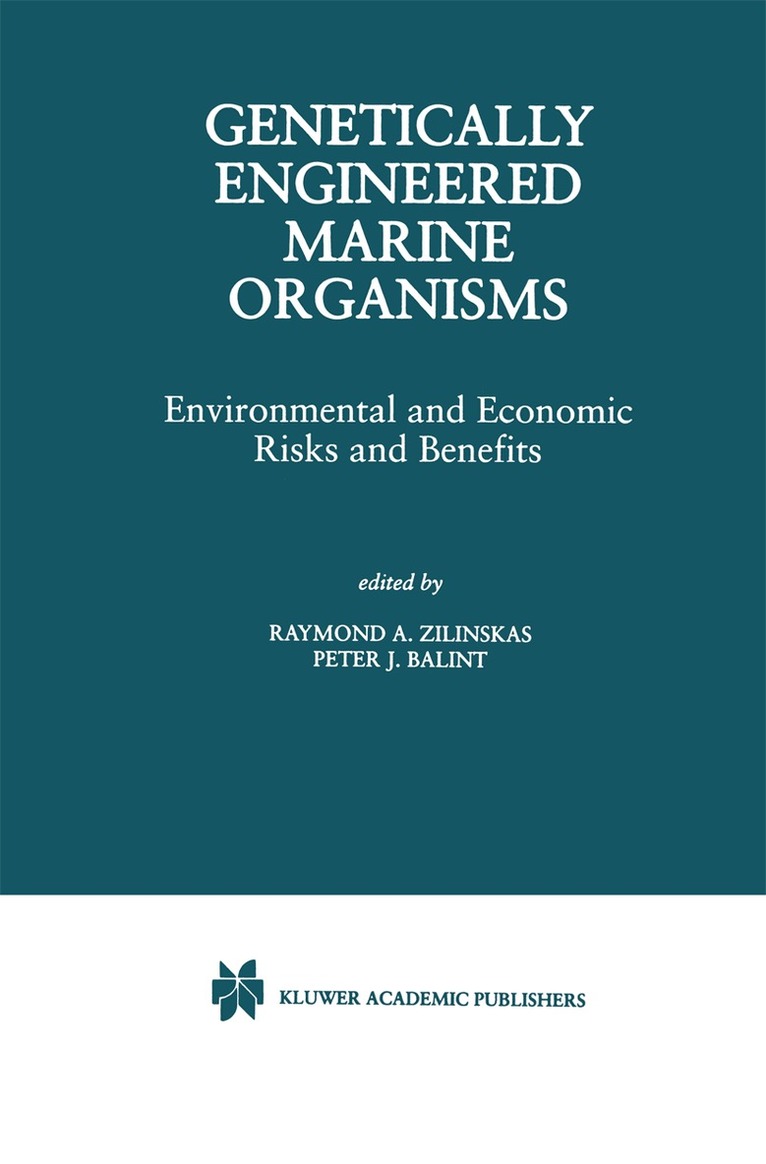
Genetically Engineered Marine Organisms: Environmental and Economic Risks and Benefits provides a comprehensive, multidisciplinary overview of the environmental, economic, and regulatory implications of advances in marine biotechnology. The book has been specifically designed to bridge the gap between the rapidly advancing marine biotechnology industry and the government agencies that are responsible for risk assessment and regulation. Editors Raymond Zilinskas and Peter Balint have brought together experts in risk assessment, marine ecology, biotechnology, economics, and the law, to provide a unique way of examining complex issues in marine biotechnology. The contributors present innovative and challenging recommendations for protecting public health and the environment, while encouraging the development of beneficial new products in the field of marine biotechnology. As an added feature, each chapter includes a comprehensive, up-to-date bibliography. Genetically Engineered Marine Organisms: Environmental and Economic Risks and Benefits will prove invaluable to students, researchers and public employees involved with risk assessment. The book will appeal to industry personnel involved with the preparation of marine biotechnology products; scientists and administrators involved with applied research in marine biotechnology; policy analysts concerned with the economics of marine fisheries; and university personnel who focus on the interaction of risk, technology, and public policy.
Häftad, Engelska, 2012
1 090 kr
Skickas inom 10-15 vardagar
Genetically Engineered Marine Organisms: Environmental and Economic Risks and Benefits provides a comprehensive, multidisciplinary overview of the environmental, economic, and regulatory implications of advances in marine biotechnology. The book has been specifically designed to bridge the gap between the rapidly advancing marine biotechnology industry and the government agencies that are responsible for risk assessment and regulation. Editors Raymond Zilinskas and Peter Balint have brought together experts in risk assessment, marine ecology, biotechnology, economics, and the law, to provide a unique way of examining complex issues in marine biotechnology. The contributors present innovative and challenging recommendations for protecting public health and the environment, while encouraging the development of beneficial new products in the field of marine biotechnology. As an added feature, each chapter includes a comprehensive, up-to-date bibliography. Genetically Engineered Marine Organisms: Environmental and Economic Risks and Benefits will prove invaluable to students, researchers and public employees involved with risk assessment. The book will appeal to industry personnel involved with the preparation of marine biotechnology products; scientists and administrators involved with applied research in marine biotechnology; policy analysts concerned with the economics of marine fisheries; and university personnel who focus on the interaction of risk, technology, and public policy.
E-bok
PDF, Engelska, 20121 367 kr
Läs direkt efter köp
Genetically Engineered Marine Organisms: Environmental and Economic Risks and Benefits provides a comprehensive, multidisciplinary overview of the environmental, economic, and regulatory implications of advances in marine biotechnology. The book has been specifically designed to bridge the gap between the rapidly advancing marine biotechnology industry and the government agencies that are responsible for risk assessment and regulation. Editors Raymond Zilinskas and Peter Balint have brought together experts in risk assessment, marine ecology, biotechnology, economics, and the law, to provide a unique way of examining complex issues in marine biotechnology. The contributors present innovative and challenging recommendations for protecting public health and the environment, while encouraging the development of beneficial new products in the field of marine biotechnology. As an added feature, each chapter includes a comprehensive, up-to-date bibliography. Genetically Engineered Marine Organisms: Environmental and Economic Risks and Benefits will prove invaluable to students, researchers and public employees involved with risk assessment. The book will appeal to industry personnel involved with the preparation of marine biotechnology products; scientists and administrators involved with applied research in marine biotechnology; policy analysts concerned with the economics of marine fisheries; and university personnel who focus on the interaction of risk, technology, and public policy.