Peter John TAYLOR – författare
Visar alla böcker från författaren Peter John TAYLOR. Handla med fri frakt och snabb leverans.
7 produkter
7 produkter
Häftad, Engelska, 2012
178 kr
Skickas inom 5-8 vardagar
Inbunden, Engelska, 2012
268 kr
Skickas inom 5-8 vardagar
Häftad, Engelska, 2014
183 kr
Skickas inom 5-8 vardagar
Inbunden, Engelska, 2014
296 kr
Skickas inom 5-8 vardagar
Inbunden, Engelska, 2020
993 kr
Skickas inom 5-8 vardagar
This revised edition of a book first published in 2010 supplements the original account of the 116 bat species then known to be found in Southern and Central Africa with an additional eight newly described species.The chapters on evolution, biogeography, ecology and echolocation have been updated, citing dozens of recently published papers. The book covers the latest systematic and taxonomic studies, ensuring that the names and relationships of bats in this new edition reflect current scientific knowledge. The species accounts provide descriptions, measurements and diagnostic characters as well as detailed information about the distribution, habitat, roosting habits, foraging ecology and reproduction of each species. The updated species distribution maps are based on 116 recorded localities. A special feature of the 2010 publication was the mode of identification of families, genera and species by way of character matrices rather than the more generally used dichotomous keys. Since then these matrices have been tested in the field and, where necessary, slightly altered for this edition. New photographs fill in gaps and updated sonograms aid with bat identification in acoustic surveys. The bibliography, which now contains more than 700 entries, will be an invaluable aid to students and scientists wishing to track down original research.
E-bok
PDF, Engelska, 20201 039 kr
Läs direkt efter köp
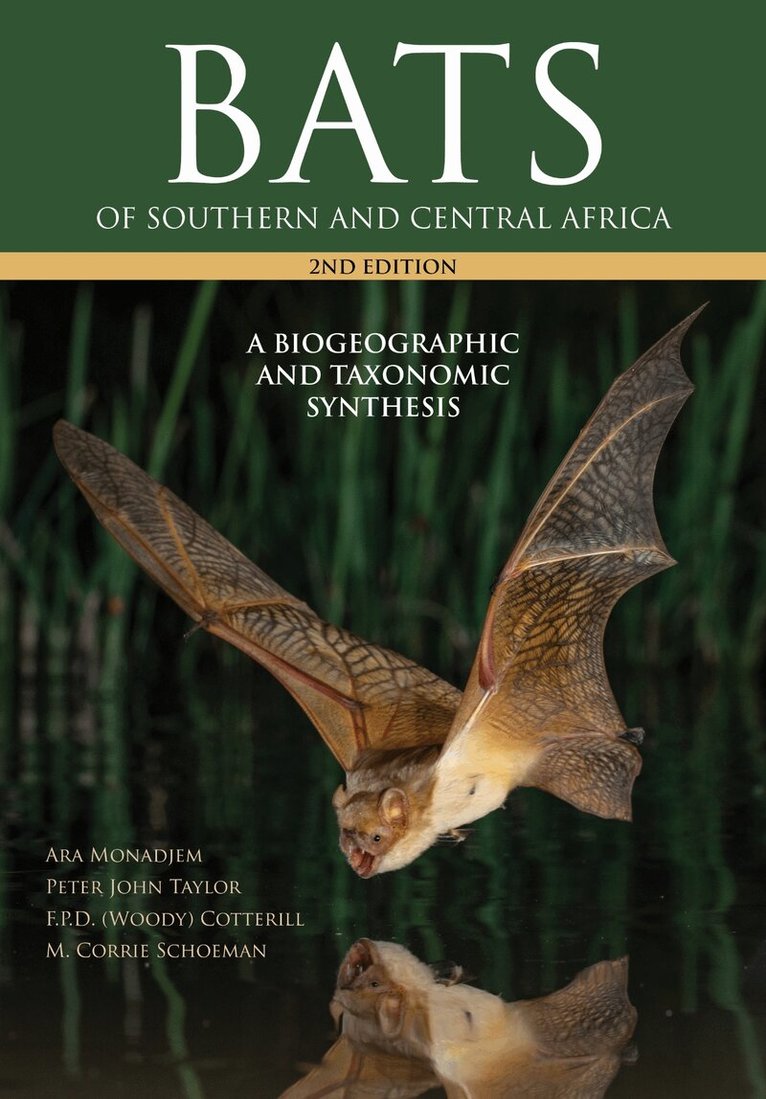
This revised edition of Bats of Southern and Central Africa builds on the solid foundation of the first edition and supplements the original account of bat species then known to be found in Southern and Central Africa with an additional eight newly described species, bringing the total to 124. The chapters on evolution, biogeography, ecology and echolocation have been updated, citing dozens of recently published papers. The book covers the latest systematic and taxonomic studies, ensuring that the names and relationships of bats in this new edition reflect current scientific knowledge. The species accounts provide descriptions, measurements and diagnostic characters as well as detailed information about the distribution, habitat, roosting habits, foraging ecology and reproduction of each species. The updated species distribution maps are based on 6 100 recorded localities. A special feature of the 2010 publication was the mode of identification of families, genera and species by way of character matrices rather than the more generally used dichotomous keys. Since then these matrices have been tested in the field and, where necessary, slightly altered for this edition. New photographs fill in gaps and updated sonograms aid with bat identification in acoustic surveys. The bibliography, which now contains more than 700 entries, will be an invaluable aid to students and scientists wishing to consult original research.
E-bok
Engelska, 20201 039 kr
Läs direkt efter köp
This revised edition of Bats of Southern and Central Africa builds on the solid foundation of the first edition and supplements the original account of bat species then known to be found in Southern and Central Africa with an additional eight newly described species, bringing the total to 124. The chapters on evolution, biogeography, ecology and echolocation have been updated, citing dozens of recently published papers. The book covers the latest systematic and taxonomic studies, ensuring that the names and relationships of bats in this new edition reflect current scientific knowledge. The species accounts provide descriptions, measurements and diagnostic characters as well as detailed information about the distribution, habitat, roosting habits, foraging ecology and reproduction of each species. The updated species distribution maps are based on 6 100 recorded localities. A special feature of the 2010 publication was the mode of identification of families, genera and species by way of character matrices rather than the more generally used dichotomous keys. Since then these matrices have been tested in the field and, where necessary, slightly altered for this edition. New photographs fill in gaps and updated sonograms aid with bat identification in acoustic surveys. The bibliography, which now contains more than 700 entries, will be an invaluable aid to students and scientists wishing to consult original research.