Peter Kroes - Böcker
Visar alla böcker från författaren Peter Kroes. Handla med fri frakt och snabb leverans.
11 produkter
11 produkter
Functions in Biological and Artificial Worlds
Comparative Philosophical Perspectives
Inbunden, Engelska, 2009
118 kr
Tillfälligt slut
Del 144 - Boston Studies in the Philosophy and History of Science
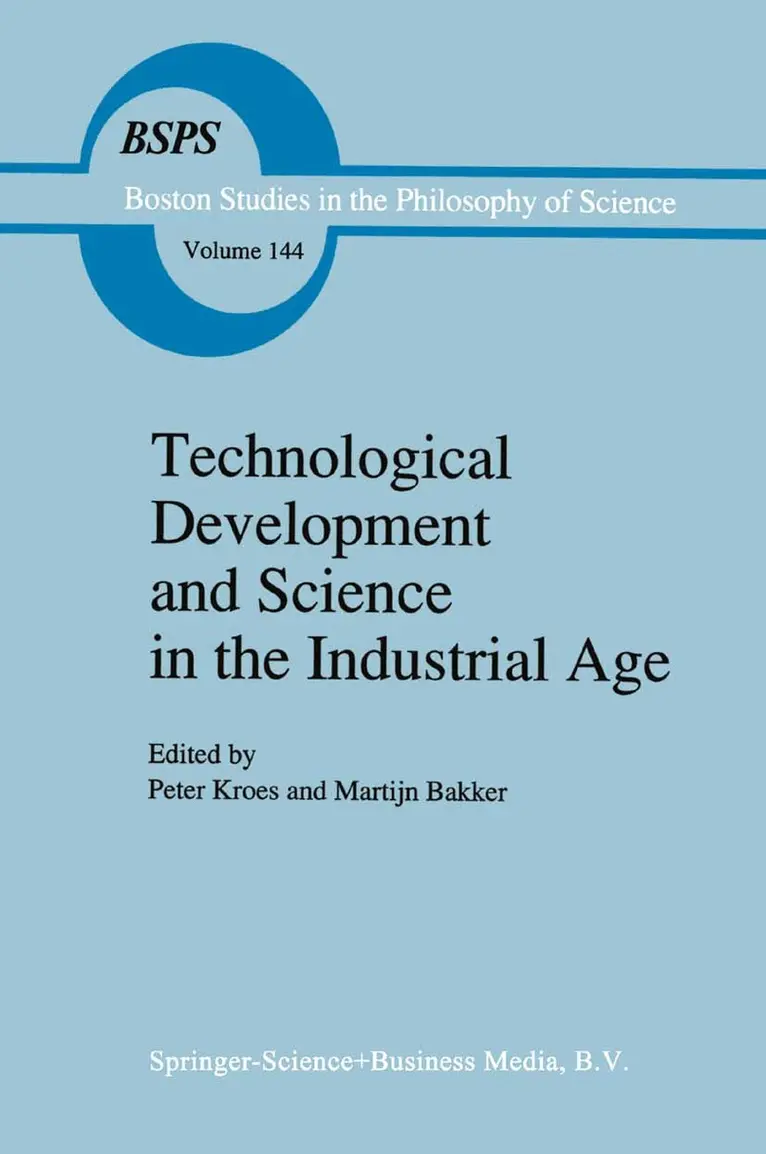
Technological Development and Science in the Industrial Age
New Perspectives on the Science-Technology Relationship
Inbunden, Engelska, 1992
1 891 kr
Skickas inom 10-15 vardagar
Historians and philosophers of technology are searching for new approaches to the study of the interaction between science and technology. New conceptual frameworks are necessary since the idea that technology is simply applied science is nothing short of a myth. The papers contained in this volume deal primarily with cognitive and social aspects of the science-technology issue. One of the most salient features of these papers is that they show a major methodological shift in studying the interaction between science and technology. Discussions of the science-technology issue have long been dominated by the demarcartion problem and related semantic issues about the notions "science" and "technology", and the "technology is applied science" thesis. Instead of general "global" interpretation schemes and models of the interaction between science and technology, detailed empirical case studies of cognitive and institutional connections between "science" and "technology" constitute the hard core of this book. The book will be of interest to philosophers of science, historians and philosophers of technology and science and sociologists of science.
303 kr
Skickas inom 10-15 vardagar
Table of Contents: Technical Artefacts / Technical Designing / Ethics and Designing / Technological Knowledge / Sociotechnical Systems / The Role of Social Factors in Technological Development / Ethics and Unintended Consequences of Technology
1 275 kr
Skickas inom 10-15 vardagar
This book is concerned with two intimately related topics of metaphysics: the identity of entities and the foundations of classification. What it adds to previous discussions of these topics is that it addresses them with respect to human-made entities, that is, artefacts. As the chapters in the book show, questions of identity and classification require other treatments and lead to other answers for artefacts than for natural entities. These answers are of interest to philosophers not only for their clarification of artefacts as a category of things but also for the new light they may shed on these issue with respect to to natural entities. This volume is structured in three parts. The contributions in Part I address basic ontological and metaphysical questions in relation to artefact kinds: How should we conceive of artefact kinds? Are they real kinds? How are identity conditions for artefacts and artefact kinds related? The contributions in Part II address meta-ontological questions: What, exactly, should an ontological account of artefact kinds provide us with? What scope can it aim for? Which ways of approaching the ontology of artefact kinds are there, how promising are they, and how should we assess this? In Part III, the essays offer engineering practice rather than theoretical philosophy as a point of reference. The issues addressed here include: How do engineers classify technical artefacts and on what grounds? What makes specific classes of technical artefacts candidates for ontologically real kinds, and by which criteria?
1 381 kr
Skickas inom 10-15 vardagar
This volume features 16 essays on the philosophy of technology that discuss its identity, its position in philosophy in general, and the role of empirical studies in philosophical analyses of engineering ethics and engineering practices. This volume is published about fifteen years after Peter Kroes and Anthonie Meijers published a collection of papers under the title The empirical turn in the philosophy of technology, in which they called for a reorientation toward the practice of engineering, and sketched the likely benefits for philosophy of technology of pursuing its major questions in an empirically informed way.The essays in this volume fall apart in two different kinds. One kind follows up on The empirical turn discussion about what the philosophy of technology is all about. It continues the search for the identity of the philosophy of technology by asking what comes after the empirical turn. The other kind of essays follows the call for an empirical turn in the philosophy of technology by showing how it may be realized with regard to particular topics. Together these essays offer the reader an overview of the state of the art of an empirically informed philosophy of technology and of various views on the empirical turn as a stepping stone into the future of the philosophy of technology.
1 275 kr
Skickas inom 10-15 vardagar
This book is concerned with two intimately related topics of metaphysics: the identity of entities and the foundations of classification. What it adds to previous discussions of these topics is that it addresses them with respect to human-made entities, that is, artefacts. As the chapters in the book show, questions of identity and classification require other treatments and lead to other answers for artefacts than for natural entities. These answers are of interest to philosophers not only for their clarification of artefacts as a category of things but also for the new light they may shed on these issue with respect to to natural entities. This volume is structured in three parts. The contributions in Part I address basic ontological and metaphysical questions in relation to artefact kinds: How should we conceive of artefact kinds? Are they real kinds? How are identity conditions for artefacts and artefact kinds related? The contributions in Part II address meta-ontological questions: What, exactly, should an ontological account of artefact kinds provide us with? What scope can it aim for? Which ways of approaching the ontology of artefact kinds are there, how promising are they, and how should we assess this? In Part III, the essays offer engineering practice rather than theoretical philosophy as a point of reference. The issues addressed here include: How do engineers classify technical artefacts and on what grounds? What makes specific classes of technical artefacts candidates for ontologically real kinds, and by which criteria?
1 381 kr
Skickas inom 10-15 vardagar
This volume features 16 essays on the philosophy of technology that discuss its identity, its position in philosophy in general, and the role of empirical studies in philosophical analyses of engineering ethics and engineering practices.
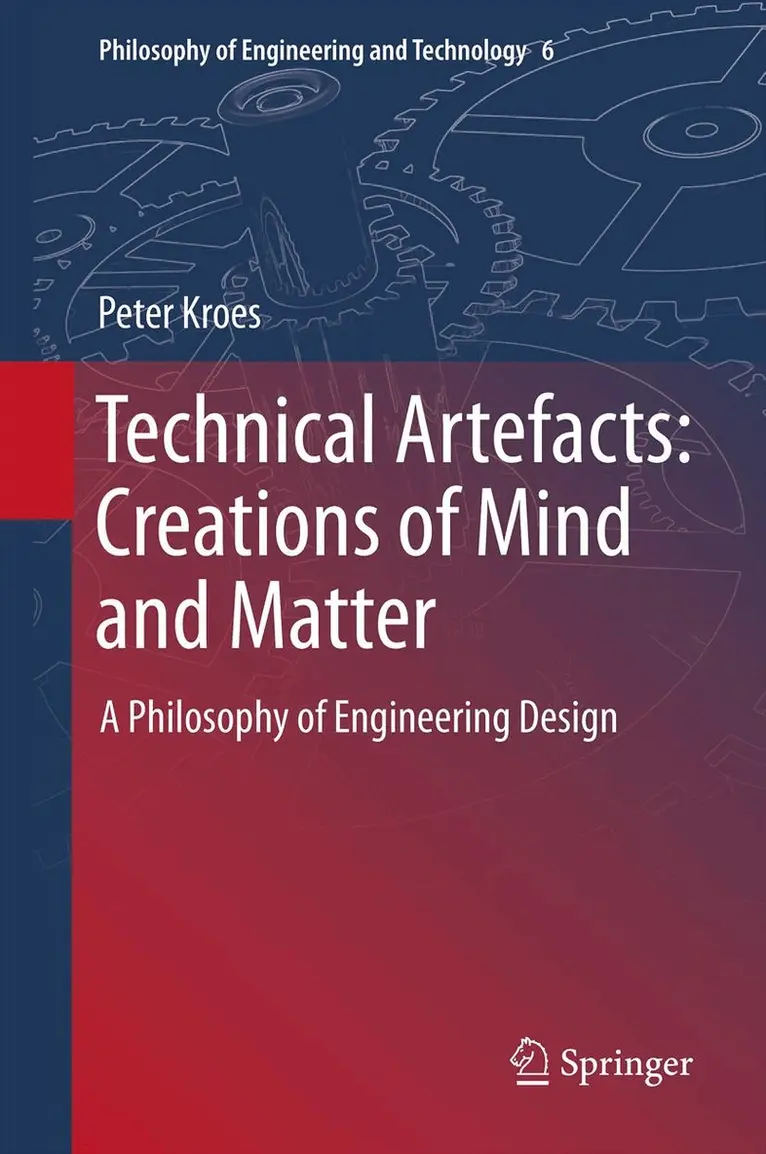
Technical Artefacts: Creations of Mind and Matter
A Philosophy of Engineering Design
Inbunden, Engelska, 2012
1 064 kr
Skickas inom 10-15 vardagar
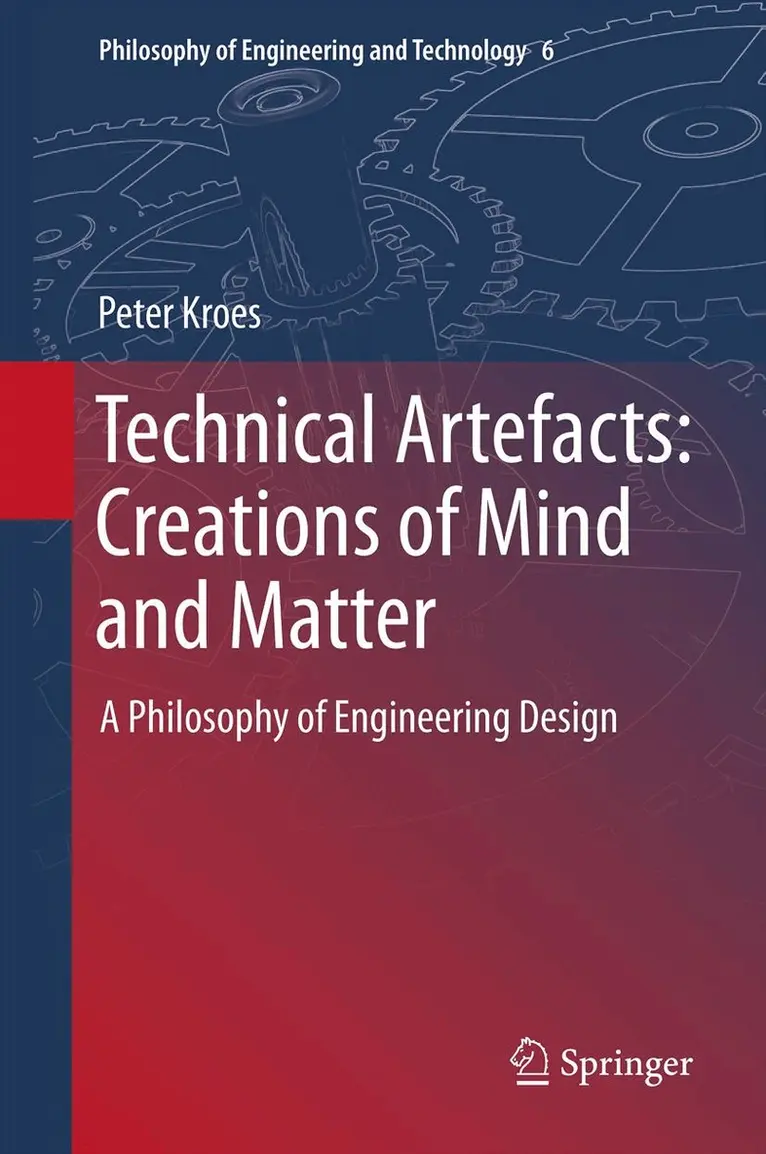
This book presents an attempt to understand the nature of technical artefacts and the way they come into being. Its primary focus is the kind of technical artefacts designed and produced by modern engineering. In spite of their pervasive influence on human thinking and doing, and therefore on the modern human condition, a philosophical analysis of technical artefacts and engineering design is lacking. Among the questions addressed are: How do technical artefacts fit into the furniture of the universe? In what sense are they different from objects from the natural world, or from the social world? What kind of activity is engineering design and what does it mean to say that technical artefacts are the embodiment of a design? Does it make sense to consider technical artefacts to be morally good or bad by themselves because of the way they influence human life? The book advances the thesis that technical artefacts, conceived of as physical constructions with a technical function, have a dual nature; they are hybrid objects combining physical and intentional features. It proposes a theory of technical functions and technical artefact kinds that does justice to this dual nature, analyses engineering design from the dual nature point of view, and argues that technical artefacts, because of their dual nature, have inherent moral significance.
1 064 kr
Skickas inom 10-15 vardagar
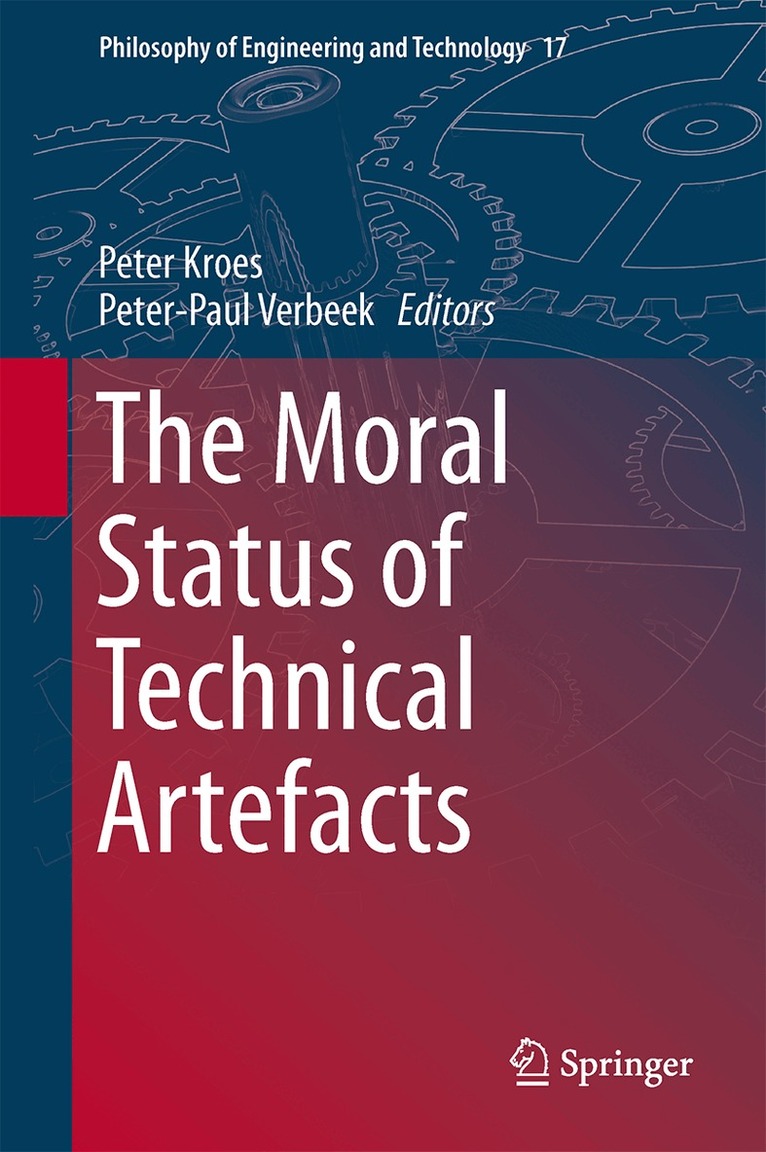
This book considers the question: to what extent does it make sense to qualify technical artefacts as moral entities? The authors’ contributions trace recent proposals and topics including instrumental and non-instrumental values of artefacts, agency and artefactual agency, values in and around technologies, and the moral significance of technology. The editors’ introduction explains that as ‘agents’ rather than simply passive instruments, technical artefacts may actively influence their users, changing the way they perceive the world, the way they act in the world and the way they interact with each other. This volume features the work of various experts from around the world, representing a variety of positions on the topic. Contributions explore the contested discourse on agency in humans and artefacts, defend the Value Neutrality Thesis by arguing that technological artefacts do not contain, have or exhibit values, or argue that moral agency involves both human andnon-human elements.The book also investigates technological fields that are subject to negative moral valuations due to the harmful effects of some of their products. It includes an analysis of some difficulties arising in Artificial Intelligence and an exploration of values in Chemistry and in Engineering. The Moral Status of Technical Artefacts is an advanced exploration of the various dimensions of the relations between technology and morality
Technical Artefacts: Creations of Mind and Matter
A Philosophy of Engineering Design
Häftad, Engelska, 2014
1 064 kr
Skickas inom 10-15 vardagar
This book presents an attempt to understand the nature of technical artefacts and the way they come into being. Its primary focus is the kind of technical artefacts designed and produced by modern engineering. In spite of their pervasive influence on human thinking and doing, and therefore on the modern human condition, a philosophical analysis of technical artefacts and engineering design is lacking. Among the questions addressed are: How do technical artefacts fit into the furniture of the universe? In what sense are they different from objects from the natural world, or from the social world? What kind of activity is engineering design and what does it mean to say that technical artefacts are the embodiment of a design? Does it make sense to consider technical artefacts to be morally good or bad by themselves because of the way they influence human life? The book advances the thesis that technical artefacts, conceived of as physical constructions with a technical function, have a dual nature; they are hybrid objects combining physical and intentional features. It proposes a theory of technical functions and technical artefact kinds that does justice to this dual nature, analyses engineering design from the dual nature point of view, and argues that technical artefacts, because of their dual nature, have inherent moral significance.
1 064 kr
Skickas inom 10-15 vardagar
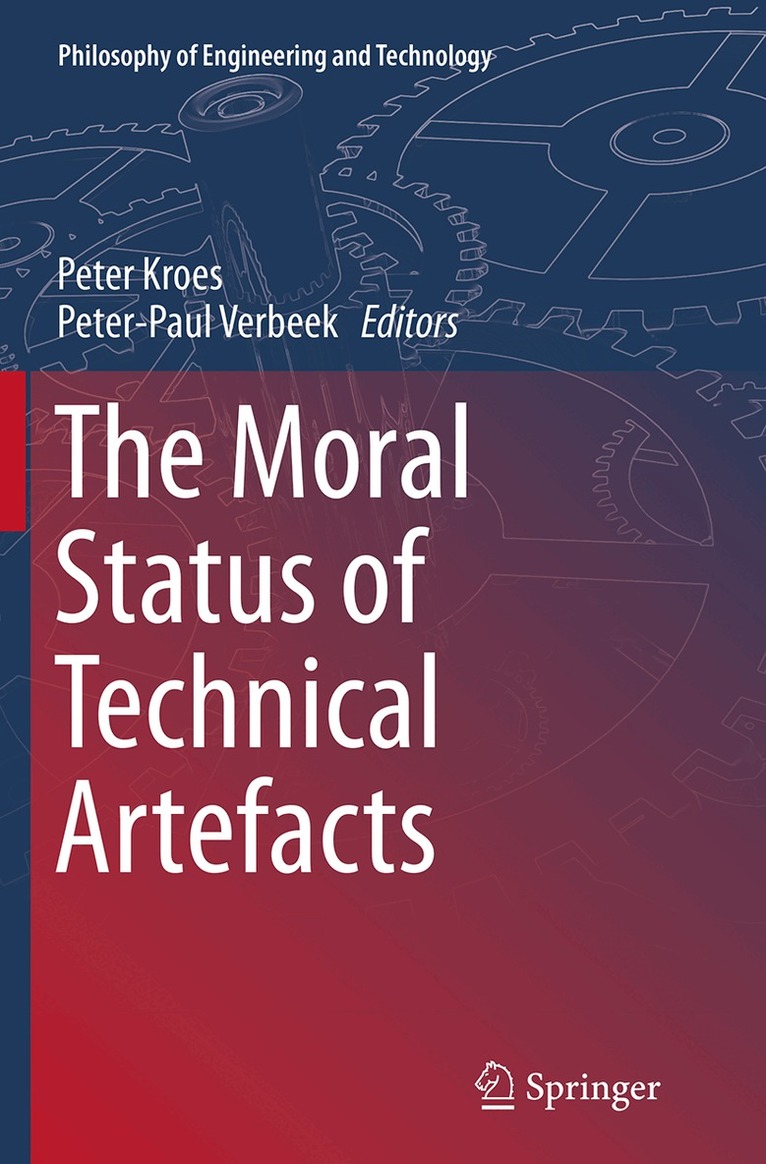
This book considers the question: to what extent does it make sense to qualify technical artefacts as moral entities? The authors’ contributions trace recent proposals and topics including instrumental and non-instrumental values of artefacts, agency and artefactual agency, values in and around technologies, and the moral significance of technology. The editors’ introduction explains that as ‘agents’ rather than simply passive instruments, technical artefacts may actively influence their users, changing the way they perceive the world, the way they act in the world and the way they interact with each other. This volume features the work of various experts from around the world, representing a variety of positions on the topic. Contributions explore the contested discourse on agency in humans and artefacts, defend the Value Neutrality Thesis by arguing that technological artefacts do not contain, have or exhibit values, or argue that moral agency involves both human andnon-human elements.The book also investigates technological fields that are subject to negative moral valuations due to the harmful effects of some of their products. It includes an analysis of some difficulties arising in Artificial Intelligence and an exploration of values in Chemistry and in Engineering. The Moral Status of Technical Artefacts is an advanced exploration of the various dimensions of the relations between technology and morality