Peter K.T. Pang – författare
Visar alla böcker från författaren Peter K.T. Pang. Handla med fri frakt och snabb leverans.
6 produkter
6 produkter
E-bok
PDF, Engelska, 2012696 kr
Läs direkt efter köp
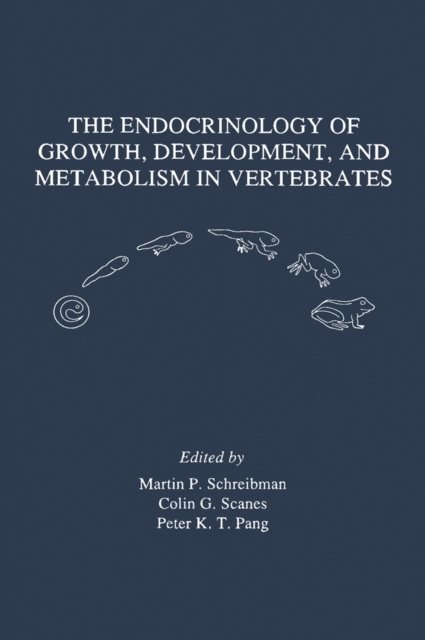
The Endocrinology of Growth, Development, and Metabolism in Vertebrates provides an overview of vertebrate endocrinology. This book aims to strengthen the bridge between medical and comparative endocrinologists by addressing the benefits that they can derive from this association. Organized into five parts encompassing 24 chapters, this volume starts with a discussion on the structure and biological function of growth hormone (GH) and prolactin (PRL) family. This book then explains the extrinsic, genetic, and humoral factors that influence animal growth, particularly in poikilotherms. This text also elaborates the environmental conditions that affect the growth of poikilotherms, including food availability, temperature, and photoperiod. Other chapters discuss how somatotropin affects the growth development in homeotherms, such as livestock species. The reader is also introduced to the metabolic actions of GH, which can be described in terms of short-lived insulin-like effects. Endocrinologists, molecular endocrinologists, biologists, molecular biologists, biochemists, researchers, and physicians will find this book extremely useful.
E-bok
PDF, Engelska, 2012696 kr
Läs direkt efter köp
Vertebrate Endocrinology: Fundamentals and Biomedical Implications, Volume 1: Morphological Considerations provides information pertinent to vertebrate endocrine systems, which has significant contributions to basic biological and biomedical research. This book discusses the practical implications of the endocrinological studies. Organized into 15 chapters, this volume starts with an overview of the endocrine process in lower vertebrates, which has provided basic information about the understanding of mammalian and human systems. This text then discusses the pituitary gland, which is considered to be functionally and structurally the most complex organ of the endocrine system. Other chapters consider the function of the pineal organ as a sensory organ capable of perceiving light stimuli in poikilothermic vertebrates. This book discusses as well the caudal neurosecretory system in lampreys, hagfish, holocephalans, and dipnoans. The final chapter provides the comparative morphology of the classical vertebrate endocrine organs. Endocrinologists, biologists, graduate students, and researchers will find this book useful.
E-bok
PDF, Engelska, 2014696 kr
Läs direkt efter köp
Vertebrate Endocrinology: Fundamentals and Biomedical Implications, Volume 2: Regulation of Water and Electrolytes provides information pertinent to vertebrate endocrine systems, which has significant contributions to basic biological and biomedical research. This book discusses the practical implications of the endocrinological studies. Organized into 13 chapters, this volume starts with an overview of the comprehensive aspects of endocrinology in mammalian and nonmammalian vertebrates, with emphasis on those systems that affect salt and water balance. This book then discusses the control of secretion as well as the function and biomedical implications of knowledge of secretion and function. Other chapters discuss several topics, including neurohypophysis, adrenal hormones, and pancreatic hormones. This text discusses as well the renin–angiotensin system. The final chapter deals with the changes that occur during vertebrate evolution in smaller peptide hormones, such as the neurohypophysial peptides and the angiotensins. Endocrinologists, biologists, graduate students, and researchers will find this book extremely useful.
E-bok
PDF, Engelska, 1991696 kr
Läs direkt efter köp
Vertebrate Endocrinology: Fundamentals and Biomedical Implication, Volume 4, Part B: Reproduction provides information relevant to the structure and function of the vertebrate reproductive endocrinology. This book deals with a variety of subjects, including oocyte maturation, gestation, ovulation, vitellogenesis, spermatogenesis, as well as the maturation and aging of the reproductive system. Organized into nine chapters, this volume starts with an overview of the gonadotropin-releasing hormone (GnRH), which is the physiological regulator of luteinizing hormone (LH) and follicle-stimulating hormone (FSH) release from the pituitary gland. This book then explores the significance of gonadotropins in animal life, which act directly on the gonads of vertebrates and control the development, maturation, and release of gametes. Other chapters consider the interactions between the reproductive system and the pineal gland in photoperiodic mammals. The final chapter deals with the evolution of the endocrine systems, which is involved in the control of vertebrate reproduction. Reproductive endocrinologists and developmental neuroendocrinologists will find this book extremely useful.
E-bok
PDF, Engelska, 2014696 kr
Läs direkt efter köp
Regulation of Calcium and Phosphate
E-bok
PDF, Engelska, 1991696 kr
Läs direkt efter köp
Vertebrate Endocrinology: Fundamentals and Biomedical Implications, Volume 4, Part A: Reproduction provides information pertinent to the structure and function of the vertebrate reproductive endocrinology. This book deals with a variety of subjects, including oocyte maturation, gestation, ovulation, vitellogenesis, spermatogenesis, and the maturation and aging of the reproductive system. Organized into seven chapters, this volume starts with an overview of the reproductive mechanisms and their underlying bases, with focus on the similarities between species. This book then discusses the factors of reproductive failure in many species, including failure of ovulation, abnormal fertilization, failure of fertilization, and failure of implantation. Other chapters explore the cellular, endocrinological, and molecular mechanisms that regulate oocyte maturation in mammals, which is directly stimulated by the need to improve human fertility and fecundity in domestic mammals. The final chapter deals with the aging of the brain–pituitary–gonadal axis in vertebrates. Reproductive endocrinologists and developmental neuroendocrinologists will find this book extremely useful.