Peter Sluglett – författare
Visar alla böcker från författaren Peter Sluglett. Handla med fri frakt och snabb leverans.
24 produkter
24 produkter
Inbunden, Engelska, 2008
402 kr
Skickas inom 5-8 vardagar
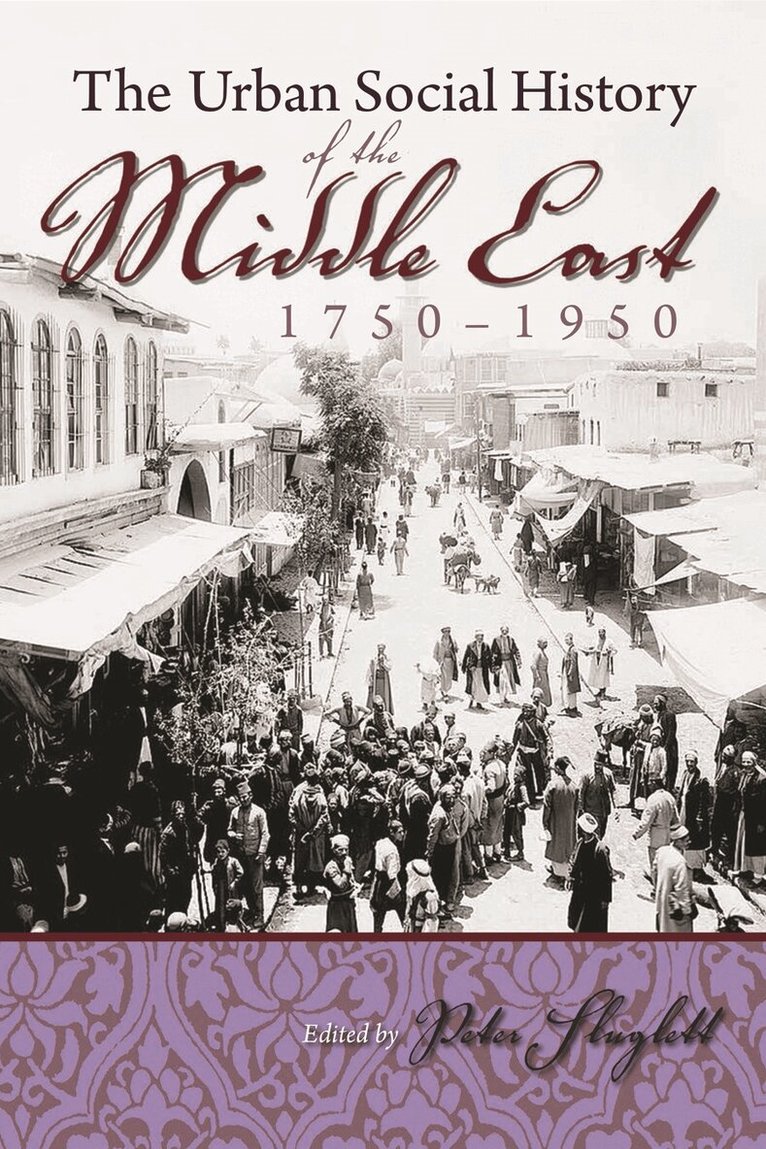
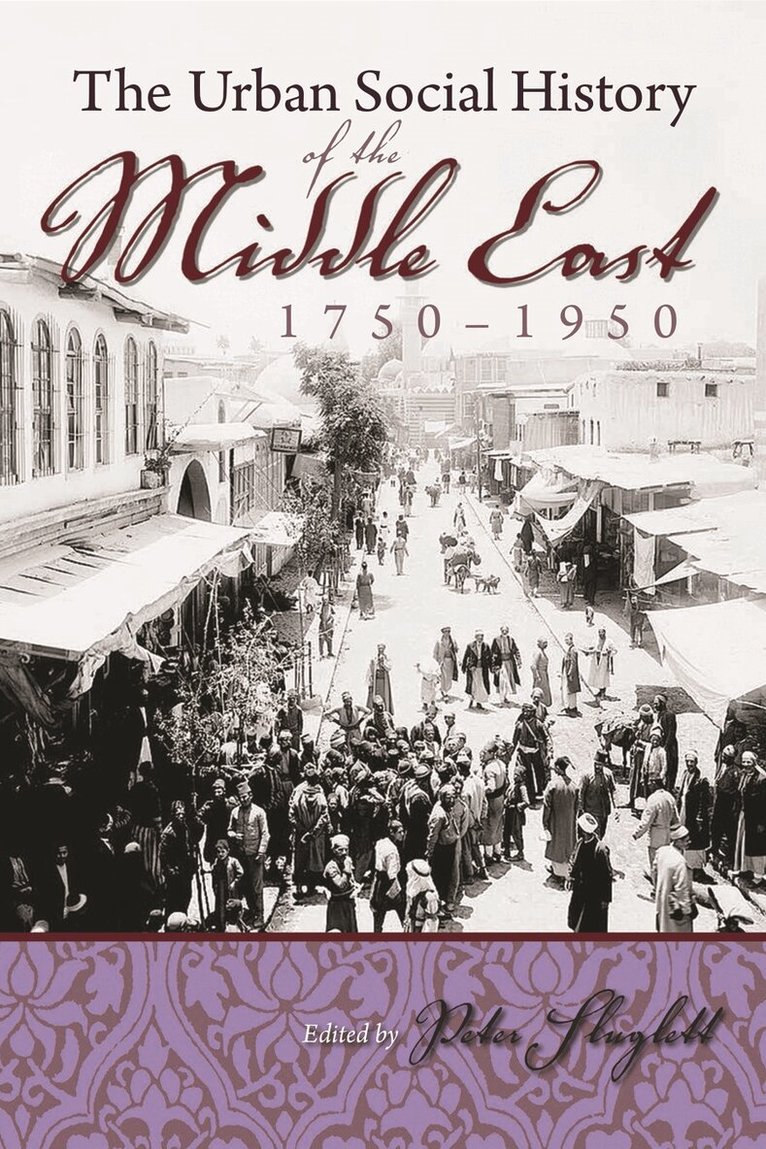
The great cities of the Middle East and North Africa have long attracted the attention and interest of historians. With the discovery and wider use over the last few decades of the Islamic court records and Ottoman administrative documents, our knowledge of Middle Eastern cities between the seventeenth and early twentieth centuries has vastly expanded. Drawing upon a treasure trove of documents and using a variety of methodologies, the contributors succeed in providing a significant overview of the ways in which Middle Eastern cities can be studied, as well as an excellent introduction to current literature in the field.Islam has often been characterized as an 'urban religion'; recognizing Islam's deep ties to civic matters and to the city itself, the essays gathered here explore the interconnectedness between religion and its geography. The authors effectively define and map out urban social history in the Middle East from the eighteenth to twentieth centuries, affording us a foundational volume that enriches our understanding of society in the late Ottoman and colonial periods.
Häftad, Engelska, 2011
467 kr
Skickas inom 3-6 vardagar
The great cities of the Middle East and North Africa have long attracted the attention and interest of historians. With the discovery and wider use over the last few decades of the Islamic court records and Ottoman administrative documents, our knowledge of Middle Eastern cities between the seventeenth and early twentieth centuries has vastly expanded. Drawing upon a treasure trove of documents and using a variety of methodologies, the contributors succeed in providing a significant overview of the ways in which Middle Eastern cities can be studied, as well as an excellent introduction to current literature in the field. Islam has often been characterized as an ""urban religion;"" recognizing Islam’s deep ties to civic matters and to the city itself, the essays gathered here explore the interconnectedness between religion and its geography. The authors effectively define and map out urban social history in the Middle East from the eighteenth to twentieth centuries, affording us a foundational volume that enriches our understanding of society in the late Ottoman and colonial periods.
E-bok
PDF, Engelska, 2008329 kr
Läs direkt efter köp
The great cities of the Middle East and North Africa have long attracted the attention and interest of historians. With the discovery and wider use over the last few decades of Islamic court records and Ottoman administrative documents, our knowledge of Middle Eastern cities between the seventeenth and early twentieth centuries has vastly expanded. Drawing upon a treasure trove of documents and using a variety of methodologies, the contributors succeed in providing a significant overview of the ways in which Middle Eastern cities can be studied, as well as an excellent introduction to current literature in the field.
E-bok
PDF, Engelska, 2007379 kr
Läs direkt efter köp
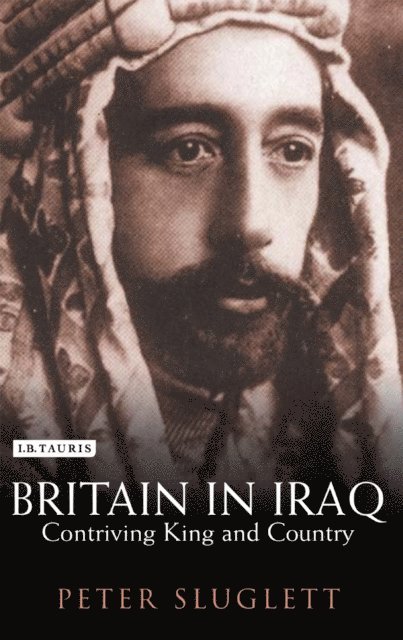
As the attention of the world is focused on the increasingly beleaguered U.S. and U.K. occupation of Iraq, Iraq expert and Middle East historian Peter Sluglett revisits Britain's creation of Iraq in the twentieth century in this thoroughly revised edition of his classic text 'Britain in Iraq'. Sluglett presents a comprehensive history of British policy towards Iraq from the beginnings of the Mesopotamia campaign in 1914 through the creation of Iraq in 1920 and the period of the mandate until Iraqi independence in 1932. As well as being a history of Britain's relations with Iraq, the book also traces the implementation of British policies in a number of key areas and the creation of the principal institutions of the state. As such it is an important contribution to both Middle Eastern and British imperial history, and crucial to our understanding of Iraq today.
E-bok
PDF, Engelska, 2001390 kr
Läs direkt efter köp
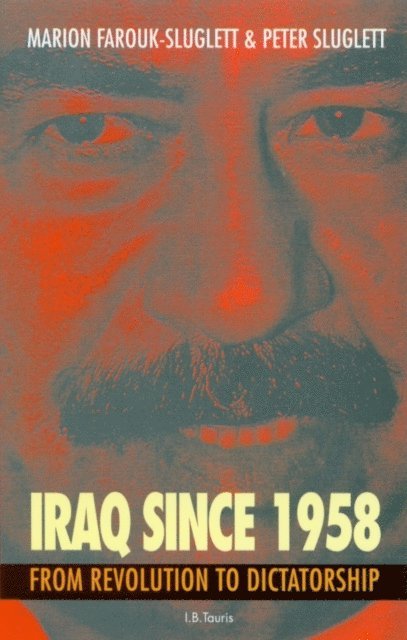
In the West, the Iraqi invasion of Kuwait in August 1990 and later Saddam Husain's political survival following a punishing defeat in war have been greeted with bewilderment and incomprehension. The history of politics in Iraq and the context which has given rise to Saddam Husayn's violent Ba'thist regime have been barely understood.This highly praised book is the first to explore the emergence of modern Iraq from its foundation in 1920 into the 21st century. It covers the period from the revolution in 1958, concentrating particularly on Saddam Husayn's rise to power and his consolidation as leader. It is the only political history of modern Iraq now available to provide a critical analysis of the Ba'thist regime which has ruled since 1968. The authors also explore the role and decline of the Iraqi Communist Party, the shifting policies towards the Kurds and the Shi'is, the nationalisation of oil and Iraq's relations with its neighbours. With the extensive revision and updatings of Peter Sluglett, they provide a stimulating analysis of the country's economy, now so drastically affected by international sanctions.---------------------Real Promo blurbAs the world holds its breath while the US-Iraq confrontation approaches its denouement, here is the definitive story of Saddam Husayn, his rise to power and the historical background to his dictatorship.This highly praised book explores the emergence of modern Iraq from the revolution in 1958 and concentrating on Saddam Husayn's rise to power and his consolidation as leader. The only political history of modern Iraq now available, it provides a critical analysis of the Ba'thist regime which has ruled since 1968. It explores the decline of the Iraqi Communist Party, the shifting policies towards the Kurds and the Shi'is, and Iraq's relations with its neighbours. Extensively updated by Peter Sluglett, it provides analysis of the country's economy, now so damaged by international sanctions.`This is an excellent, reasoned, historical analysis of Iraq, lucidly written, theoretically astute, empirically based, politically firm.'Fred Halliday`A very good book indeed' Albert Hourani---------------------------------Author aff.The late Marion Farouk-Sluglett lectured in Middle Eastern Politics at the University College of Wales. Peter Sluglett is Professor of History at the University of Utah.
E-bok
Engelska, 2021120 kr
Läs direkt efter köp
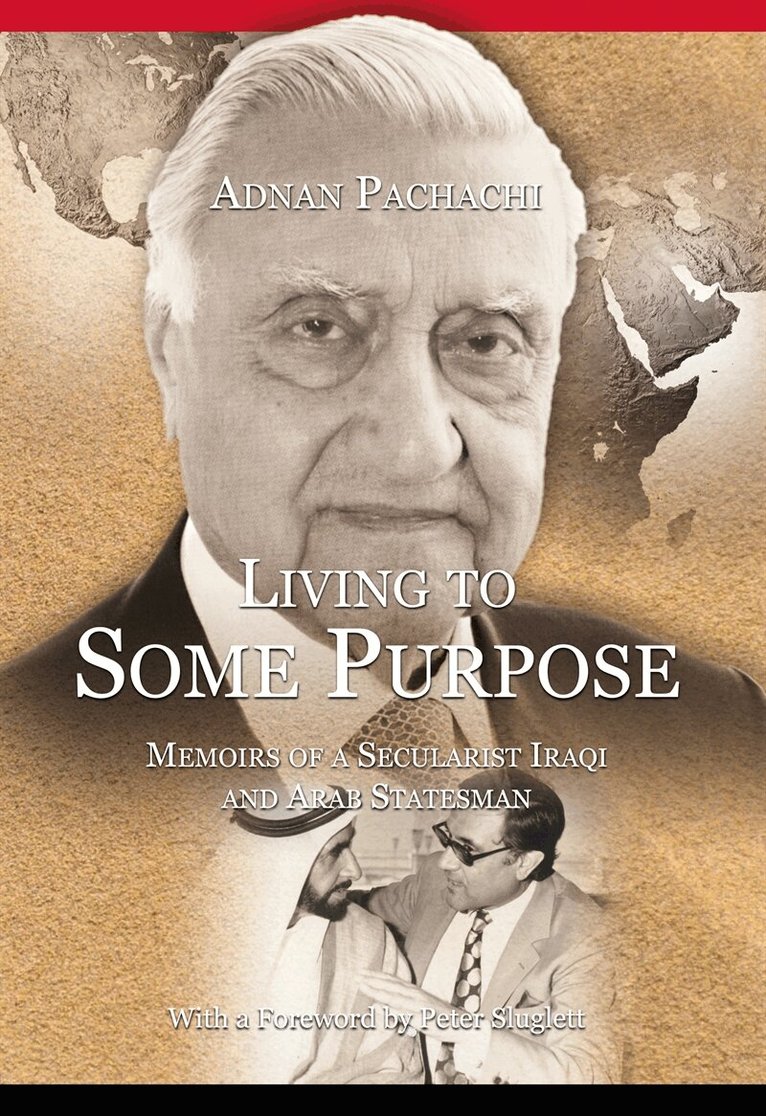
Often described as Iraq’s elder statesman, Dr Adnan Pachachi has enjoyed one of the longest and most distinguished political careers of modern times, both domestically and on the world stage. In a life spanning nine decades, he has served his country as Ambassador to the United Nations and as Foreign Minister, and has worked tirelessly to establish a secular and anti-sectarian political culture in Iraq. At the UN, where he was an eloquent advocate of the Palestinian cause, he was much admired for his mastery of procedure and his formidable debating skills. In 1969, a few months after the Ba‘athist government took power in Baghdad, he resigned from the Iraqi foreign service while at the United Nations in New York. He would not see his country again for thirty-four years. At the invitation of Sheikh Zayed, he took up residence in Abu Dhabi where, until 1993, he played a central role in establishing the United Arab Emirates as a newly independent state.In 1991 he re-engaged with Iraqi politics when he became involved with the expatriate opposition. In 2003, at the age of eighty, he made the courageous decision to return to Iraq in the aftermath of the US invasion and the fall of Saddam Hussein. He became a member of the Governing Council, its President in January 2004, a member of the Interim National Council in 2004–05, and a member of the Iraqi Parliament from 2006 to 2010. In this honest and affecting memoir, in which he combines the political with the personal, Dr Pachachi charts the course of his lifelong dedication to democratic, pluralist, tolerant and civilized values.
Häftad, Engelska, 2014
733 kr
Skickas inom 10-15 vardagar
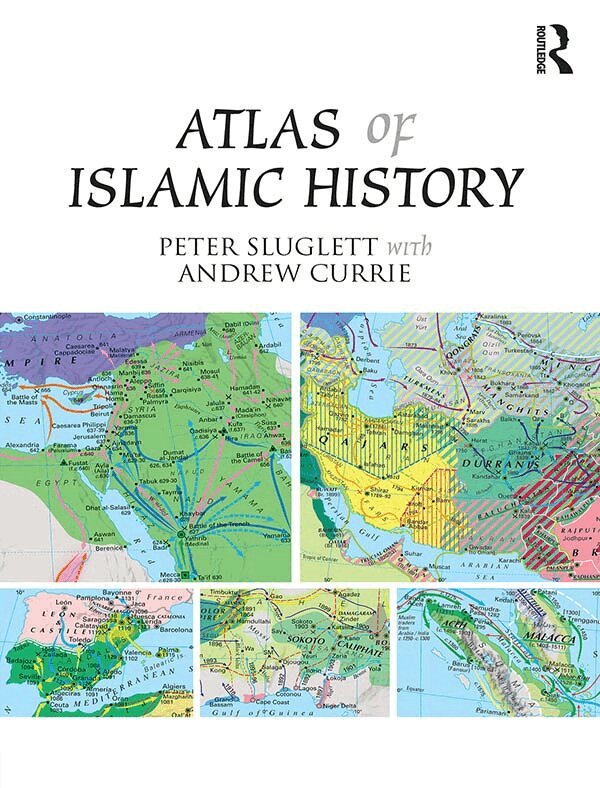
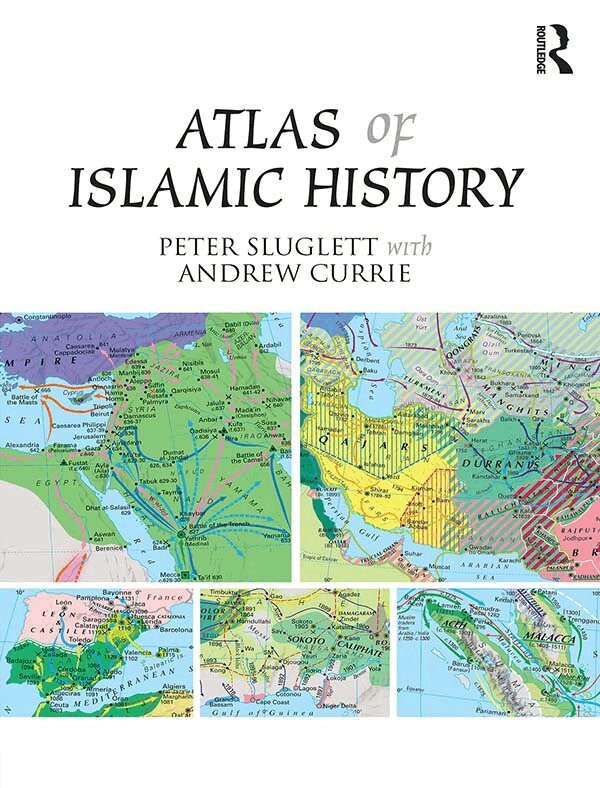
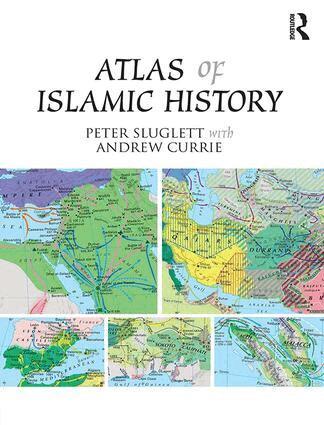
This Atlas provides the main outlines of Islamic history from the immediate pre-Islamic period until the end of 1920, that is, before most parts of the Muslim world became sovereign nation states.Each map is accompanied by a text that contextualises, explains, and expands upon the map, and are fully cross-referenced. All of the maps are in full colour: 18 of them are double-page spreads, and 25 are single page layouts. This is an atlas of Islamic, not simply Arab or Middle Eastern history; hence it covers the entire Muslim world, including Spain, North, West and East Africa, the Indian sub-continent, Central Asia and South-East Asia. The maps are not static, in that they show transitions within the historical period to which they refer: for instance, the stages of the three contemporaneous Umayyad, Fatimid and ‘Abbasid caliphates on Map 10, or the progress of the Mongol invasions and the formation of the various separate Mongol khanates between 1200 and 1300 on Map 21. Using the most up to date cartographic and innovative design techniques, the maps break new ground in illuminating the history of Islam.Brought right up to date with the addition of a Postscript detailing The Islamic World since c.1900, a Chronology from 500 BCE to 2014, and additional endpaper maps illustrating The Spread of Islam through the Ages and The Islamic World in the 21st Century, the Atlas of Islamic History is an essential reference work and an invaluable textbook for undergraduates studying Islamic history, as well as those with an interest in Asian History, Middle East History and World History more broadly.
E-bok
Engelska, 2015866 kr
Läs direkt efter köp
This Atlas provides the main outlines of Islamic history from the immediate pre-Islamic period until the end of 1920, that is, before most parts of the Muslim world became sovereign nation states.Each map is accompanied by a text that contextualises, explains, and expands upon the map, and are fully cross-referenced. All of the maps are in full colour: 18 of them are double-page spreads, and 25 are single page layouts. This is an atlas of Islamic, not simply Arab or Middle Eastern history; hence it covers the entire Muslim world, including Spain, North, West and East Africa, the Indian sub-continent, Central Asia and South-East Asia. The maps are not static, in that they show transitions within the historical period to which they refer: for instance, the stages of the three contemporaneous Umayyad, Fatimid and ‘Abbasid caliphates on Map 10, or the progress of the Mongol invasions and the formation of the various separate Mongol khanates between 1200 and 1300 on Map 21. Using the most up to date cartographic and innovative design techniques, the maps break new ground in illuminating the history of Islam.Brought right up to date with the addition of a Postscript detailing The Islamic World since c.1900, a Chronology from 500 BCE to 2014, and additional endpaper maps illustrating The Spread of Islam through the Ages and The Islamic World in the 21st Century, the Atlas of Islamic History is an essential reference work and an invaluable textbook for undergraduates studying Islamic history, as well as those with an interest in Asian History, Middle East History and World History more broadly.
E-bok
PDF, Engelska, 2015866 kr
Läs direkt efter köp
This Atlas provides the main outlines of Islamic history from the immediate pre-Islamic period until the end of 1920, that is, before most parts of the Muslim world became sovereign nation states.Each map is accompanied by a text that contextualises, explains, and expands upon the map, and are fully cross-referenced. All of the maps are in full colour: 18 of them are double-page spreads, and 25 are single page layouts. This is an atlas of Islamic, not simply Arab or Middle Eastern history; hence it covers the entire Muslim world, including Spain, North, West and East Africa, the Indian sub-continent, Central Asia and South-East Asia. The maps are not static, in that they show transitions within the historical period to which they refer: for instance, the stages of the three contemporaneous Umayyad, Fatimid and ‘Abbasid caliphates on Map 10, or the progress of the Mongol invasions and the formation of the various separate Mongol khanates between 1200 and 1300 on Map 21. Using the most up to date cartographic and innovative design techniques, the maps break new ground in illuminating the history of Islam.Brought right up to date with the addition of a Postscript detailing The Islamic World since c.1900, a Chronology from 500 BCE to 2014, and additional endpaper maps illustrating The Spread of Islam through the Ages and The Islamic World in the 21st Century, the Atlas of Islamic History is an essential reference work and an invaluable textbook for undergraduates studying Islamic history, as well as those with an interest in Asian History, Middle East History and World History more broadly.
E-bok
PDF, Engelska, 1981633 kr
Läs direkt efter köp
E-bok
PDF, Engelska, 1990665 kr
Läs direkt efter köp
In this new edition Professor Tibi analyses the impact and function of nationalism and its contribution to social and political change in the Third World, taking the rise of nationalism in the Middle East as a historical example. He concentrates on the period after the First World War, when many Arab intellectuals became disillusioned with Britain and France as a result of the occupation of their countries. Professor Tibi''s careful study of the writings and influence of Sati'' al-Husri illustrates the connection between modern Arab nationalism and nineteenth century German Romantic nationalism, which will be of particular interest to the English reader. Professor Tibi concludes that while nationalism has played a necessary and important role in the movement for national independence in the Middle East, it has since developed into an ideology which seems to obstruct further social and political emancipation. This book will be of particular interest to historians and social scientists as well as to specialists in the area itself.
Häftad, Engelska, 1990
512 kr
Skickas inom 10-15 vardagar
In this new edition Professor Tibi analyses the impact and function of nationalism and its contribution to social and political change in the Third World, taking the rise of nationalism in the Middle East as a historical example. He concentrates on the period after the First World War, when many Arab intellectuals became disillusioned with Britain and France as a result of the occupation of their countries. Professor Tibi's careful study of the writings and influence of Sati' al-Husri illustrates the connection between modern Arab nationalism and nineteenth century German Romantic nationalism, which will be of particular interest to the English reader. Professor Tibi concludes that while nationalism has played a necessary and important role in the movement for national independence in the Middle East, it has since developed into an ideology which seems to obstruct further social and political emancipation. This book will be of particular interest to historians and social scientists as well as to specialists in the area itself.
Inbunden, Engelska, 2011
684 kr
Skickas inom 5-8 vardagar
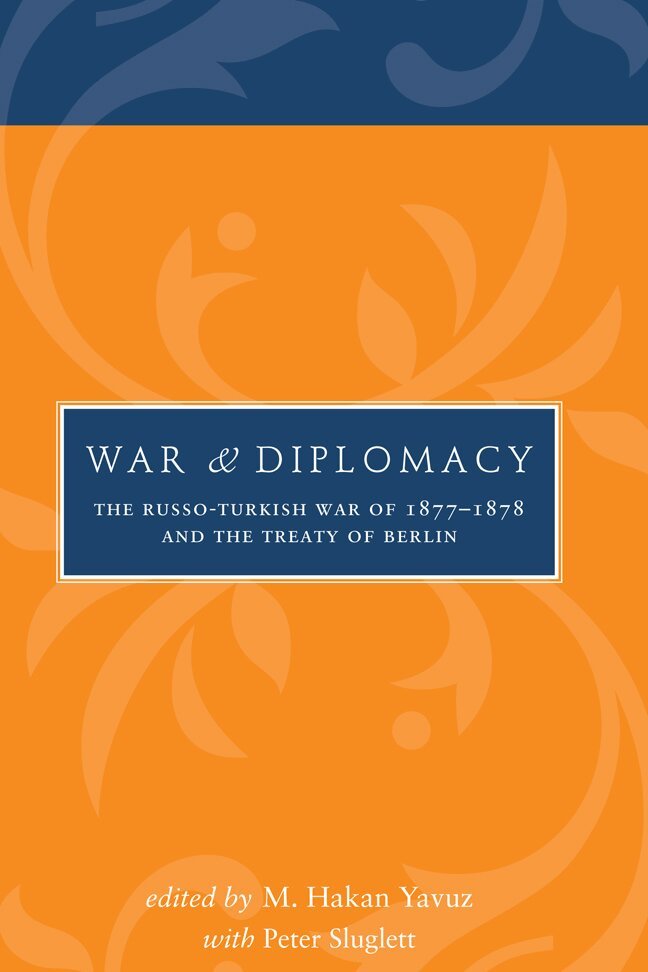
Following the Russo-Turkish War of 1877-1878, the Treaty of Berlin (1878) - the final act of the Congress of Berlin - was enacted by the United Kingdom, Austria-Hungary, France, Germany, Italy, Russia, and the Ottoman Empire. The treaty recognised the complete independence of the principalities of Romania, Serbia, and Montenegro, and the autonomy of Bulgaria. The three newly independent states subsequently proclaimed themselves kingdoms - Romania in 1881, Serbia in 1882, and Montenegro in 1910 - and in 1908 Bulgaria proclaimed full independence and Austria-Hungary annexed Bosnia, sparking a major European crisis.Representing the latest scholarship in this field of study, War and Diplomacy documents the proceedings of a conference on the Treaty of Berlin that was held at the University of Utah in 2010. The reorganisation of country borders in central and eastern Europe after the Treaty of Berlin led to the Balkan Wars of 1912 and 1913 and eventually to World War I. During this period the three great empires - Austro-Hungarian, Ottoman, and Russian - were falling apart at the same time that the nation-state in the Balkans was rising. This volume provides an important contribution to understanding the historical background of these events. War and Diplomacy documents the proceedings of the first of three conferences: 1878 Treaty of Berlin (in 2010) Balkan Wars (in 2011) World War I (in 2012) Proceedings of the final two conferences will also be published by the University of Utah Press.
E-bok
Engelska, 2019405 kr
Läs direkt efter köp
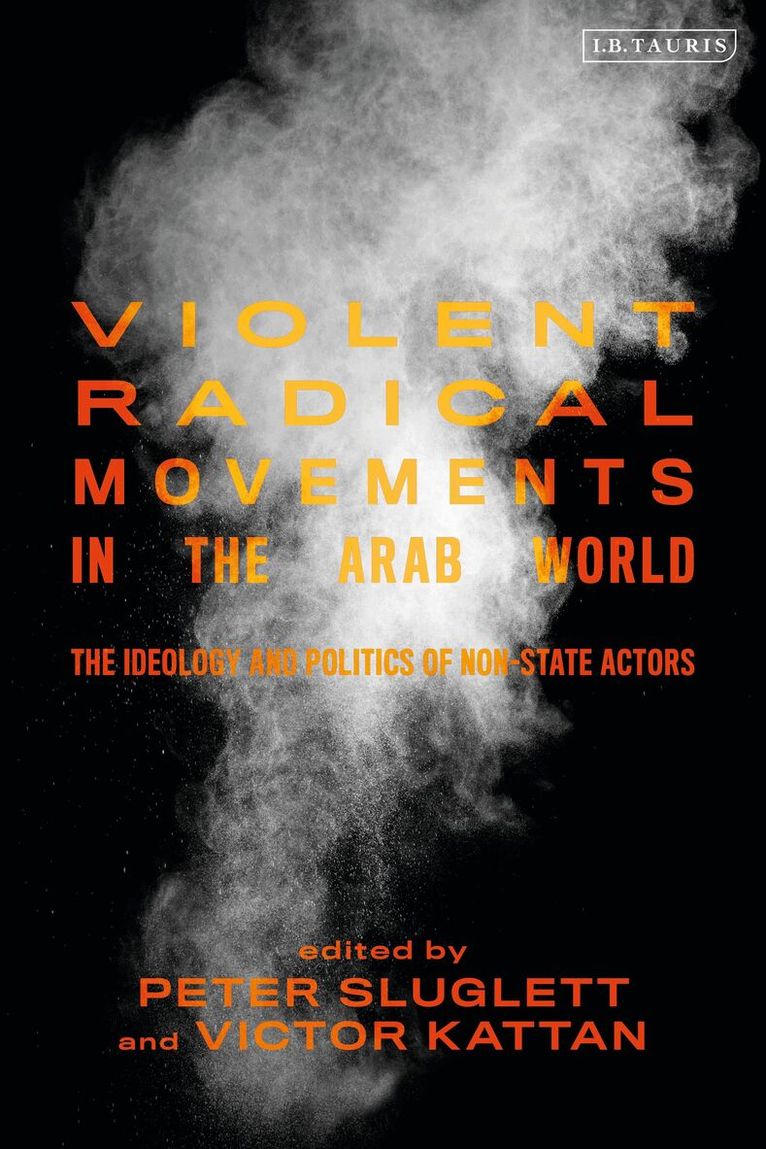
Violent non-state actors have become almost endemic to political movements in the Middle East and the Horn of Africa. This book examines why they play such a key role and the different ways in which they have developed. Placing them in the context of the region, separate chapters cover the organizations that are currently active, including: The Muslim Brotherhood, The Islamic State in Iraq and Syria, Jabhat al-Nusra, Hamas, Hizbullah, the PKK, al-Shabab and the Huthis. The book shows that while these groups are a new phenomenon, they also relate to other key factors including the 'unfinished business' of the colonial and postcolonial eras and tacit encouragement of the Wahhabi/Salafi/jihadi da'wa by some regional powers. Their diversity means violent non-state actors elude simple classification, ranging from 'national' and 'transnational' to religious and political movements. However, by examining their origins, their supporters and their motivations, this book helps explain their ubiquity in the region.
E-bok
PDF, Engelska, 2019405 kr
Läs direkt efter köp
Violent non-state actors have become almost endemic to political movements in the Middle East and the Horn of Africa. This book examines why they play such a key role and the different ways in which they have developed. Placing them in the context of the region, separate chapters cover the organizations that are currently active, including: The Muslim Brotherhood, The Islamic State in Iraq and Syria, Jabhat al-Nusra, Hamas, Hizbullah, the PKK, al-Shabab and the Huthis. The book shows that while these groups are a new phenomenon, they also relate to other key factors including the 'unfinished business' of the colonial and postcolonial eras and tacit encouragement of the Wahhabi/Salafi/jihadi da'wa by some regional powers. Their diversity means violent non-state actors elude simple classification, ranging from 'national' and 'transnational' to religious and political movements. However, by examining their origins, their supporters and their motivations, this book helps explain their ubiquity in the region.
Inbunden, Engelska, 2019
786 kr
Skickas
Violent non-state actors have become almost endemic to political movements in the Middle East and the Horn of Africa. This book examines why they play such a key role and the different ways in which they have developed. Placing them in the context of the region, separate chapters cover the organizations that are currently active, including: The Muslim Brotherhood, The Islamic State in Iraq and Syria, Jabhat al-Nusra, Hamas, Hizbullah, the PKK, al-Shabab and the Huthis. The book shows that while these groups are a new phenomenon, they also relate to other key factors including the ‘unfinished business’ of the colonial and postcolonial eras and tacit encouragement of the Wahhabi/Salafi/jihadi da‘wa by some regional powers. Their diversity means violent non-state actors elude simple classification, ranging from ‘national’ and ‘transnational’ to religious and political movements. However, by examining their origins, their supporters and their motivations, this book helps explain their ubiquity in the region.
Häftad, Engelska, 2019
374 kr
Skickas inom 5-8 vardagar
Violent non-state actors have become almost endemic to political movements in the Middle East and the Horn of Africa. This book examines why they play such a key role and the different ways in which they have developed. Placing them in the context of the region, separate chapters cover the organizations that are currently active, including: The Muslim Brotherhood, The Islamic State in Iraq and Syria, Jabhat al-Nusra, Hamas, Hizbullah, the PKK, al-Shabab and the Huthis. The book shows that while these groups are a new phenomenon, they also relate to other key factors including the ‘unfinished business’ of the colonial and postcolonial eras and tacit encouragement of the Wahhabi/Salafi/jihadi da‘wa by some regional powers. Their diversity means violent non-state actors elude simple classification, ranging from ‘national’ and ‘transnational’ to religious and political movements. However, by examining their origins, their supporters and their motivations, this book helps explain their ubiquity in the region.
Häftad, Engelska, 2007
364 kr
Skickas inom 10-15 vardagar
As the attention of the world is focused on the increasingly beleaguered U.S. and U.K. occupation of Iraq, Iraq expert and Middle East historian Peter Sluglett revisits Britain's creation of Iraq in the twentieth century in this thoroughly revised edition of his classic text 'Britain in Iraq'. Sluglett presents a comprehensive history of British policy towards Iraq from the beginnings of the Mesopotamia campaign in 1914 through the creation of Iraq in 1920 and the period of the mandate until Iraqi independence in 1932. As well as being a history of Britain's relations with Iraq, the book also traces the implementation of British policies in a number of key areas and the creation of the principal institutions of the state. As such it is an important contribution to both Middle Eastern and British imperial history, and crucial to our understanding of Iraq today.
Häftad, Engelska, 2001
364 kr
Skickas inom 10-15 vardagar
This volume explores the emergence of modern Iraq covering the period since the revolution in 1958 and concentrating on Saddam Hussein's rise to power and his consolidation as leader. It also covers the role and decline of the Iraqi Communist Party and the shifting policies towards the Kurds and the Shi'is.
Inbunden, Engelska, 2012
3 251 kr
Skickas inom 5-8 vardagar
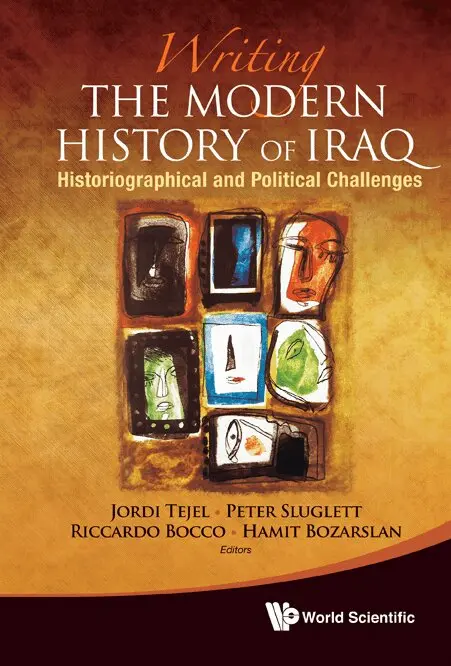
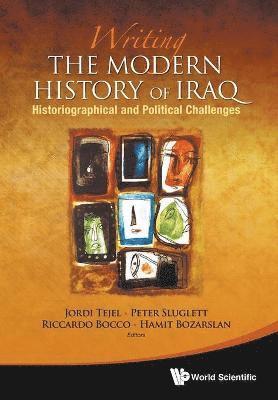
The modern history of Iraq is punctuated by a series of successive and radical ruptures (coups d'etat, changes of regime, military adventures and foreign invasions) whose chronological markers are relatively easy to identify. Although researchers cannot ignore these ruptures, they should also be encouraged to establish links between the moments when the breaks occur and the longue durée, in order to gain a better understanding of the period.Combining a variety of different disciplinary and methodological perspectives, this collection of essays seeks to establish some new markers which will open fresh perspectives on the history of Iraq in the twentieth and twenty-first centuries, and suggest a narrative that fits into new paradigms. The book covers the various different periods of the modern state (the British occupation and mandate, the monarchy, the first revolutions and the decades of Ba'thist rule) through the lens of significant groups in Iraq society, including artists, film-makers, political and opposition groups, members of ethnic and religious groups, and tribes.
Häftad, Engelska, 2012
537 kr
Skickas inom 5-8 vardagar
The modern history of Iraq is punctuated by a series of successive and radical ruptures (coups d'etat, changes of regime, military adventures and foreign invasions) whose chronological markers are relatively easy to identify. Although researchers cannot ignore these ruptures, they should also be encouraged to establish links between the moments when the breaks occur and the longue durée, in order to gain a better understanding of the period.Combining a variety of different disciplinary and methodological perspectives, this collection of essays seeks to establish some new markers which will open fresh perspectives on the history of Iraq in the twentieth and twenty-first centuries, and suggest a narrative that fits into new paradigms. The book covers the various different periods of the modern state (the British occupation and mandate, the monarchy, the first revolutions and the decades of Ba'thist rule) through the lens of significant groups in Iraq society, including artists, film-makers, political and opposition groups, members of ethnic and religious groups, and tribes.
Inbunden, Engelska, 2007
341 kr
Tillfälligt slut
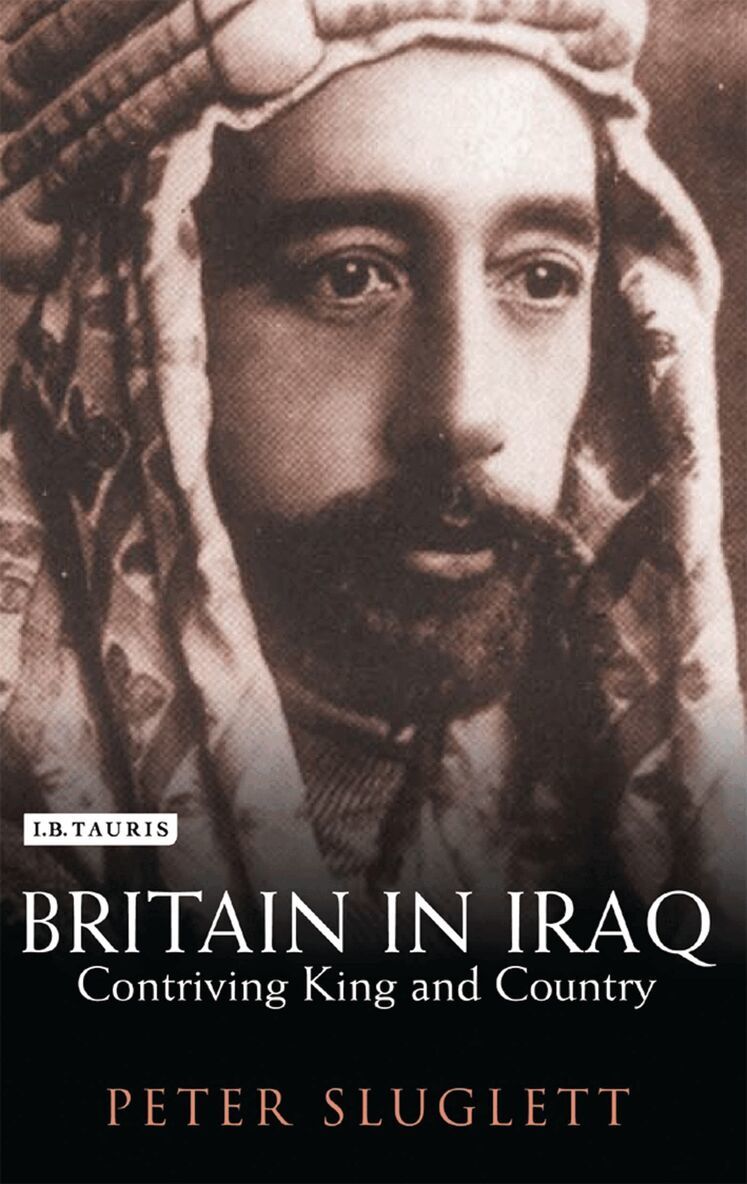
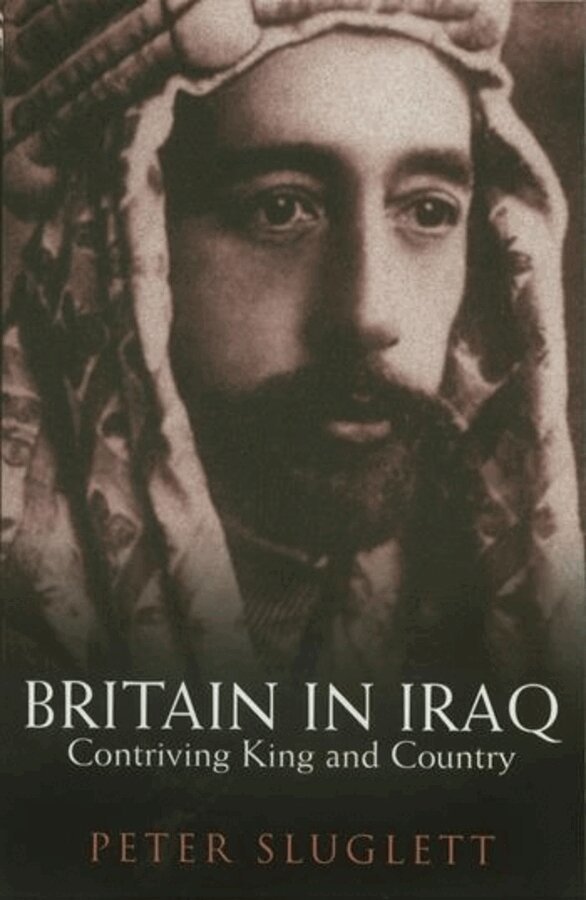
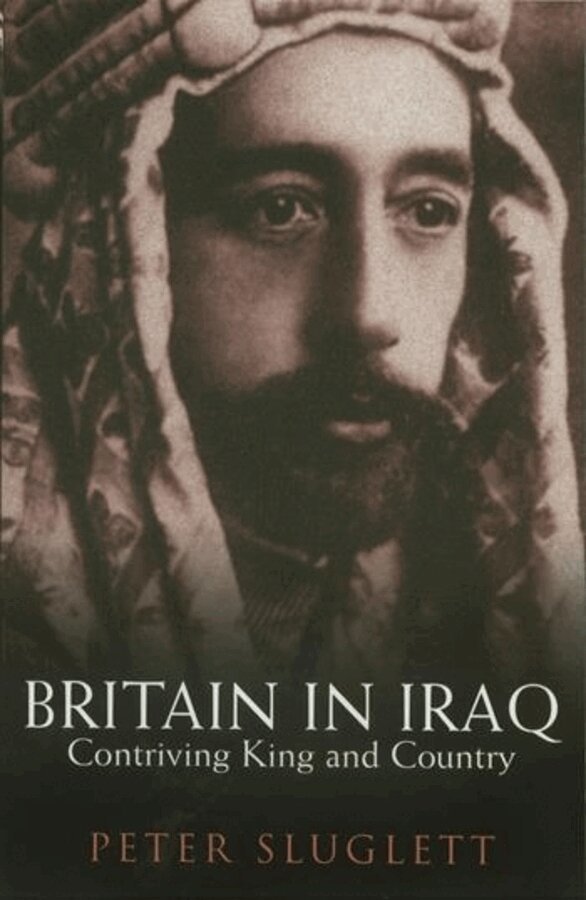
After the end of World War I, international pressures prevented the Allies from implementing direct colonial rule over the former Arab provinces of the Ottoman Empire. Instead, the Allies created a system of mandates for the governance of the Middle East. France was assigned Lebanon and Syria, and Britain was assigned Iraq, Palestine, and Transjordan. First published in 1976, Britain in Iraq has long been recognized as the definitive history of the mandate period, providing a meticulous and engaging account of Britain's political involvement in Iraq as well as rare insights into the motives behind the founding of the Iraqi state. Peter Sluglett presents a historical narrative of the development and implementation of the mandate in the face of considerable opposition in both Iraq and Britain and shows how the British maintained a "reliable" group of Iraqi clients in power to protect imperial interests.Sluglett explores the changing relationship between Britain and Iraq over the eighteen years of occupation and mandate, the interactions between Shi'ite and Sunni populations, the position of the Kurds, the boundary between Turkey and northern Iraq, and policies relating to defense, land tenure and the tribes, and education. A new conclusion attempts to analyze the legacy of the mandate and to offer some explanation for Iraq's continuing weakness as a state and the structural obstacles preventing the emergence of a plural political system.
Häftad, Engelska, 2007
317 kr
Tillfälligt slut
After the end of World War I, international pressures prevented the Allies from implementing direct colonial rule over the former Arab provinces of the Ottoman Empire. Instead, the Allies created a system of mandates for the governance of the Middle East. France was assigned Lebanon and Syria, and Britain was assigned Iraq, Palestine, and Transjordan. First published in 1976, Britain in Iraq has long been recognized as the definitive history of the mandate period, providing a meticulous and engaging account of Britain's political involvement in Iraq as well as rare insights into the motives behind the founding of the Iraqi state. Peter Sluglett presents a historical narrative of the development and implementation of the mandate in the face of considerable opposition in both Iraq and Britain and shows how the British maintained a "reliable" group of Iraqi clients in power to protect imperial interests.Sluglett explores the changing relationship between Britain and Iraq over the eighteen years of occupation and mandate, the interactions between Shi'ite and Sunni populations, the position of the Kurds, the boundary between Turkey and northern Iraq, and policies relating to defense, land tenure and the tribes, and education. A new conclusion attempts to analyze the legacy of the mandate and to offer some explanation for Iraq's continuing weakness as a state and the structural obstacles preventing the emergence of a plural political system.
Inbunden, Engelska, 2015
1 570 kr
Tillfälligt slut
This Atlas provides the main outlines of Islamic history from the immediate pre-Islamic period until the end of 1920, that is, before most parts of the Muslim world became sovereign nation states. Each map is accompanied by a text that contextualises, explains, and expands upon the map, and are fully cross-referenced. All of the maps are in full colour: 18 of them are double-page spreads, and 25 are single page layouts. This is an atlas of Islamic, not simply Arab or Middle Eastern history; hence it covers the entire Muslim world, including Spain, North, West and East Africa, the Indian sub-continent, Central Asia and South-East Asia. The maps are not static, in that they show transitions within the historical period to which they refer: for instance, the stages of the three contemporaneous Umayyad, Fatimid and ‘Abbasid caliphates on Map 10, or the progress of the Mongol invasions and the formation of the various separate Mongol khanates between 1200 and 1300 on Map 21. Using the most up to date cartographic and innovative design techniques, the maps break new ground in illuminating the history of Islam. Brought right up to date with the addition of a Postscript detailing The Islamic World since c.1900, a Chronology from 500 BCE to 2014, and additional endpaper maps illustrating The Spread of Islam through the Ages and The Islamic World in the 21st Century, the Atlas of Islamic History is an essential reference work and an invaluable textbook for undergraduates studying Islamic history, as well as those with an interest in Asian History, Middle East History and World History more broadly.