Peter Trower – författare
2 689 kr
Skickas inom 10-15 vardagar
616 kr
Skickas inom 10-15 vardagar
2 689 kr
Skickas inom 10-15 vardagar
703 kr
Skickas inom 10-15 vardagar
2 187 kr
Skickas inom 5-8 vardagar
2 436 kr
Läs direkt efter köp
One of the main problems with this approach, is that only a small proportion of these young adults can be expected to go on to develop schizophrenia, yet all the treatment regimes are derived from work with adults who have had full psychotic episodes.
Why Does Schizophrenia Develop at Late Adolescence? proposes a controversial new model of how schizophrenia develops in late adolescence and presents clinical material aimed at influencing the way psychosis is treated, building on a state-of-the-art reassessment of the field.
A major reconceptualisation of how schizophrenia develops A controversial approach Early intervention programmes are now extremely widespread, so there is much interest in the area and how best to treat this serious psychotic disorder
Cognitive Therapy for Delusions, Voices and Paranoia
661 kr
Skickas inom 5-8 vardagar
802 kr
Läs direkt efter köp
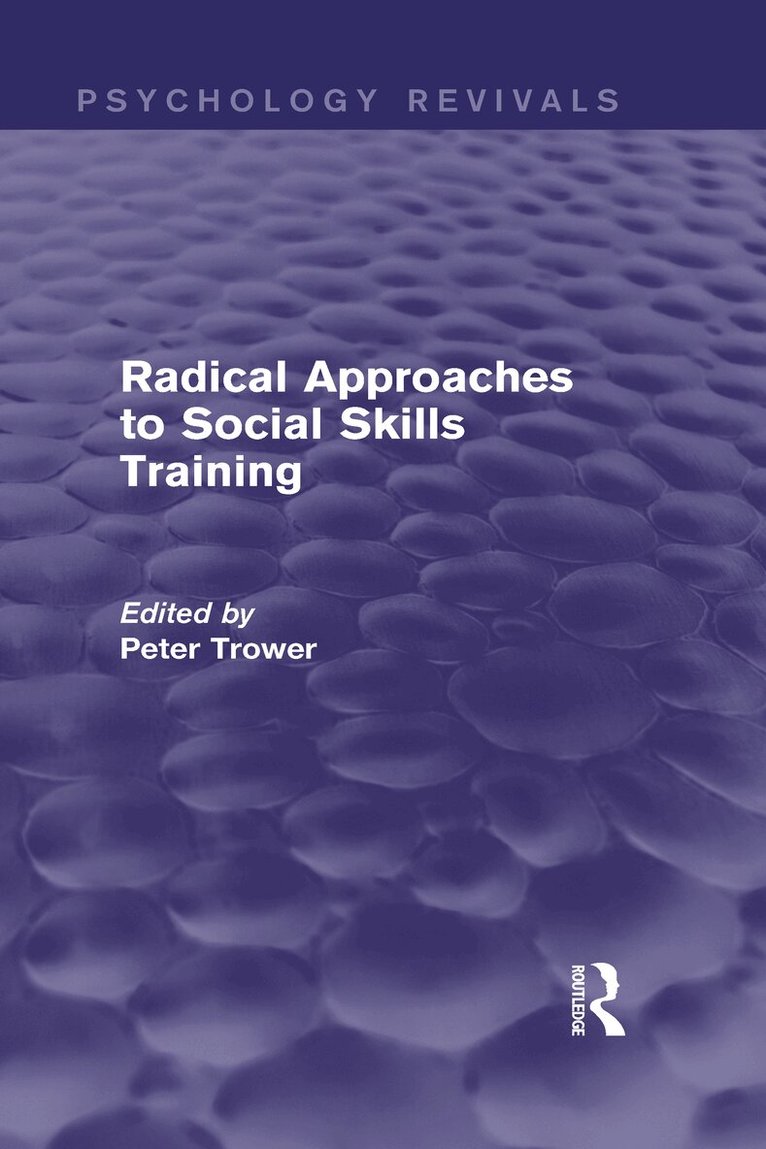
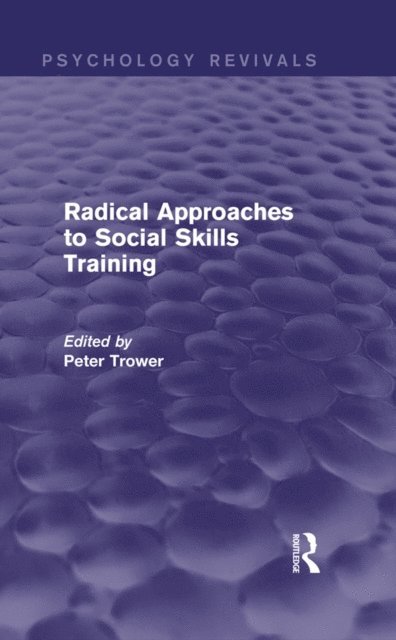
Originally published in 1984, one of the few facts that emerged clearly in the beleaguered field of psychology and mental health at the time was the extent of poor social skills in psychiatric patients, the mentally handicapped and problem adolescents. As a result, during the 1970s, social skills training – espoused as a form of behaviour therapy – seemed to offer great promise, based on the notion that social skills, like any other skills, are learnt and can be taught if lacking. However, in evaluating social skills training, many investigators found that skills did not endure and generalise.
This book attempts a major re-assessment of social skills training. It examines the underlying paradigms, which are shown to be fundamentally behaviourist. Such paradigms, it is argued, severely constrain the aims and method of current types of training. Thus the book develops what is termed an ‘agency’ approach, based on man as a social agent who actively constructs his own experiences and generates his own goal-directed behaviour on the basis of those constructs. This new model is developed in both theoretical and practical ways in the main body of the book and should, even today, be of great interest to all those involved with social skills training.
802 kr
Läs direkt efter köp
Originally published in 1984, one of the few facts that emerged clearly in the beleaguered field of psychology and mental health at the time was the extent of poor social skills in psychiatric patients, the mentally handicapped and problem adolescents. As a result, during the 1970s, social skills training – espoused as a form of behaviour therapy – seemed to offer great promise, based on the notion that social skills, like any other skills, are learnt and can be taught if lacking. However, in evaluating social skills training, many investigators found that skills did not endure and generalise.
This book attempts a major re-assessment of social skills training. It examines the underlying paradigms, which are shown to be fundamentally behaviourist. Such paradigms, it is argued, severely constrain the aims and method of current types of training. Thus the book develops what is termed an ‘agency’ approach, based on man as a social agent who actively constructs his own experiences and generates his own goal-directed behaviour on the basis of those constructs. This new model is developed in both theoretical and practical ways in the main body of the book and should, even today, be of great interest to all those involved with social skills training.
674 kr
Läs direkt efter köp
In the 10 years or so prior to original publication in 1978 new theories and discoveries in the social sciences had given a scientific basis and new impetus to the development of social skills training as a form of therapy. This book explores the progress made with this idea and gives practical guidance for therapists based on several years’ experience with the technique.
The book provides an account of the latest ideas at the time, about the analysis of social behaviour – non-verbal communication, social skill, rules, analysis of situations, etc. The different techniques for training and modifying social behaviour – some old, some very new – are described and compared, with detailed accounts.
There is a careful critical review of follow-up studies of social skills training and other forms of social therapy on in-patients, out-patients and volunteer subjects.
The second part of the book consists of a manual for assessing deficits and difficulties, and for training in ten main areas of social deficiency such as observation, listening, speaking, asserting and planning. A rating scale, questionnaire and user’s booklet of training exercises is included.
The book should be of interest, not only to psychiatric professionals – psychiatrists, clinical psychologists, psychiatric nurses, occupational therapists – but to many others, such as social and community workers, teachers, prison officers, and lay people who may be interested in forming self-help groups, either on their own or with professional guidance.
668 kr
Läs direkt efter köp
In the 10 years or so prior to original publication in 1978 new theories and discoveries in the social sciences had given a scientific basis and new impetus to the development of social skills training as a form of therapy. This book explores the progress made with this idea and gives practical guidance for therapists based on several years’ experience with the technique.
The book provides an account of the latest ideas at the time, about the analysis of social behaviour – non-verbal communication, social skill, rules, analysis of situations, etc. The different techniques for training and modifying social behaviour – some old, some very new – are described and compared, with detailed accounts.
There is a careful critical review of follow-up studies of social skills training and other forms of social therapy on in-patients, out-patients and volunteer subjects.
The second part of the book consists of a manual for assessing deficits and difficulties, and for training in ten main areas of social deficiency such as observation, listening, speaking, asserting and planning. A rating scale, questionnaire and user’s booklet of training exercises is included.
The book should be of interest, not only to psychiatric professionals – psychiatrists, clinical psychologists, psychiatric nurses, occupational therapists – but to many others, such as social and community workers, teachers, prison officers, and lay people who may be interested in forming self-help groups, either on their own or with professional guidance.
3 069 kr
Skickas inom 3-6 vardagar
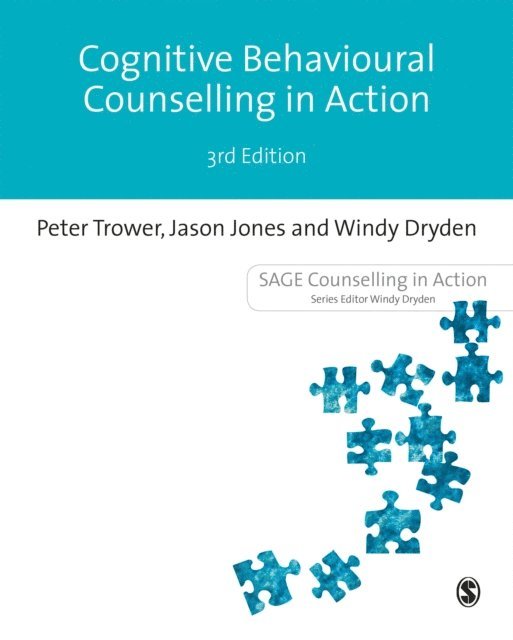
This best-selling, practical, evidence-based guide to the cognitive behavioural approach takes you step-by-step through the process of counselling, from initial contact with the client to termination and follow up. The book follows a skills-based format based around the Bordin and Dryden model of bonds, goals, tasks and views, with expanded case material to further illustrate links between theory and practice.
This third edition includes new content on:
· the working alliance – what it is and why it is so important
· challenges and pitfalls in the counselling process
· when to challenge and when not to challenge clients beliefs · emotional problems such as shame, guilt and jealousy as well as anxiety, depression and anger.
Drawing on their own extensive experience and contemporary research, the authors provide a concise overview of the cognitive behavioural approach, with new material on emotional problems rarely covered in practitioner guides, a strong emphasis on the therapeutic alliance, and updated bibliographic references throughout. Praise for the Previous Edition: "An elegant and informative guide to the practice of cognitive behavioural counselling … recommended for all CBT practitioners." - Mick Power, Professor of Clinical Psychology, University of Edinburgh "A deserved best-seller for over 20 years. Peter Trower and colleagues have completely revised and updated the book in light of the enormous scientific achievements of CBT in this time. This brilliant book is essential reading for all cognitive behavioural practitioners." - Max Birchwood, Professor of Youth Mental Health, University of Birmingham ?"An absolutely wonderful book on cognitive behavioural counselling. It includes not only the basic information but also recent conceptual advances in the field. Truly, I cannot recommend this book highly enough!" - E. Thomas Dowd, International Editor, Journal of Cognitive Psychotherapy
603 kr
Skickas inom 5-8 vardagar
This best-selling, practical, evidence-based guide to the cognitive behavioural approach takes you step-by-step through the process of counselling, from initial contact with the client to termination and follow up. The book follows a skills-based format based around the Bordin and Dryden model of bonds, goals, tasks and views, with expanded case material to further illustrate links between theory and practice.
This third edition includes new content on:
· the working alliance – what it is and why it is so important
· challenges and pitfalls in the counselling process
· when to challenge and when not to challenge clients beliefs · emotional problems such as shame, guilt and jealousy as well as anxiety, depression and anger.
Drawing on their own extensive experience and contemporary research, the authors provide a concise overview of the cognitive behavioural approach, with new material on emotional problems rarely covered in practitioner guides, a strong emphasis on the therapeutic alliance, and updated bibliographic references throughout. Praise for the Previous Edition: "An elegant and informative guide to the practice of cognitive behavioural counselling … recommended for all CBT practitioners." - Mick Power, Professor of Clinical Psychology, University of Edinburgh "A deserved best-seller for over 20 years. Peter Trower and colleagues have completely revised and updated the book in light of the enormous scientific achievements of CBT in this time. This brilliant book is essential reading for all cognitive behavioural practitioners." - Max Birchwood, Professor of Youth Mental Health, University of Birmingham ?"An absolutely wonderful book on cognitive behavioural counselling. It includes not only the basic information but also recent conceptual advances in the field. Truly, I cannot recommend this book highly enough!" - E. Thomas Dowd, International Editor, Journal of Cognitive Psychotherapy
535 kr
Läs direkt efter köp
This best-selling, practical, evidence-based guide to the cognitive behavioural approach takes you step-by-step through the process of counselling, from initial contact with the client to termination and follow up. The book follows a skills-based format based around the Bordin and Dryden model of bonds, goals, tasks and views, with expanded case material to further illustrate links between theory and practice.
This third edition includes new content on:
· the working alliance – what it is and why it is so important
· challenges and pitfalls in the counselling process
· when to challenge and when not to challenge clients beliefs · emotional problems such as shame, guilt and jealousy as well as anxiety, depression and anger.
Drawing on their own extensive experience and contemporary research, the authors provide a concise overview of the cognitive behavioural approach, with new material on emotional problems rarely covered in practitioner guides, a strong emphasis on the therapeutic alliance, and updated bibliographic references throughout. Praise for the Previous Edition: "An elegant and informative guide to the practice of cognitive behavioural counselling … recommended for all CBT practitioners." - Mick Power, Professor of Clinical Psychology, University of Edinburgh "A deserved best-seller for over 20 years. Peter Trower and colleagues have completely revised and updated the book in light of the enormous scientific achievements of CBT in this time. This brilliant book is essential reading for all cognitive behavioural practitioners." - Max Birchwood, Professor of Youth Mental Health, University of Birmingham ?"An absolutely wonderful book on cognitive behavioural counselling. It includes not only the basic information but also recent conceptual advances in the field. Truly, I cannot recommend this book highly enough!" - E. Thomas Dowd, International Editor, Journal of Cognitive Psychotherapy
113 kr
Tillfälligt slut
114 kr
Tillfälligt slut
167 kr
Tillfälligt slut
162 kr
Tillfälligt slut
150 kr
Tillfälligt slut