• Fri frakt över 249 kr
  • •
  • Snabba leveranser
  • •
  • Billiga böcker
Kundservice

Du är på sajten för privatpersoner.

Företag, bibliotek eller offentlig verksamhet?

Du handlar på classic.bokus.com, där alla dina funktioner finns intakta.
Till classic.bokus.com
Bokus logotyp. Gå till startsidan.
  • Erbjudanden
  • Student
  • Topplistor
  • Barn & ungdom
  • Bokus Play
  • E-böcker
  • Ljudböcker
  • Pocketböcker
  • Spel och pussel

Pocketfynda! Hundratals böcker för 49 kr/st →

Sidfot

Mina sidor

    Hjälp

    • Kundservice
    • Vanliga frågor och svar
    • Frakt och leverans
    • Retur vid ångerrätt
    • Reklamera vara
    • Betalning
    • Köpvillkor
    • Allmänna villkor
    • Information om webbplatsens tillgänglighet

    Om Bokus

    • Om oss
    • Pressrum
    • För studenter
    • För företag
    • För bibliotek och offentlig verksamhet
    • För leverantörer
    • Hållbarhet

    Populärt

    • Aktuella erbjudanden
    • Presentkort
    • Studentlitteratur
    • Nya böcker
    • Topplistor
    • Signerade böcker
    • Engelska böcker

    Inspiration

    • Boktips
    • BookTok
    • Barnbokskaraktärer
    • Populära författare
    Logotyp för Bokus
    Följ oss på Facebook (extern länk)Följ oss på Instagram (extern länk)Följ oss på YouTube (extern länk)Följ oss på TikTok (extern länk)
    bokus @ CookiesAnpassa cookiesIntegritetspolicyKöpvillkor
    Till Citymail hemsida (extern länk)Till Budbee hemsida (extern länk)Till Postnord hemsida (extern länk)Till Schenker hemsida (extern länk)Till Early Bird hemsida (extern länk)Till Walleys hemsida (extern länk)
    1. Psykologi och pedagogik
    2. Psykologi
    3. Biologisk psykologi och neuropsykologi

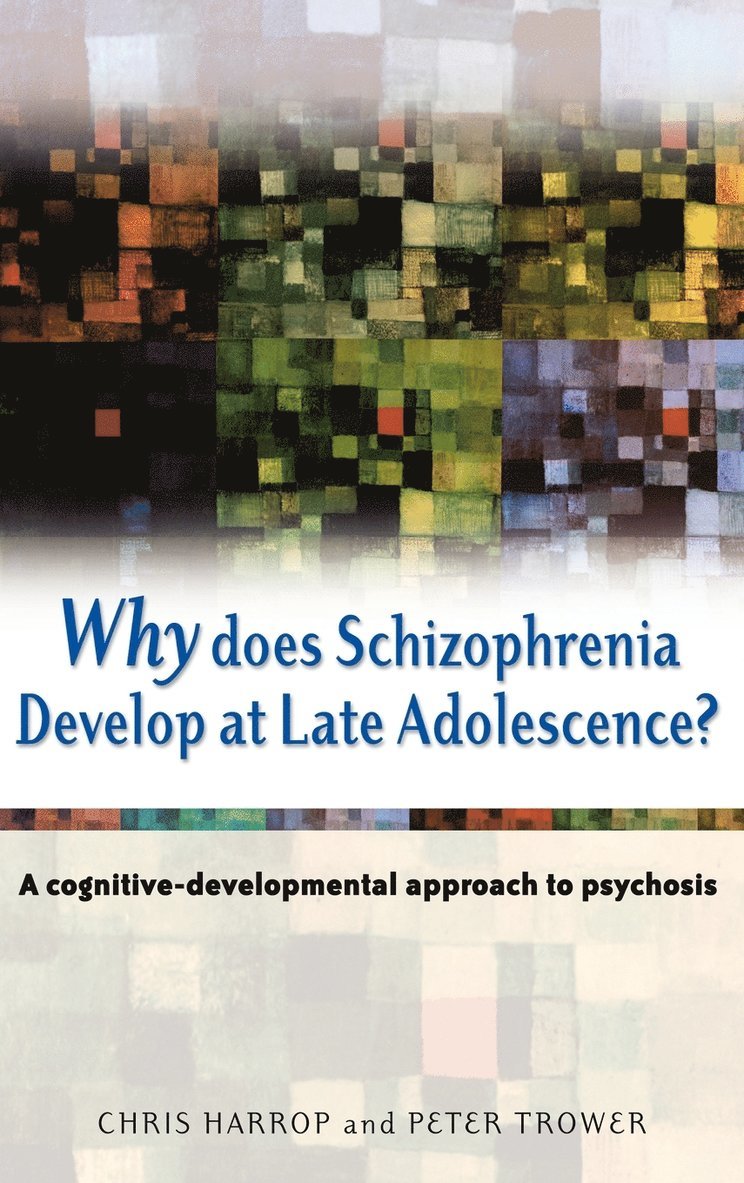
    Why Does Schizophrenia Develop at Late Adolescence?

    A Cognitive-Developmental Approach to Psychosis

    AvChris Harrop,Peter Trower

    Inbunden, Engelska, 2003

    2 181 kr

    Beställningsvara. Skickas inom 5-8 vardagar. Fri frakt över 249 kr.

    Beskrivning

    Governments around the world have given priority to "early intervention", i.e. the early diagnosis and treatment of young adults with psychotic symptoms. One of the main problems with this approach, is that only a small proportion of these young adults can be expected to go on to develop schizophrenia, yet all the treatment regimes are derived from work with adults who have had full psychotic episodes.Why Does Schizophrenia Develop at Late Adolescence? proposes a controversial new model of how schizophrenia develops in late adolescence and presents clinical material aimed at influencing the way psychosis is treated, building on a state-of-the-art reassessment of the field. A major reconceptualisation of how schizophrenia developsA controversial approachEarly intervention programmes are now extremely widespread, so there is much interest in the area and how best to treat this serious psychotic disorder

    Produktinformation

    • Utgivningsdatum:2003-08-15
    • Mått:163 x 237 x 19 mm
    • Vikt:482 g
    • Format:Inbunden
    • Språk:Engelska
    • Antal sidor:256
    • Förlag:John Wiley & Sons Inc
    • ISBN:9780470848777

    Utforska kategorier

    • Biologisk psykologi och neuropsykologi inom Psykologi och pedagogik
    • Psykiatri inom Medicin
    • Sociala grupper och identitet inom Samhälle och politik

    Mer om författaren

    Chris Harrop is the author of Why Does Schizophrenia Develop at Late Adolescence?: A Cognitive-Developmental Approach to Psychosis, published by Wiley. Peter Trower is the author of Why Does Schizophrenia Develop at Late Adolescence?: A Cognitive-Developmental Approach to Psychosis, published by Wiley.

    Innehållsförteckning

    • About the Authors ixAcknowledgements xIntroduction xiSection One: What Is This Schizophrenia?Chapter 1 Schizophrenia: What is it? 3Chapter 2 Biological Disease or Psychological Problem? Who is Right? 13Chapter 3 Why Young Men? What the Hell is Going On in Late Adolescence? 33Chapter 4 Why Might Some People be Blocked? 51Section Summary 60Section Two: Psychosis and the SelfChapter 5 The Crisis of the Adolescent Self 63Chapter 6 The Mystery of the Self: Why have it? What is it? 65Chapter 7 The Potential and the Limit 73Chapter 8 How is the Self Constructed?. 77Chapter 9 The Insecure Self (Le Neant) 79Chapter 10 Alienated/Engulfed Self (Objectité) 83Section Summary 90Section Three: Personal AccountsChapter 11 How We Asked People to Give Their Personal Accounts 93Chapter 12 Results I: Anger and Catastrophes 104Chapter 13 Further Results: Linking Conflict Interactions to Symptoms. 111Chapter 14 Peer and Romantic Conflicts 133Section Summary 144Section Four: What Can Be Done? Therapeutic IdeasChapter 15 ‘‘Character-based’’ Training. 151Chapter 16 Overcoming Interpersonal Blocks to Self-construction 168Chapter 17 Overcoming Symptoms 186Section Summary 201Concluding Remarks 202Appendix The Self and Other Scale 203References 205Author Index 217Subject Index 221