Peter Uwe Hohendahl - Böcker
Visar alla böcker från författaren Peter Uwe Hohendahl. Handla med fri frakt och snabb leverans.
18 produkter
18 produkter
727 kr
Skickas inom 10-15 vardagar
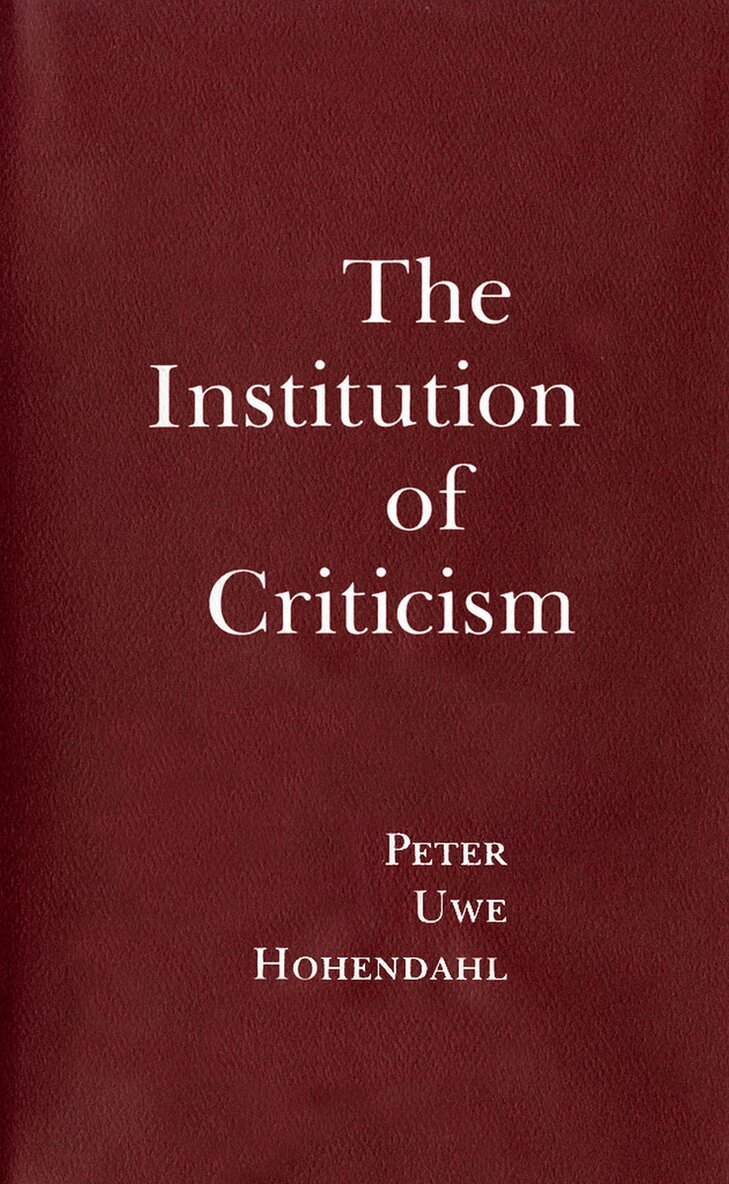
German radicals of the 1960s announced the death of literature. For them, literature both past and present, as well as conventional discussions of literary issues, had lost its meaning. In The Institution of Criticism, Peter Uwe Hohendahl explores the implications of this crisis from a Marxist perspective and attempts to define the tasks and responsibilities of criticism in advanced capitalist societies. Hohendahl takes a close look at the social history of literary criticism in Germany since the eighteenth century. Drawing on the tradition of the Frankfurt School and on Jürgen Habermas's concept of the public sphere, Hohendahl sheds light on some of the important political and social forces that shape literature and culture. The Institution of Criticism is made up of seven essays originally published in German and a long theoretical introduction written by the author with English-language readers in mind. This book conveys the rich possibilities of the German perspective for those who employ American and French critical techniques and for students of contemporary critical theory.
727 kr
Skickas inom 10-15 vardagar
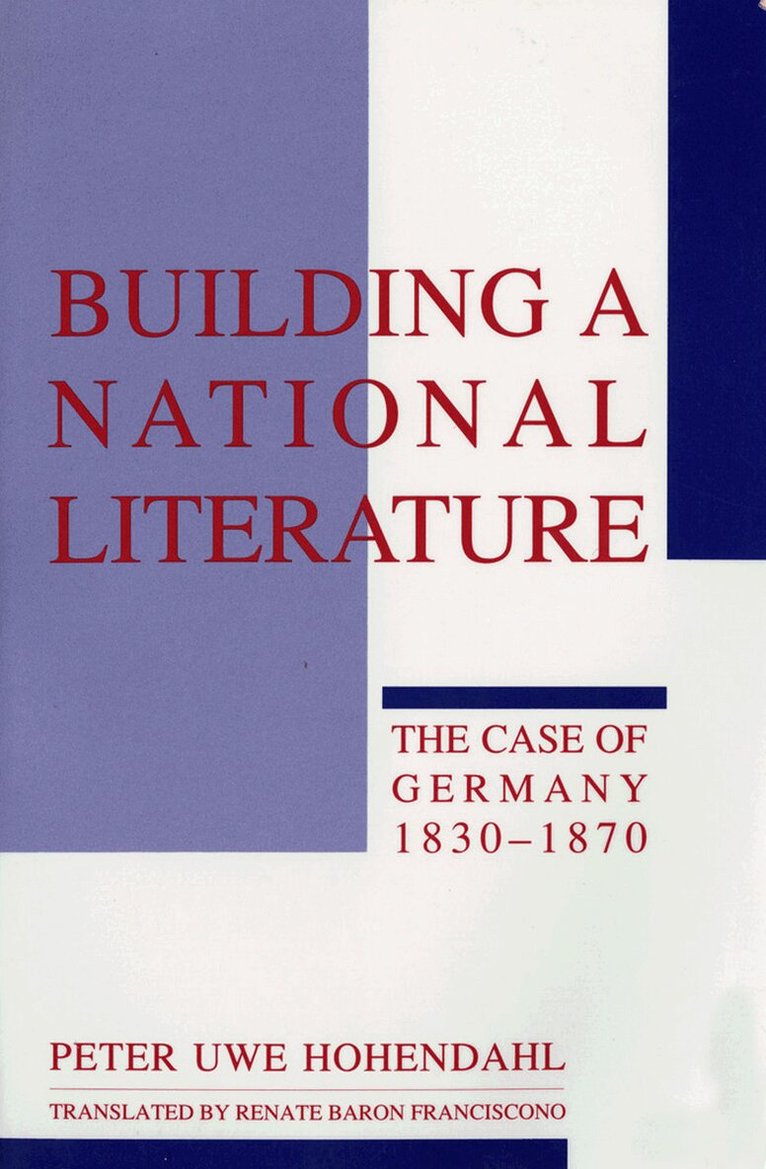
Building a National Literature boldly takes issue with traditional literary criticism for its failure to explain how literature as a body is created and shaped by institutional forces. Peter Uwe Hohendahl approaches literary history by focusing on the material and ideological structures that determine the canonical status of writers and works. He examines important elements in the making of a national literature, including the political and literary public sphere, the theory and practice of literary criticism, and the emergence of academic criticism as literary history. Hohendahl considers such key aspects of the process in Germany as the rise of liberalism and nationalism, the delineation of the borders of German literature, the idea of its history, the understanding of its cultural function, and the notion of a canon of major and minor authors.
773 kr
Skickas inom 10-15 vardagar
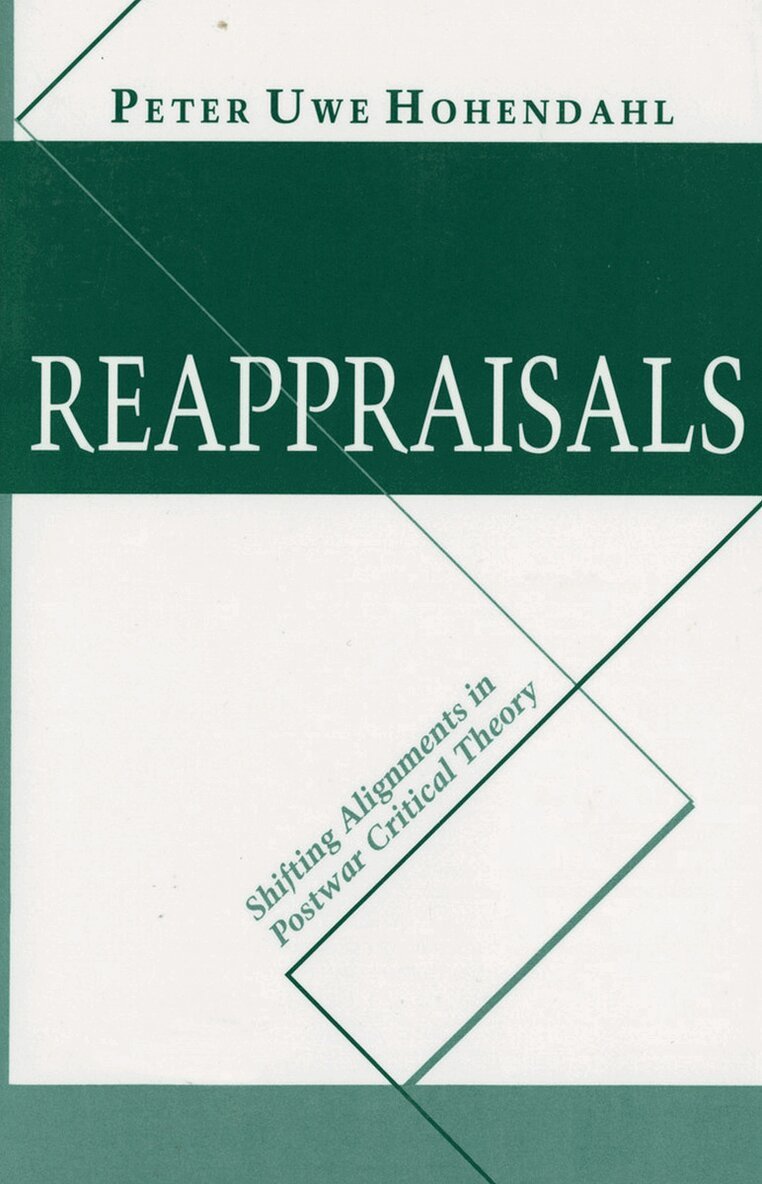
Reappraisals is a provocative account of the development of modern critical theory in Germany and the United States. Focusing on the period since World War II, Peter Uwe Hohendahl explores key debates on the function of critical theory, illuminating the diverse positions and alliances among the participants. Bringing together six essays, as well as new introductory and concluding chapters, Hohendahl interprets and subjects to critical scrutiny many of the central ideas of the Frankfurt School. He first maps the trajectory of neomarxist criticism in Germany to the 1980s. Individual chapters then focus on the work of Georg Lukács, Theodor W. Adorno, and Jürgen Habermas, and on such issues as the politicization of German criticism after 1965 under the influence of the Frankfurt School.
1 551 kr
Skickas inom 10-15 vardagar
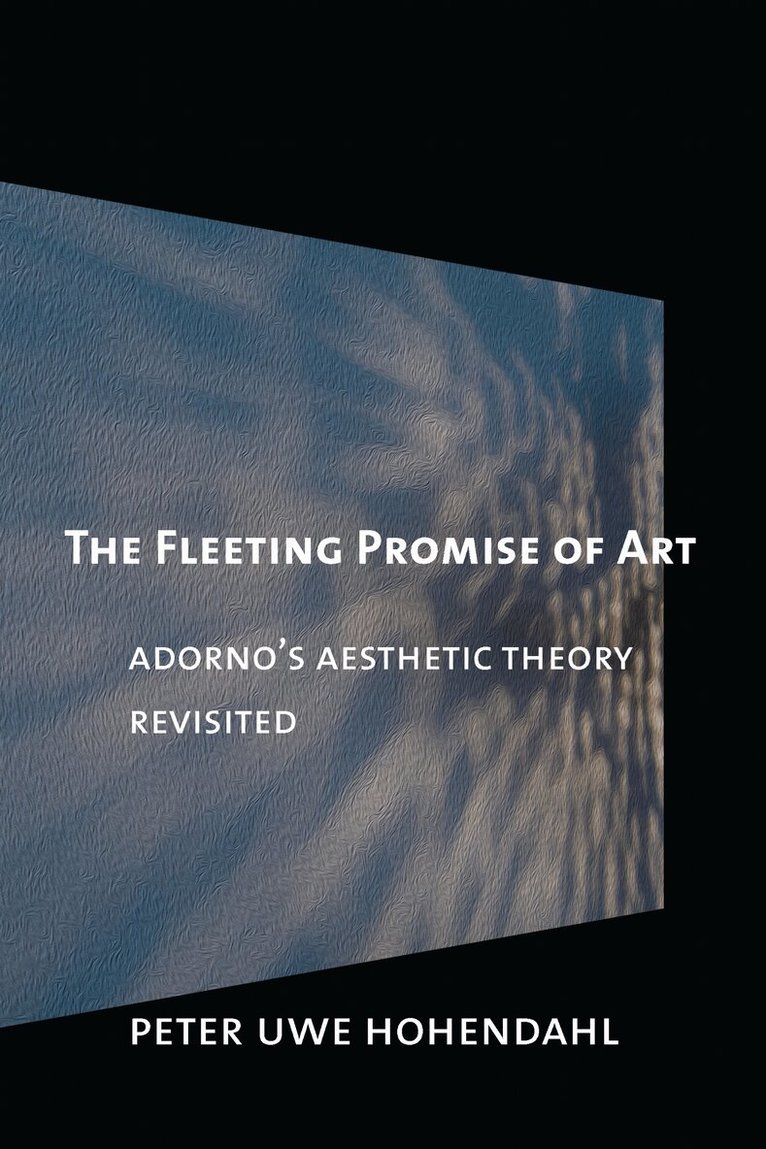
A discussion of Theodor Adorno's Aesthetic Theory is bound to look significantly different today than it would have looked when the book was first published in 1970, or when it first appeared in English translation in the 1980s. In The Fleeting Promise of Art, Peter Uwe Hohendahl reexamines Aesthetic Theory along with Adorno's other writings on aesthetics in light of the unexpected return of the aesthetic to today's cultural debates. Is Adorno's aesthetic theory still relevant today? Hohendahl answers this question with an emphatic yes. As he shows, a careful reading of the work exposes different questions and arguments today than it did in the past. Over the years Adorno's concern over the fate of art in a late capitalist society has met with everything from suspicion to indifference. In part this could be explained by relative unfamiliarity with the German dialectical tradition in North America. Today's debate is better informed, more multifaceted, and further removed from the immediate aftermath of the Cold War and of the shadow of postmodernism. Adorno's insistence on the radical autonomy of the artwork has much to offer contemporary discussions of art and the aesthetic in search of new responses to the pervasive effects of a neoliberal art market and culture industry. Focusing specifically on Adorno's engagement with literary works, Hohendahl shows how radically transformative Adorno's ideas have been and how thoroughly they have shaped current discussions in aesthetics. Among the topics he considers are the role of art in modernism and postmodernism, the truth claims of artworks, the function of the ugly in modern artworks, the precarious value of the literary tradition, and the surprising significance of realism for Adorno.
420 kr
Skickas inom 10-15 vardagar
A discussion of Theodor Adorno's Aesthetic Theory is bound to look significantly different today than it would have looked when the book was first published in 1970, or when it first appeared in English translation in the 1980s. In The Fleeting Promise of Art, Peter Uwe Hohendahl reexamines Aesthetic Theory along with Adorno's other writings on aesthetics in light of the unexpected return of the aesthetic to today's cultural debates. Is Adorno's aesthetic theory still relevant today? Hohendahl answers this question with an emphatic yes. As he shows, a careful reading of the work exposes different questions and arguments today than it did in the past. Over the years Adorno's concern over the fate of art in a late capitalist society has met with everything from suspicion to indifference. In part this could be explained by relative unfamiliarity with the German dialectical tradition in North America. Today's debate is better informed, more multifaceted, and further removed from the immediate aftermath of the Cold War and of the shadow of postmodernism. Adorno's insistence on the radical autonomy of the artwork has much to offer contemporary discussions of art and the aesthetic in search of new responses to the pervasive effects of a neoliberal art market and culture industry. Focusing specifically on Adorno's engagement with literary works, Hohendahl shows how radically transformative Adorno's ideas have been and how thoroughly they have shaped current discussions in aesthetics. Among the topics he considers are the role of art in modernism and postmodernism, the truth claims of artworks, the function of the ugly in modern artworks, the precarious value of the literary tradition, and the surprising significance of realism for Adorno.
268 kr
Skickas inom 10-15 vardagar
Building a National Literature boldly takes issue with traditional literary criticism for its failure to explain how literature as a body is created and shaped by institutional forces. Peter Uwe Hohendahl approaches literary history by focusing on the material and ideological structures that determine the canonical status of writers and works. He examines important elements in the making of a national literature, including the political and literary public sphere, the theory and practice of literary criticism, and the emergence of academic criticism as literary history. Hohendahl considers such key aspects of the process in Germany as the rise of liberalism and nationalism, the delineation of the borders of German literature, the idea of its history, the understanding of its cultural function, and the notion of a canon of major and minor authors.
268 kr
Skickas inom 10-15 vardagar
Reappraisals is a provocative account of the development of modern critical theory in Germany and the United States. Focusing on the period since World War II, Peter Uwe Hohendahl explores key debates on the function of critical theory, illuminating the diverse positions and alliances among the participants. Bringing together six essays, as well as new introductory and concluding chapters, Hohendahl interprets and subjects to critical scrutiny many of the central ideas of the Frankfurt School. He first maps the trajectory of neomarxist criticism in Germany to the 1980s. Individual chapters then focus on the work of Georg Lukács, Theodor W. Adorno, and Jürgen Habermas, and on such issues as the politicization of German criticism after 1965 under the influence of the Frankfurt School.
361 kr
Skickas inom 10-15 vardagar
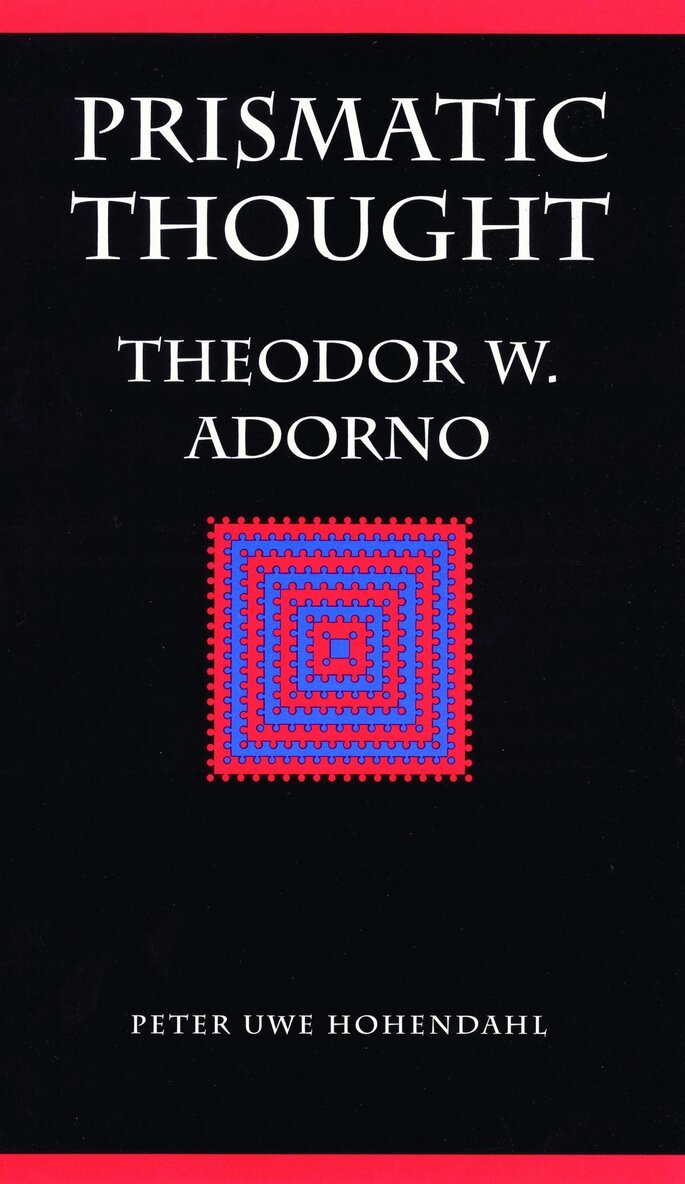
A leading figure in the Frankfurt School of philosophers from the 1930s through the time of his death in 1969, Adorno was the author of influential philosophical and sociological works on issues ranging from aesthetics, music history, and mass culture to politics, modern technology, and the Western philosophical tradition. Prismatic Thought is a brilliant tour of Adorno's work, with special emphasis on his aesthetic writings. Peter Uwe Hohendahl opens with a pair of chapters that considers Adorno's years of exile in the United States during the Second World War and his return in the early 1950s to a West Germany harrowed by its recent Nazi past and responsibility for the Holocaust. He then examines Adorno's writings on literature, language, poetry, philosophy, and mass culture in relation to modern history. Throughout the book, Hohendahl argues that Adorno's work "ultimately resists the desire for systematic order, the search for a grand design that gives meaning to all the individual texts." Prismatic Thought is distinguished by Hohendahl's sensitivity to the historical and intellectual conditions of Adorno's time and by his mastery of the myriad Adorno studies of the past twenty-five years. Equally important is his description of Adorno's relevance to our own age. In the course of situating Adorno in his own era, Hohendahl introduces us to an Adorno who is also our contemporary.
268 kr
Skickas inom 10-15 vardagar
German radicals of the 1960s announced the death of literature. For them, literature both past and present, as well as conventional discussions of literary issues, had lost its meaning. In The Institution of Criticism, Peter Uwe Hohendahl explores the implications of this crisis from a Marxist perspective and attempts to define the tasks and responsibilities of criticism in advanced capitalist societies. Hohendahl takes a close look at the social history of literary criticism in Germany since the eighteenth century. Drawing on the tradition of the Frankfurt School and on Jürgen Habermas's concept of the public sphere, Hohendahl sheds light on some of the important political and social forces that shape literature and culture. The Institution of Criticism is made up of seven essays originally published in German and a long theoretical introduction written by the author with English-language readers in mind. This book conveys the rich possibilities of the German perspective for those who employ American and French critical techniques and for students of contemporary critical theory.
1 551 kr
Skickas inom 10-15 vardagar
Since his death, the writings of Carl Schmitt (1888–1985) have been debated, cited, and adopted by political and legal thinkers on both the left and right with increasing frequency, though not without controversy given Schmitt's unwavering support for National Socialism before and during World War II. In Perilous Futures, Peter Uwe Hohendahl calls for critical scrutiny of Schmitt's later writings, the work in which Schmitt wrestles with concerns that retain present-day relevance: globalization, asymmetrical warfare, and the shifting international order. Hohendahl argues that Schmitt's work seems to offer solutions to these present-day issues, although the ambiguity of his beliefs means that Schmitt's later work is a problematic guide.Focusing on works Schmitt published after the war—including The Nomos of the Earth, Theory of the Partisan and Political Theology II—as well as his posthumously published diaries, Hohendahl reads these works critically against the backdrop of their biographical and historical contexts, he charts the shift in Schmitt's perspective from a German nationalist focus to a European and then international agenda, while attending to both the conceptual and theoretical continuities with his prewar work and addressing the tension between the specific circumstances in which Schmitt was writing and the later international appropriation. Crossing disciplines of history, political theory, international relations, German studies, and political philosophy, Hohendahl brings Schmitt's later writings into contemporary discourse and forces us to reexamine what we believe about Carl Schmitt.
326 kr
Skickas inom 10-15 vardagar
Since his death, the writings of Carl Schmitt (1888–1985) have been debated, cited, and adopted by political and legal thinkers on both the left and right with increasing frequency, though not without controversy given Schmitt's unwavering support for National Socialism before and during World War II. In Perilous Futures, Peter Uwe Hohendahl calls for critical scrutiny of Schmitt's later writings, the work in which Schmitt wrestles with concerns that retain present-day relevance: globalization, asymmetrical warfare, and the shifting international order. Hohendahl argues that Schmitt's work seems to offer solutions to these present-day issues, although the ambiguity of his beliefs means that Schmitt's later work is a problematic guide.Focusing on works Schmitt published after the war—including The Nomos of the Earth, Theory of the Partisan and Political Theology II—as well as his posthumously published diaries, Hohendahl reads these works critically against the backdrop of their biographical and historical contexts, he charts the shift in Schmitt's perspective from a German nationalist focus to a European and then international agenda, while attending to both the conceptual and theoretical continuities with his prewar work and addressing the tension between the specific circumstances in which Schmitt was writing and the later international appropriation. Crossing disciplines of history, political theory, international relations, German studies, and political philosophy, Hohendahl brings Schmitt's later writings into contemporary discourse and forces us to reexamine what we believe about Carl Schmitt.
1 816 kr
Kommande
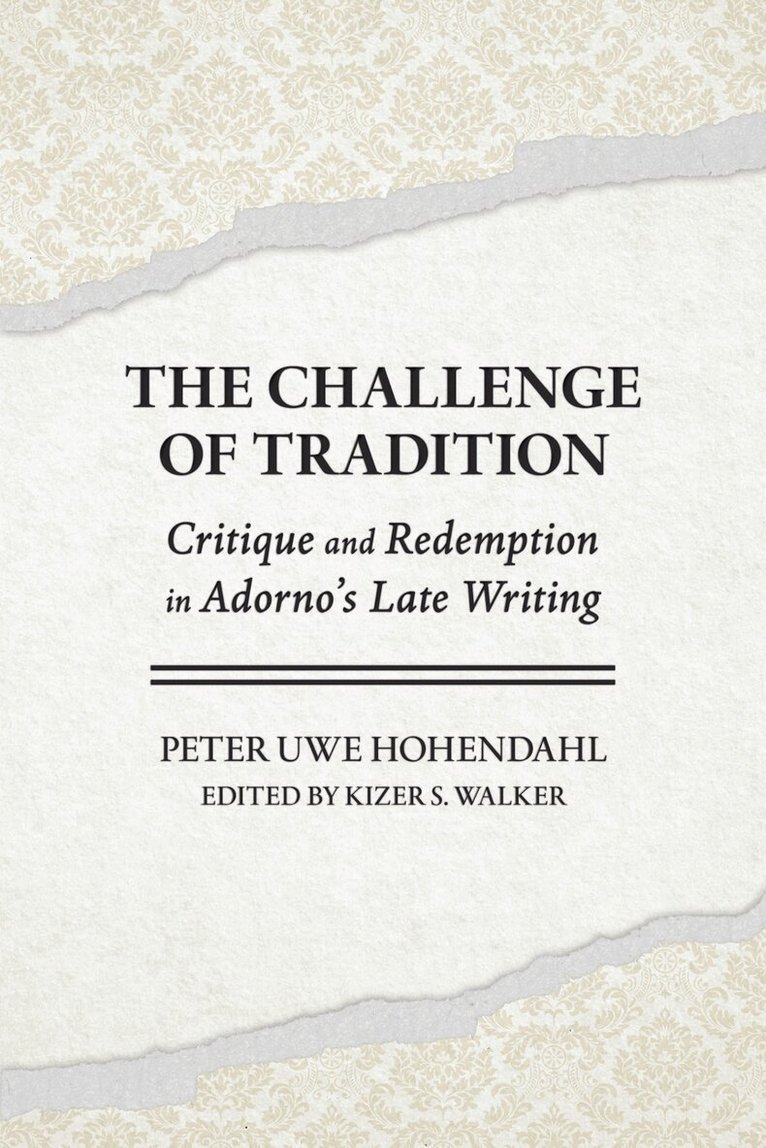
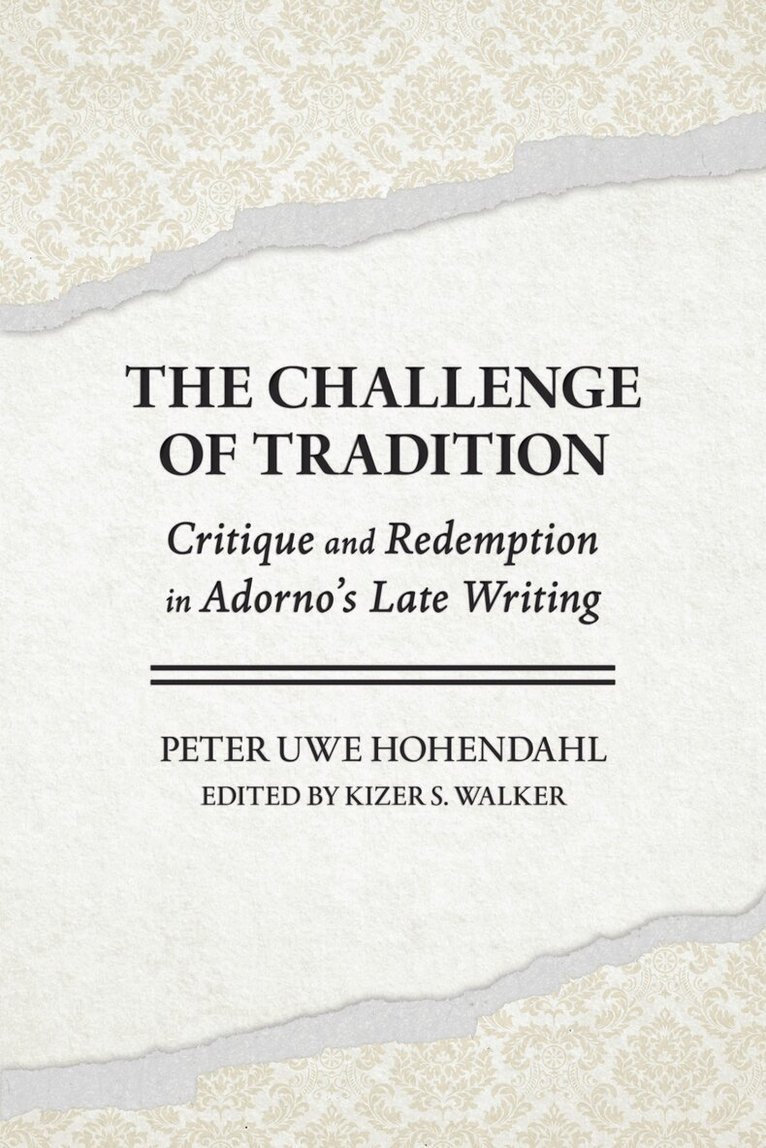
The Challenge of Tradition emphasizes the tension between Theodor Adorno's critique of tradition as being incompatible with capitalist modernity and his understanding of the need for maintaining aesthetic and cultural connections with the past. Placing the concept of tradition in the larger context of late modernity, Peter Uwe Hohendahl argues that Adorno redeems tradition even as he critiques it.Beginning his analysis with Adorno's 1966 essay, "On Tradition," Hohendahl examines Adorno's thinking on the value and hazards of recuperating cultural and philosophical traditions from reified histories. Even as Adorno questions tradition, the concept of tradition challenges Adorno – and his theory of culture and art. At a time when the idea of cultural heritage is undergoing fundamental rethinking, The Challenge of Tradition asks how Adorno's insights might enable a reconception of the idea of tradition but without the baggage of traditionalism.
341 kr
Kommande
The Challenge of Tradition emphasizes the tension between Theodor Adorno's critique of tradition as being incompatible with capitalist modernity and his understanding of the need for maintaining aesthetic and cultural connections with the past. Placing the concept of tradition in the larger context of late modernity, Peter Uwe Hohendahl argues that Adorno redeems tradition even as he critiques it.Beginning his analysis with Adorno's 1966 essay, "On Tradition," Hohendahl examines Adorno's thinking on the value and hazards of recuperating cultural and philosophical traditions from reified histories. Even as Adorno questions tradition, the concept of tradition challenges Adorno – and his theory of culture and art. At a time when the idea of cultural heritage is undergoing fundamental rethinking, The Challenge of Tradition asks how Adorno's insights might enable a reconception of the idea of tradition but without the baggage of traditionalism.
1 956 kr
Skickas inom 3-6 vardagar
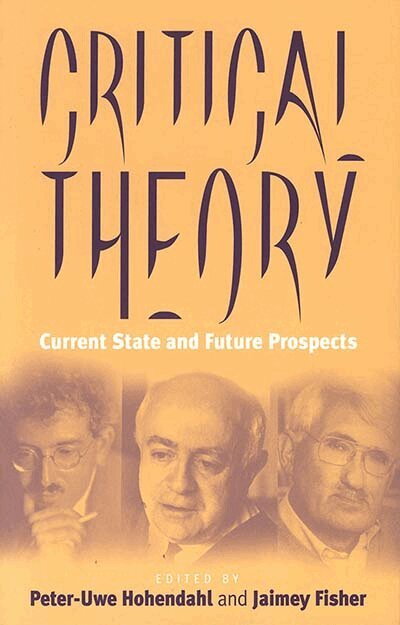
The retirement of the distinguished philosopher Jürgen Habermas from his chair at the University of Frankfurt signalled an important caesura in the history of Critical Theory: the transition from the Habermasian project, to different forms of inquiry in the work of the next generation. This change-over happens at a time when it has become clear that Habermas's systematic exploration of communicative rationality has reached the point where both its achievements and its limitations had become evident. The essays collected in this volume address the problems connected with this transition, partly by returning to the insights of the first generation (Adorno and Benjamin), partly by focusing on questions raised by Habermas's work. Whatever the difference in the authors' positions, this collection gains its unity through their common interest in the significance and value of Critical Theory today and in its future as a philosophical project.
651 kr
Skickas inom 3-6 vardagar
The retirement of the distinguished philosopher Jürgen Habermas from his chair at the University of Frankfurt signalled an important caesura in the history of Critical Theory: the transition from the Habermasian project, to different forms of inquiry in the work of the next generation. This change-over happens at a time when it has become clear that Habermas's systematic exploration of communicative rationality has reached the point where both its achievements and its limitations had become evident. The essays collected in this volume address the problems connected with this transition, partly by returning to the insights of the first generation (Adorno and Benjamin), partly by focusing on questions raised by Habermas's work. Whatever the difference in the authors' positions, this collection gains its unity through their common interest in the significance and value of Critical Theory today and in its future as a philosophical project.
Del 26 - Publikationen zur Zeitschrift fuer Germanistik
Perspektiven konservativen Denkens
Deutschland und die Vereinigten Staaten nach 1945
Häftad, Engelska, 2012
927 kr
Tillfälligt slut
Die Beiträge des vorliegenden Bandes widmen sich vergleichend der Entwicklung des Konservatismus in der Bundesrepublik Deutschland und den USA von 1945 bis heute. Sie gehen dabei auf die unterschiedlichen Rahmenbedingungen und wechselseitigen Beziehungen ebenso ein wie auf die wesentlichen Akteure zwischen Politik und Kultur, Theorie und Praxis. Damit liefert der Band erstmals einen Überblick über diese kulturpolitisch höchst einflussreiche Strömung der jüngsten Gegenwart.Neben historischen Überblicken bietet der Band vor allem Einzelstudien zu einflussreichen Personen und Positionen – u. a. zu Gottfried Benn, Allan Bloom, James Burnham, Carl Schmitt, Arnold Gehlen, Ernst Jünger, Eduard Spranger, Leo Strauss oder Eric Voegelin, aber auch Analysen zu kulturpolitischen Feldern wie Erziehungswesen, Medien und Militär.
253 kr
Skickas inom 10-15 vardagar
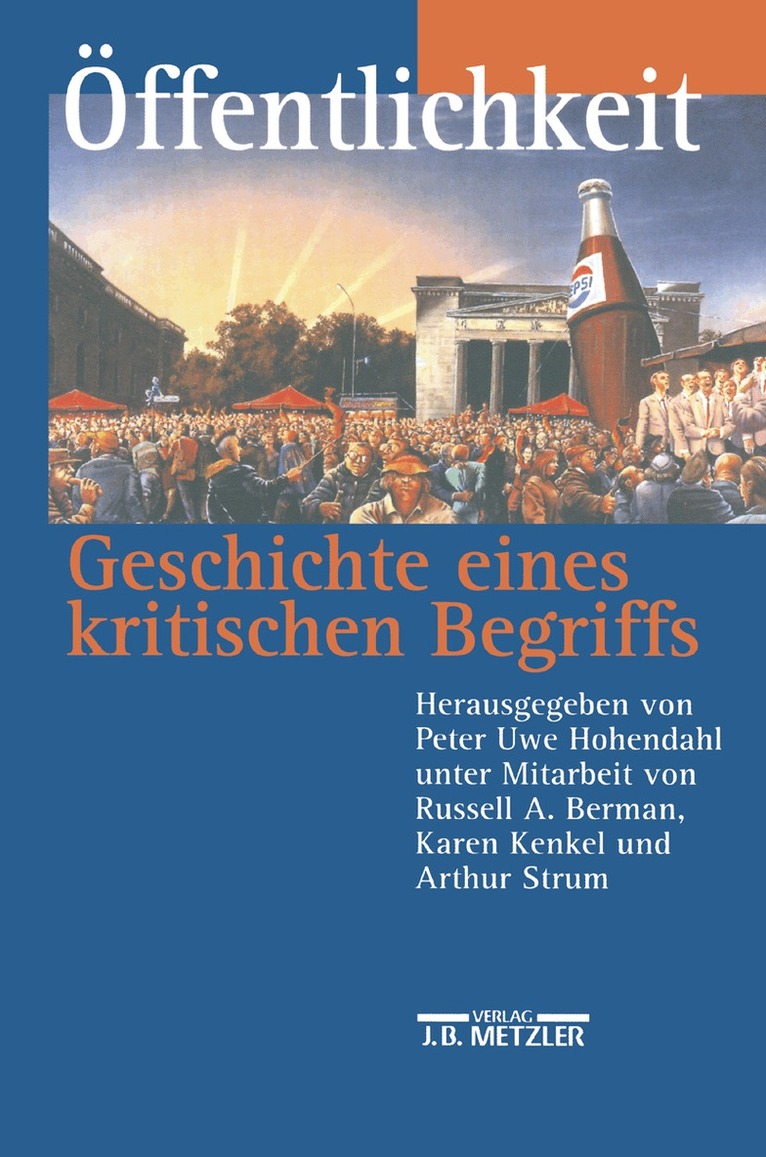
Die historische Analyse zum Begriff Öffentlichkeit. Hohendahl veröffentlicht einen Lern- und Arbeitsband, der die international gewachsene Bedeutung des Begriffs Öffentlichkeit historisch und aktuell umreißt. Dabei werden die Entstehung moderner Öffentlichkeit und des modernen Publikums, das klassische liberale Modell von Öffentlichkeit, die moderne Öffentlichkeit und die Erfahrungen von Öffentlichkeit im Zeichen der Postmoderne als wichtige Stufen dargestellt.
Del 69 - Internationale Forschungen zur Allgemeinen und Vergleichenden Literaturwissenschaft
Patriotism, Cosmopolitanism, and National Culture
Public Culture in Hamburg 1700-1933
Häftad, Engelska, 2003
1 151 kr
Skickas inom 5-8 vardagar
The essays assembled in this volume grew out of a conference held at Cornell University in November 2001. The goal of the conference was to examine the claim that the city-state of Hamburg had a unique status in the cultural landscape of eighteenth and nineteenth-century Germany, a status based upon the city’s republican political constitution. Hamburg’s independence and its tolerant and cosmopolitan political traditions made it a focal point for progressive cultural developments during the period of the Enlightenment and after. The contributions collected here transcend traditional disciplinary boundaries by giving equal attention to literature, music, and theater, as well as to architecture and city planning. Key essays address the role that figures as diverse as C.P.E. Bach, Lessing, Klopstock, Heine, Brahms, and Thomas Mann played in shaping Hamburg’s exceptional quality as a center of culture. This volume will be of interest not only to scholars doing research on Hamburg, but also to anyone with an interest in the cultural history of eighteenth, nineteenth, and early twentieth-century Germany.