Pierre Dillenbourg – författare
Visar alla böcker från författaren Pierre Dillenbourg. Handla med fri frakt och snabb leverans.
6 produkter
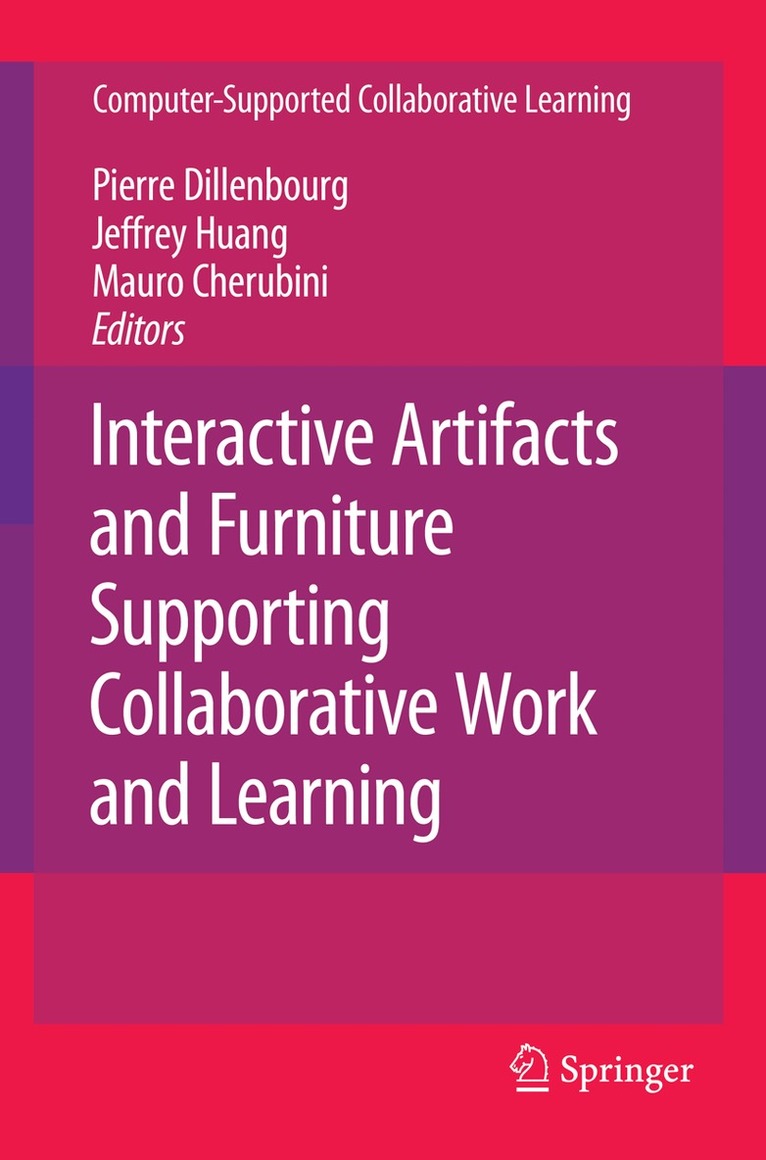
Interactive Artifacts and Furniture Supporting Collaborative Work and Learning
Av Pierre Dillenbourg, Jeffrey Huang m. fl.
Inbunden, 2008
536 kr
Lägg i varukorg
The field of Computer-Supported Collaborative Learning (CSCL) has traditionally focused on virtual learning environments and has somewhat neglected the physical environments in which students interact with each other and with their teachers. However, over the last years, scholars have devoted …
Interactive Artifacts and Furniture Supporting Collaborative Work and Learning
Av Mauro Cherubini, Jeffrey Huang m. fl.
E-bok, 2008
755 kr
Lägg i varukorg
The field of Computer-Supported Collaborative Learning (CSCL) has traditionally focused on virtual learning environments and has somewhat neglected the physical environments in which students interact with each other and with their teachers. However, over the last years, scholars have devoted …
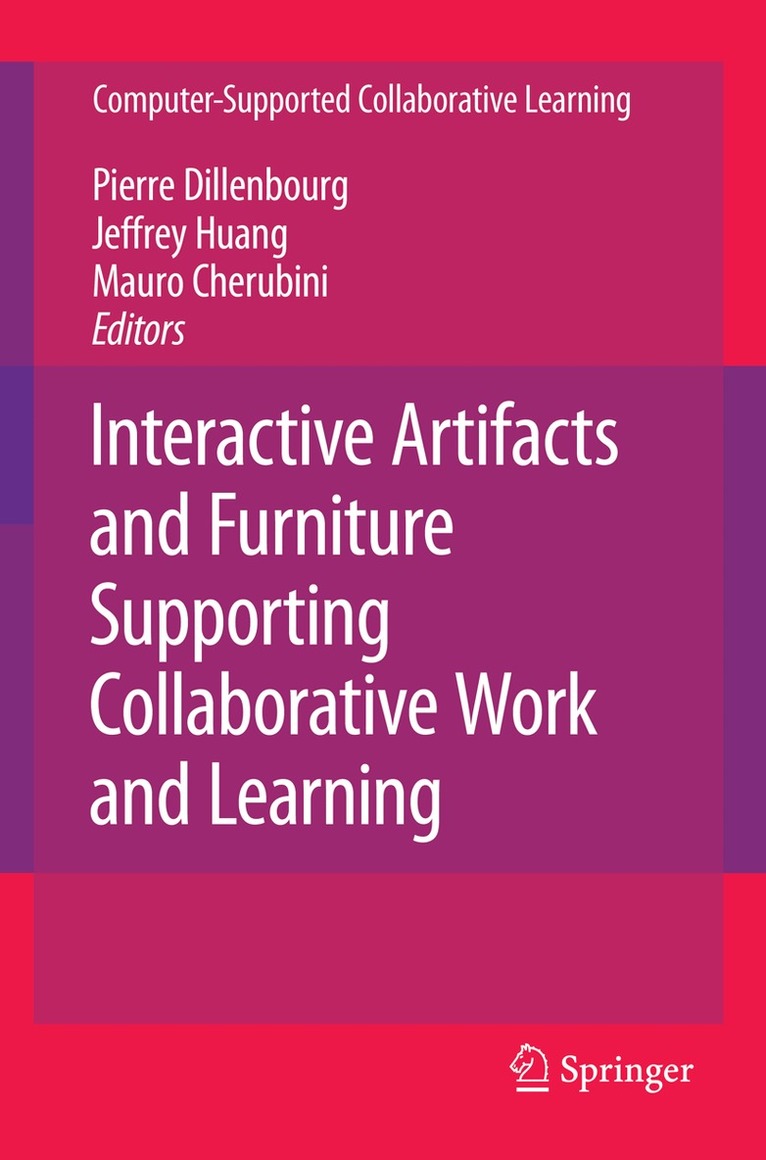
Interactive Artifacts and Furniture Supporting Collaborative Work and Learning
Av Pierre Dillenbourg, Jeffrey Huang m. fl.
Häftad, 2010
569 kr
Lägg i varukorg
The field of Computer-Supported Collaborative Learning (CSCL) has traditionally focused on virtual learning environments and has somewhat neglected the physical environments in which students interact with each other and with their teachers. However, over the last years, scholars have devoted …
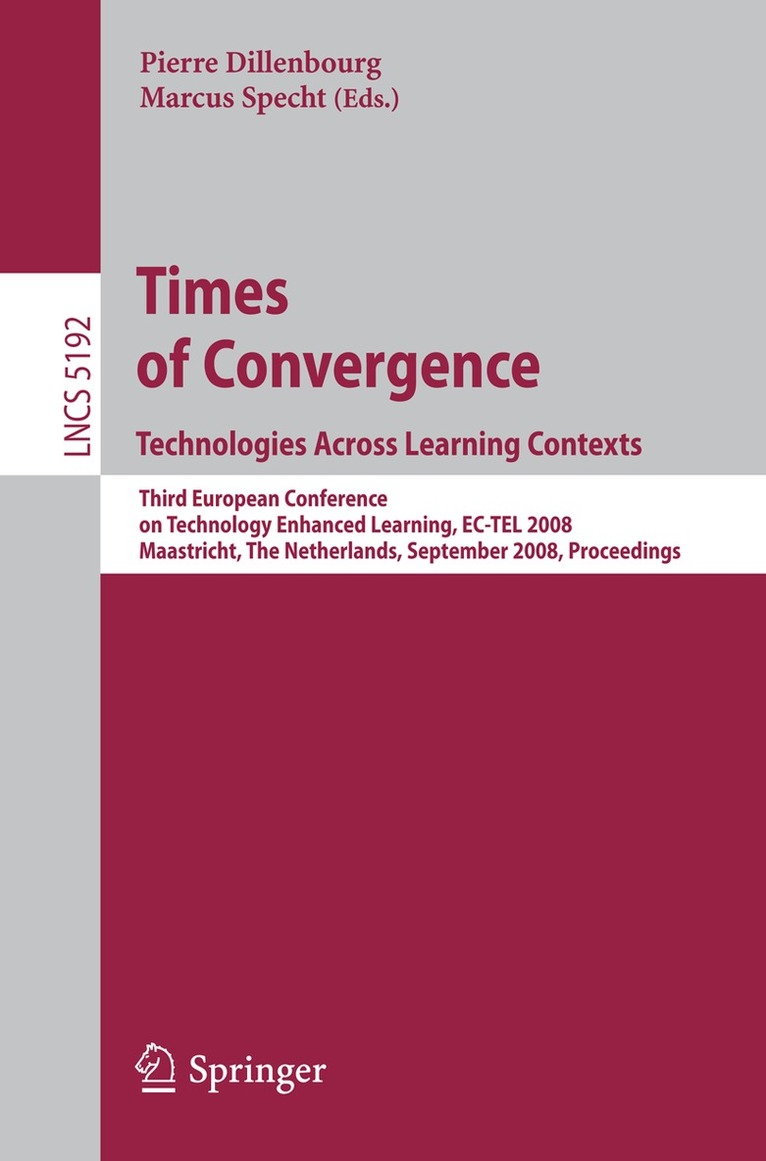
Times of Convergence. Technologies Across Learning Contexts
Third European Conference on Technology Enhanced Learning, EC-TEL 2008, Maastricht, The Netherlands, September 16-19, 2008, Proceedings
Av Pierre Dillenbourg, Marcus Specht
Häftad, 2008
537 kr
Lägg i varukorg
The European Conference on Technology-Enhanced Learning (EC-TEL 2008) was the third event of a series that started in 2006. The two first editions were organized by Pro- Learn (http://www.prolearn-project.org/), a European Network of Excellence. In 2008, several members of Kaleidoscope, the other …
Times of Convergence. Technologies Across Learning Contexts
Third European Conference on Technology Enhanced Learning, EC-TEL 2008, Maastricht, The Netherlands, September 16-19, 2008, Proceedings
Av Marcus Specht, Pierre Dillenbourg
E-bok, 2008
698 kr
Lägg i varukorg
The European Conference on Technology-Enhanced Learning (EC-TEL 2008) was the third event of a series that started in 2006. The two first editions were organized by Pro- Learn (http://www.prolearn-project.org/), a European Network of Excellence. In 2008, several members of Kaleidoscope, the other …