Pierre François Souyri - Böcker
Visar alla böcker från författaren Pierre François Souyri. Handla med fri frakt och snabb leverans.
3 produkter
3 produkter
2 191 kr
Skickas inom 3-6 vardagar
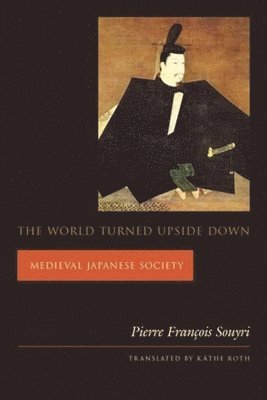
In the late twelfth century, Japanese people called the transitional period in which they were living the "age of warriors." Feudal clans fought civil wars, and warriors from the Kanto Plain rose up to restore the military regime of their shogun, Yoritomo. The whole of this intermediary period came to represent a gap between two stable societies: the ancient period, dominated by the imperial court in Heian (today's Kyoto), and the modern period, dominated by the Tokugawa bakufu based in Edo (today's Tokyo). In this remarkable portrait of a complex period in the evolution of Japan, Pierre F. Souyri uses a wide variety of sources-ranging from legal and historical texts to artistic and literary examples-to form a magisterial overview of medieval Japanese society. As much at home discussing the implications of the morality and mentality of The Tale of the Heike as he is describing local disputes among minor vassals or the economic implications of the pirate trade, Souyri brilliantly illustrates the interconnected nature of medieval Japanese culture. The Middle Ages was a decisive time in Japan's history because it confirmed the country's national identity.New forms of cultural expression, such as poetry, theater, garden design, the tea ceremony, flower arranging, and illustrated scrolls, conveyed a unique sensibility-sometimes in opposition to the earlier Chinese models followed by the old nobility. The World Turned Upside Down provides an animated account of the religious, intellectual, and literary practices of medieval Japan in order to reveal the era's own notable cultural creativity and enormous economic potential.
610 kr
Skickas inom 3-6 vardagar
In the late twelfth century, Japanese people called the transitional period in which they were living the "age of warriors." Feudal clans fought civil wars, and warriors from the Kanto Plain rose up to restore the military regime of their shogun, Yoritomo. The whole of this intermediary period came to represent a gap between two stable societies: the ancient period, dominated by the imperial court in Heian (today's Kyoto), and the modern period, dominated by the Tokugawa bakufu based in Edo (today's Tokyo). In this remarkable portrait of a complex period in the evolution of Japan, Pierre F. Souyri uses a wide variety of sources-ranging from legal and historical texts to artistic and literary examples-to form a magisterial overview of medieval Japanese society. As much at home discussing the implications of the morality and mentality of The Tale of the Heike as he is describing local disputes among minor vassals or the economic implications of the pirate trade, Souyri brilliantly illustrates the interconnected nature of medieval Japanese culture. The Middle Ages was a decisive time in Japan's history because it confirmed the country's national identity.New forms of cultural expression, such as poetry, theater, garden design, the tea ceremony, flower arranging, and illustrated scrolls, conveyed a unique sensibility-sometimes in opposition to the earlier Chinese models followed by the old nobility. The World Turned Upside Down provides an animated account of the religious, intellectual, and literary practices of medieval Japan in order to reveal the era's own notable cultural creativity and enormous economic potential.
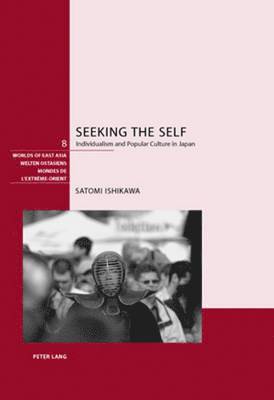
Del 8 - Welten Ostasiens/Worlds of East Asia/Mondes de l'Extreme-Orient
Seeking the Self
Individualism and Popular Culture in Japan
Inbunden, Engelska, 2007
870 kr
Skickas inom 5-8 vardagar