Pierre L. Yong – författare
Value in Health Care
Accounting for Cost, Quality, Safety, Outcomes, and Innovation: Workshop Summary
761 kr
Läs direkt efter köp
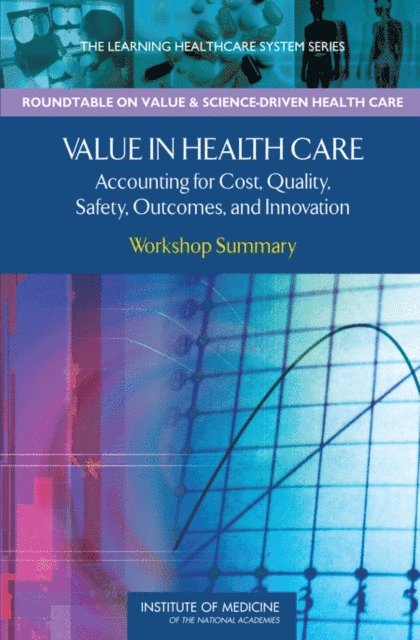
The United States has the highest per capita spending on health care of any industrialized nation. Yet despite the unprecedented levels of spending, harmful medical errors abound, uncoordinated care continues to frustrate patients and providers, and U.S. healthcare costs continue to increase. The growing ranks of the uninsured, an aging population with a higher prevalence of chronic diseases, and many patients with multiple conditions together constitute more complicating factors in the trend to higher costs of care. A variety of strategies are beginning to be employed throughout the health system to address the central issue of value, with the goal of improving the net ratio of benefits obtained per dollar spent on health care. However, despite the obvious need, no single agreed-upon measure of value or comprehensive, coordinated systemwide approach to assess and improve the value of health care exists. Without this definition and approach, the path to achieving greater value will be characterized by encumbrance rather than progress. To address the issues central to defining, measuring, and improving value in health care, the Institute of Medicine convened a workshop to assemble prominent authorities on healthcare value and leaders of the patient, payer, provider, employer, manufacturer, government, health policy, economics, technology assessment, informatics, health services research, and health professions communities. The workshop, summarized in this volume, facilitated a discussion of stakeholder perspectives on measuring and improving value in health care, identifying the key barriers and outlining the opportunities for next steps.
1 596 kr
Läs direkt efter köp
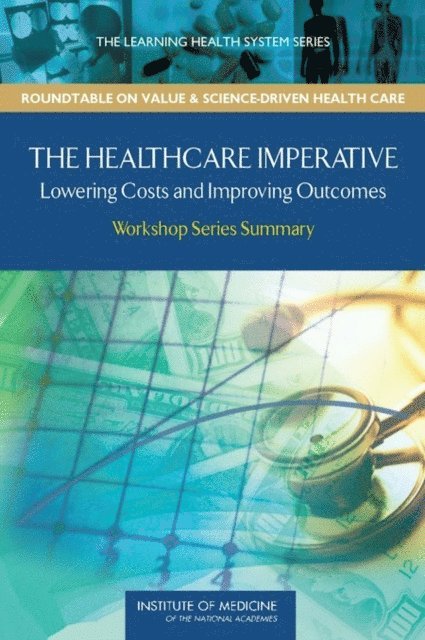
The United States has the highest per capita spending on health care of any industrialized nation but continually lags behind other nations in health care outcomes including life expectancy and infant mortality. National health expenditures are projected to exceed $2.5 trillion in 2009. Given healthcare''s direct impact on the economy, there is a critical need to control health care spending. According to The Health Imperative: Lowering Costs and Improving Outcomes, the costs of health care have strained the federal budget, and negatively affected state governments, the private sector and individuals. Healthcare expenditures have restricted the ability of state and local governments to fund other priorities and have contributed to slowing growth in wages and jobs in the private sector. Moreover, the number of uninsured has risen from 45.7 million in 2007 to 46.3 million in 2008. The Health Imperative: Lowering Costs and Improving Outcomes identifies a number of factors driving expenditure growth including scientific uncertainty, perverse economic and practice incentives, system fragmentation, lack of patient involvement, and under-investment in population health. Experts discussed key levers for catalyzing transformation of the delivery system. A few included streamlined health insurance regulation, administrative simplification and clarification and quality and consistency in treatment. The book is an excellent guide for policymakers at all levels of government, as well as private sector healthcare workers.
Value in Health Care
Accounting for Cost, Quality, Safety, Outcomes, and Innovation: Workshop Summary
802 kr
Läs direkt efter köp
The United States has the highest per capita spending on health care of any industrialized nation. Yet despite the unprecedented levels of spending, harmful medical errors abound, uncoordinated care continues to frustrate patients and providers, and U.S. healthcare costs continue to increase. The growing ranks of the uninsured, an aging population with a higher prevalence of chronic diseases, and many patients with multiple conditions together constitute more complicating factors in the trend to higher costs of care. A variety of strategies are beginning to be employed throughout the health system to address the central issue of value, with the goal of improving the net ratio of benefits obtained per dollar spent on health care. However, despite the obvious need, no single agreed-upon measure of value or comprehensive, coordinated systemwide approach to assess and improve the value of health care exists. Without this definition and approach, the path to achieving greater value will be characterized by encumbrance rather than progress. To address the issues central to defining, measuring, and improving value in health care, the Institute of Medicine convened a workshop to assemble prominent authorities on healthcare value and leaders of the patient, payer, provider, employer, manufacturer, government, health policy, economics, technology assessment, informatics, health services research, and health professions communities. The workshop, summarized in this volume, facilitated a discussion of stakeholder perspectives on measuring and improving value in health care, identifying the key barriers and outlining the opportunities for next steps.
1 671 kr
Läs direkt efter köp
The United States has the highest per capita spending on health care of any industrialized nation but continually lags behind other nations in health care outcomes including life expectancy and infant mortality. National health expenditures are projected to exceed $2.5 trillion in 2009. Given healthcare''s direct impact on the economy, there is a critical need to control health care spending. According to The Health Imperative: Lowering Costs and Improving Outcomes, the costs of health care have strained the federal budget, and negatively affected state governments, the private sector and individuals. Healthcare expenditures have restricted the ability of state and local governments to fund other priorities and have contributed to slowing growth in wages and jobs in the private sector. Moreover, the number of uninsured has risen from 45.7 million in 2007 to 46.3 million in 2008. The Health Imperative: Lowering Costs and Improving Outcomes identifies a number of factors driving expenditure growth including scientific uncertainty, perverse economic and practice incentives, system fragmentation, lack of patient involvement, and under-investment in population health. Experts discussed key levers for catalyzing transformation of the delivery system. A few included streamlined health insurance regulation, administrative simplification and clarification and quality and consistency in treatment. The book is an excellent guide for policymakers at all levels of government, as well as private sector healthcare workers.
Value in Health Care
Accounting for Cost, Quality, Safety, Outcomes, and Innovation: Workshop Summary
774 kr
Tillfälligt slut
1 352 kr
Tillfälligt slut