Piers Rawling – författare
Visar alla böcker från författaren Piers Rawling. Handla med fri frakt och snabb leverans.
5 produkter
5 produkter
Inbunden, Engelska, 2004
1 561 kr
Skickas inom 5-8 vardagar
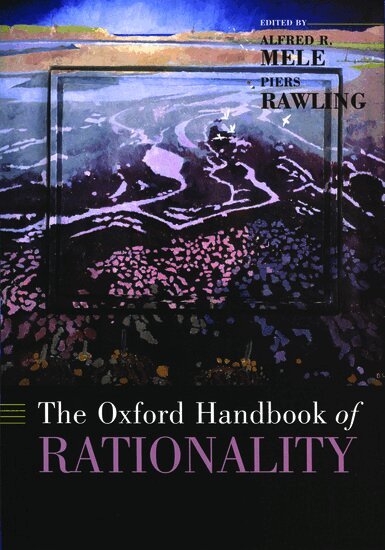
Rationality has long been a central topic in philosophy, crossing standard divisions and categories. It continues to attract much attention in published research and teaching by philosophers as well as scholars in other disciplines, including economics, psychology, and law. The Oxford Handbook of Rationality is an indispensable reference to the current state of play in this vital and interdisciplinary area of study. Twenty-two newly commissioned chapters by a roster of distinguished philosophers provide an overview of the prominent views on rationality, with each author also developing a unique and distinctive argument.
E-bok
PDF, Engelska, 20041 701 kr
Läs direkt efter köp
Rationality has long been a central topic in philosophy, crossing standard divisions and categories. It continues to attract much attention in published research and teaching by philosophers as well as scholars in other disciplines, including economics, psychology, and law. The Oxford Handbook of Rationality is an indispensable reference to the current state of play in this vital and interdisciplinary area of study. Twenty-two newly commissioned chapters by a roster of distinguished philosophers provide an overview of the prominent views on rationality, with each author also developing a unique and distinctive argument.
E-bok
Engelska, 2023275 kr
Läs direkt efter köp
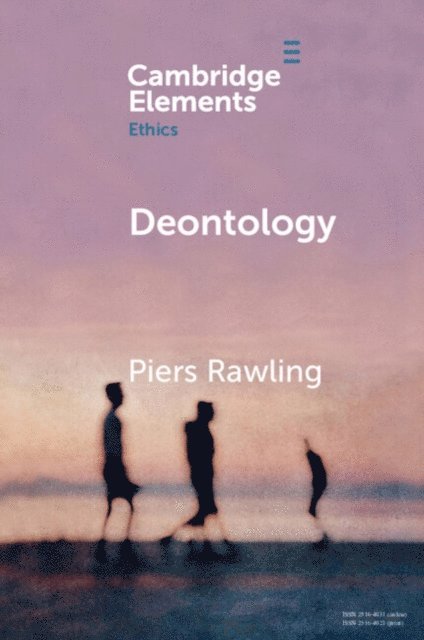
Deontology is a theory about how we should act, morally speaking. It comes in several varieties, but all share certain doctrines, many of which are close to those found in the so-called ''common-sense morality'' of the Western world. And all varieties are united in their opposition to consequentialism, a theory that, in its simplest form, tells us that we should always act so as to maximize impersonal value by bringing about the best consequences. This Element presents some of the different versions of deontology, including the views of W. D. Ross, and, to a lesser extent, Immanuel Kant. It defends certain deontological tenets, while challenging others, and contrasts them with consequentialism. Deontology and consequentialism are two of the main contenders in ethical theory, but virtue ethics is another, and it too is addressed (briefly), with an attempt to see it, in its most plausible form, as part of deontology.
E-bok
PDF, Engelska, 2023275 kr
Läs direkt efter köp
Deontology is a theory about how we should act, morally speaking. It comes in several varieties, but all share certain doctrines, many of which are close to those found in the so-called ''common-sense morality'' of the Western world. And all varieties are united in their opposition to consequentialism, a theory that, in its simplest form, tells us that we should always act so as to maximize impersonal value by bringing about the best consequences. This Element presents some of the different versions of deontology, including the views of W. D. Ross, and, to a lesser extent, Immanuel Kant. It defends certain deontological tenets, while challenging others, and contrasts them with consequentialism. Deontology and consequentialism are two of the main contenders in ethical theory, but virtue ethics is another, and it too is addressed (briefly), with an attempt to see it, in its most plausible form, as part of deontology.
Häftad, Engelska, 2023
230 kr
Skickas inom 7-10 vardagar
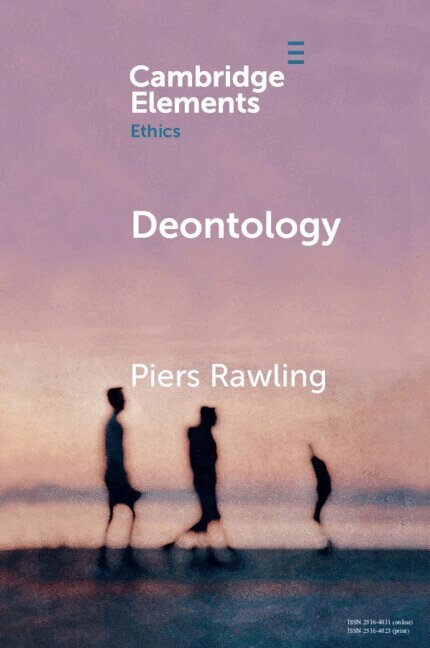
Deontology is a theory about how we should act, morally speaking. It comes in several varieties, but all share certain doctrines, many of which are close to those found in the so-called 'common-sense morality' of the Western world. And all varieties are united in their opposition to consequentialism, a theory that, in its simplest form, tells us that we should always act so as to maximize impersonal value by bringing about the best consequences. This Element presents some of the different versions of deontology, including the views of W. D. Ross, and, to a lesser extent, Immanuel Kant. It defends certain deontological tenets, while challenging others, and contrasts them with consequentialism. Deontology and consequentialism are two of the main contenders in ethical theory, but virtue ethics is another, and it too is addressed (briefly), with an attempt to see it, in its most plausible form, as part of deontology.