Pradyumna P. Karan – författare
Visar alla böcker från författaren Pradyumna P. Karan. Handla med fri frakt och snabb leverans.
17 produkter
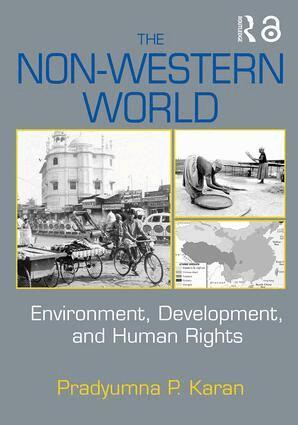
Non-Western World
Environment, Development and Human Rights
Inbunden, 2004
3063 kr
Lägg i varukorg
Through a cross-cultural and multi-disciplinary approach, this introductory textbook focuses on critical issues of development, environment, and cultural conflicts facing most area of the non-Western world. Areas covered include China, Japan, Southeast Asia, the Indian subcontinent, the Middle …
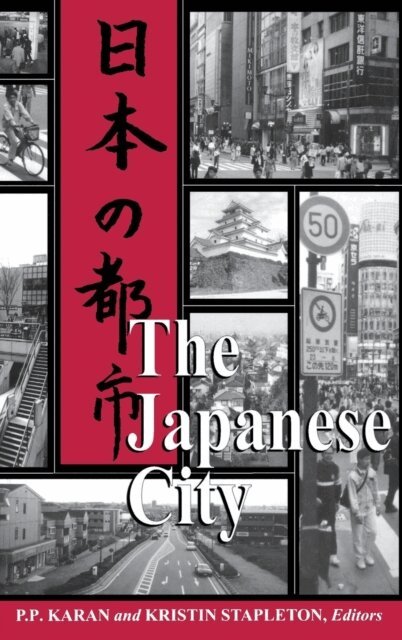
Japanese City
Av Pradyumna P Karan, Kristin Stapleton
Inbunden, 1997
570 kr
Lägg i varukorg
Japan is one of the most crowded countries on earth, with three-fourths of its population now living in cities. Tokyo is easily the most populous city on the planet. And yet, though closely packed, its citizens dwell together in relative peace. In America, inner-city violence -- often attributed in …
Japanese Landscapes
Where Land and Culture Merge
Av Cotton Mather, Pradyumna P Karan m. fl.
Inbunden, 1998
445 kr
Lägg i varukorg
From the busy streets of Tokyo to the secluded shores of Kyushu, from the volcanoes of Hokkaido to the temples of Kyoto, the treasured landscapes of Japan are brought to life in this concise visual guide. Drawing upon years of observation, Cotton Mather, P.P. Karan, and Shigeru Iijima explore the …
Japan in the Bluegrass
Inbunden, 2001
570 kr
Lägg i varukorg
Fifteen years after Toyota announced it would build a manufacturing plant in the heart of the Bluegrass, Kentucky crafts are being used to help sell Camrys at car dealerships in Japan and sushi and Japanese condiments are widely stocked on grocery shelves in a number of cities across Kentucky. In …
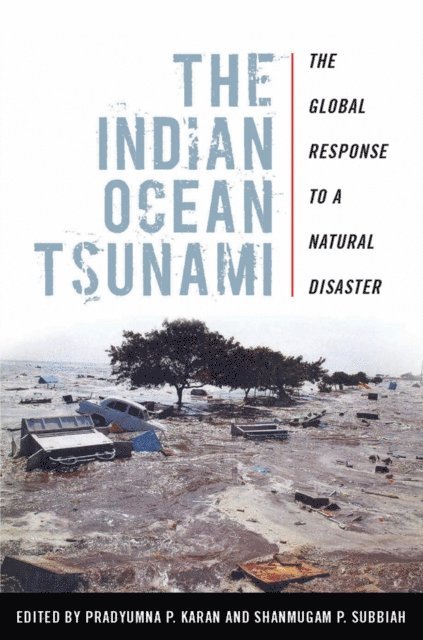
Indian Ocean Tsunami
The Global Response to a Natural Disaster
Av Pradyumna P Karan, Shanmugam P Subbiah
Inbunden, 2010
663 kr
Lägg i varukorg
On December 26, 2004, a massive tsunami triggered by an underwater earthquake pummeled the coasts of Thailand, Indonesia, Sri Lanka, and other countries along the Indian Ocean. With casualties as far away as Africa, the aftermath was overwhelming: ships could be spotted miles inland; cars floated …
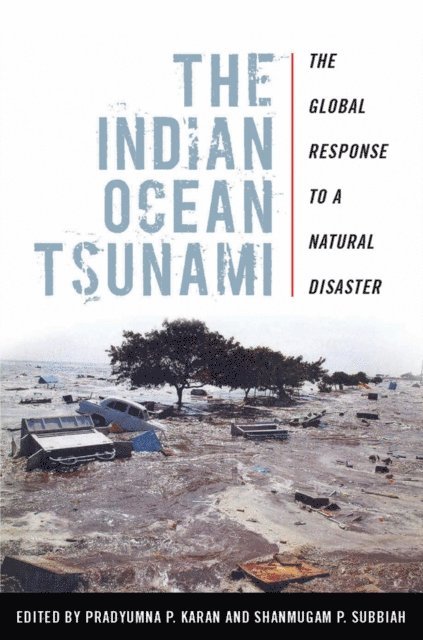
Indian Ocean Tsunami
The Global Response to a Natural Disaster
Av Shanmugam P. Subbiah, Pradyumna P. Karan
E-bok, 2010
630 kr
Lägg i varukorg
On December 26, 2004, a massive tsunami triggered by an underwater earthquake pummeled the coasts of Thailand, Indonesia, Sri Lanka, and other countries along the Indian Ocean. With casualties as far away as Africa, the aftermath was overwhelming: ships could be spotted miles inland; cars floated …
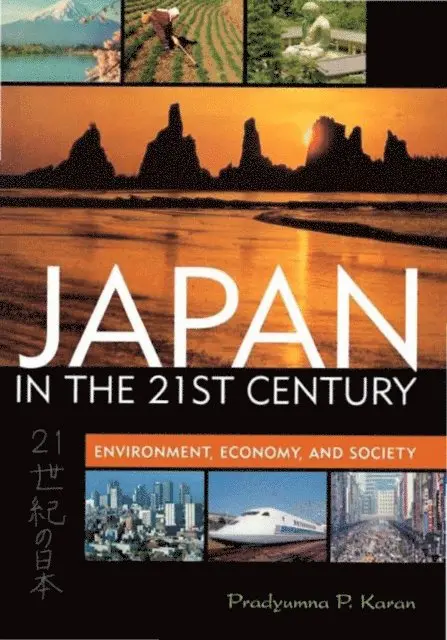
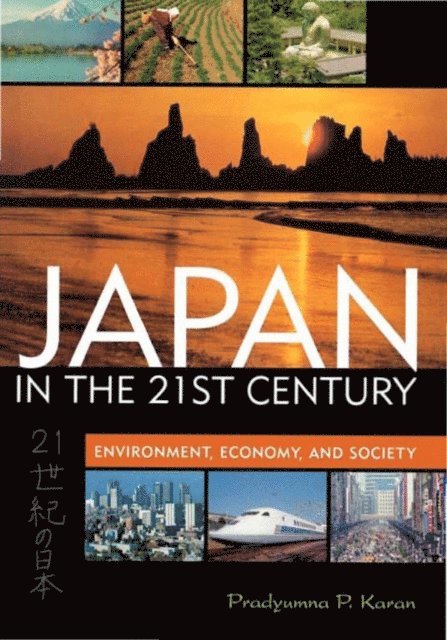
Japan in the 21st Century
Environment, Economy, and Society
E-bok, 2010
770 kr
Lägg i varukorg
The ancient civilization of Japan, with its Shinto shrines and Buddhist temples, is also closely associated with all that is new and modern. Looking outward, Japan sees what it has become since Hiroshima: the world''s second-largest economy, a source of fury and wonder, a power without arms. …
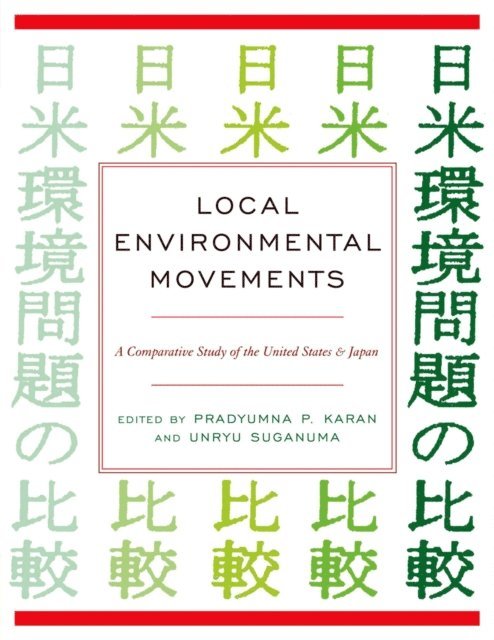
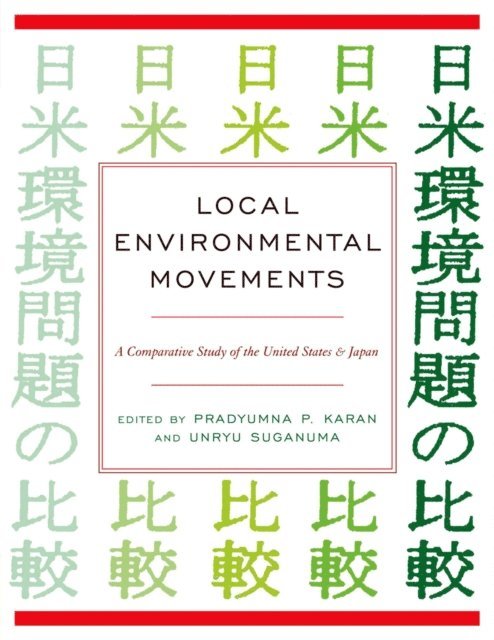
Local Environmental Movements
Av Unryu Suganuma, Pradyumna P. Karan
E-bok, 2010
612 kr
Lägg i varukorg
Increasing evidence of the irreparable damage humans have inflicted on the planet has caused many to adopt a defeatist attitude toward the future of the global environment. Local Environmental Movements: A Comparative Study of the United States and Japan analyzes how local groups in both Japan and …
Japan in the 21st Century
Environment, Economy, and Society
E-bok, 2005
787 kr
Lägg i varukorg
The ancient civilization of Japan, with its Shinto shrines and Buddhist temples, is also closely associated with all that is new and modern. Looking outward, Japan sees what it has become since Hiroshima: the world''s second-largest economy, a source of fury and wonder, a power without arms. …
Local Environmental Movements
Av Unryu Suganuma, Pradyumna P. Karan
E-bok, 2008
612 kr
Lägg i varukorg
Increasing evidence of the irreparable damage humans have inflicted on the planet has caused many to adopt a defeatist attitude toward the future of the global environment. Local Environmental Movements: A Comparative Study of the United States and Japan analyzes how local groups in both Japan and …
Indian Ocean Tsunami
The Global Response to a Natural Disaster
Av Shanmugam P. Subbiah, Pradyumna P. Karan
E-bok, 2010
630 kr
Lägg i varukorg
On December 26, 2004, a massive tsunami triggered by an underwater earthquake pummeled the coasts of Thailand, Indonesia, Sri Lanka, and other countries along the Indian Ocean. With casualties as far away as Africa, the aftermath was overwhelming: ships could be spotted miles inland; cars floated …
Japanese Landscapes
Where Land and Culture Merge
Av Shigeru Iijima, Pradyumna P. Karan m. fl.
E-bok, 2014
394 kr
Lägg i varukorg
From the busy streets of Tokyo to the secluded shores of Kyushu, from the volcanoes of Hokkaido to the temples of Kyoto, the treasured landscapes of Japan are brought to life in this concise visual guide. Drawing upon years of observation, Cotton Mather, P.P. Karan, and Shigeru Iijima explore the …
Japan in the Bluegrass
E-bok, 2014
612 kr
Lägg i varukorg
Fifteen years after Toyota announced it would build a manufacturing plant in the heart of the Bluegrass, Kentucky crafts are being used to help sell Camrys at car dealerships in Japan and sushi and Japanese condiments are widely stocked on grocery shelves in a number of cities across Kentucky. In …
Japanese City
Av Kristin Stapleton, Pradyumna P. Karan
E-bok, 2014
551 kr
Lägg i varukorg
Japan is one of the most crowded countries on earth, with three-fourths of its population now living in cities. Tokyo is easily the most populous city on the planet. And yet, though closely packed, its citizens dwell together in relative peace. In America, inner-city violenceoften attributed in …
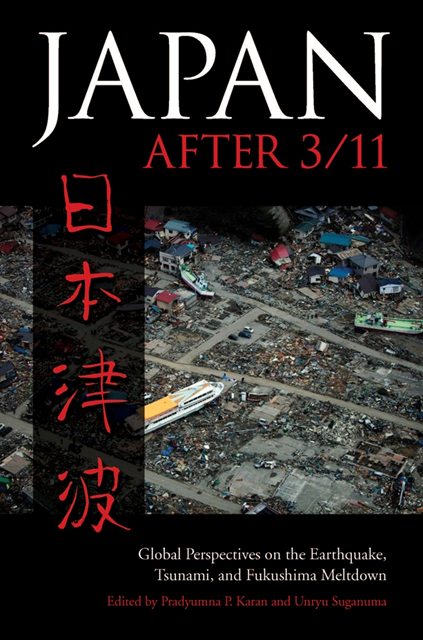
Japan after 3/11
Global Perspectives on the Earthquake, Tsunami, and Fukushima Meltdown
Av Unryu Suganuma, Pradyumna P. Karan
E-bok, 2016
762 kr
Lägg i varukorg
On March 11, 2011, an underwater earthquake off the Pacific coast of Tohoku, Japan, triggered one of the most devastating tsunamis of a generation. The aftermath was overwhelming: communities were reduced to rubble, thousands of people were missing or dead, and relief organizations struggled to …
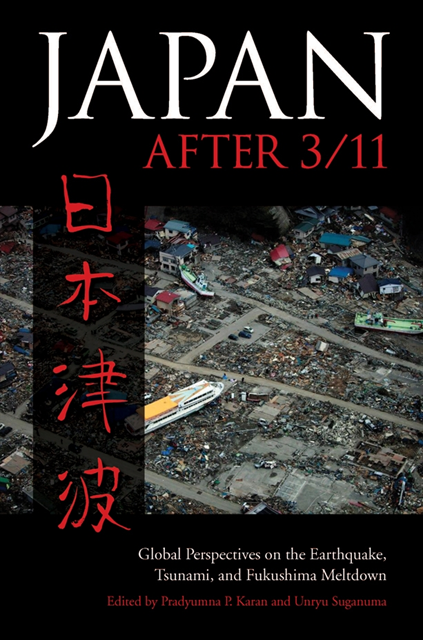
Japan after 3/11
Global Perspectives on the Earthquake, Tsunami, and Fukushima Meltdown
Av Unryu Suganuma, Pradyumna P. Karan
E-bok, 2016
787 kr
Lägg i varukorg
On March 11, 2011, an underwater earthquake off the Pacific coast of Tohoku, Japan, triggered one of the most devastating tsunamis of a generation. The aftermath was overwhelming: communities were reduced to rubble, thousands of people were missing or dead, and relief organizations struggled to …
Non-Western World
Environment, Development and Human Rights
Häftad, 2004
574 kr
Tillfälligt slut
Through a cross-cultural and multi-disciplinary approach, this introductory textbook focuses on critical issues of development, environment, and cultural conflicts facing most area of the non-Western world. Areas covered include China, Japan, Southeast Asia, the Indian subcontinent, the Middle …