Preeti Singh Bahadur – författare
Visar alla böcker från författaren . Handla med fri frakt och snabb leverans.
4 produkter
4 produkter
Inbunden, Engelska, 2026
1 979 kr
Skickas inom 5-8 vardagar
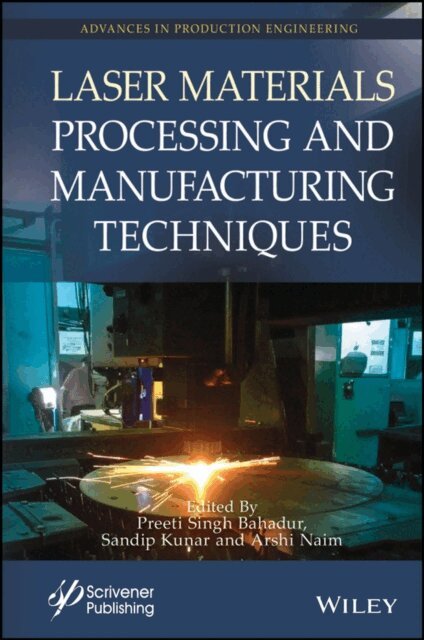
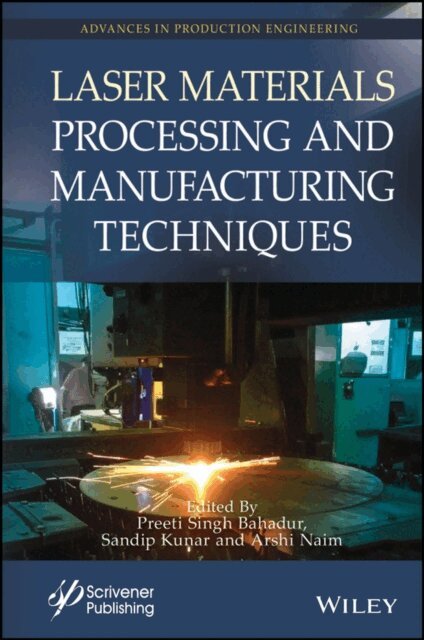
Harness the precision of modern manufacturing with this concise reference manual, providing a comprehensive exploration of laser processing. Since the laser’s invention, its use in materials processing has continually expanded. Its initial uses for procedures such as heat treatment, machining, and welding laid the groundwork for more modern uses, including laser forming, shock peening, micromachining, and nanoprocessing. This book provides a comprehensive exploration of how lasers are utilized in modern manufacturing processes. The text examines the physics of laser-material interaction, process parameters, and the latest advancements in laser technologies, as well as how industrial laser processes are developed and the diverse attributes of the resulting objects, emphasizing their significance in industrial settings. These objects exhibit distinct mechanical properties, metallurgical characteristics, and geometrical precision, all of which are crucial considerations in their utility and performance within industrial environments. Serving as a concise reference manual, it functions as a valuable resource for understanding the fundamentals, applications, production specifics, and characteristics of modern laser processing. Readers will find this book: Introduces emerging and previously developed laser material processes;Delves into various laser-based techniques such as cutting, welding, drilling, surface treatment, and additive manufacturing, emphasizing their advantages in precision, speed, and automation;Bridges theory and practical applications, highlighting real-world industrial use cases and innovations in laser-based manufacturing.Audience Engineers, researchers, and academics studying laser materials processing for mechanical, manufacturing, biomedical, and industrial engineering.
E-bok
Engelska, 20262 462 kr
Läs direkt efter köp
Harness the precision of modern manufacturing with this concise reference manual, providing a comprehensive exploration of laser processing. Since the laser s invention, its use in materials processing has continually expanded. Its initial uses for procedures such as heat treatment, machining, and welding laid the groundwork for more modern uses, including laser forming, shock peening, micromachining, and nanoprocessing. This book provides a comprehensive exploration of how lasers are utilized in modern manufacturing processes. The text examines the physics of laser-material interaction, process parameters, and the latest advancements in laser technologies, as well as how industrial laser processes are developed and the diverse attributes of the resulting objects, emphasizing their significance in industrial settings. These objects exhibit distinct mechanical properties, metallurgical characteristics, and geometrical precision, all of which are crucial considerations in their utility and performance within industrial environments. Serving as a concise reference manual, it functions as a valuable resource for understanding the fundamentals, applications, production specifics, and characteristics of modern laser processing. Readers will find this book: Introduces emerging and previously developed laser material processes; Delves into various laser-based techniques such as cutting, welding, drilling, surface treatment, and additive manufacturing, emphasizing their advantages in precision, speed, and automation; Bridges theory and practical applications, highlighting real-world industrial use cases and innovations in laser-based manufacturing. Audience Engineers, researchers, and academics studying laser materials processing for mechanical, manufacturing, biomedical, and industrial engineering.
Inbunden, Engelska, 2026
2 547 kr
Kommande
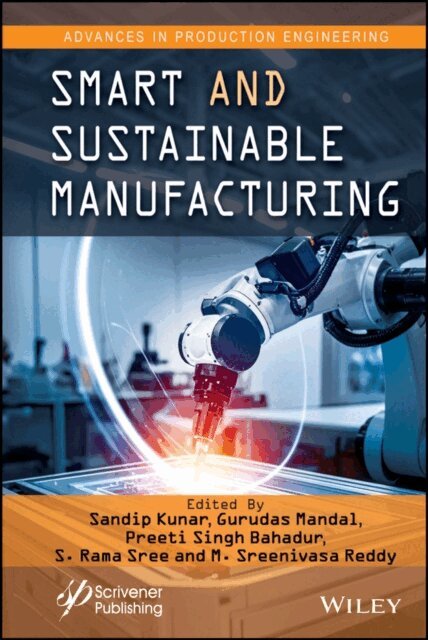
Discover how to harness the power of Industry 4.0 with this comprehensive, case-study-driven guide that bridges the gap between advanced smart manufacturing technologies and actionable, sustainable industrial growth. Smart manufacturing, often associated with Industry 4.0, leverages advanced technologies to revolutionize traditional manufacturing processes. Key processes involve data collection and analysis from sensors embedded in machines and equipment, enabling real-time monitoring, predictive maintenance, and process optimization. This data-driven approach fosters greater efficiency, flexibility, and agility in manufacturing operations. Smart manufacturing finds applications across various industries, including automotive, aerospace, electronics, and pharmaceuticals. This book presents key findings, solutions, and implementation perspectives on smart manufacturing and sustainable development. It addresses urgent economic, social, and industrial challenges by outlining current trends, advanced technologies, product design strategies, and practical tactics for information sharing and solution deployment within businesses. Expert insights and real-world case studies provide a comprehensive overview of smart manufacturing, including the role that technologies such as machine learning, cyber-physical systems, and the Internet of Things play in this emerging field. Ultimately, it highlights critical areas of action needed to make the world more sustainable and livable today and in the future. Readers will find the volume: Covers the technologies for successful improvement in advanced processes and the application of smart manufacturing technologies; Introduces existing and emerging smart manufacturing technologies; Discusses the successful utilization of multipurpose technologies, processes, applications, future scopes, and challenges of smart manufacturing technologies. Audience Engineers, researchers, and academics of various disciplines, specifically mechanics, manufacturing, biomedicine, industrial engineering, electronics, and computer science.
Inbunden, Engelska, 2026
2 078 kr
Kommande
By 2050, it is estimated that there will be 10 billion people on the planet, putting tremendous pressure on the agricultural industry to boost crop yields and productivity. In addition, in order to be sustainable, farming systems also need to create and preserve healthy soil, manage water resources, lower pollution, and maintain and hopefully increase biodiversity. This book explores the transformative role of new technologies like artificial intelligence (AI), machine learning, the Internet of Things (IoT), blockchain, and green computing in the future of sustainable agriculture. The integration of AI and machine learning is enhancing energy efficiency in agriculture and reducing environmental impact, while AI-driven biosensors enable real-time monitoring of soil health, crop conditions, and disease detection. Emerging technologies like blockchain offer ecofriendly frameworks for supply chain optimization and IoT-enabled smart farming enhances precision agriculture, improving water and resource management. As agriculture becomes more digital, green computing minimizes energy consumption and waste and advances in next-generation materials support ecofriendly farming practices. AI-powered climate modeling and IoT-enabled smart grids optimize agricultural energy use, promoting a sustainable balance between production and conservation. Featuring 15 chapters by global experts, this book covers innovative methods and cutting-edge technologies, including smart agriculture, sensor-based systems, and sustainable engineering. It offers a comprehensive framework for fostering sustainable agricultural development, serving as an invaluable resource for researchers, policy makers, and industry professionals. The book: Explores cutting-edge technologies such as AI, IoT and blockchain, showcasing their transformative impact on agricultural practices and sustainability. Highlights innovative methods and strategies that optimize resource use, improve productivity and reduce environmental impact in farming. Provides practical insights into how AI and machine learning can enhance energy efficiency and real-time monitoring of soil, crops and diseases. Offers a comprehensive framework for integrating smart farming technologies, facilitating precision agriculture and sustainable water management. Examines the role of emerging technologies like green computing and next-generation materials in advancing eco-friendly farming practices and reducing digital waste.