Puay Yok Tan – författare
869 kr
Läs direkt efter köp
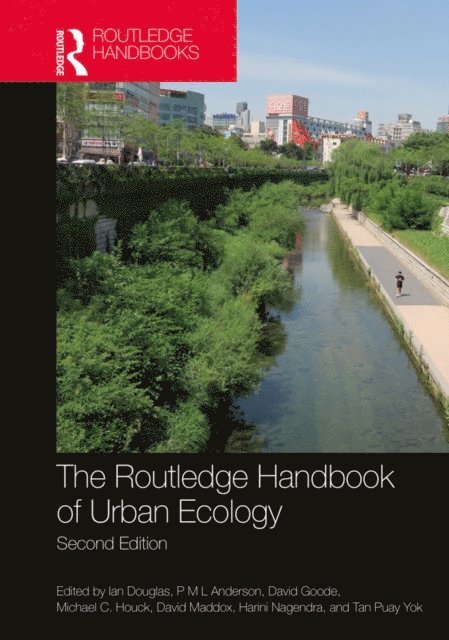
This second edition covers recent developments around the world with contributors from 33 different countries. It widens the handbook’s scope by including ecological design; consideration of cultural dimensions of the use and conservation of urban nature; the roles of government and civil society; and the continuing issues of equity and fairness in access to urban greenspaces.
New features include an emphasis on the biophilic design of homes and workplaces, demonstrating the value of nature, in order to counter the still prevalent attitude among many developers that nature is a constraint rather than a value. The volume explores great practical achievements that have occurred since the first edition, with many governments increasingly recognizing and legislating on urban nature and green infrastructure matters, since cities play a major role in adapting to change, particularly to climate crisis. New topics such as the ecological role of light at night and human microbiota in the urban ecosystem are introduced. Additional attention is given to food production in cities, particularly the multiple roles of urban agriculture and household gardens in different contexts from wealthy communities to the poorest informal settlements in deprived communities. The emphasis is on demonstrating what can be achieved, and what is already being done.
The book aims to help scholars and graduate students by providing an invaluable and up-to-date guide to current urban ecological thinking across the range of disciplines, such as geography, ecology, environmental science/studies, planning, and urban studies, that converge in the study of towns and cities and urban design and living. It will also assist practitioners and civil society members in discovering the ways diff erent specialists and thinkers approach urban nature.
869 kr
Läs direkt efter köp
This second edition covers recent developments around the world with contributors from 33 different countries. It widens the handbook’s scope by including ecological design; consideration of cultural dimensions of the use and conservation of urban nature; the roles of government and civil society; and the continuing issues of equity and fairness in access to urban greenspaces.
New features include an emphasis on the biophilic design of homes and workplaces, demonstrating the value of nature, in order to counter the still prevalent attitude among many developers that nature is a constraint rather than a value. The volume explores great practical achievements that have occurred since the first edition, with many governments increasingly recognizing and legislating on urban nature and green infrastructure matters, since cities play a major role in adapting to change, particularly to climate crisis. New topics such as the ecological role of light at night and human microbiota in the urban ecosystem are introduced. Additional attention is given to food production in cities, particularly the multiple roles of urban agriculture and household gardens in different contexts from wealthy communities to the poorest informal settlements in deprived communities. The emphasis is on demonstrating what can be achieved, and what is already being done.
The book aims to help scholars and graduate students by providing an invaluable and up-to-date guide to current urban ecological thinking across the range of disciplines, such as geography, ecology, environmental science/studies, planning, and urban studies, that converge in the study of towns and cities and urban design and living. It will also assist practitioners and civil society members in discovering the ways diff erent specialists and thinkers approach urban nature.
1 763 kr
Skickas inom 10-15 vardagar
1 533 kr
Läs direkt efter köp
This book offers an overview of recent scientific and professional literature on urban greening and urban ecology, focusing on diverse disciplines such as landscape architecture, geography, urban ecology, urban climatology, biodiversity conservation, urban governance, architecture and urban hydrology. It includes contributions in which academics, public policy experts and practitioners share their considerable knowledge on the multi-faceted aspects of greening cities. The greening of cities has witnessed a global resurgence over the past two decades and has made a significant contribution to urban liveability and sustainability, as well as increasing resilience. As urban greening efforts continue to expand, it is useful to promote recent advances in our understanding of various aspects of planning, design and management of urban greenery, but at the same time, it is also important to realize that there are important gaps in our knowledge and that further research is needed. The bookis organized in three main parts: concepts, functions and forms of urban greening. The first part examines the historical roots of greening cities and how the burgeoning field of urban ecology can contribute useful principles and strategies to guide the planning, design and management of urban greening. The second part shifts the focus to the diverse range of services – the functions – provided by urban greening, such as those related to urban climate, urban biodiversity, human health, and community building. The final part explores conventional, often neglected, but important forms of urban greenery such as urban woodlands and urban farms, as well as relatively recent forms of urban greenery like those integrated with buildings and waterways. It offers a ready reference resource for researchers, practitioners and policy-makers to grasp the critical issues and trigger further studies and applications in the quest for high-performance green cities.
1 269 kr
Skickas inom 10-15 vardagar
2 869 kr
Skickas inom 3-6 vardagar
1 962 kr
Tillfälligt slut