Tan Puay Yok - Böcker
Visar alla böcker från författaren Tan Puay Yok. Handla med fri frakt och snabb leverans.
2 produkter
2 produkter
3 498 kr
Skickas inom 10-15 vardagar
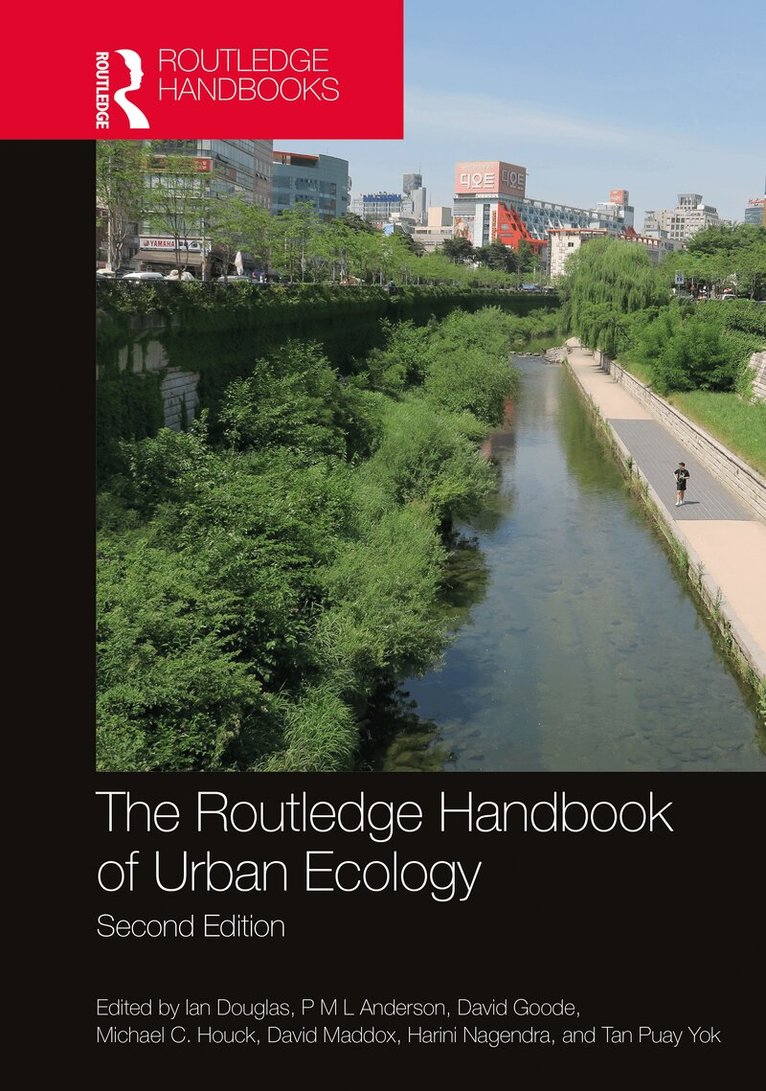
This second edition covers recent developments around the world with contributors from 33 different countries. It widens the handbook’s scope by including ecological design; consideration of cultural dimensions of the use and conservation of urban nature; the roles of government and civil society; and the continuing issues of equity and fairness in access to urban greenspaces.New features include an emphasis on the biophilic design of homes and workplaces, demonstrating the value of nature, in order to counter the still prevalent attitude among many developers that nature is a constraint rather than a value. The volume explores great practical achievements that have occurred since the first edition, with many governments increasingly recognizing and legislating on urban nature and green infrastructure matters, since cities play a major role in adapting to change, particularly to climate crisis. New topics such as the ecological role of light at night and human microbiota in the urban ecosystem are introduced. Additional attention is given to food production in cities, particularly the multiple roles of urban agriculture and household gardens in different contexts from wealthy communities to the poorest informal settlements in deprived communities. The emphasis is on demonstrating what can be achieved, and what is already being done.The book aims to help scholars and graduate students by providing an invaluable and up-to-date guide to current urban ecological thinking across the range of disciplines, such as geography, ecology, environmental science/studies, planning, and urban studies, that converge in the study of towns and cities and urban design and living. It will also assist practitioners and civil society members in discovering the ways diff erent specialists and thinkers approach urban nature.
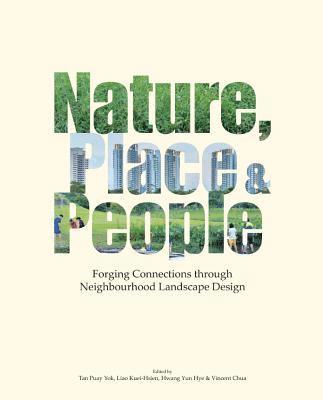
Nature, Place & People: Forging Connections Through Neighbourhood Landscape Design
Inbunden, Engelska, 2018
1 962 kr
Tillfälligt slut
Neighbourhood landscapes are the quintessential forms of urban landscapes in most cities worldwide. They are pervasive, and hence experienced by the large majority of urban dwellers in their everyday life. More than parks, nature reserves or nature areas which are visited as destinations, neighbourhood landscapes provide the most immediate, frequent and convenient form of nature experienced by urban dwellers on a daily basis. They are also valuable as social spaces to bring residents together, foster social ties, and strengthen communities. Despite their importance, surprisingly little has been written to guide the planning and design of neighbourhood landscapes.This book is written for a specific purpose, to illustrate how the design of neighbourhood landscapes helps to deliver more benefits for urban dwellers and, at the same time, protect ecosystems that facilitate human well-being. This is in turn important as the synergistic relationships between human well-being, quality of biophysical urban environment, and health of human-environment interactions fundamentally underpin urban sustainability. The authors emphasize the role neighbourhood landscapes play in forging connections between people and nature, people and people, and people and place. Most of all, the book highlights the role of focusing on people in this endeavour, as it is only when landscapes are appropriately designed, and when people recognize these benefits, that they become valued and protected as a community resource.This book is organized into two parts. Part 1 focuses on the conceptual foundations that underpin the neighbourhood landscape design guidelines being developed. In this section, the authors describe the key concepts relating functions of neighbourhood landscapes to the key urban development goals of sustainability, liveability and reliance; how they can be represented in a framework; and how a synthesis of current knowledge of cities as socio-ecological systems helps to identify principles that can guide the designing of neighbourhood landscapes. Part 2 is more application focused, and is centred on neighbourhood landscape design guidelines inspired by the concept of ecosystem services. The guidelines consist of design approaches, practical strategies, design targets and performance monitoring indicators for tracking the performance of neighbourhood landscapes. The book is written for readers in academia and design practice, and anyone who has a role in shaping neighbourhood landscapes for the benefit of urban dwellers.