R. Matthew Shockey – författare
Visar alla böcker från författaren R. Matthew Shockey. Handla med fri frakt och snabb leverans.
4 produkter
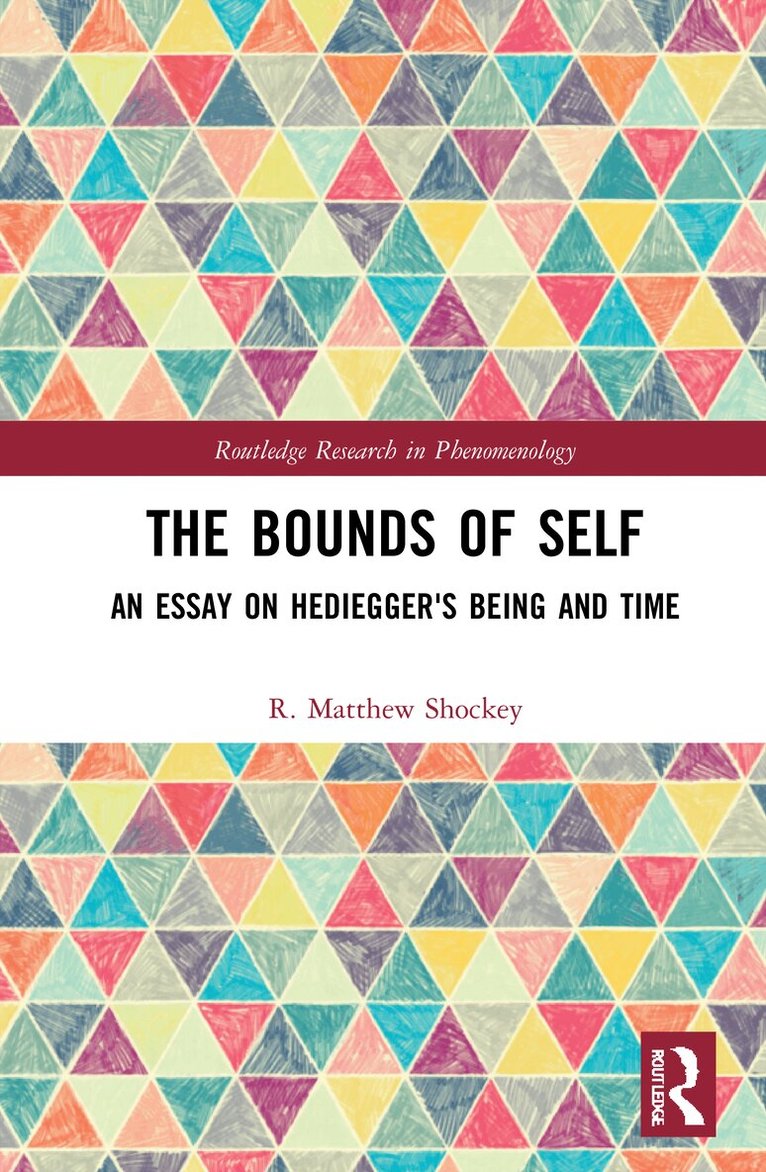
Bounds of Self
An Essay on Heidegger's Being and Time
Inbunden, 2021
2513 kr
Lägg i varukorg
This book provides a systematic reading of Martin Heidegger’s project of “fundamental ontology,” which he initially presented in Being and Time (1927) and developed further in his work on Kant. It shows our understanding of being to be that of a small set of a priori, temporally inflected, …
Bounds of Self
An Essay on Heidegger's Being and Time
Häftad, 2023
648 kr
Lägg i varukorg
This book provides a systematic reading of Martin Heidegger’s project of “fundamental ontology,” which he initially presented in Being and Time (1927) and developed further in his work on Kant. It shows our understanding of being to be that of a small set of a priori, temporally inflected, …
Bounds of Self
An Essay on Heidegger''s Being and Time
E-bok, 2021
746 kr
Lägg i varukorg
This book provides a systematic reading of Martin Heidegger’s project of “fundamental ontology,” which he initially presented in Being and Time (1927) and developed further in his work on Kant. It shows our understanding of being to be that of a small set of a priori, temporally inflected, …
Bounds of Self
An Essay on Heidegger''s Being and Time
E-bok, 2021
762 kr
Lägg i varukorg
This book provides a systematic reading of Martin Heidegger’s project of “fundamental ontology,” which he initially presented in Being and Time (1927) and developed further in his work on Kant. It shows our understanding of being to be that of a small set of a priori, temporally inflected, …